Grease traps back up on a Friday night, a backflow test lapses and code enforcement flags the lease renewal, or a strip mall's 35-year-old cast iron main finally gives out under three tenants at once — commercial plumbing on the Treasure Coast breaks differently than residential, and it breaks on a business's timeline, not a homeowner's.
- Commercial plumbing on the Treasure Coast means code compliance, not just leak repair — annual backflow testing is non-negotiable in 2026.
- Restaurants need grease trap service every 60-90 days depending on volume; skip it and health inspectors will find out first.
- Strip centers and multi-tenant buildings built before the mid-1990s often still run original cast iron drain lines — budget for camera inspection before a lease renewal, not after a flood.
- Imperium Electric handles licensed commercial plumbing across Port St. Lucie, Stuart, and Jensen Beach — verdict: worth a call before your next inspection, not after.
Why this matters
Residential plumbers fix what's broken. Commercial plumbing for Treasure Coast businesses has to satisfy that plus a health inspector, a landlord's lease terms, an insurance carrier, and in some cases a county backflow prevention ordinance. Miss one of those and the plumbing problem becomes a business problem — a closed dining room, a failed inspection, a denied claim.
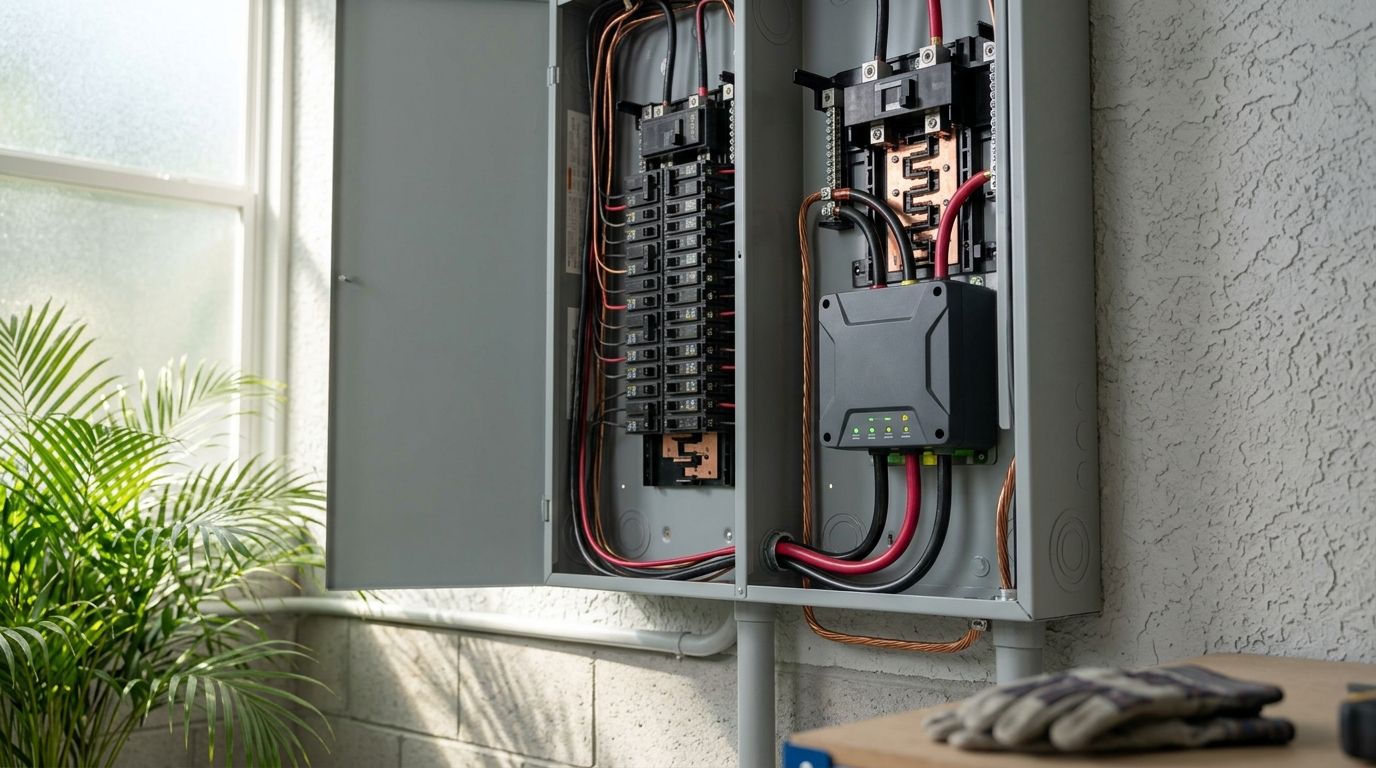
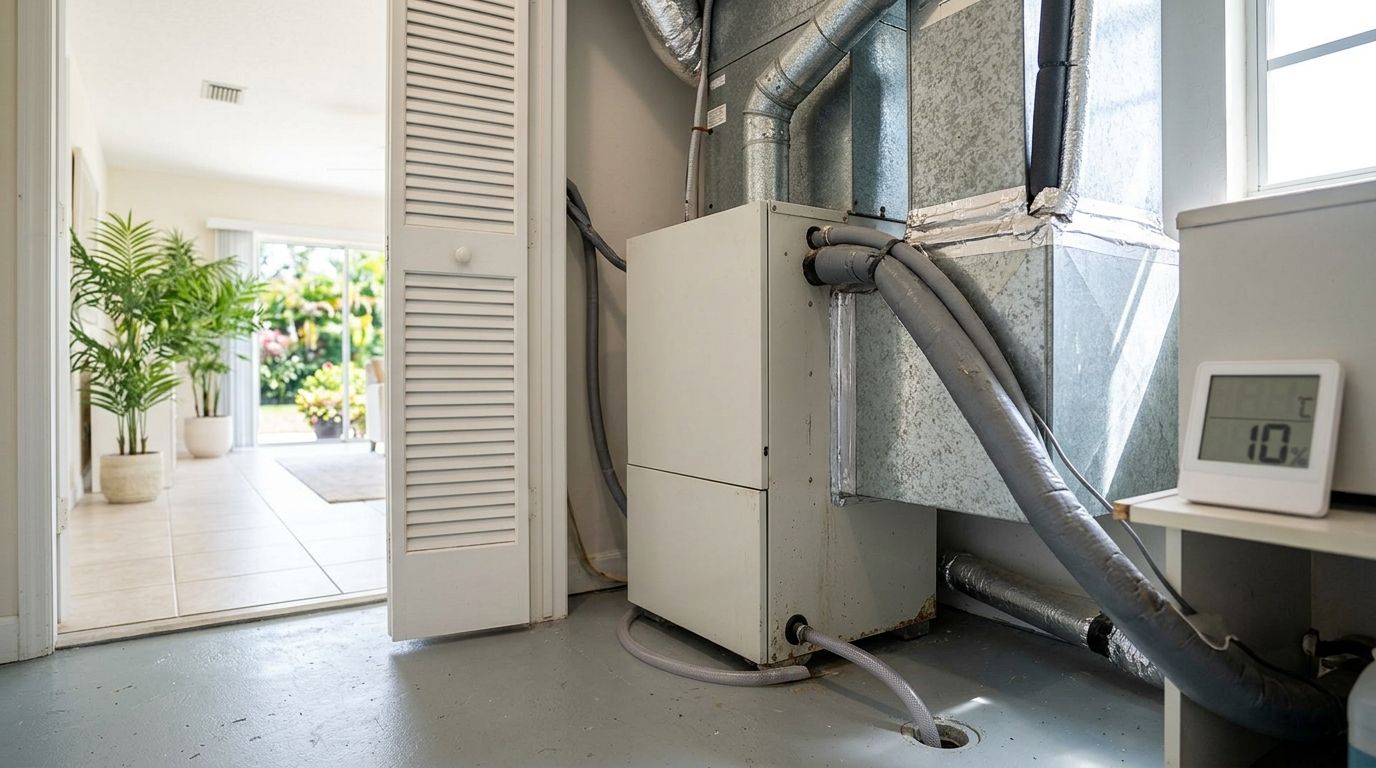
Imperium Electric works both sides of a commercial mechanical room — electrical and plumbing — which matters more than it sounds like when a walk-in cooler, a tankless water heater, and a dedicated circuit all sit three feet apart in the same closet.
Who this is for
This guide is for property managers, restaurant owners, medical and dental office operators, and general contractors doing tenant build-outs anywhere from Port St. Lucie down through Stuart and Jensen Beach. If you're responsible for a building where a plumbing failure means lost revenue, a failed health inspection, or a tenant complaint — not just an inconvenienced homeowner — this is written for your decision, not a DIY fix.
What to look for in commercial plumbing for Treasure Coast businesses
Licensing scoped for commercial work
A residential plumbing license doesn't automatically cover commercial-grade backflow assemblies, grease interceptors, or multi-fixture drain systems. Ask specifically whether the contractor is licensed and insured for commercial jobs in your county — not just Florida-licensed in general.
Emergency response outside business hours
A burst supply line at 11 PM in a restaurant means product loss and a closed dining room the next morning. Confirm actual after-hours response time before you sign a service agreement, not during the emergency.
Backflow prevention and annual testing
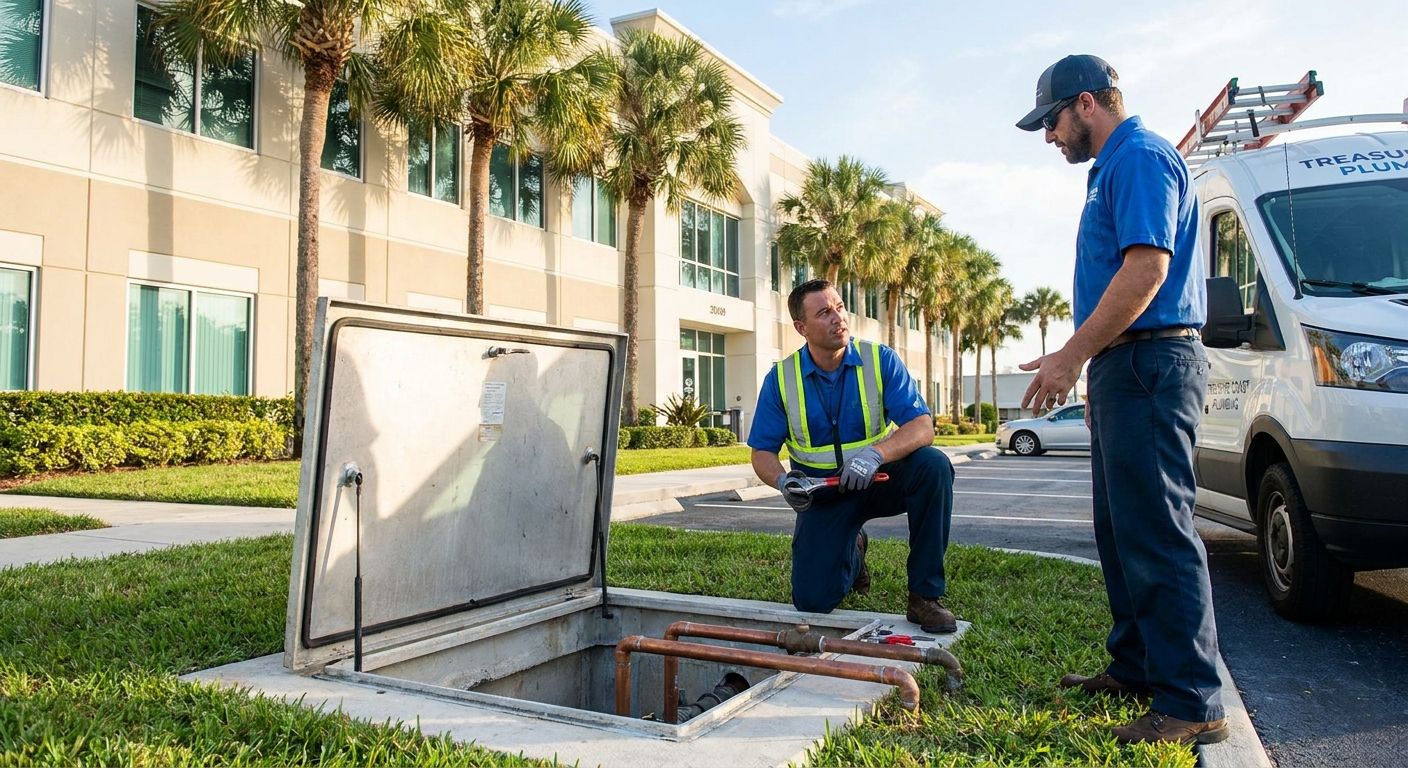
Florida requires annual backflow preventer testing on most commercial connections to protect the public water supply. A contractor who can test, certify, and file that paperwork with the local utility saves you from a compliance letter landing on a property manager's desk in 2026.
Grease trap and drain capacity
Full-service kitchens generate fats, oils, and grease at a volume residential traps never see. Undersized or neglected traps cause slow drains, odor complaints, and health code violations — this is the single most common reason a restaurant fails a surprise inspection.
Experience with multi-tenant and property management contracts
A strip center or office park with six tenants sharing one main line needs a contractor who understands shared-line liability and can coordinate shutoffs without closing every business at once. This is a different skill set than a single-family service call.
Documentation for insurance and lease compliance
Commercial leases and insurance policies often require dated service records, especially for backflow devices and grease interceptors. A contractor who hands you a paper trail protects you if a claim or lease dispute ever comes up.
Top picks by business type
Restaurants and food service — the grease-heavy one
Full-service kitchens need grease trap pumping every 60 to 90 days depending on volume, plus drain lines sized for constant heavy use. Skip this maintenance and you're looking at slow drains, odor, and a health inspection failure — not an if, a when. Pair grease trap service with routine drain cleaning on a set schedule rather than waiting for a backup. Buy — this is the highest-risk, highest-frequency-failure category on the Treasure Coast.
Medical and dental offices — the compliance-heavy one
These facilities run specialized fixtures — vacuum systems, sterilization equipment, sometimes dedicated backflow assemblies — that fall under stricter inspection standards than a standard office. Annual backflow certification isn't optional here; a lapsed test can hold up a lease renewal or licensing inspection. Buy, and put the annual test on a recurring calendar reminder, not a mental note.
Retail strip centers and shopping plazas — the aging-infrastructure one
Many Treasure Coast strip centers were built in the 1980s and 1990s and still run original cast iron drain mains, now 30 to 40+ years old. A camera inspection before a tenant build-out or lease renewal catches root intrusion and pipe degradation before it becomes an emergency sewer line repair mid-lease. Consider — get the inspection done proactively, especially on buildings older than 25 years.
Multi-family and property management — the volume one
Shared plumbing systems across a dozen or more units concentrate risk: one failure can affect several tenants at once, and Treasure Coast's high water table adds sump pump demand most inland properties don't deal with. Coordinate a single service contract across the property rather than calling different plumbers per unit. Consider — consolidating vendors here cuts both cost and response time.
New construction and tenant build-outs — the ground-up one
Build-outs are the one scenario where you're specifying the system instead of inheriting one, which means fixture counts, drain sizing, and backflow placement need to be right before drywall goes up. Coordinating new construction plumbing with the electrical rough-in avoids the mechanical room conflicts that show up later when a walk-in cooler and a subpanel end up fighting for the same wall space — worth checking with a commercial electrician during the same planning phase. Buy — the cost of getting this right during rough-in is a fraction of retrofitting after occupancy.
What to avoid
- A residential-only plumber quoting commercial jobs. They may be licensed, but if they've never certified a backflow device or serviced a grease interceptor, you're the training job.
- Skipping the paper trail. A verbal "it's fine" from a technician doesn't satisfy a health inspector or an insurance adjuster in 2026 — get dated, written service records every time.
- Reactive-only service contracts. Waiting for a failure instead of scheduling backflow tests and grease trap pumping costs more in lost business than the maintenance ever would.
Verdict comparison
| Business type | Biggest risk | Recommended action | Verdict |
|---|---|---|---|
| Restaurants/food service | Grease trap backup, health code failure | Pump every 60-90 days, schedule drain cleaning | Buy |
| Medical/dental offices | Lapsed backflow certification | Annual testing on a fixed calendar | Buy |
| Retail strip centers | Aging cast iron mains (30-40+ yrs) | Camera inspection before lease renewal | Consider |
| Multi-family/property mgmt | Shared-line failures, high water table | Single service contract across property | Consider |
| New construction/build-outs | Wrong fixture sizing before drywall | Plan plumbing and electrical rough-in together | Buy |
Get a commercial plumbing quote
Licensed commercial plumbing across Port St. Lucie, Stuart, and Jensen Beach.
FAQ
How often does a business need backflow preventer testing in Florida?
Most Florida utilities require annual backflow preventer testing on commercial connections. Skipping the test risks a compliance notice from the local utility and can hold up lease renewals or health inspections in 2026.
How often should a restaurant grease trap be pumped?
Full-service restaurants typically need grease trap pumping every 60 to 90 days depending on volume. Waiting longer causes slow drains, odor complaints, and a higher risk of failing a health inspection.
Is commercial plumbing more expensive than residential plumbing?
Commercial jobs usually cost more per call because of larger fixture counts, code-required backflow testing, and after-hours response needs. Pricing varies by scope, so get a site-specific quote rather than comparing to a residential rate.
What's the difference between a residential and commercial plumber?
A commercial plumber is licensed and equipped to handle grease interceptors, backflow assemblies, and multi-fixture drain systems that residential work rarely involves. Ask directly whether a contractor's license and experience cover commercial-scale systems before hiring.
How do I know if my strip center's pipes need replacing?
A camera inspection is the direct way to check, especially in buildings over 25 to 30 years old that may still run original cast iron. Signs like recurring backups, slow drains across multiple units, or sewer odor point to aging infrastructure worth inspecting before it fails.
Do medical offices need special plumbing compliance?
Yes — medical and dental offices often require dedicated backflow assemblies and stricter inspection standards than standard commercial space. A lapsed backflow certification can delay a licensing inspection or lease renewal.
Can one contractor handle both electrical and plumbing for a commercial build-out?
Some licensed contractors cover both trades, which helps coordinate mechanical room layout and rough-in scheduling on new construction. That coordination avoids conflicts between plumbing lines and electrical panels discovered after drywall is up.
What happens if a business skips required backflow testing?
Local utilities can issue a compliance notice or, in repeat cases, restrict water service until the test is completed and filed. It's a low-cost annual requirement that becomes a high-cost problem when ignored.
One last thing
The backflow test is the cheapest line item on this whole list and the one businesses skip most often — it's an annual requirement, not a suggestion, and it's the first thing a county inspector checks when something else goes wrong on the property.