Hurricane season on the Treasure Coast runs June 1 through November 30, and a whole house generator installation in Stuart, FL turns a multi-day outage into a non-event — if you size and install it correctly the first time.
- A 16-22 kW standby generator covers most Stuart homes; anything smaller leaves your AC and well pump unpowered during summer outages.
- NFPA 37 requires 5 feet of clearance from windows and doors on most units — placement mistakes cause failed inspections in Martin County.
- Natural gas runs continuously; propane needs a tank sized for at least 48-72 hours of runtime during a slow-moving storm.
- Skip the big-box portable-only route for whole house coverage — it can't carry central AC and well pump loads at once.
- Verdict: a properly sized 20kW automatic standby unit with a licensed electrical hookup is the buy for most three- and four-bedroom homes in Stuart.
Why this matters
Stuart sits on the Treasure Coast, which means every named storm between June and November is a real threat to grid power, not a hypothetical one. Homes on well water lose water pressure the moment power drops, and homes with central AC turn into ovens within hours in July and August. A whole house generator installation solves both problems at once, but only when it's sized for your actual electrical load and installed to Martin County code — not guessed at from a big-box store chart.
Imperium Electric handles licensed electrical work across Port St. Lucie, Stuart, Jensen Beach, and the rest of the Treasure Coast, and generator sizing mistakes are one of the most common repeat calls in this market. Get the sizing and placement right in 2026, and you won't touch it again for a decade.
Who this is for
This guide is for Stuart homeowners who've already lost power for more than a day at least once and are done with extension cords and coolers full of ice. It's for anyone on well water, anyone running medical equipment at home, and anyone who works from home and can't afford a dead router for three days. If you're weighing a whole house generator installation against a portable unit you haul out of the garage, read the criteria below before you spend a dollar.
What to look for in a whole house generator installation for Stuart, FL
Correct load sizing for your home
A generator undersized by even 4-5 kW will trip and shut down the moment your AC compressor and well pump kick on together. A licensed electrician calculates your home's actual starting and running watts — not a rule-of-thumb number off a sales flyer — before recommending a unit. This single step determines whether your system works during an actual outage or fails on hour one.
Fuel source and runtime
Natural gas units run as long as the gas line supplies pressure, which makes them the lower-maintenance choice if your street already has service. Propane units need a tank sized for 48-72 hours minimum, since slow-moving systems like the ones that stall over the Treasure Coast can knock out power for a week. Pick the wrong fuel path and you're either refueling constantly or paying for a gas line extension you didn't budget for.
Transfer switch type
An automatic transfer switch senses the outage and starts the generator within seconds, with no one home required. A manual switch is cheaper up front but means someone has to physically flip breakers during the storm — not realistic if you evacuate or if the outage hits at 2 a.m. For a true whole house generator installation in Stuart, automatic is the standard, not the upgrade.
Placement and code clearance
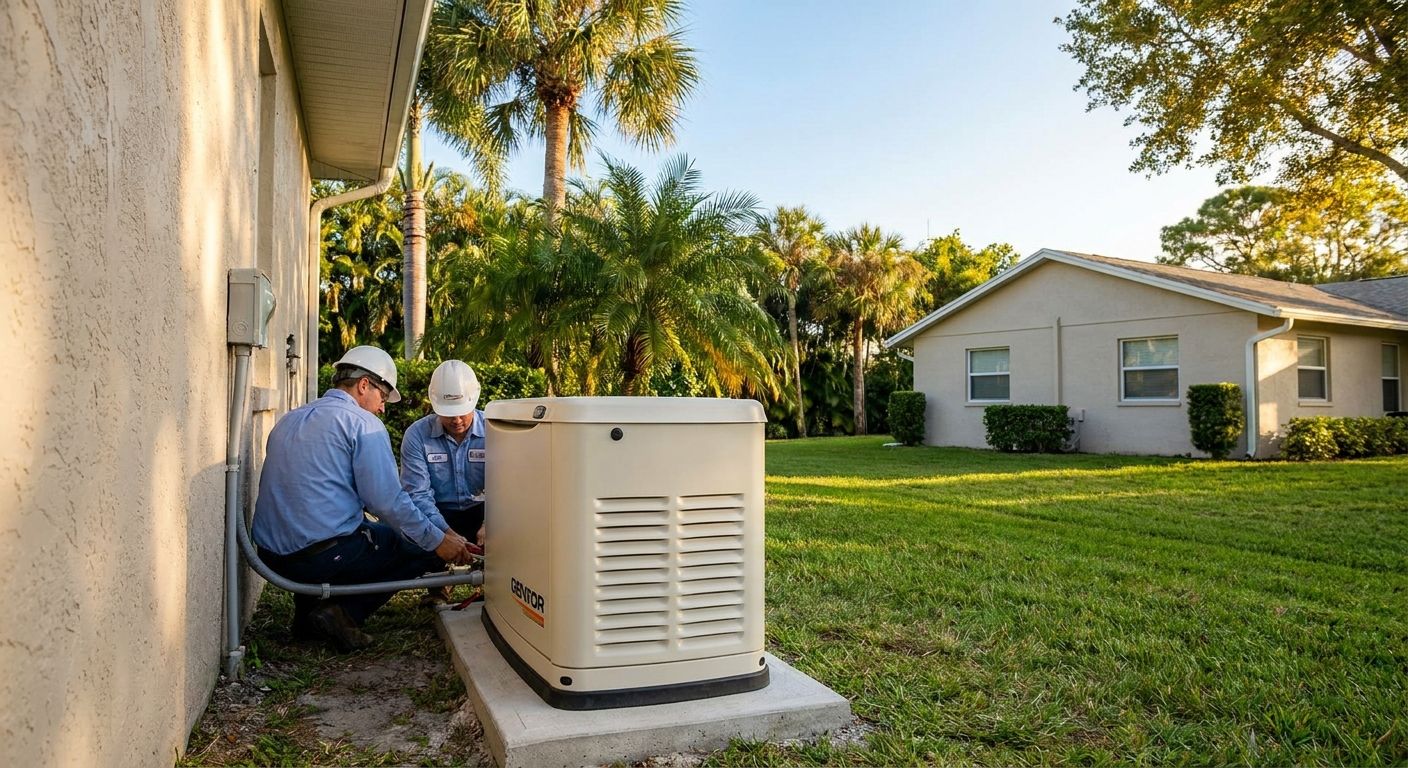
NFPA 37 and most Florida jurisdictions require 5 feet of clearance from windows, doors, and vents, plus setback from property lines that varies by county. Placing a unit too close to a bedroom window is a common DIY mistake that fails inspection and can push carbon monoxide back into the house. This is a permitting item, not a preference — get it wrong and you're moving concrete pads after the fact.
Permitting and inspection
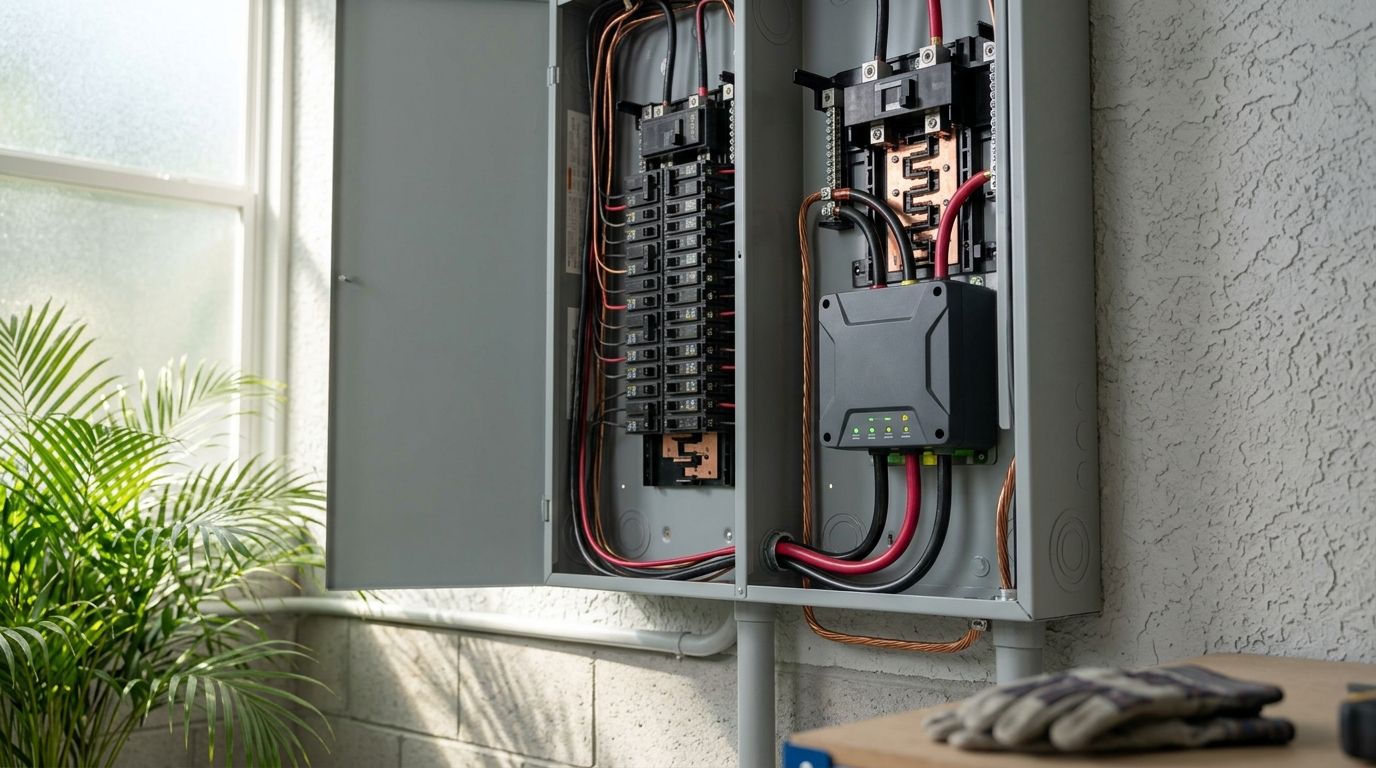
Martin County requires an electrical permit and inspection for any standby generator installation tied into your home's panel. Skipping this step voids manufacturer warranties on many units and creates a real problem if you ever sell the house and a buyer's inspector flags unpermitted work. A licensed electrician pulls the permit as part of the job, not as an add-on.
Maintenance access
Standby units need annual service — oil changes, battery checks, weekly self-test cycles — and the pad location has to leave room for a technician to actually reach the unit. Tucking a generator behind a fence or under a deck for aesthetics turns every service call into a two-hour job instead of thirty minutes.
Get your generator sized right
Licensed electrical evaluation for whole house generator installs across Stuart and the Treasure Coast.
Top picks by home size
The safe pick: 16-20 kW automatic standby
This tier covers a 1,800-2,600 square foot home running central AC, a refrigerator, well pump, and standard lighting circuits without a hitch. Most three-bedroom Stuart homes fall into this range, and it's the size an electrician defaults to after a proper load calculation. Verdict: Buy for the majority of single-family homes on the Treasure Coast.
The wildcard: portable generator with manual interlock
A portable unit paired with a manual interlock kit costs less upfront and can power select circuits — fridge, a few lights, one AC window unit — during a shorter outage. It cannot run central air and a well pump simultaneously, and someone has to be home to start it and refuel it every 8-10 hours. Verdict: Consider only as a stopgap while budgeting for a standby system, Skip it as a permanent whole house solution.
The heavy hitter: 22-26 kW automatic standby
Homes over 3,000 square feet, or homes with a pool pump and a second AC zone, need this tier to avoid nuisance shutdowns when multiple large loads cycle on together. It costs more than the 16-20 kW tier but eliminates the load-shedding compromises smaller units force. Verdict: Buy if your home has a pool, a second AC unit, or an in-home office with server equipment.
The oversized trap: 30 kW+ residential units
Unless you're running a home business with heavy equipment or a very large estate, a 30kW+ unit is more generator than your panel needs and more fuel cost than your outage frequency justifies. Verdict: Skip unless a licensed load calculation specifically calls for it — oversizing wastes fuel and upfront cost without adding reliability.
What to avoid
- Big-box sizing charts that ignore your actual panel. They estimate off square footage alone and miss high-draw appliances like well pumps and hot tubs.
- Unpermitted installs from unlicensed handymen. It's cheaper today and a liability the day you file an insurance claim or list the house.
- Skipping the annual maintenance contract. A generator that hasn't self-tested in months is the one that fails the first night of a hurricane.
Verdict comparison
| Tier | Best for | Fuel | Runs central AC + well pump together | Verdict |
|---|---|---|---|---|
| Portable + manual interlock | Short outages, tight budget | Gasoline/propane | No | Consider as stopgap |
| 16-20 kW automatic standby | 1,800-2,600 sq ft homes | Natural gas or propane | Yes | Buy |
| 22-26 kW automatic standby | 3,000+ sq ft, pool, 2nd AC zone | Natural gas or propane | Yes | Buy |
| 30 kW+ standby | Home business, large estate | Natural gas | Yes, plus extras | Skip unless load calc requires it |
FAQ
How much does a whole house generator installation cost in Stuart, FL?
Cost depends on unit size, fuel type, and panel work required, and it varies by property, so get a load calculation and site quote before budgeting. Larger homes with pools or second AC zones need bigger units and higher installation costs than a standard three-bedroom home.
Is a whole house generator worth it in Stuart, FL?
Yes, for most homeowners who've experienced multi-day outages during hurricane season, which runs June 1 through November 30. Well water systems and central AC both fail immediately without power, making standby backup a practical necessity, not a luxury, on the Treasure Coast.
What size generator do I need for a 2,000 square foot home?
Most 1,800-2,600 square foot homes need a 16-20 kW automatic standby unit to run central AC, the refrigerator, and a well pump together. An electrician should confirm the exact size with a load calculation specific to your panel and appliances.
Natural gas vs propane generator: which is better for Stuart homes?
Natural gas runs indefinitely as long as utility service holds, making it the lower-maintenance choice where gas lines already exist. Propane requires a properly sized tank, ideally rated for 48-72 hours of runtime, since slow-moving storms can knock out power for a week or more.
Do I need a permit for a generator installation in Martin County?
Yes, Martin County requires an electrical permit and inspection for any standby generator tied into a home's panel. Skipping this step can void manufacturer warranties and create problems during a home sale inspection.
How close can a generator be to my house?
NFPA 37 generally requires 5 feet of clearance from windows, doors, and vents on most residential units. Local setback requirements from property lines can add further restrictions, so placement should be confirmed before the concrete pad is poured.
How often does a standby generator need maintenance?
Standby generators need annual service including oil changes and battery checks, plus they run a brief self-test weekly on their own. A unit that skips maintenance for a year is the one most likely to fail during an actual outage.
Can a portable generator power a whole house?
No, a portable generator paired with a manual interlock kit can run select circuits but cannot carry central AC and a well pump simultaneously. It works as a short-term stopgap, not as a permanent whole house generator installation.
One last thing
The detail most homeowners miss until it's too late: a generator's weekly self-test cycle only proves the unit starts, not that it can carry your full load under real conditions. Ask whoever installs your system to run an actual load test at commissioning in 2026, not just a startup check — that's the difference between a generator that starts and one that actually keeps your AC running through a three-day outage.