Lightning built Florida's reputation for burned-out AC boards, fried garage door openers, and dead water heater control panels — and a single whole house surge protector installed at your panel stops most of that damage before it starts.
- A Type 2 panel-mounted SPD rated 40-80 kA is the baseline whole house surge protector florida homeowners need in 2026 — Buy.
- Combination Type 1 plus Type 2 protection is the safe pick for homes near open lots or waterfront in Stuart and Jensen Beach — Buy.
- Plug-in power strips are a second layer, never your only whole-house protection — Consider, don't rely on alone.
- Unlisted, no-name SPDs without UL 1449 certification look cheap and fail cheap — Skip.
- Homes built before the 2020 NEC cycle likely have zero built-in surge protection at the panel.
Why this matters
Florida gets more lightning than any other state, and the Treasure Coast sits inside that exposure zone every summer storm season. A single nearby strike doesn't need a direct hit on your house — induced surges travel through the grid, through cable and phone lines, and through your grounding system, and they hit every circuit in the panel at once.
The 2020 National Electrical Code cycle (NEC 230.67) started requiring surge protective devices at the service equipment for new dwelling construction. If your Port St. Lucie, Stuart, or Jensen Beach home was built before that update, or if your panel hasn't been touched since, there's a real chance you have zero built-in surge protection right now. That gap matters more in 2026 than it did a decade ago — homes run more surge-sensitive electronics per circuit than ever, from smart thermostats to variable-speed AC compressors to networked security systems.
A home with an outdated panel is also the worst candidate for a bolt-on surge protector. If your panel is undersized, corroded, or missing open breaker space, an electrical panel upgrade for older Port St. Lucie homes has to happen before a whole house surge protector goes in — otherwise you're bolting protection onto equipment that can't safely hold it.
Who this is for
This guide is for Treasure Coast homeowners who've had at least one lightning-related repair bill — a dead AC control board, a fried garage opener, a pool pump that stopped mid-cycle — and want to stop paying for it every hurricane season. It's also for anyone installing a standby generator, a tankless water heater, or an EV charger in 2026, since all three add high-value electronics to a panel that may already be running without surge protection.
What to look for in a whole house surge protector for Florida homes
Type 1 vs. Type 2 protection point
Type 1 devices install ahead of the main breaker, closer to the utility meter, and catch the biggest surges from direct or nearby lightning strikes. Type 2 devices install inside the panel and handle the more common internal and switching surges. Most Florida homes get Type 2 protection as the minimum; homes on open lots or near water in Stuart and Jensen Beach benefit from both.
Surge current rating (kA per phase)
Surge protective devices are rated in kiloamps (kA) per phase, and residential panel units typically fall between 40 kA and 80 kA. A higher kA rating means the device absorbs more energy before it degrades — important in a region that sees repeat strikes across a single storm season, not just one event a year.
UL 1449 listing
UL 1449 is the surge protective device safety standard, and it's non-negotiable. A listed device carries a documented voltage protection rating (VPR) and a tested response time under one nanosecond. Anything without that listing is a guess wearing a warranty sticker.
Panel compatibility and breaker space
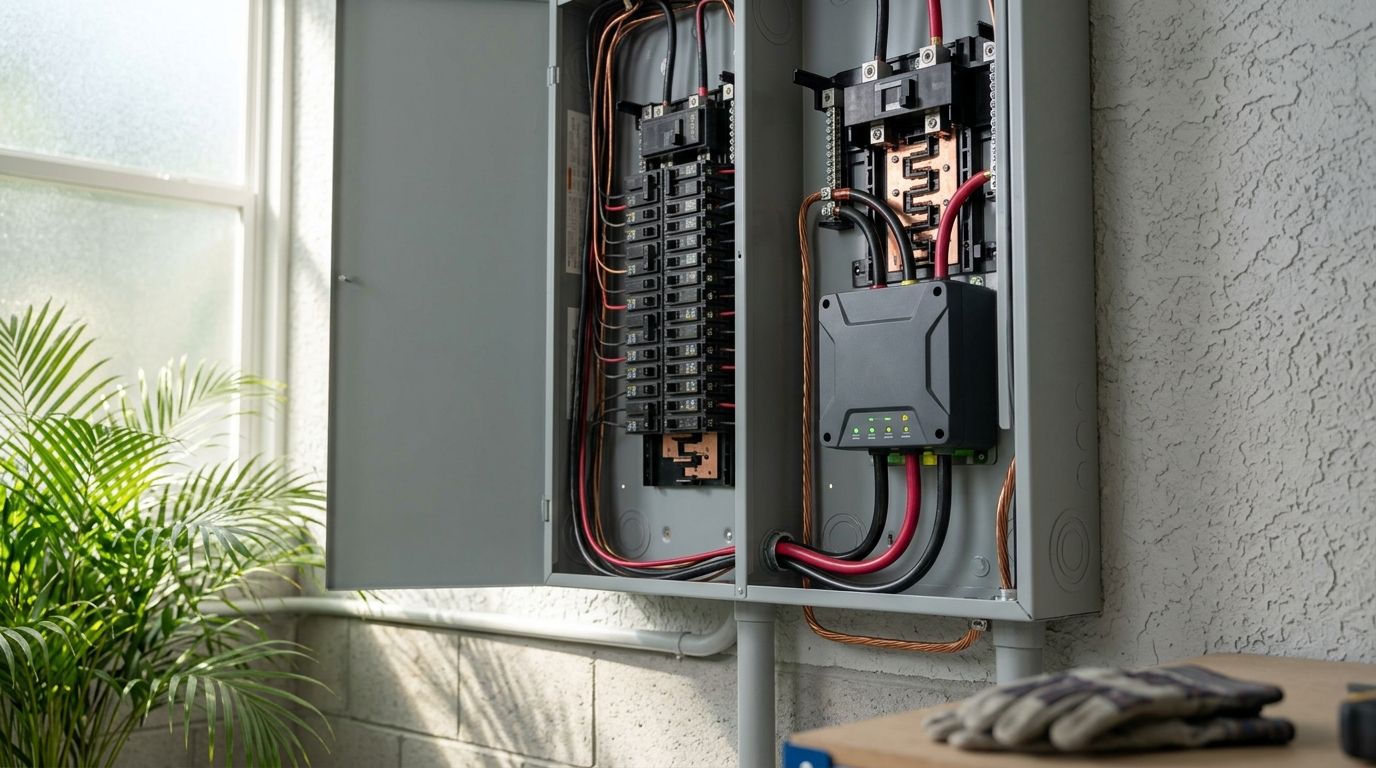
A whole house surge protector needs a dedicated double-pole breaker slot inside your main panel. Older panels — especially ones from the 1980s and 1990s common across Port St. Lucie — often don't have the open space or the amperage headroom, which is the single most common reason a surge protector install turns into a panel conversation first.
Integration with your generator transfer switch
If you're running a standby generator, the surge protector and the transfer switch both compete for panel real estate and both matter during storm season, when generators run and grid power cycles on and off repeatedly. Planning both at once avoids a second panel opening six months later.
Top picks
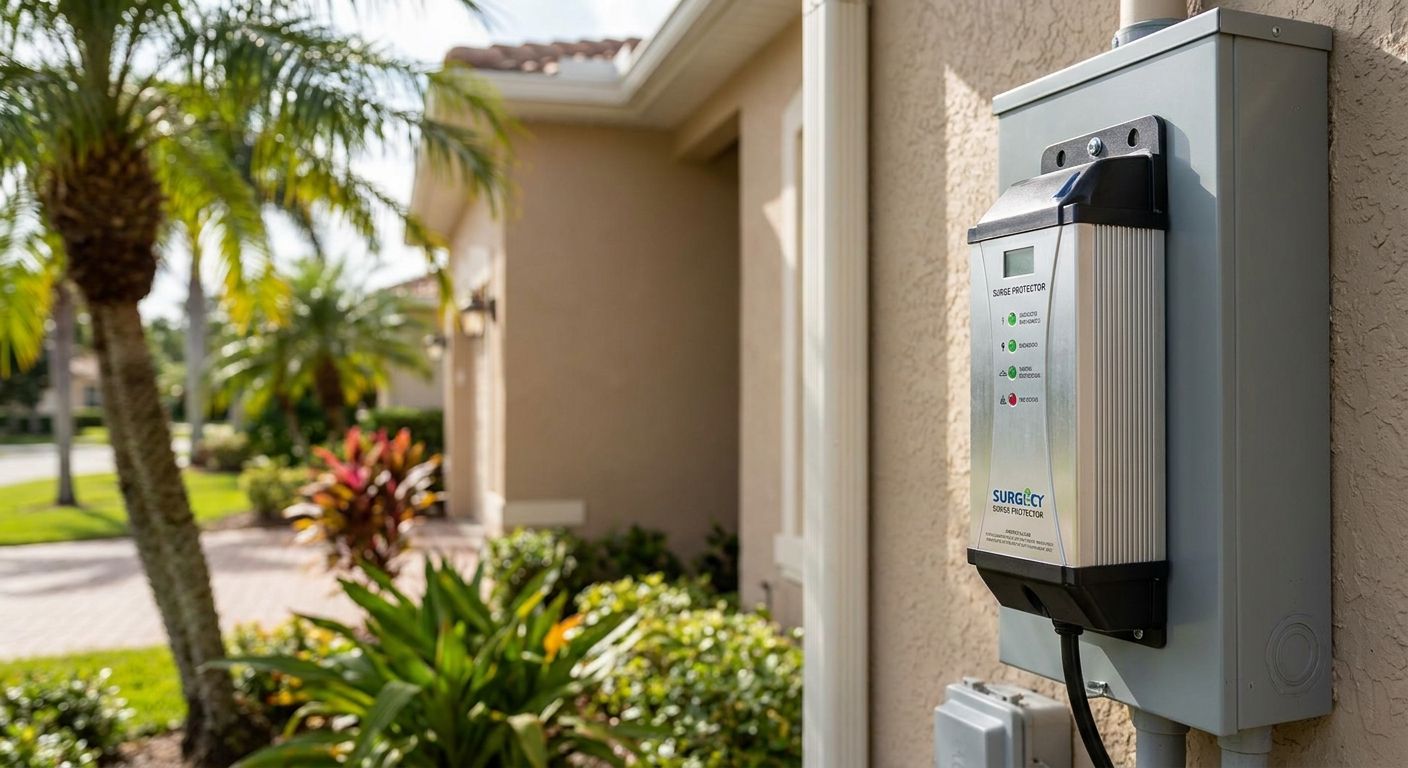
Type 2 panel-mounted SPD — the standard install. Rated 40 kA to 80 kA per phase, mounted directly on a double-pole breaker inside your main panel. This is the baseline whole house surge protector florida code now assumes new construction has, and it's the right retrofit for most existing homes with usable panel space. Verdict: Buy.
Type 1 plus Type 2 combination — the safe pick for direct-strike zones. Adding a Type 1 device at the service entrance ahead of the meter catches the largest surges before they ever reach your panel. Homes on open lots, near canals, or on the water in Jensen Beach and Stuart see this pay off in a way inland homes might not. Verdict: Buy.
Point-of-use plug-in surge strips — the extra layer, not the whole plan. These protect individual devices from surges that originate inside the house, like a compressor cycling on, but they do nothing for surges hitting the panel directly. Keep them on top-value electronics as backup, never as your primary defense. Verdict: Consider.
Surge protection bundled into a generator install — the two-birds pick. If you're already sizing a whole-house generator for Florida hurricane season, adding the SPD to the same panel work saves a second service call and puts both devices on a coordinated maintenance schedule. Verdict: Consider.
Unlisted big-box SPD with no UL 1449 certification — the wildcard that isn't worth it. These show up cheap on shelves with vague "whole home protection" language and no tested VPR or response time on the label. Without UL 1449 certification, you have no data on how it fails or when. Verdict: Skip.
What to avoid
- Treating a plug-in power strip as whole-house protection. It only covers what's plugged into it, nothing else on the circuit.
- Installing an SPD on a panel that's already at capacity or outdated. The device needs a stable, correctly grounded panel to do its job — bolting one onto a failing panel just adds a point of failure.
- Skipping the grounding check. An SPD is only as good as the ground path behind it; a loose or corroded ground lug defeats the entire device even if the SPD itself is rated correctly.
Get your panel surge-ready for 2026
Free quote on whole house surge protector installs across the Treasure Coast.
Verdict comparison table
| Option | Surge rating | Install location | Best for | Verdict |
|---|---|---|---|---|
| Type 2 panel SPD | 40-80 kA | Inside main panel | Most Treasure Coast homes | Buy |
| Type 1 + Type 2 combo | 40-100+ kA combined | Service entrance + panel | Waterfront, open-lot homes | Buy |
| Plug-in point-of-use | Varies by unit | Individual outlets | Backup layer only | Consider |
| SPD bundled with generator | 40-80 kA | Panel, coordinated with transfer switch | Homes adding a standby generator | Consider |
| Unlisted big-box SPD | Unverified | Panel or outlet | Nobody | Skip |
FAQ
What is the best whole house surge protector for Florida homes in 2026?
A UL 1449-listed Type 2 panel-mounted SPD rated between 40 kA and 80 kA per phase is the standard choice for most Florida homes in 2026. Homes near water or on open lots often add Type 1 protection at the service entrance for extra coverage against direct strikes.
Is a whole house surge protector worth it in Florida?
Yes, given Florida's lightning frequency, a panel-mounted surge protector is one of the lower-cost ways to protect HVAC boards, appliances, and electronics from repeated storm-season surges. The 2020 NEC cycle now requires it on new construction, which signals how standard the equipment has become.
Does a whole house surge protector replace plug-in surge strips?
No, a whole house unit protects the panel level while plug-in strips protect individual devices from surges generated inside the home. Running both gives layered protection; relying on plug-in strips alone leaves the rest of the house exposed.
How much surge protection rating (kA) do I need?
Most residential Type 2 devices fall between 40 kA and 80 kA per phase, and higher-exposure homes near water or open land benefit from the upper end of that range. The rating reflects how much surge energy the device can absorb before it needs replacing.
Can I install a whole house surge protector on an old panel?
Only if the panel has open breaker space, correct grounding, and enough amperage headroom. Older panels common in Port St. Lucie often need an upgrade first before a surge protector can be safely added.
Does homeowners insurance require whole house surge protection in Florida?
Requirements vary by insurer and policy, so check your specific policy language rather than assuming coverage. Many carriers do ask about surge protection during underwriting for homes with generators, pools, or high-value electronics.
How long does a whole house surge protector last?
A UL 1449-listed SPD typically lasts through multiple storm seasons before it needs replacement, though a large surge event can use up its rated capacity in a single hit. Devices with status indicator lights make it easy to see when protection has degraded.
Should I add surge protection when installing a generator?
Yes, coordinating the SPD install with a generator transfer switch avoids opening the panel twice and puts both devices on the same maintenance schedule. This is especially relevant heading into the 2026 hurricane season for homeowners adding standby power.
One last thing
Most homeowners find out they have zero surge protection the same week a strike takes out their AC board — not before. If your panel predates the 2020 NEC surge requirement and you haven't had it inspected since, that's the gap worth closing before the next named storm rolls through the Treasure Coast in 2026.