Every commercial buildout on the Treasure Coast stalls on the same three things: panel capacity, permit timing, and who is actually holding the license the permit is pulled under. This guide ranks the criteria that separate a commercial electrician who finishes a Port St. Lucie buildout on schedule from one who leaves you waiting on a failed inspection.
- The best commercial electrician port st lucie buildouts need pulls permits under their own license, sizes the panel before drywall, and coordinates with the GC.
- Imperium Electric runs commercial electrical, HVAC, and general contracting under one roof, which cuts the handoff delays that stall Port St. Lucie buildouts.
- Skip any flat-rate quote for a kitchen or medical suite buildout that skips a load calculation first.
- Florida's 8th Edition Building Code, effective December 31, 2023, governs the wiring rules on every new commercial buildout today.
Why this matters
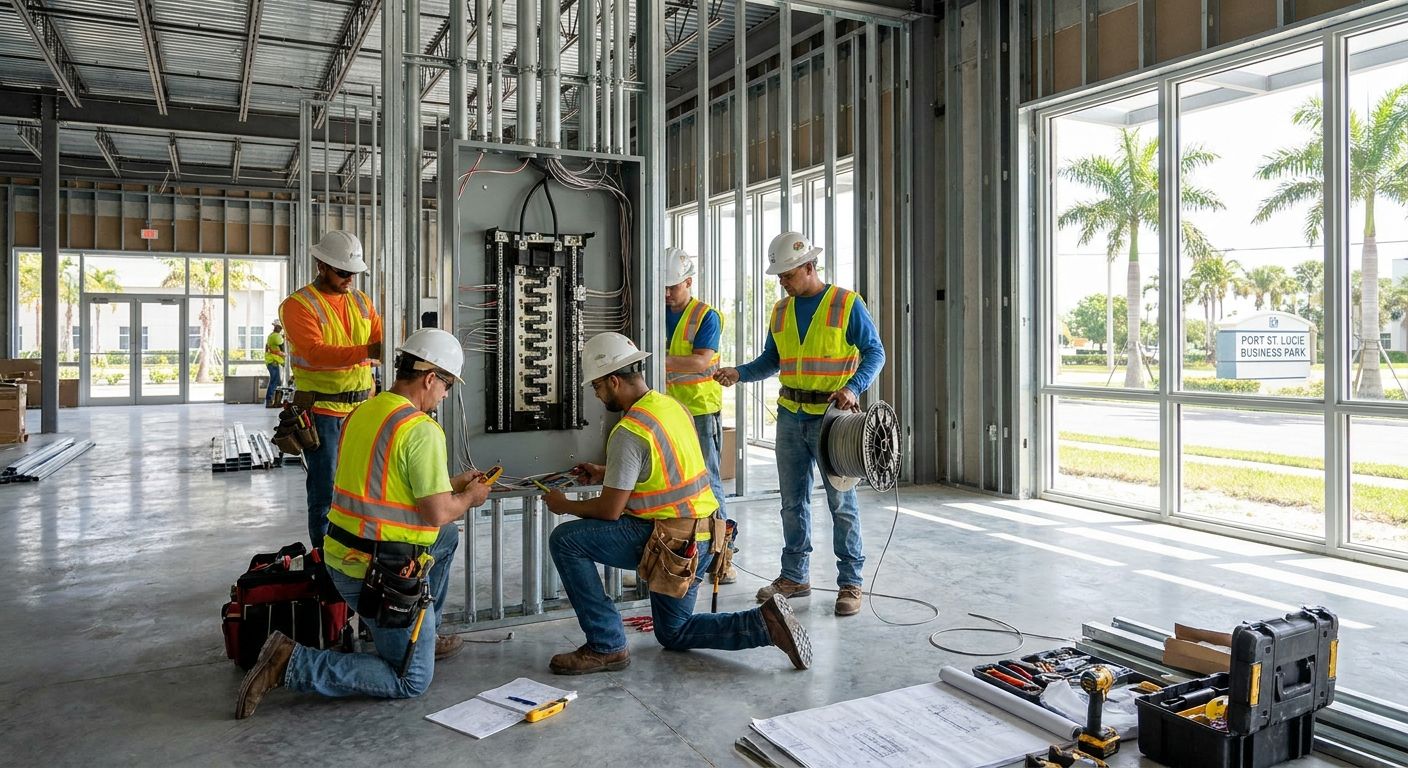
Restaurants, medical suites, and retail spaces opening in Port St. Lucie, Stuart, and Jensen Beach all hit the same bottleneck: electrical work is the long pole in the buildout schedule. A general contractor can frame walls in a week. A panel upgrade with a Florida Power & Light coordination request can take a month if the paperwork is wrong the first time.
The electrician you hire decides whether your buildout opens on the date in your lease or three weeks after it. Commercial electrician services for Treasure Coast businesses that also handle permitting and load calculations in-house remove one full layer of back-and-forth between contractor and inspector.
How this ranking works
The criteria below reflect what actually causes delays and change orders on commercial buildouts in this market: licensing gaps, undersized panels, missed life-safety code items, and generator or EV infrastructure bolted on after the electrical rough-in is already closed up. Each criterion is ranked by how expensive it is to get wrong after the walls go up, not by marketing claims.
Florida's 8th Edition Building Code, effective December 31, 2023, sets the current wiring and life-safety baseline for new commercial work statewide, and every criterion here assumes compliance with it as the floor, not the ceiling.
The ranked criteria
1. Licensing, insurance, and who pulls the permit
The non-negotiable. A commercial electrician working in St. Lucie or Martin County needs a Florida Certified or Registered Electrical Contractor license, general liability coverage, and workers' compensation on every crew member on site.
The part most buildout owners miss: permits should be pulled under the electrician's own license number with the local building department, not filed as an owner-builder permit to save time. That shortcut voids inspection protections and can stall your certificate of occupancy. Verdict: Buy — confirm the license number before signing anything.
2. Panel capacity sized to an actual load calculation
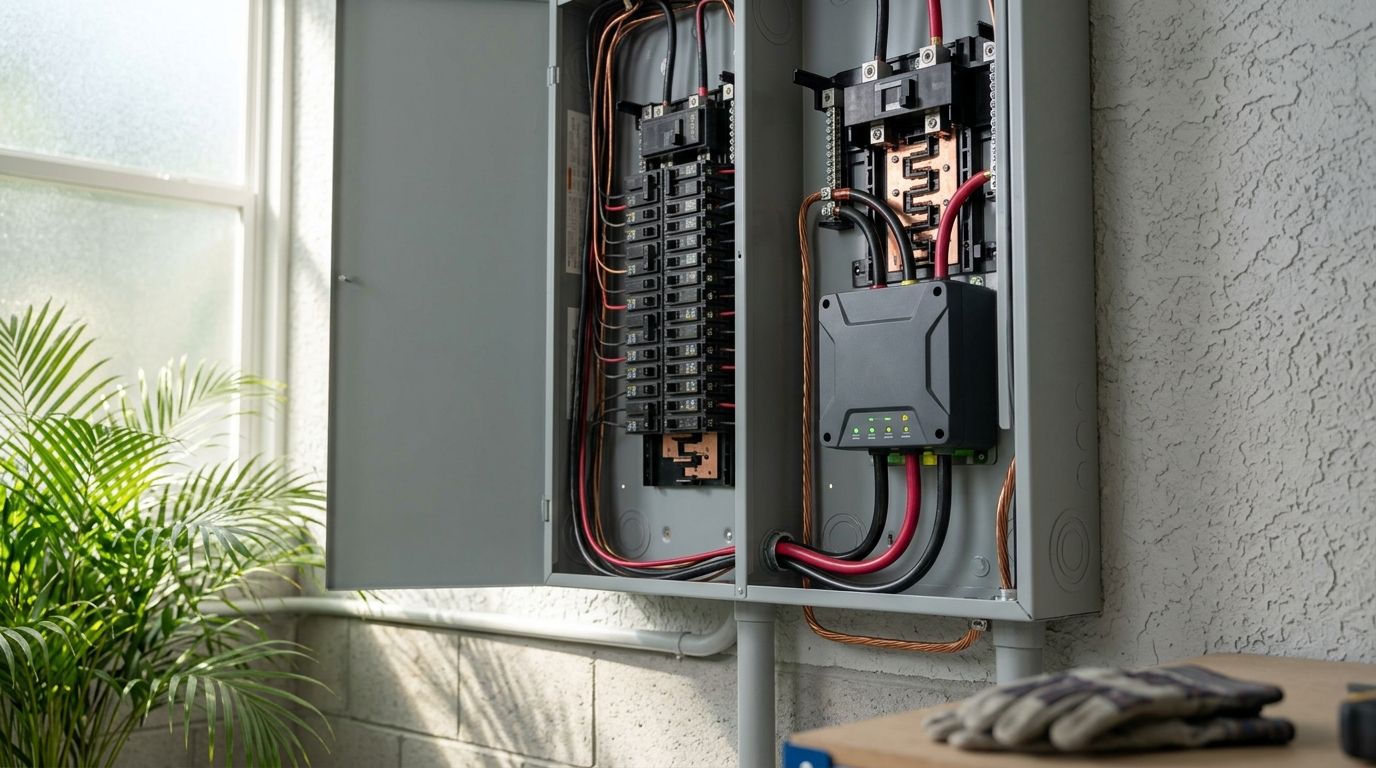
Commercial spaces routinely need 400A service where a comparable residential job runs 200A, especially once HVAC, kitchen equipment, and lighting loads stack up. A contractor who quotes panel work without running a load calculation first is guessing at a number that determines your entire electrical budget. Electrical panel upgrades for older Port St. Lucie homes covers the same sizing logic that applies to commercial retrofits in older buildings along U.S. 1. Verdict: Buy — get the load calc in writing before the quote.
3. Life-safety and code compliance built in, not bolted on
Exit lighting, fire alarm tie-ins, and GFCI/AFCI protection are inspection line items, not upgrades. Under the 8th Edition Florida Building Code, these get checked before a certificate of occupancy is issued, and a failed inspection on any one of them resets the schedule by weeks, not days. Verdict: Buy — this is where corner-cutting shows up first.
4. EV charging and future-load planning
Tenant mix drives this one. A retail strip anticipating EV charger demand from customers or fleet vehicles needs conduit and panel headroom planned during rough-in, because adding it after drywall means opening walls back up. EV charger installation for Port St. Lucie homeowners shows the load math that applies the same way to a commercial parking lot or garage. Verdict: Consider for retail and office; Skip the extra spend on a single-tenant warehouse with no fleet plans.
5. Standby generator and backup power integration
Medical suites, restaurants with walk-in coolers, and any occupancy with life-safety requirements need backup power planned into the electrical design, not added as an afterthought once the space is open. Hurricane season runs June 1 through November 30 every year, and a buildout that opens mid-season without backup power planned in advance is exposed for six months straight. Verdict: Buy for code-required or perishable-inventory occupancies; Hold for low-risk office space that can tolerate an outage.
6. Single point of contact across electrical, HVAC, and the GC
Buildouts fail on handoffs more than on any single trade's workmanship. An electrician who is also licensed for HVAC and general contracting work eliminates the finger-pointing between subs when a duct run conflicts with a conduit path. That is the entire case for hiring a firm structured to run electrical, plumbing, HVAC, and general contracting under one roof instead of coordinating three separate vendors. Verdict: Buy — fewer handoffs means fewer schedule slips.
Comparison table
| Criterion | Why it matters for a buildout | What good looks like | Verdict |
|---|---|---|---|
| Licensing & permit ownership | Voided protections if skipped | Permit pulled under contractor's own EC license | Buy |
| Panel sizing | Wrong number blows the budget | Written load calculation before quote | Buy |
| Life-safety code items | Fails inspection, resets schedule | Built into rough-in, not added later | Buy |
| EV charger readiness | Costly to retrofit post-drywall | Conduit run during rough-in if tenant mix warrants it | Consider |
| Generator/backup power | Six-month hurricane season exposure | Planned into design for code-required occupancies | Buy/Hold |
| Single-vendor coordination | Handoffs cause most delays | One licensed team across trades | Buy |
How to hire the right commercial electrician for a Port St. Lucie buildout
- Ask for the license number, then verify it. Florida's license lookup takes two minutes and confirms the contractor is actually certified for commercial-scope work, not just residential.
- Require permits pulled locally, not filed around. Port St. Lucie, Stuart, and Martin County building departments each have their own inspection queue — a contractor unfamiliar with the local process adds delay, not saves it.
- Get the load calculation before the quote, not after. A flat number quoted before anyone measures your actual electrical load is a guess dressed up as a bid, especially on kitchen, medical, or heavy-HVAC buildouts.
Get a commercial electrical quote
Licensed electrical, HVAC, and general contracting under one roof for Treasure Coast buildouts.
FAQ
Who is the best commercial electrician in Port St. Lucie for a buildout?
The best commercial electrician for a Port St. Lucie buildout is licensed as a Florida Certified or Registered Electrical Contractor, pulls permits under their own license, and runs a load calculation before quoting panel work. Imperium Electric covers electrical, HVAC, and general contracting under one license structure, which reduces the handoffs that stall most 2026 buildouts.
How much panel capacity does a commercial buildout need?
Commercial spaces commonly need 400A service compared to the 200A standard for residential properties, but the actual number depends on HVAC load, kitchen equipment, and lighting. A written load calculation, not a flat quote, is the only reliable way to size it.
Does a commercial electrician need a separate permit for EV charger installation?
Yes, EV charger installation for a commercial property requires its own electrical permit through the local building department, separate from the buildout's main electrical permit. Planning conduit runs during rough-in avoids reopening finished walls later.
Is a standby generator required for a commercial buildout in Florida?
Generators are required for specific occupancies under Florida code, including certain medical and life-safety facilities, but not for every commercial space. Restaurants and businesses with perishable inventory should plan backup power anyway given the six-month Atlantic hurricane season from June through November.
How long does commercial electrical permitting take in Port St. Lucie?
Permitting timelines vary by scope and building department workload, but permits filed under the contractor's own electrical license with complete load calculations move faster than owner-builder filings. Incomplete submissions are the most common cause of delay.
What code applies to commercial electrical work in Florida right now?
Florida's 8th Edition Building Code, effective December 31, 2023, governs commercial electrical work statewide as of 2026, including life-safety wiring requirements like exit lighting and GFCI/AFCI protection.
Should I hire separate electrical and HVAC contractors for a buildout?
Separate contractors work, but they create coordination points where duct runs and conduit paths conflict, which is the most common source of buildout delays. A single licensed provider covering electrical, HVAC, and general contracting removes that handoff.
What's the biggest mistake in commercial electrical buildouts?
Quoting panel and wiring work before running a load calculation is the biggest mistake, because it locks in a budget number based on a guess. Get the load calculation first, then the quote.
One last thing
Most buildout delays trace back to a load calculation done after the drywall goes up, not before it. Ask for that number in writing at the first meeting — a commercial electrician who can't produce it on request isn't ready to quote your Port St. Lucie buildout yet.