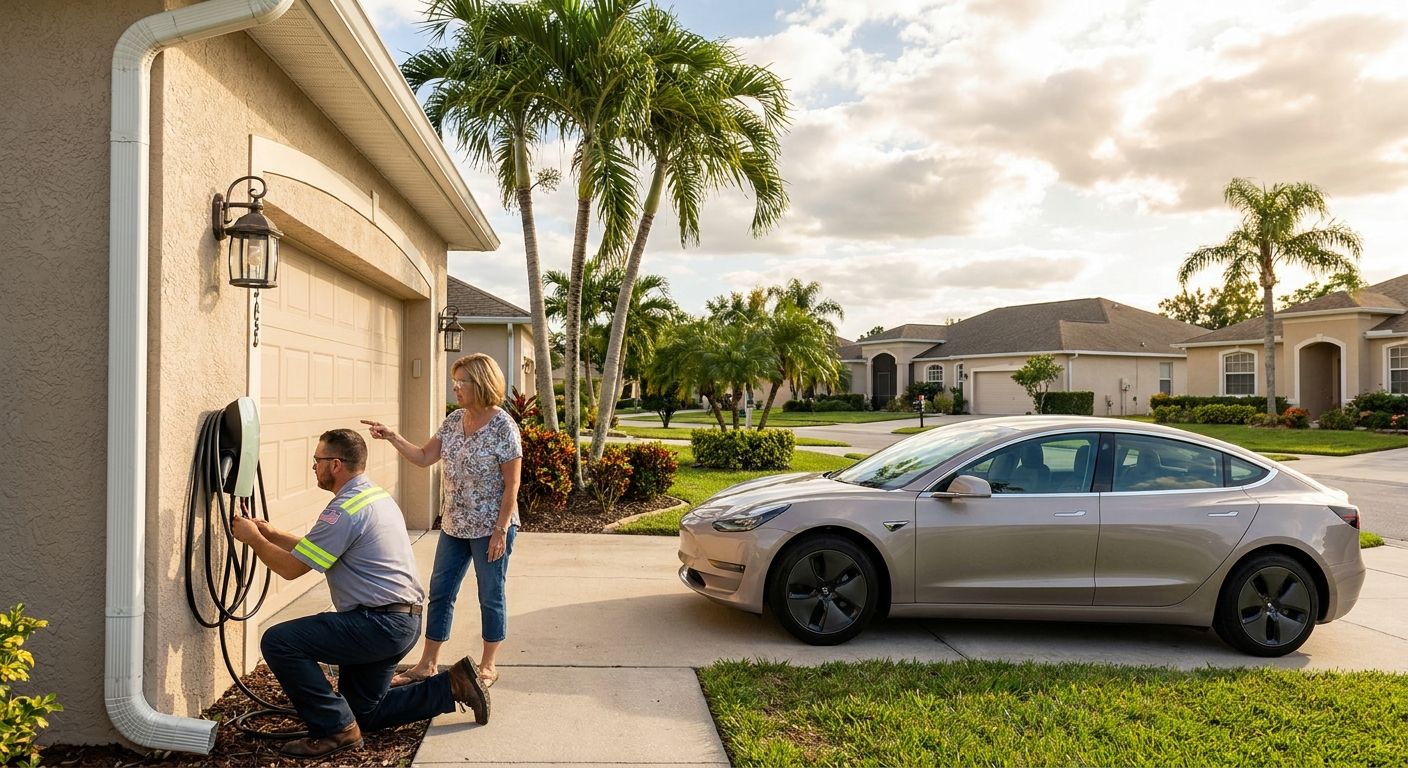
EV charger installation in Port St. Lucie comes down to one question before any wiring gets pulled: does your panel have room for a 240-volt circuit that can carry 40 to 50 amps every night for years? Get that answer first and the rest of the install is straightforward.
- EV charger installation in Port St. Lucie starts with a panel load calculation, not the charger spec sheet. Get the panel checked first.
- A hardwired 48-amp Level 2 charger on a dedicated 240V circuit is the safe pick for single-family homes in 2026. Buy.
- NEMA 14-50 outlet installs cost less upfront but hold up worse outdoors on the Treasure Coast. Consider for garage-only setups.
- Skip any contractor doing ev charger installation port st lucie work without pulling a permit — St. Lucie County inspections catch undersized wiring before it becomes a fire hazard.
- Homes built before 2000 with a 100-amp panel usually need a panel upgrade alongside the charger, not instead of it.
Why this matters
More homeowners across Port St. Lucie, Stuart, and Jensen Beach are plugging in overnight instead of stopping at a public station, and that shifts real load onto a panel that was never sized for it. A lot of Treasure Coast homes built in the 1980s and 1990s still run 100-amp service. Add central AC, a pool pump, and a range, and there's not much headroom left for a 50-amp EV circuit.
The fix isn't complicated, but it has to be sequenced right: load calculation, then circuit design, then permit, then install, then inspection. Skip a step and you either get an electrician who won't sign off, an inspector who red-tags the job, or a breaker that trips every time you charge and run the dryer at once. Imperium Electric handles this sequence daily across the Treasure Coast, and the pattern repeats: the charger is rarely the hard part, the panel is.
Who this is for
This guide is for homeowners in Port St. Lucie, Stuart, or Jensen Beach who own or are about to buy an EV and want Level 2 charging at home instead of relying on public stations. It's most useful if your home was built before 2005, if you're not sure what amperage your panel carries, or if you're weighing a hardwired charger against a plug-in unit. If you're a landlord or manage a multi-unit property, the calculus changes — see the commercial section below before you install anything.
What to look for in EV charger installation for Port St. Lucie
Panel capacity and load calculation
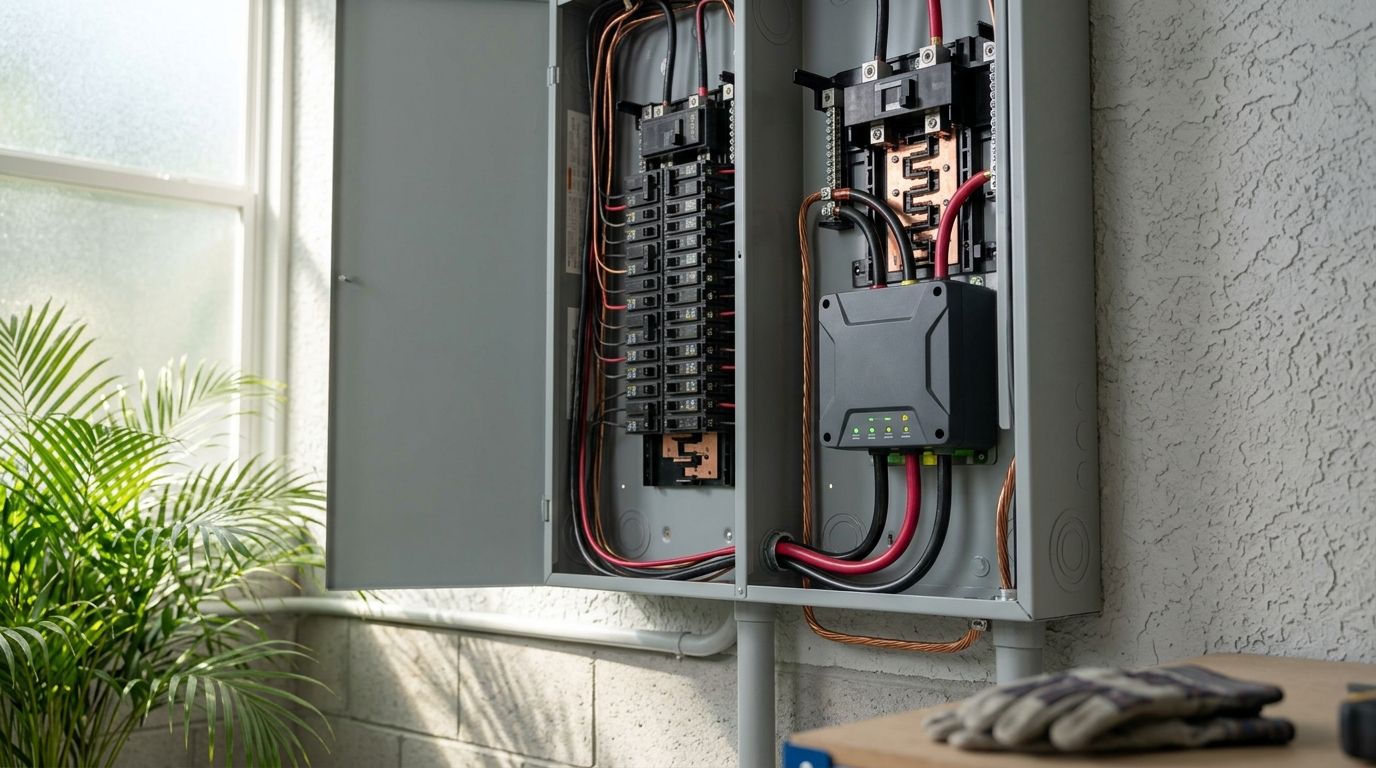
A 40-amp EV circuit at full draw adds meaningfully to your total household load, and the National Electrical Code requires a load calculation before that circuit gets added — not a guess. A 100-amp panel with an electric range, AC, and a pool pump already running close to capacity often can't absorb a 50-amp EV circuit without a panel upgrade for older Port St. Lucie homes first. A 150 or 200-amp panel usually has room without any upgrade at all.
Dedicated 240V circuit sized to the charger
Level 2 chargers run on 240 volts and most residential units call for a 40 to 50-amp dedicated circuit with nothing else sharing that breaker. Undersizing the wire gauge to save cost on the front end is the single most common corner-cutting move on cheap installs, and it shows up later as breaker trips or heat at the panel.
NEC Article 625 and GFCI compliance
Electric vehicle supply equipment falls under NEC Article 625, which sets requirements for disconnects, GFCI protection, and conductor sizing specific to EV charging. A licensed electrician pulling permits in Port St. Lucie has to meet this code, not just general wiring code — it's a different section with its own rules.
Permit and inspection through the local building department
Any new 240V circuit for EV charging in Port St. Lucie requires a permit and a final inspection. This isn't optional paperwork — it's what protects you if there's ever a fire claim or a home sale inspection that flags unpermitted electrical work. A contractor who offers to skip the permit to save time is offering to skip your protection too.
Weatherproofing for garage vs. outdoor mounting
Treasure Coast humidity and salt air are hard on outdoor electrical equipment. A charger mounted outside needs a NEMA-rated enclosure and weatherproof disconnect; a garage-mounted unit doesn't need the same hardware but still needs to sit clear of moisture and direct sun exposure through a garage door left open in summer.
Backup power coordination
If you're already running or planning a standby generator, the EV charger has to be accounted for in that load calculation too. A whole-house generator installation for Port St. Lucie homeowners sized before the EV circuit existed may not carry both loads during an outage — that's worth checking before hurricane season, not during it.
Top picks: EV charger installation options for Port St. Lucie homes
The safe pick: hardwired 48-amp Level 2 charger
A hardwired unit on a dedicated 60-amp breaker feeding a 48-amp continuous load is the standard setup for single-family homes in 2026. No plug, no outlet to wear out, and it's rated for outdoor or garage mounting depending on the enclosure. Verdict: Buy for anyone planning to keep the car and the house for more than a few years.
The flexible pick: NEMA 14-50 outlet install
A 50-amp NEMA 14-50 outlet lets you plug in a portable Level 2 charger and swap it if you change vehicles or chargers later. It costs less to install than a hardwired unit but the outlet and plug connection is a wear point outdoors, and salt air speeds up corrosion on exposed contacts. Verdict: Consider for garage installs only — skip it for anything mounted outside on the Treasure Coast.
The older-home fix: panel upgrade paired with the charger
If your home runs 100-amp service and you want a 50-amp EV circuit, doing the panel upgrade for older Port St. Lucie homes at the same time as the charger install saves a second permit, a second inspection, and a second service call. Verdict: Buy — bundling these two jobs is cheaper than doing them as separate projects six months apart.
The wildcard: multi-charger or future-proofed circuit
Some homeowners install a 100-amp subpanel in the garage specifically to run one EV circuit now and leave room for a second vehicle or a battery backup later. It costs more upfront than a single dedicated circuit. Verdict: Consider only if a second EV or home battery is a real near-term plan, not a maybe.
Get your panel checked before you buy a charger
Licensed Treasure Coast electricians confirm capacity and permit needs in one visit.
What to avoid
- Extension cords or adapters for daily charging. They're not rated for the sustained 240V load a Level 2 charger draws for hours every night, and they're a fire risk regardless of what the packaging claims.
- Skipping the permit to save a week. An unpermitted 240V circuit shows up on home inspections at resale and can void insurance coverage on an electrical fire claim.
- Installing the charger before checking the panel. A charger installed on an already-maxed 100-amp panel either trips constantly or forces a second service call for the upgrade you should have done first.
Verdict comparison
| Option | Circuit size | Best for | Permit complexity | Verdict |
|---|---|---|---|---|
| Hardwired 48A Level 2 | 60A breaker | Long-term single-family use | Standard | Buy |
| NEMA 14-50 outlet | 50A | Garage installs, flexible chargers | Standard | Consider |
| Panel upgrade + charger | 40-50A after upgrade | 100A panels, older PSL homes | Two permits, one visit | Buy |
| Subpanel for future EVs | 100A subpanel | Multi-EV or battery backup plans | Higher complexity | Consider |
FAQ
How much does EV charger installation cost in Port St. Lucie?
Cost depends on whether your panel has spare capacity or needs an upgrade first, plus permit fees set by the local building department. Get a load calculation and a written quote before comparing numbers between contractors.
Do you need a permit for EV charger installation in Port St. Lucie?
Yes, any new 240V circuit for EV charging requires a permit and final inspection in Port St. Lucie. Unpermitted work can create problems at resale and with insurance claims tied to electrical fires.
What size panel do you need for a Level 2 EV charger?
A 150 or 200-amp panel usually has enough headroom for a 40-50 amp EV circuit alongside normal household loads. A 100-amp panel often needs a load calculation and possibly an upgrade first, especially in older Port St. Lucie homes.
Is a 100-amp panel enough for an EV charger?
It depends on what else is already running on that panel. A 100-amp panel with central AC, an electric range, and a pool pump is frequently too tight for an added 40-50 amp EV circuit without an upgrade.
What's the difference between Level 1 and Level 2 home charging?
Level 1 uses a standard 120V outlet and adds roughly 3-5 miles of range per hour, while Level 2 runs on 240V and adds roughly 25 miles of range per hour. Most homeowners who drive daily choose Level 2 for the faster overnight charge.
Can a hardwired charger and an outlet-based charger both work for daily driving?
Both can fully charge a car overnight on a 240V circuit, but a hardwired unit has no plug connection to wear down outdoors. An outlet-based setup gives more flexibility if you plan to switch charger brands later.
Does adding an EV charger affect a home generator setup?
Yes, an EV circuit adds to the total load a standby generator needs to carry during an outage. Any generator sized before the EV charger existed should be rechecked against the new total load.
How long does EV charger installation take?
A straightforward install with an already-sized panel typically takes a single day including the electrical work. Add a panel upgrade to the same job and it extends to a second visit for permitting and inspection scheduling.
One last thing
The part homeowners underestimate isn't the charger — it's how little headroom a 100-amp panel actually has once AC, a range, and a pool pump are already running. Get the load calculation done before you fall in love with a specific charger model; it changes the whole scope of the job, and it's the difference between a one-visit install and a two-permit project.