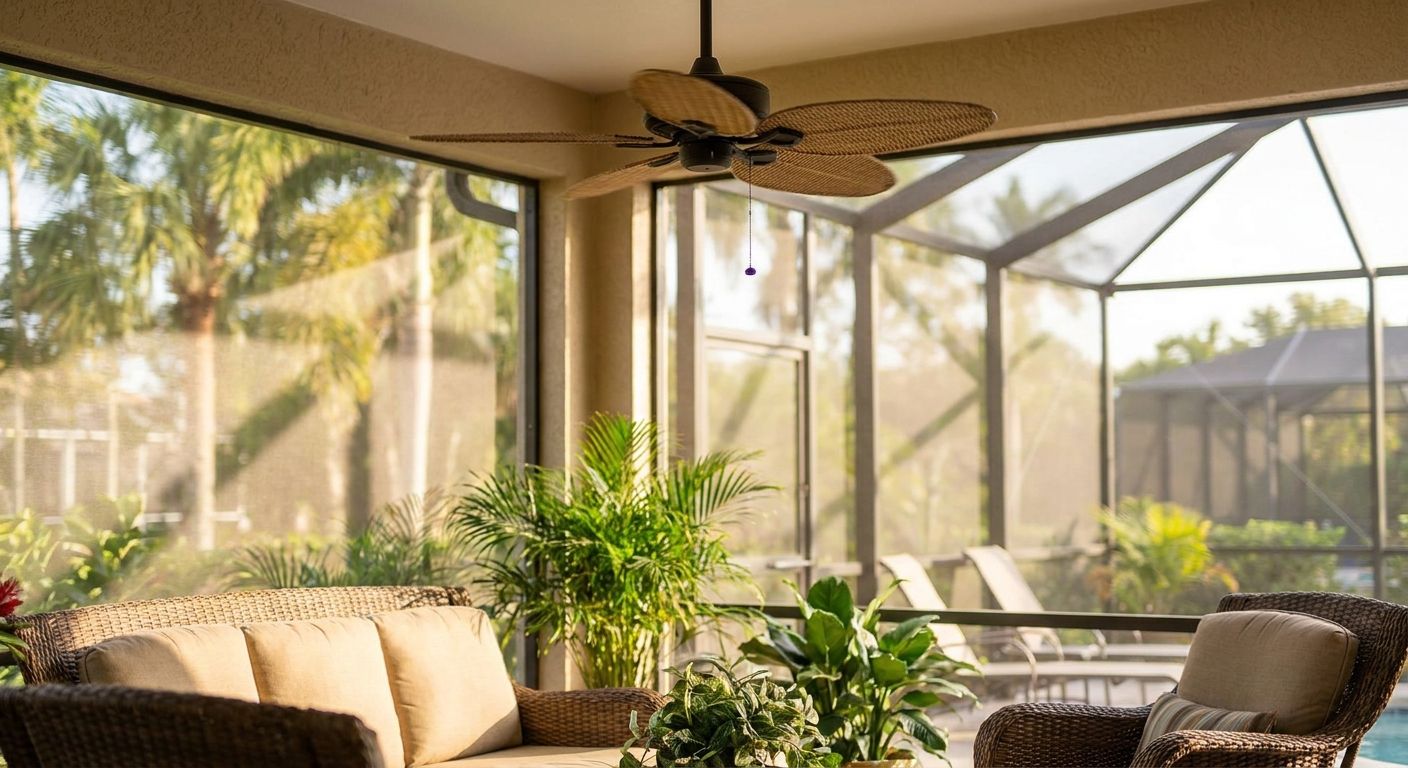
Florida lanais and screened porches take a beating from salt air, humidity, and afternoon storms — and a ceiling fan rated for an indoor family room will corrode or seize up fast in that environment. Ceiling fan installation for Florida lanais comes down to matching the fan's UL rating and mounting hardware to how exposed the space actually is.
- Ceiling fan installation florida lanai projects need UL 507 wet-rated fans on open porches, damp-rated on screened lanais — mixing them up voids warranties.
- Fans over 144 square feet of porch need 50 to 60 inch blade spans or a second fan; undersized fans just push hot air around.
- Blade tips must clear the floor and any seating by at least 7 feet under NEC guidance — check downrod length before buying.
- Existing porch light boxes are rarely fan-rated; a licensed electrician swaps the box before mounting, not after.
- Surge protection matters more on exterior circuits — lanai fans sit closer to lightning strikes than interior fixtures.
Why this matters
A ceiling fan mounted in a screened lanai or open porch sits in a different electrical and environmental category than one in a bedroom. Moisture, salt, and direct sun break down motor windings and blade finishes that aren't built for it, and a fan installed on the wrong junction box is a fire risk, not a convenience upgrade.
Getting ceiling fan installation done right on a Treasure Coast lanai in 2026 means the electrician checks three things before touching a fan box: the UL wet/damp rating needed for that specific porch, the condition of the existing electrical box, and whether the circuit has capacity for the added load. Skip any one of those and you're troubleshooting a wobbling, humming, or dead fan within a season.
Who this is for
This guide is for Port St. Lucie, Stuart, and Jensen Beach homeowners with an existing screened lanai, open porch, or covered patio who want a ceiling fan installed for actual airflow — not decoration. It's built around Florida's humidity and storm exposure, not general indoor fan-buying advice.
What to look for in ceiling fan installation for Florida lanais
UL wet rating vs. damp rating
An open porch exposed to direct rain requires a UL 507 wet-rated fan — the motor housing and blades are sealed against moisture intrusion. A screened lanai with a roof overhead, where rain doesn't hit the fan directly, only needs a damp-rated fan. Installing a damp-rated fan on an exposed porch is the single most common mistake homeowners make, and it shortens motor life fast in Florida's climate.
Motor sealing and blade material
Wet-rated fans use ABS or all-weather composite blades instead of wood veneer, because wood swells and delaminates in humidity swings. Look for a sealed motor housing rated for continuous outdoor exposure, not just a splash guard — that distinction matters once salt air gets involved near the coast.
Junction box compatibility
Most porch light fixtures sit on a standard outlet box rated for 15 to 20 pounds — a ceiling fan needs a fan-rated box rated for 35 to 70 pounds of dynamic load, secured to a joist or fan-rated brace. If the existing box isn't fan-rated, that swap happens before the fan goes up, not after installation day.
Circuit capacity and switching
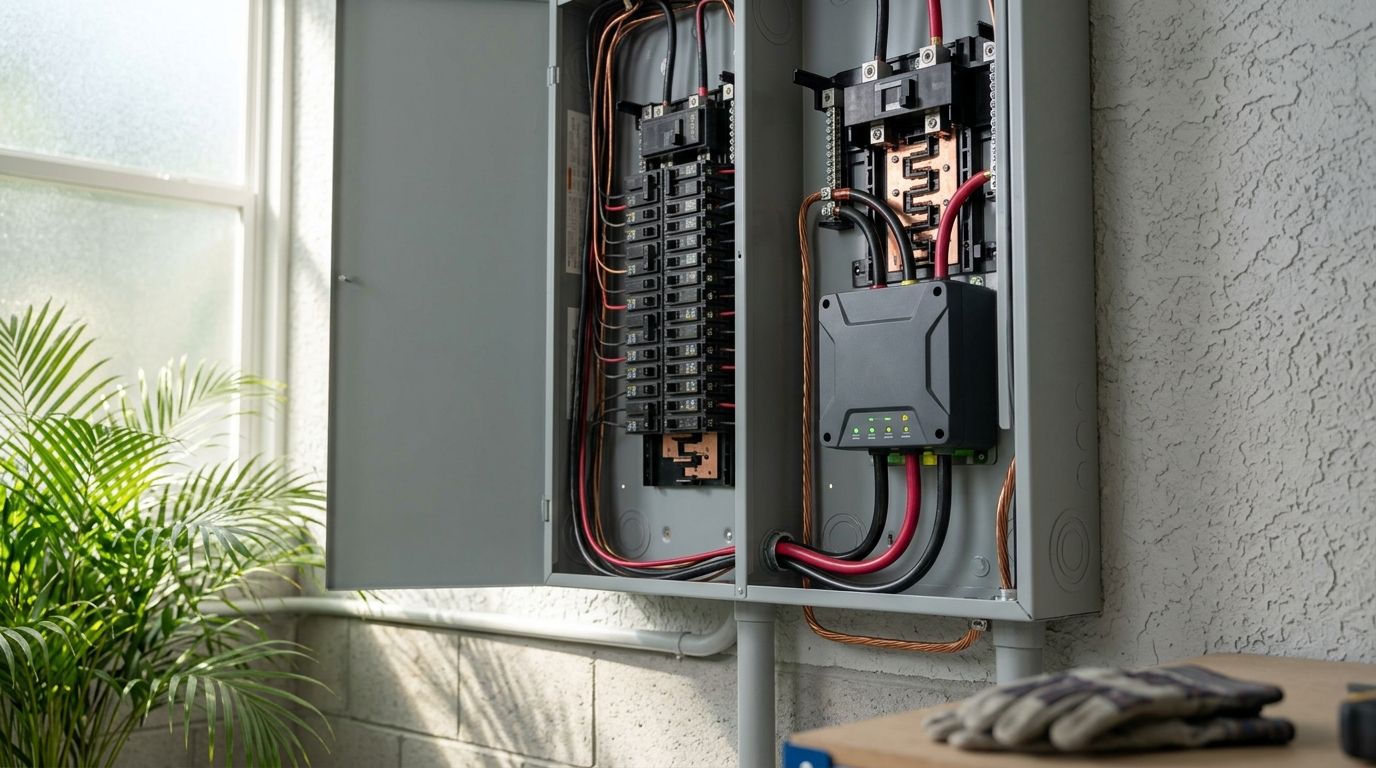
Adding a fan to a circuit that already runs porch lighting, outlets, and maybe a mini split condenser can trip breakers during peak summer load. An electrical panel upgrade is worth checking on homes built before the 1990s, where panels were never sized for today's outdoor living additions.
Mounting height and downrod length
Vaulted lanai ceilings need a longer downrod so the blades still clear 7 feet from the floor per NEC guidance while keeping the fan close enough to the ceiling to move air efficiently. Flat porch ceilings under 8 feet typically need a flush or close-mount fan instead of a standard downrod fan.
Storm and surge exposure
Exterior circuits take the first hit during Florida's lightning season, and a fan on an unprotected circuit is exposed every time a storm rolls through. If you're not sure whether your home needs surge protection, a lanai fan install is a good moment to find out — it's one more expensive motor sitting on the line.
Which fan and install type fits your lanai
The safe pick — damp-rated fan on a screened, roofed lanai. One motor spec that matters: sealed damp-rated motors handle Florida humidity without the added cost of full wet-rated hardware. If the porch is fully screened and covered, this is the right call in 2026. Buy.
The exposed-porch pick — wet-rated fan on an open patio. Direct rain and full sun demand UL 507 wet-rated construction with ABS blades — no exceptions. Skip anything labeled "damp-rated" here even if it looks similar on the shelf. Buy.
The vaulted-ceiling pick — downrod-mounted fan with extended rod. Vaulted lanai ceilings over 10 feet need a downrod length matched to the pitch so blades still sit within the 7-foot clearance zone. Get the rod length measured on-site rather than guessing from a box label. Consider.
The retrofit pick — reusing an old porch light box. Standard outlet boxes aren't rated for fan weight or vibration, and reusing one without swapping to a fan-rated box is how fans fall or wobble loose. This needs a box swap first. Skip until the box is replaced.
The smart-control pick — remote or app-controlled fan on a dedicated switch. Convenient for reaching a fan mounted 10+ feet up on a vaulted lanai, and it avoids running a second switch leg through an exterior wall. Worth it if the wiring's already being opened up for the install. Consider.
Get your lanai fan installed correctly
Licensed electricians handle box swaps, wiring, and UL-rated fan mounts.
What to avoid
- Indoor-rated fans on any covered porch. They look identical to damp-rated models but lack sealed motors — corrosion shows up within a year near the coast.
- Reusing a porch light's outlet box. It's not rated for the weight or vibration of a spinning fan, even a small one.
- Oversized fans on undersized circuits. A 60-inch fan pulling extra amps on a circuit already loaded with lighting and outlets is a nuisance-trip waiting to happen.
Verdict comparison
| Fan/install type | UL rating needed | Best for | Verdict |
|---|---|---|---|
| Damp-rated fan | UL damp-rated | Screened, roofed lanai | Buy |
| Wet-rated fan | UL 507 wet-rated | Open, exposed porch | Buy |
| Downrod extended mount | Matches base fan rating | Vaulted ceilings 10 ft+ | Consider |
| Retrofit on old light box | N/A until box swapped | Never without box upgrade | Skip |
| Smart/remote control fan | Matches base fan rating | Fans mounted out of reach | Consider |
FAQ
What's the best ceiling fan rating for a Florida lanai?
A damp-rated fan works for screened, covered lanais, while an open or exposed porch needs a UL 507 wet-rated fan. Checking your porch's actual rain exposure before buying prevents early motor failure.
Is a damp-rated fan enough for a screened porch?
Yes, if the screen and roof keep direct rain off the fan, damp-rated is sufficient. Once wind-driven rain regularly hits the fan, upgrade to wet-rated.
Can I install a ceiling fan on a lanai without existing wiring?
Yes, but it requires running a new circuit or tapping an existing one with capacity, plus a fan-rated junction box. A licensed electrician confirms the panel and circuit can handle the added load before running wire.
What size ceiling fan fits a Florida porch?
Spaces under 75 square feet typically use 36 to 42 inch fans, while spaces over 144 square feet need 50 to 60 inch fans or two smaller units. Blade span should scale with square footage, not just ceiling height.
Do I need a permit for ceiling fan installation in Port St. Lucie?
New circuit work or box replacement on an exterior structure typically requires a permit under local building code. A like-for-like swap on an existing fan-rated box usually does not.
How high should a ceiling fan hang on a lanai?
Blades need at least 7 feet of clearance from the floor or any seating area under NEC guidance. Vaulted ceilings need a longer downrod to keep the fan close enough to the ceiling while maintaining that clearance.
Is a smart ceiling fan worth it for a lanai?
It's worth it when the fan is mounted high on a vaulted ceiling or hard to reach for a pull chain. It adds convenience without changing the UL rating requirements for the fan itself.
Does a lanai fan need surge protection?
Exterior circuits are more exposed to lightning-related surges than interior ones, so whole-home surge protection reduces the risk of losing a fan motor during storm season. It's worth evaluating alongside any new outdoor electrical work.
One last thing
The detail most homeowners miss isn't the fan — it's the box behind it. A fan-rated junction box secured directly to a joist or brace is the difference between a fan that runs quiet for years and one that wobbles loose within a summer of Florida storms.