Flickering lights during a thunderstorm, a breaker that trips for no obvious reason, or a dead microwave the week after a lightning strike two blocks away — these are the tells that your home is absorbing power surges instead of stopping them. This guide walks through exactly what to check and what to do next.
- Repeated small appliance failures and flickering LEDs are classic signs you need surge protection, not bad luck.
- Homes without a whole-house surge protective device (SPD) take the full hit from every grid fluctuation and lightning-induced spike.
- Panels older than 20 years or unrated for SPD installation should be evaluated before adding surge protection in 2026.
- A licensed electrician can install a whole-house SPD at the panel in under two hours in most Treasure Coast homes.
Why this matters
Florida leads the country in lightning strike density, and the Treasure Coast sees summer storm cells roll through almost daily from June through September. Every one of those storms sends voltage spikes down utility lines, into transformers, and straight into your panel if nothing is stopping them.
Most surges aren't the dramatic kind from a direct strike. They're small, repeated spikes from grid switching, HVAC compressors cycling, or utility equipment faults nearby. Those add up. A refrigerator compressor or a smart thermostat board can degrade after a dozen small hits long before a single big one ever shows up.
Homeowners in Port St. Lucie, Stuart, and Jensen Beach who skip surge protection usually find out the hard way — a fried AC control board, a dead pool pump motor, or a router that needs replacing every hurricane season. Checking for the signs below now is cheaper than replacing electronics later.
What you'll need
- A flashlight and your breaker panel cover screwdriver
- A notepad or phone to log dates when lights flicker or breakers trip
- The age and brand of your electrical panel (check the panel door)
- A list of electronics or appliances that have failed in the last 12 months
- Contact info for a licensed electrician if you find two or more warning signs — Imperium Electric handles surge protection installs across the Treasure Coast
The steps
1. Check for flickering or dimming lights
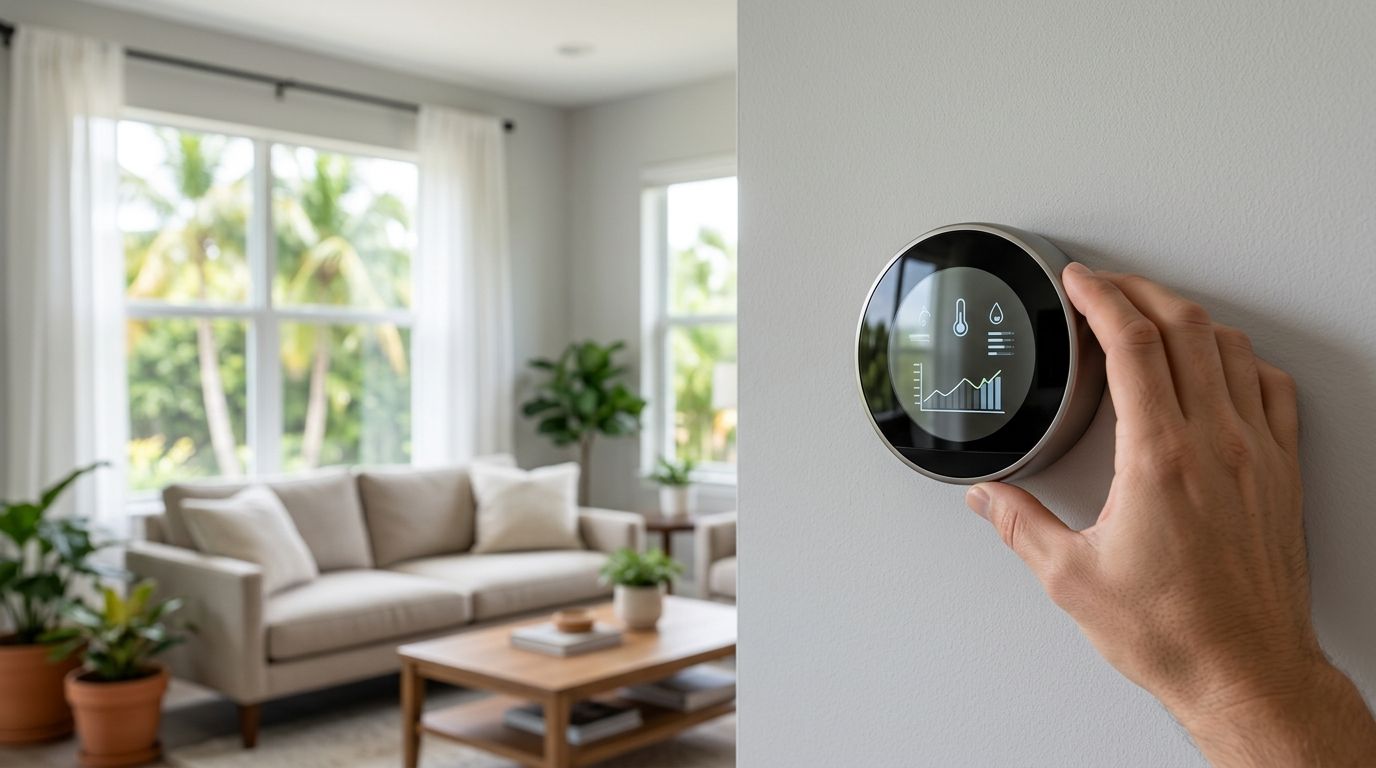
This is the fastest tell. If your lights dim briefly whenever the AC compressor, well pump, or a large appliance kicks on, your home is experiencing voltage fluctuation on every cycle. Walk through the house during peak AC usage hours (typically 2–6 PM in Florida summers) and note which fixtures dim.
Occasional, brief dimming tied to a specific appliance points to normal load draw. Dimming that happens randomly, without a clear appliance trigger, points to incoming surges from the grid itself.
2. Track breaker trips over two weeks
Log every breaker trip with a date, time, and weather condition. A breaker that trips during or right after a storm — especially the same breaker repeatedly — is doing its job by cutting power before a surge reaches downstream outlets.
A single trip isn't alarming. Three or more trips in two weeks, especially on circuits feeding electronics, is a pattern worth acting on.
3. Inspect outlets for scorch marks or a burning smell
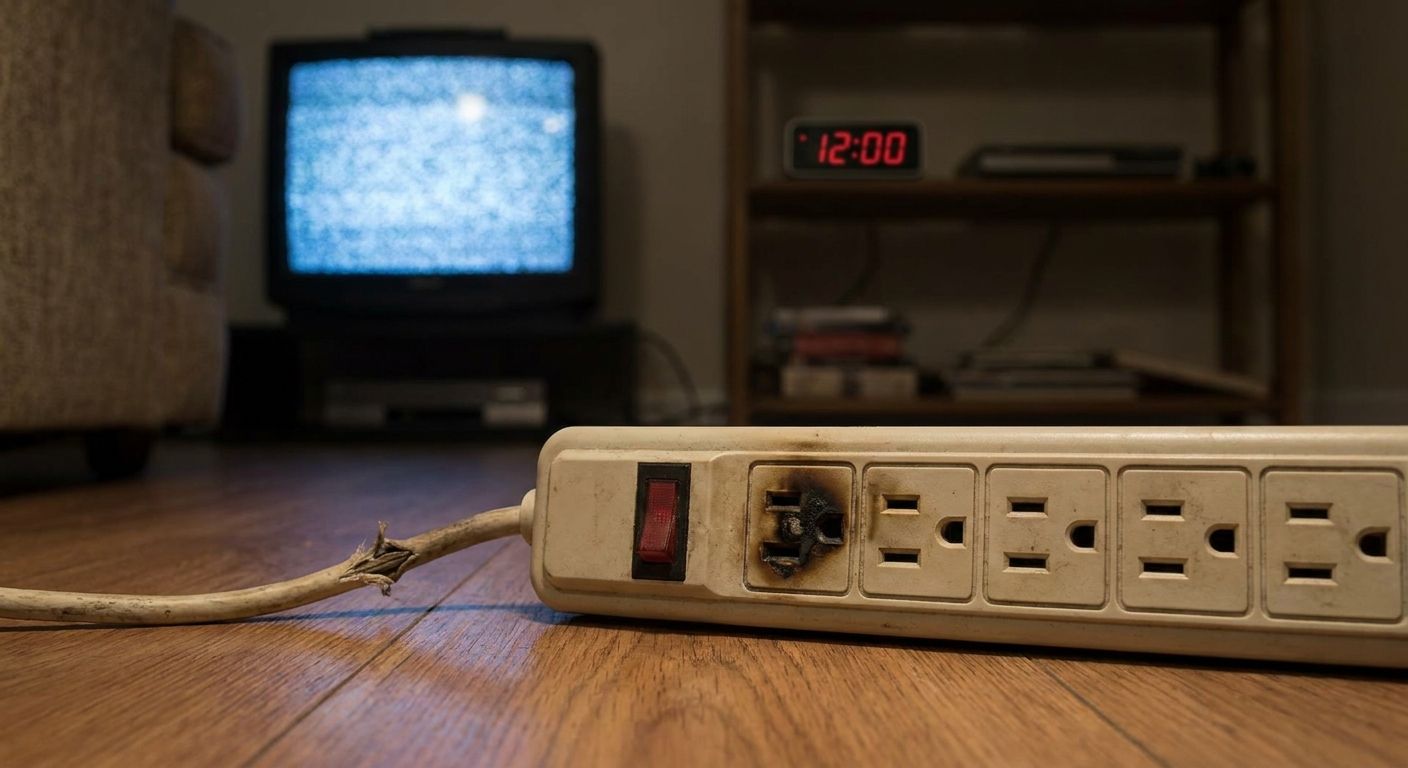
Turn off power to any outlet you're inspecting, then look for discoloration around the plug slots or a faint burnt-plastic smell. Surges generate heat at the point of resistance, and outlets are often the first visible casualty.
Any scorching means the outlet needs replacement regardless of surge protection status — but it's also a sign the circuit has already absorbed damage that a whole-house SPD would have blocked.
4. Review appliance failure history
Pull together every appliance or electronic that's died in the past year: garage door openers, pool pump controllers, smart thermostats, TVs, routers. If three or more failed within 12 months, especially clustered around storm season, surges are a likely common cause.
Modern appliances run on circuit boards, not the simple motors and relays of older models. Circuit boards are far more sensitive to voltage spikes, which is why appliance failure rates have climbed as homes fill up with smart devices.
5. Check your panel's age and condition
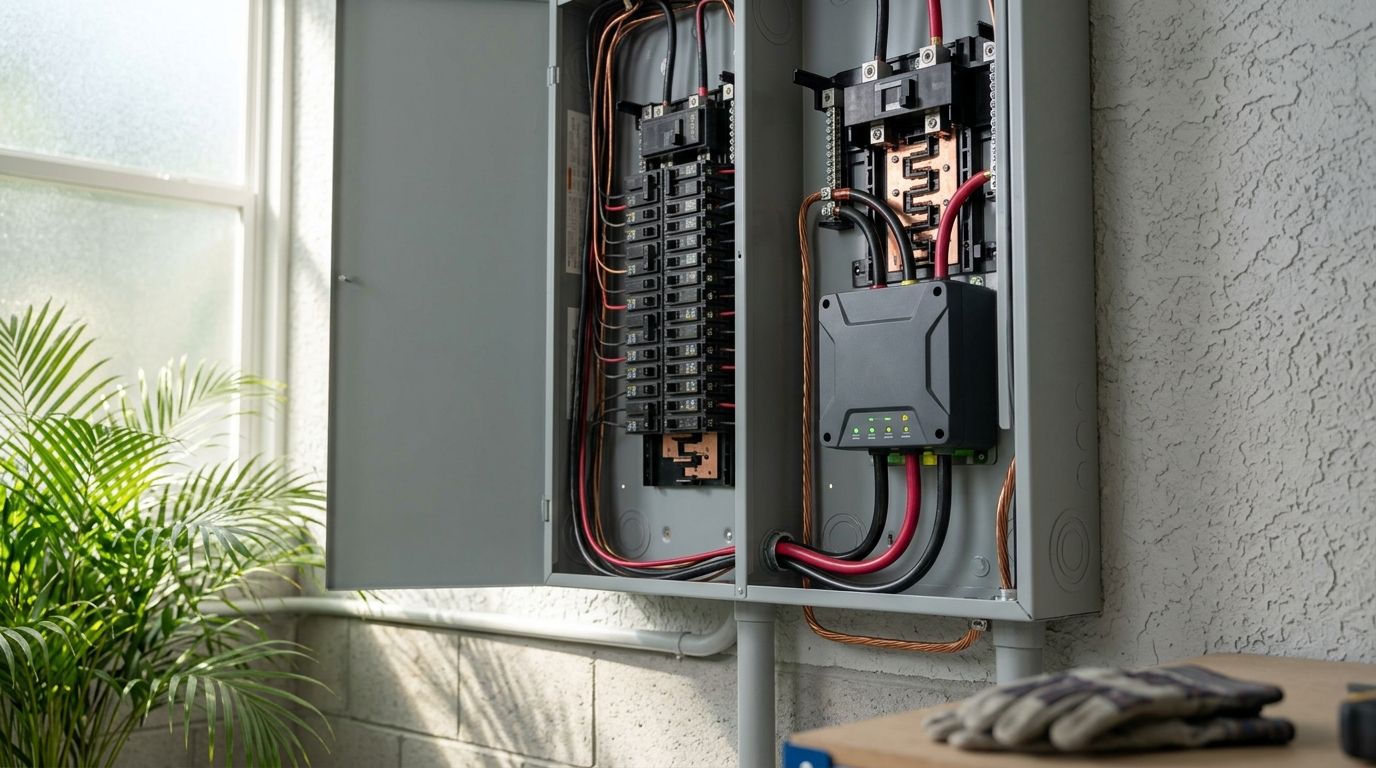
Open the panel door and note the manufacturer and install date, often stamped inside the cover. Panels installed before 2005, or brands like Federal Pacific and Zinsco, often lack the bus bar clearance or breaker slots needed for a modern whole-house SPD without an upgrade first.
If your panel is aging or undersized, get it evaluated before adding surge protection — electrical panel upgrades for older Port St. Lucie homes covers what triggers a replacement versus a simple retrofit.
6. Confirm whether you already have a whole-house SPD
Look at your main panel for a small module, usually about the size of a double breaker, wired directly to two slots with a status light on the front. No module means no whole-house protection — you're relying entirely on point-of-use power strips, which only protect what's plugged into them.
Point-of-use surge strips stop small spikes at the outlet but do nothing for your HVAC system, water heater, or hardwired appliances. A whole-house SPD at the panel protects everything downstream in one install.
7. Factor in your hurricane season exposure
If you're on municipal power in a storm-prone zone and you've had two or more outages or brownouts in the last hurricane season, your grid connection is already unstable. Every restoration after an outage sends a surge back through the system as power returns.
Homes that also run a standby generator need surge protection on both sides — utility-side and generator-side — since transfer switches create their own switching spikes. How to prepare your electrical panel for hurricane season walks through the full pre-season checklist.
Get your panel checked before storm season
Licensed electricians serving Port St. Lucie, Stuart, and Jensen Beach.
Troubleshooting
Lights flicker but no breaker ever trips. This usually means the surge or fluctuation is small and consistent, not dramatic. It still degrades electronics over time — don't wait for a breaker trip to confirm the problem.
You already have a power strip with "surge protection" listed on it. Most consumer strips only handle small spikes and wear out silently after repeated hits, often with zero indicator. They also don't protect anything not plugged directly into them.
Your homeowner's insurance flagged surge damage on a past claim. That's a documented signal your home has already taken a hit. Insurers increasingly ask about whole-house SPD installation when underwriting Florida properties.
You just had a lightning strike nearby and things seem fine. Damage from a near-miss strike isn't always immediate — components can degrade over weeks. Get the panel checked within a few days rather than waiting for a visible failure.
You're not sure if your panel can even accept an SPD. Some older panels are full or lack listed slots for an SPD breaker. This is common enough in Jensen Beach's older housing stock that it's worth a dedicated look — see electrical rewiring for older Jensen Beach homes if your panel is original to the house.
“If your lights dim every time the AC compressor kicks on, that's a small surge hitting your panel — every single cycle.”
Tools and resources
- Panel manufacturer and date stamp (found inside the panel door)
- A running log of breaker trips and appliance failures
- Residential electrician services for Jensen Beach homeowners for a full-home electrical inspection
- Your homeowner's insurance policy, if you're checking for surge damage exclusions
- A note of any standby generator or transfer switch on the property, since it changes where SPDs get installed
What to do next
If you found two or more of the signs above — flickering lights, repeated breaker trips, a cluster of appliance failures, or no SPD module in the panel — get a licensed electrician to inspect the panel before the next storm rolls through. Whole-house surge protection is a single install at the panel, not a room-by-room retrofit, and it's far cheaper than replacing a fried HVAC control board or water heater element after the fact.
Homeowners weighing a generator alongside surge protection should look at how to size a whole-house generator for your home — the two systems are often installed together on Treasure Coast properties heading into hurricane season 2026.
FAQ
What are the most common signs you need surge protection?
Flickering or dimming lights during appliance cycles, breakers that trip during storms, scorch marks near outlets, and repeated appliance or electronics failures within a 12-month span are the most common signs. Two or more of these together mean a panel inspection is worth scheduling.
Is whole-house surge protection better than power strips?
Yes, whole-house surge protection installed at the panel covers every hardwired and plugged-in device in the home, while power strips only protect what's directly connected to them. HVAC systems, water heaters, and pool equipment get no benefit from a power strip.
How much does whole-house surge protection cost in 2026?
Cost depends on panel condition, home size, and whether the panel needs upgrades before an SPD can be installed. Get an on-site quote since panel age and available breaker slots change the scope significantly.
Can an old electrical panel accept a surge protector?
Not always. Panels older than 20 years, or discontinued brands like Federal Pacific and Zinsco, often lack the listed slots or bus bar capacity for a modern SPD and need evaluation first.
Does Florida's lightning activity make surge protection more important?
Yes, Florida records more lightning strikes than any other state according to NOAA, and the Treasure Coast sees frequent summer storm cells from June through September. That storm frequency raises both the number and size of surges hitting home electrical systems each year.
Will a generator protect my home from power surges?
No, a standby generator supplies backup power during outages but doesn't stop surges. Transfer switches can even introduce their own switching spikes, so homes with generators often need surge protection on both the utility and generator sides.
How long does it take to install a whole-house surge protector?
Most whole-house SPD installs take under two hours for a licensed electrician once the panel is confirmed compatible. Panels needing an upgrade first add additional time to the job.
Does homeowner's insurance cover surge damage?
Coverage varies by policy and insurer, and some carriers ask about whole-house surge protection when underwriting Florida properties. Check your specific policy language for surge damage exclusions or requirements.
One last thing
The module that tells you whether you already have whole-house protection is often smaller than a deck of cards, sitting quietly at the top of your panel with a single status light — most homeowners have never once looked for it. Check tonight, not during the next named storm.