Losing power for three days after a named storm is normal on the Treasure Coast — deciding which generator setup actually keeps your house running through it isn't. This guide breaks down what Port St. Lucie homeowners need to check before signing a contract for whole house generator installation, and which setups are worth the money in 2026.
- A 22-24kW natural gas standby generator is the safe whole house generator installation pick for Port St. Lucie in 2026.
- Propane standby units work when natural gas isn't run to your street, but budget for a buried tank.
- Portable generators with a manual transfer switch cover short outages only — Consider it a stopgap, not a whole-house fix.
- Solar plus battery backup can't match multi-day hurricane runtime yet — Skip it as your primary system in 2026.
Why this matters
St. Lucie County sits in an active hurricane corridor, and FPL's own outage maps show multi-day restoration windows are routine after a direct hit, not an exception. A generator sized wrong, installed without a permit, or placed too close to a window doesn't just fail when you need it — it can void your homeowner's insurance claim.
The licensed electricians at Imperium Electric handle whole house generator installation across Port St. Lucie, Stuart, and Jensen Beach, and the mistakes below show up on the same handful of jobs every storm season.
Who this is for
This guide is for homeowners in Port St. Lucie who want the house — not just the fridge and a few lamps — running on backup power during a grid outage. If you're comparing a $400 box-store portable generator to a permitted standby system, read the criteria below before you spend on either.
What to look for in whole house generator installation
Fuel type availability
Natural gas is the cheapest fuel to run long-term because you're never refilling a tank, but not every Port St. Lucie street has a gas main. Propane is the fallback, and it means budgeting for a buried or above-ground tank sized to your generator's runtime, not just the unit itself.
Generator sizing in kW
A 22kW to 24kW unit typically covers a full house — HVAC, water heater, kitchen, and all circuits — while anything under 16kW usually means an electrician has to pick which circuits get power during an outage. Undersizing is the single most common regret homeowners report after their first real outage.
Transfer switch type
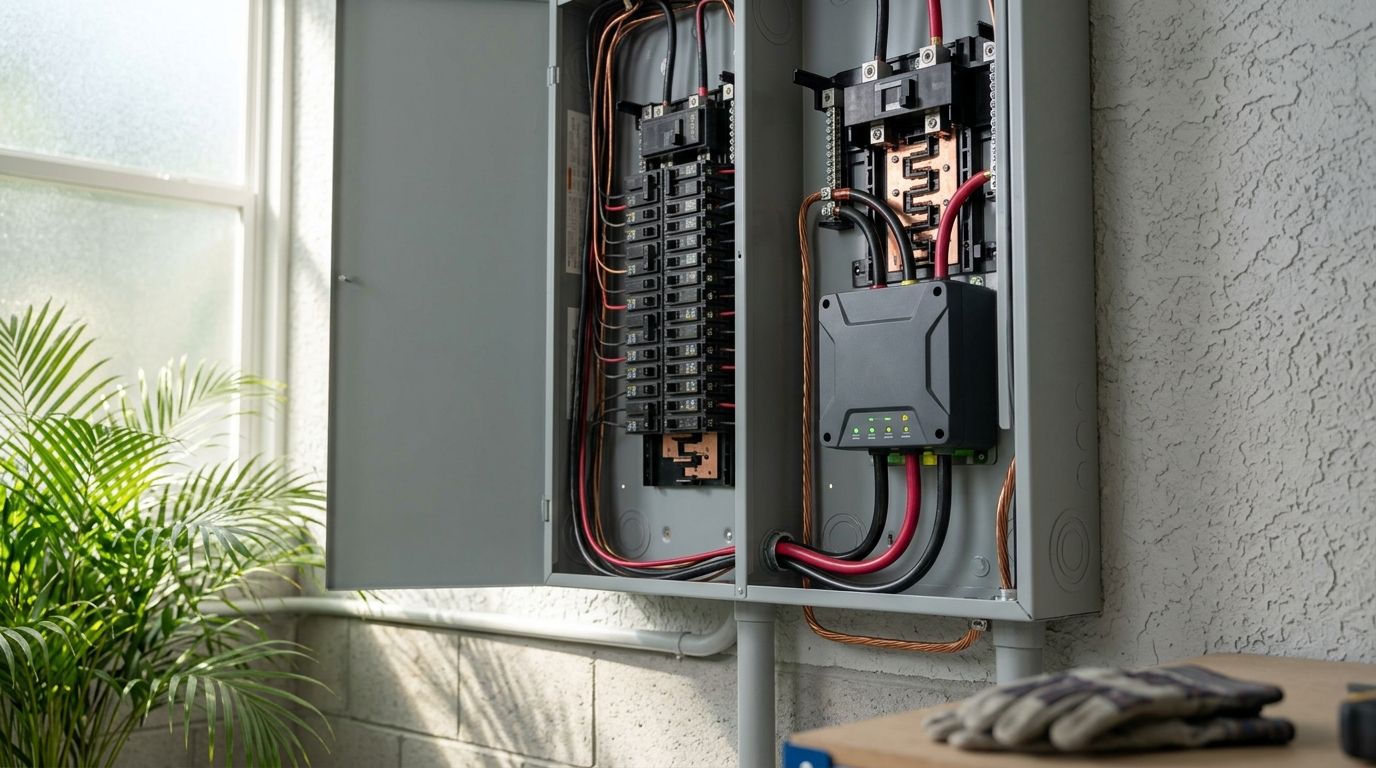
An automatic transfer switch senses the outage and starts the generator within seconds, with zero action from you. A manual switch means walking outside in a storm to flip breakers by hand, which is the tradeoff you're accepting with any portable setup.
Permitting and code compliance
Florida requires a permit for any permanent generator installation, and St. Lucie County inspects placement, clearances, and the gas or electrical tie-in before it's signed off. Skip the permit and you're the one holding the risk if the unit ever causes a fire or an insurance dispute.
Placement and setback requirements
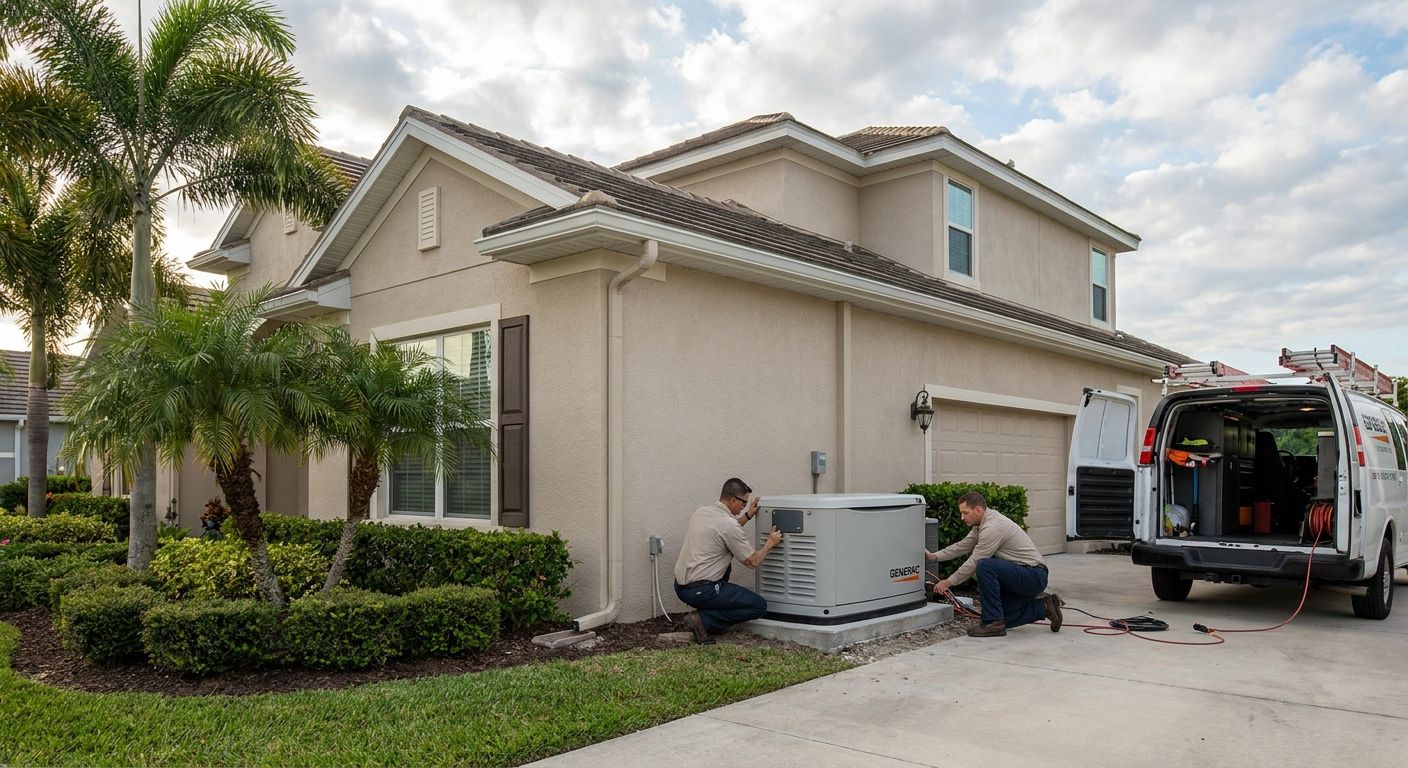
Standby generators generally need roughly 5 feet of clearance from doors, windows, and vents to keep carbon monoxide out of the house, plus flood-zone clearance in low-lying parts of Port St. Lucie near the St. Lucie River. Placement gets decided before the pad ever gets poured — moving a unit after installation is expensive.
Installer licensing
A whole house generator installation touches electrical, and often gas line, work — both require licensed trades in Florida, not a handyman with a truck. If you're not sure how to vet a contractor for this kind of job, the breakdown in how to choose an electrician in Port St. Lucie, FL covers exactly what license numbers and insurance paperwork to ask for.
Get your generator sized right
Licensed electricians quote whole house generator installation across the Treasure Coast.
Top picks for Port St. Lucie homes
The safe pick: 22-24kW natural gas standby generator
One specific number matters here: a 22kW unit typically covers central AC, the water heater, and every kitchen circuit at once, with no load-shedding needed. If natural gas runs to your block, this is the setup that starts within 10-30 seconds of an outage and keeps running for as long as the gas utility stays up, which historically outlasts the power grid during hurricanes. Verdict: Buy if gas is available at your address.
The practical fallback: propane standby generator
Same automatic-start convenience as the natural gas option, but you're now managing a tank — typically 250 to 1,000 gallons depending on how long you want to run without a refill. A full 500-gallon tank on a 22kW unit generally covers well over a week of intermittent runtime, which matches most post-hurricane restoration windows in St. Lucie County. Verdict: Consider when natural gas isn't run to your street.
The budget stopgap: portable generator with manual transfer switch
A 5,000 to 7,500-watt portable unit paired with a manual transfer switch can keep the fridge, a few outlets, and window units running, but it's not whole-house power and it needs a person outside to start it and switch it over. It's the cheapest entry point into backup power, and it's the setup most people regret keeping past their first multi-day outage. Verdict: Consider only as a temporary bridge while you save for standby.
The wildcard: solar plus battery backup
A home battery system runs silently and needs no fuel deliveries, which sounds ideal until you check the runtime math against a Florida hurricane outage. Most residential battery setups are built for daily load-shifting, not for powering full HVAC loads across three or four cloudy, post-storm days. Verdict: Skip as your only backup plan in 2026 — pair it with a fuel-based generator if you want both.
What to avoid
- Undersized "whole house" units sold as full coverage. A 10-12kW generator marketed as whole-house often can't run central AC and the water heater simultaneously — ask for the exact kW output, not the label on the box.
- Skipping the permit to save time. An unpermitted install can complicate an insurance claim after storm damage, and it's the first thing an adjuster checks.
- Placement inside setback zones. A generator installed too close to a window or in a flood-prone spot near the St. Lucie River fails inspection and has to be relocated — a cost you pay twice.
“If your generator can't run the AC and the water heater at the same time, it isn't whole-house power, it's partial-house power with a bigger price tag.”
Verdict comparison
| Setup | Fuel | Typical Size | Transfer Switch | Verdict |
|---|---|---|---|---|
| Natural gas standby | Natural gas | 22-24kW | Automatic | Buy |
| Propane standby | Propane (tank) | 20-24kW | Automatic | Consider |
| Portable + manual switch | Gasoline | 5,000-7,500W | Manual | Consider (stopgap) |
| Solar + battery | Solar/grid charge | Varies | Automatic | Skip (standalone) |
FAQ
How much does whole house generator installation cost in Port St. Lucie?
Cost depends on generator size, fuel type, and site work like trenching for a gas line or tank placement, so pricing varies by property. Getting a site-specific quote from a licensed electrician is the only way to get an accurate number.
What size generator do I need for a whole house in Florida?
Most Florida homes need 22kW to 24kW to run central AC, the water heater, and kitchen circuits together without load-shedding. Smaller homes without central AC on the backup circuit can sometimes use 16kW to 18kW units.
Is natural gas or propane better for a standby generator?
Natural gas is better when it's available because you never run out of fuel or manage a tank. Propane is the right call when natural gas isn't run to your street, but it means budgeting for tank size and refills.
Do I need a permit for a whole house generator in St. Lucie County?
Yes, St. Lucie County requires a permit for permanent generator installation, covering placement, clearances, and the gas or electrical tie-in. Skipping the permit puts you at risk during an insurance claim.
How close can a generator be to my house?
Standby generators generally need around 5 feet of clearance from doors, windows, and vents to keep exhaust away from living spaces. Exact setback requirements depend on the manufacturer's spec and local code.
Can a portable generator power a whole house?
No, a typical 5,000 to 7,500-watt portable generator can run select circuits like the fridge and a few outlets, not full HVAC and every circuit in the house. For full coverage you need a standby unit sized to your home's load.
How long does a standby generator installation take?
Installation timelines depend on permitting, fuel line work, and inspection scheduling, and can run from a single day for the unit itself to several weeks including permit approval. Permitting is usually the longest part of the process, not the physical install.
One last thing
Most homeowners size their generator around the outage they remember, not the one coming next — a three-day outage in 2022 gets you a 16kW unit that stalls out the second summer you're running central AC nonstop for a week straight. Size for the worst outage St. Lucie County has actually seen, not the average one.