GFCI outlet installation for Florida bathrooms and kitchens is required by the National Electrical Code and enforced through local permits across the Treasure Coast in 2026, and it's the single most common reason a remodel fails inspection on the first pass. Bathrooms and kitchens sit within reach of running water, which is exactly where a ground-fault circuit interrupter earns its keep.
- GFCI outlet installation in Florida bathrooms and kitchens is required within 6 feet of any sink under NEC 210.8 as of 2026.
- Imperium Electric LLC installs and permits GFCI circuits across Port St. Lucie, Stuart, and Jensen Beach for remodels and code upgrades.
- A GFCI outlet cuts power in a fraction of a second when it senses a ground fault, which is what protects you near a wet countertop or tub.
- Bathroom and kitchen GFCI outlets must be tamper-resistant, and outdoor units must also be weather-resistant under current Florida Building Code.
- Wiring the load and line terminals backwards is the top reason a feed-through GFCI outlet fails to protect the rest of the circuit.
Why GFCI protection matters for Florida bathrooms and kitchens
Florida's humidity and salt air corrode outlet contacts faster than they do inland, which raises ground-fault risk in wiring that's already 20 or 30 years old. Homes built before the mid-1970s across Port St. Lucie, Stuart, and Jensen Beach frequently have zero GFCI protection in wet areas, and that's one of the most common flags on a 4-point insurance inspection in 2026.
NEC 210.8(A) requires GFCI protection on every 125-volt, 15- and 20-amp receptacle within 6 feet of a bathroom sink, and on all kitchen countertop receptacles regardless of distance. The 2020 NEC cycle, which Florida's current building code has adopted, extended that requirement to the dishwasher branch circuit — a detail a lot of older kitchen remodels miss entirely.
If you're mid-remodel on a bathroom in Jensen Beach, GFCI placement isn't optional trim work — it's what gets your permit closed.
How to handle GFCI outlet installation step by step
Test every outlet you already have
Start free. Press the "test" button on each GFCI outlet in your bathroom and kitchen — it should cut power immediately, and the "reset" button should restore it.
- Test monthly, not just once at move-in
- Outlets that don't trip on test are dead GFCI protection wearing a working-looking faceplate
- A GFCI that trips on its own repeatedly signals a downstream fault, not a bad button
- Note any outlet with no test/reset buttons at all — that's a standard outlet with no protection
Map which outlets are missing protection
Walk your kitchen and bathrooms with the code requirement in mind: anything within 6 feet of a sink, and every kitchen counter receptacle.
- Check under-sink outlets for garbage disposals and dishwashers
- Check outlets near a wet bar or ice maker
- Check bathroom outlets near a tub or walk-in shower
- Note outlets on a covered lanai or outdoor kitchen — those need weather-resistant covers, not standard GFCI
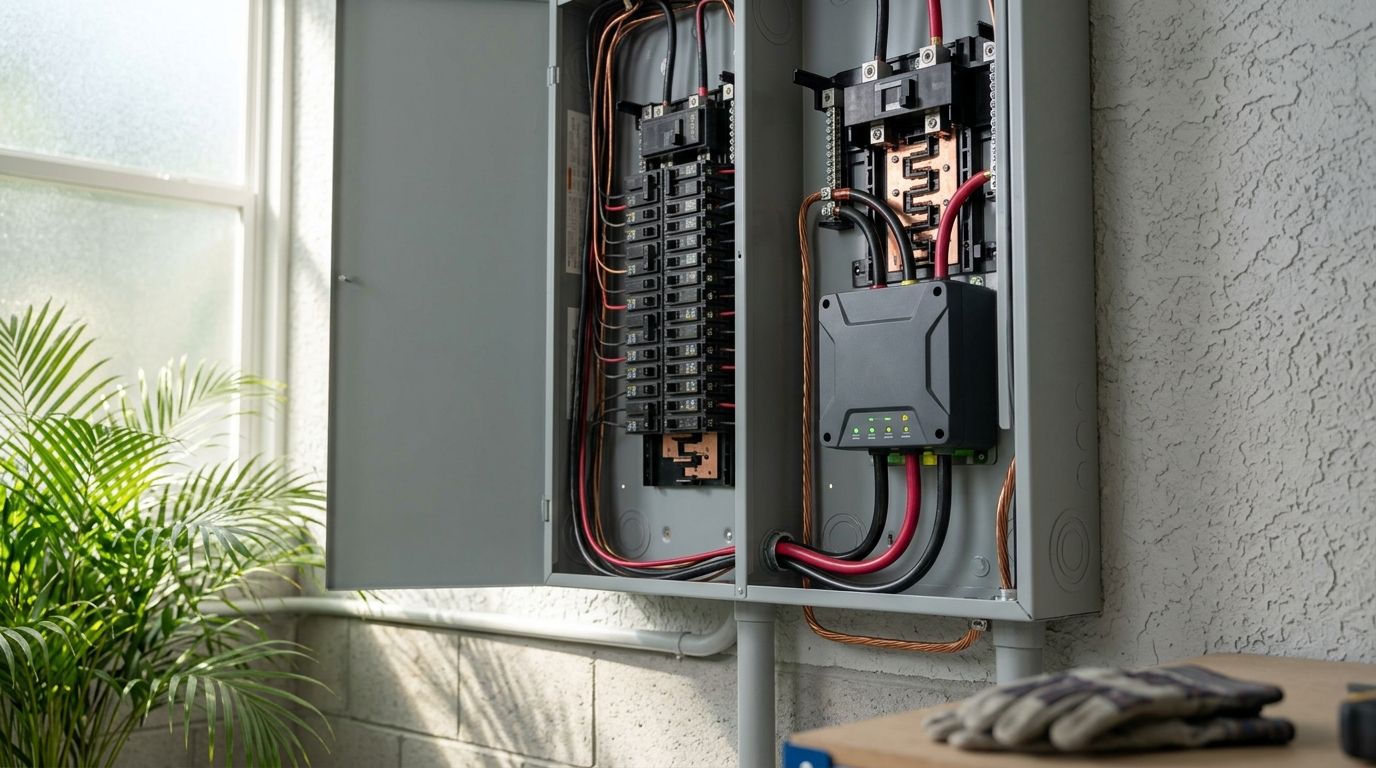
Check your panel for open breaker space
Adding GFCI protection sometimes means adding a dedicated circuit, not just swapping a faceplate — and that depends on what your panel can carry.
- Count open breaker slots before assuming a swap is simple
- Check the panel's total amperage against what the kitchen or bath already draws
- Look for double-tapped breakers, a common shortcut in older Treasure Coast homes that fails inspection
- If the panel is maxed out or original to a pre-1990s build, an electrical panel upgrade usually comes first
This is the point where most homeowners stop DIYing and call a licensed electrician — panel work in Florida requires a permit regardless of who pulls it.
Choose the right GFCI device for the circuit
There isn't one right answer here — it depends on how many outlets sit downstream and how the existing wiring is laid out.
- Single-location GFCI outlet protects only itself, simplest for one isolated receptacle
- Feed-through GFCI outlet protects itself plus every standard outlet wired downstream on the same circuit
- GFCI circuit breaker protects the entire circuit from the panel, cleanest for kitchens with several counter outlets
- Portable GFCI plug adapters are a stopgap, not a permanent fix, and won't satisfy a permit inspection
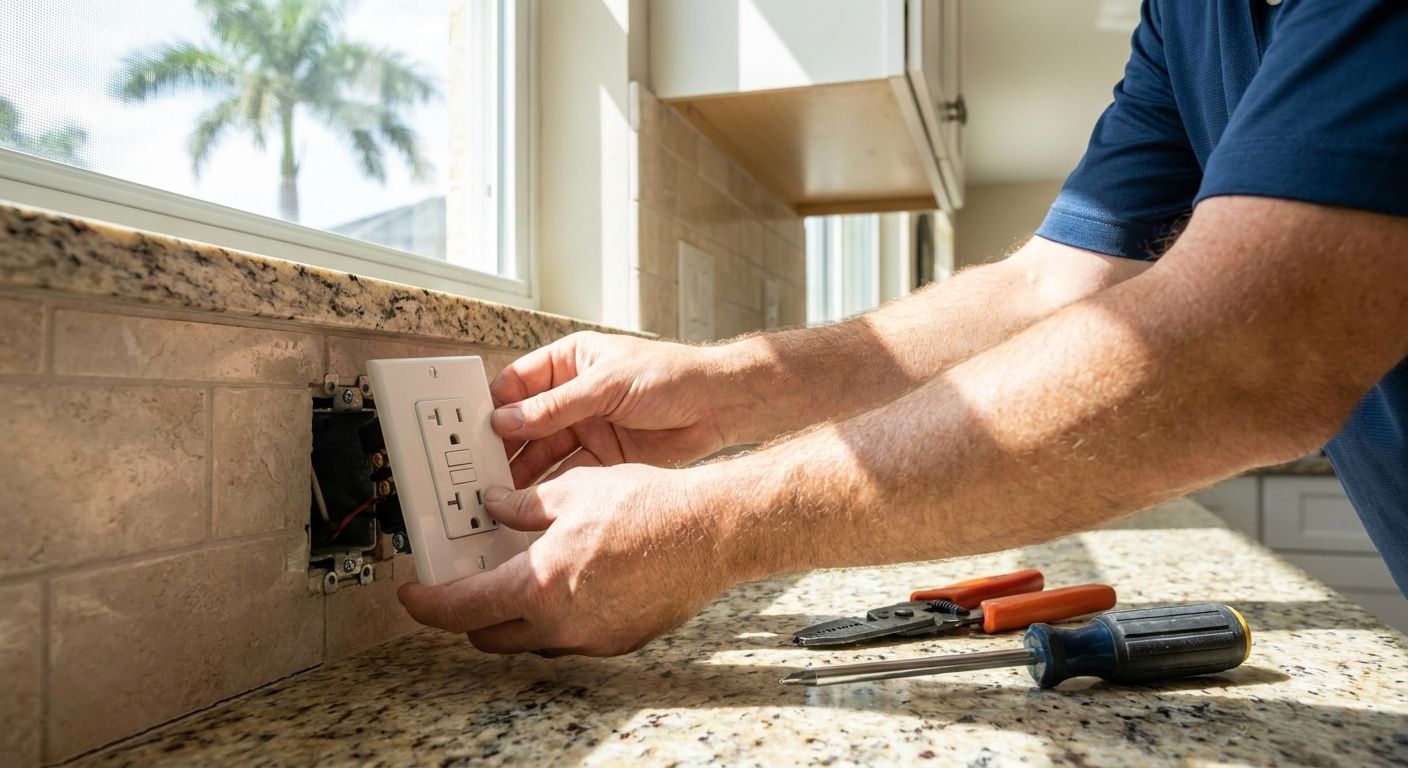
Wire load and line correctly
A GFCI outlet has two sets of terminals — line (incoming power) and load (power sent downstream). Reverse them and the outlet still works, but it stops protecting anything past it.
- Line terminals connect to the wire coming from the breaker
- Load terminals connect to any downstream outlets you want protected
- Mislabeling this is the single most common DIY mistake on GFCI installs
- If you're not certain which wire is which, this is licensed-electrician territory, not a weekend project
Match placement to kitchen and bath code specifics
Code isn't just "add a GFCI somewhere nearby" — placement and circuit assignment matter for the inspection.
- Kitchen counter GFCI outlets must serve countertop space, not just any nearby wall
- Dishwasher circuits need GFCI protection under the current code cycle
- Bathroom GFCI outlets must sit within 6 feet of the sink edge, not the room's perimeter
- Any kitchen remodel electrical work should map GFCI placement before drywall goes back up, not after
Pull the permit and schedule inspection
Skipping the permit on GFCI or panel work is a gamble that shows up later — at resale, or at your next insurance renewal.
- St. Lucie, Martin, and surrounding counties require a permit for new circuits and panel changes
- Unpermitted electrical work is a standard flag during home sale inspections
- A licensed electrician's work carries an inspection sign-off; a DIY swap doesn't
- Keep the closed permit on file — it's proof of code compliance if your insurer asks
Get your GFCI wiring quoted right
Licensed electricians pull the permit and pass inspection the first time.
Comparing your GFCI options
| Option | Best for | Key limitation |
|---|---|---|
| Single-location GFCI outlet | One isolated wet-area receptacle | Doesn't protect any other outlet on the circuit |
| Feed-through GFCI outlet | Kitchens or baths with several outlets on one run | Fails to protect downstream outlets if line/load is reversed |
| GFCI circuit breaker | Whole-circuit protection from the panel | Requires open panel space and breaker compatibility |
| Weather-resistant GFCI outlet | Outdoor kitchens, covered lanais, pool decks | Standard indoor GFCI units aren't rated for that exposure |
| Portable GFCI plug adapter | Short-term use on ungrounded outlets | Not a permanent fix, won't pass a permit inspection |
A GFCI circuit breaker is the better call for a full kitchen remodel with multiple counter outlets — a feed-through outlet is fine for a single bathroom vanity.
Common mistakes Florida homeowners make with GFCI outlets
- Reversing line and load terminals on a feed-through outlet, leaving downstream outlets unprotected while the test button still works fine.
- Installing an indoor-rated GFCI outlet outdoors on a lanai or outdoor kitchen instead of a weather-resistant model rated for exposure.
- Skipping the permit on a DIY panel or circuit change, which shows up as unpermitted work during a home sale or 4-point insurance inspection.
- Assuming one GFCI outlet covers the whole kitchen without confirming which downstream outlets are actually wired through it.
- Ignoring the monthly test-and-reset routine until the device fails silently and stops protecting the circuit altogether.
FAQ
Is GFCI outlet installation required by code in Florida bathrooms and kitchens?
Yes. NEC 210.8(A), adopted through the Florida Building Code, requires GFCI protection within 6 feet of a bathroom sink and on every kitchen countertop receptacle as of 2026.
Can I install a GFCI outlet myself in Florida?
You can swap a like-for-like GFCI outlet yourself if the wiring is straightforward, but new circuits and panel work require a licensed electrician and a permit under Florida code.
What's the difference between a GFCI outlet and a GFCI breaker?
A GFCI outlet protects itself and anything wired downstream from it if load and line terminals are connected correctly. A GFCI breaker protects the entire circuit from the panel outward, which suits kitchens with several counter outlets.
How often should I test GFCI outlets in my kitchen or bathroom?
Test them monthly using the built-in test and reset buttons. An outlet that doesn't trip on test isn't providing ground-fault protection even though it still powers devices.
Do I need GFCI protection on a dishwasher circuit in Florida?
Yes, the current NEC cycle adopted in Florida's building code requires GFCI protection on dishwasher branch circuits, a requirement a lot of older kitchen remodels never picked up.
Why did my GFCI outlet fail a home inspection?
Common reasons are reversed line and load wiring, missing GFCI protection within 6 feet of a sink, or an indoor-rated outlet installed in an outdoor location that needs a weather-resistant version.
Does an old Florida home need a panel upgrade before adding GFCI outlets?
If the panel is maxed out on breaker slots or shows double-tapped breakers, yes — GFCI additions on a full panel usually mean a panel upgrade comes first.
Will unpermitted GFCI work affect my home insurance in Florida?
It can. Unpermitted electrical work is a standard flag on 4-point inspections that Florida insurers require, and it can delay or complicate a policy renewal.
One last thing
The detail most homeowners miss in 2026: the dishwasher circuit needs GFCI protection under the current code cycle, and it's one of the most commonly skipped items in kitchen remodels finished before this requirement was widely enforced. If your kitchen was updated more than a few years back and the dishwasher outlet has no test/reset button, that's worth checking before your next inspection or insurance renewal — not after.