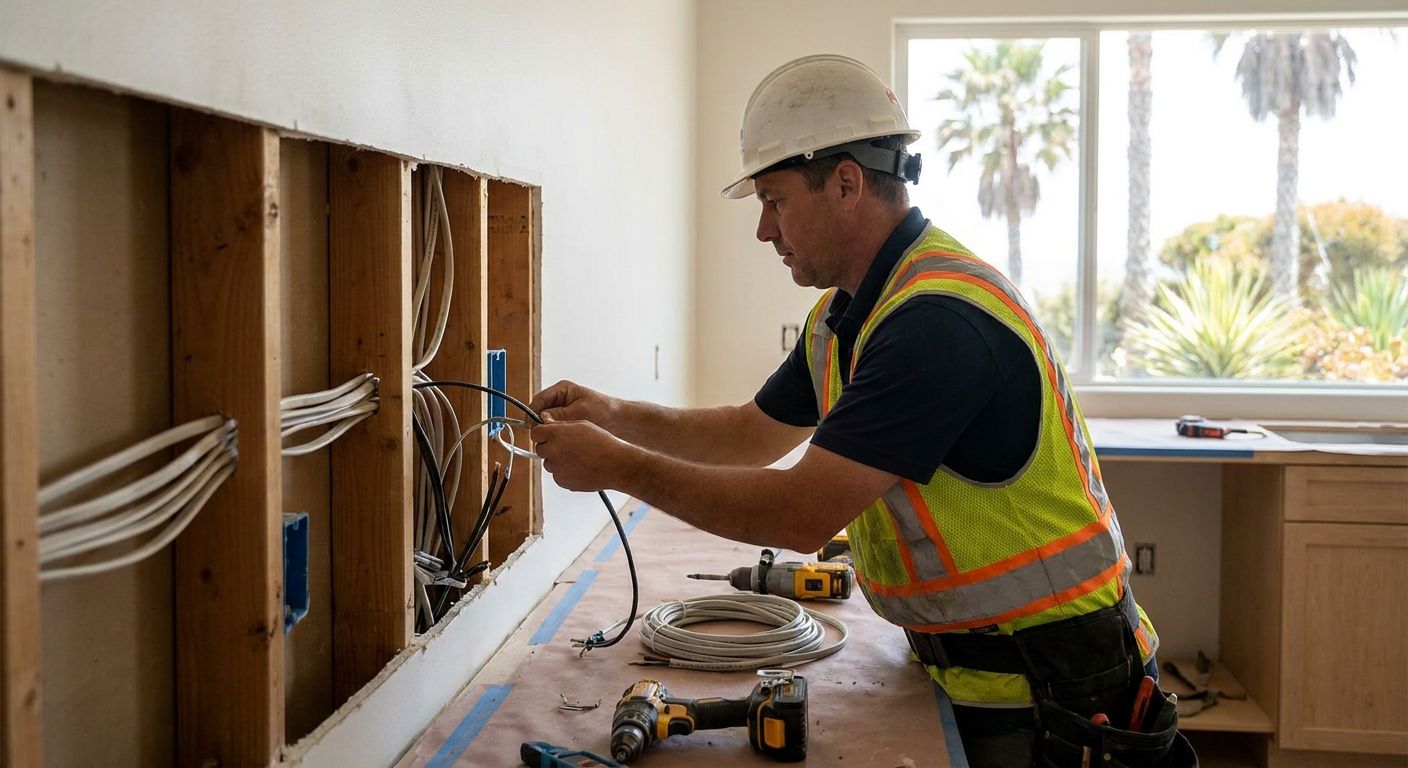
Ripping out kitchen cabinets in a Stuart, FL home built before 1995 almost always exposes wiring that hasn't been touched since the house was framed — and that wiring rarely meets the load a 2026 kitchen actually needs. This guide breaks down what the electrical scope of a kitchen remodel should cover before you sign a contractor agreement.
- Kitchen remodel electrical work in Stuart FL starts with a panel load check, not a fixture list — get that first.
- Code requires two dedicated 20-amp small-appliance circuits in every kitchen remodel — cutting this corner fails inspection.
- GFCI and AFCI protection near sinks and counters is mandatory in 2026, not an upsell.
- Rough-in an EV charger circuit during the remodel — retrofitting after drywall closes costs more.
- Martin County permits and inspections typically add 1-2 weeks to the timeline — plan around it, don't skip it.
Why this matters
A kitchen remodel is the one project where electrical mistakes get buried behind new cabinets and quartz countertops for another 20 years. Undersized circuits show up later as tripped breakers when the microwave, air fryer, and coffee maker run at once. A panel that was marginal before the remodel becomes a real problem once you add under-cabinet lighting, a garbage disposal, and maybe an induction range.
Stuart's older housing stock — plenty of it from the 1970s through 1990s — commonly runs 100-amp service with panels that are already near capacity before a kitchen touches them. Imperium Electric checks that capacity before any rough-in starts, because guessing on load calculations is how homeowners end up with a failed inspection mid-remodel.
Who this is for
This is written for Stuart, Jensen Beach, and Treasure Coast homeowners planning a full or partial kitchen remodel in 2026 — anyone moving appliance locations, adding an island, upgrading to an induction range, or just tired of a breaker that trips every time two things run at once. If your kitchen still has two-prong outlets or a single 15-amp circuit feeding half the room, this applies to you directly.
What to look for in kitchen remodel electrical work for Stuart FL homeowners
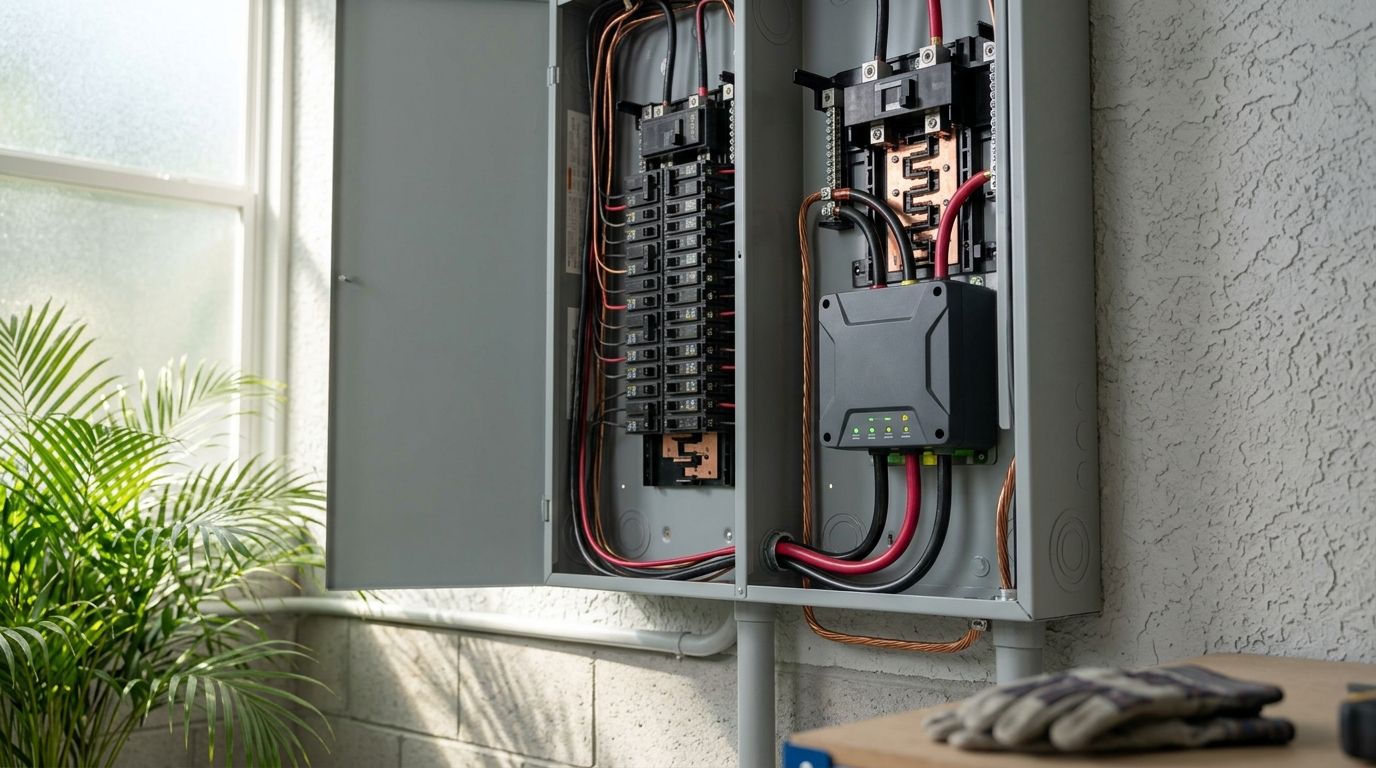
Panel capacity and load calculation
Every new kitchen circuit adds amperage draw, and a 100-amp panel that was fine for a 1980s kitchen often can't absorb an induction range, disposal, and EV charger rough-in at once. A proper load calculation before demo tells you whether the remodel needs a panel upgrade alongside the kitchen work — skipping this step is the single most common cause of mid-project surprises.
Dedicated small-appliance circuits
The National Electrical Code requires two dedicated 20-amp small-appliance circuits serving countertop receptacles, separate from the refrigerator and lighting circuits. This isn't a nice-to-have — it's what keeps the toaster and blender from tripping the same breaker as the overhead lights.
GFCI and AFCI protection
Any outlet within 6 feet of the sink needs GFCI protection, and most 2026 kitchen circuits also require AFCI protection under current code adoption. This matters more in Florida than in drier climates — humidity and coastal air accelerate wear on outlets near water sources.
Lighting circuits and dimmer compatibility
Under-cabinet task lighting and recessed cans usually run on separate circuits from general lighting, and LED fixtures need dimmers rated for LED loads specifically — an old incandescent dimmer will flicker or hum on LED circuits. Get this specified before the electrician pulls wire, not after the cabinets are hung.
Future-proofing for EV chargers and induction ranges
Induction ranges pull more amperage than gas or standard electric ranges, and if you're planning an EV charger for the garage, rough-in wiring during the kitchen remodel is far cheaper than opening walls again later. This is the step most homeowners skip and regret within two years.
Permit and inspection compliance in Martin County
Any circuit addition, panel work, or rewiring in a kitchen remodel requires a permit and inspection in Martin County. Unpermitted electrical work creates real problems at resale — appraisers and buyers' inspectors flag it, and it can delay closing.
Electrical upgrades to prioritize in your kitchen remodel
Panel capacity check — the foundation. If your panel is under 150 amps and the remodel adds an induction range, disposal, and dishwasher circuit, load calculations often push you past what a 100-amp service can safely carry. A panel upgrade resolves this before it becomes a failed inspection. Buy.
Two dedicated 20-amp small-appliance circuits — the code minimum. This is non-negotiable under NEC requirements for kitchen countertop receptacles. Any contractor proposing to run countertop outlets off a single shared circuit is cutting a corner that fails inspection. Buy.
GFCI/AFCI protection — the safety net. Required within 6 feet of any sink and across most kitchen circuits under current code. Skipping this to save an hour of labor is the fastest way to fail a Martin County inspection. Buy.
Under-cabinet task lighting circuit — the upgrade everyone forgets. A dedicated low-voltage or LED-rated circuit for under-cabinet lighting keeps it independent of general lighting, so a tripped breaker in the overhead cans doesn't kill your countertop work light. Consider if budget allows — it's not code-required, but it's cheap during an open-wall remodel.
EV charger rough-in — the future-proofer. Running conduit and a dedicated circuit to the garage during the kitchen remodel avoids a second wall-opening project later. EV charger installation during an active remodel typically costs less than a standalone retrofit. Buy if you own or plan to own an EV within the next few years; Skip if not.
Get your kitchen electrical scope checked
Panel load calculation and circuit plan before demo starts.
What to avoid
- DIY tandem breakers to add circuits without upgrading the panel. Doubling up breaker slots to squeeze in more circuits looks like a fix but overloads a panel that's already near capacity — it fails inspection and creates a fire risk.
- Reusing old ungrounded wiring behind cabinets. Cabinets hide a lot, but inspectors don't miss ungrounded runs feeding new GFCI outlets — the ground fault protection doesn't work without a proper ground.
- Skipping the permit to save time. A remodel without permits creates disclosure problems at resale in Stuart and across Martin County, and it voids the inspection trail an appraiser or buyer's inspector will look for.
Verdict comparison
| Upgrade | Typical scope | Priority | Verdict |
|---|---|---|---|
| Panel capacity check | Load calculation, possible panel upgrade | Do first | Buy |
| Small-appliance circuits | Two dedicated 20-amp lines | Code minimum | Buy |
| GFCI/AFCI protection | Outlets near sink, kitchen circuits | Code minimum | Buy |
| Under-cabinet lighting circuit | Dedicated LED-rated circuit | Nice-to-have | Consider |
| EV charger rough-in | Conduit + dedicated garage circuit | Future-proofing | Buy if EV owner |
FAQ
What does kitchen remodel electrical work cost in Stuart FL in 2026?
Cost depends on whether the panel needs an upgrade alongside new circuits, GFCI/AFCI outlets, and lighting work. A licensed electrician can give an accurate number after a walk-through and load calculation, since every kitchen's existing wiring condition differs.
Do I need a permit for kitchen electrical work in Martin County?
Yes, any circuit addition, panel work, or rewiring during a kitchen remodel requires a permit and inspection in Martin County. Unpermitted work creates disclosure problems at resale and can delay a home sale.
How many electrical circuits does a kitchen need?
Code requires at minimum two dedicated 20-amp small-appliance circuits plus separate circuits for the refrigerator, dishwasher, disposal, and lighting. Larger kitchens with islands or induction ranges often need additional dedicated circuits.
Is GFCI required in a kitchen remodel?
Yes, GFCI protection is required within 6 feet of any sink and on most kitchen countertop circuits under current code adoption. This applies to remodels the same as new construction.
Can I add an EV charger during a kitchen remodel?
Yes, and it's typically cheaper to rough-in the conduit and dedicated circuit while walls are already open than to retrofit later. Coordinate the panel load calculation to include the EV charger before finalizing the kitchen circuit plan.
How long does kitchen electrical work take during a remodel?
Rough-in and rewiring typically run alongside the rest of the demo and framing phase, with a separate inspection before drywall closes. Permit review in Martin County can add 1-2 weeks to the overall timeline.
Do I need to upgrade my electrical panel for a kitchen remodel?
It depends on your current panel's amperage and how many new circuits the remodel adds. A load calculation before demo tells you definitively whether your existing service can handle the new kitchen load.
One last thing
The combination that catches Stuart homeowners off guard isn't any single upgrade — it's stacking an induction range, an EV charger, and a full LED lighting retrofit onto a 100-amp panel that was already running close to capacity before the remodel started. Get the load calculation done in the planning phase, not after the drywall goes up, and the rest of the electrical scope falls into place without surprises.