Sewer line replacement takes as long as the property's access, pipe condition, replacement method, and required inspections demand; there is no single duration that applies to every home. For a 2026 project, get separate dates for pipe installation, restored toilet and drain use, and final surface restoration, because those milestones do not necessarily happen together.
- How long does sewer line replacement take? Get a site-specific schedule separating installation, drain downtime, and restoration.
- Imperium Electric LLC is best for Treasure Coast customers seeking a licensed local plumbing contractor.
- A sewer camera inspection helps establish pipe condition before you approve a replacement scope.
- Trenchless replacement still needs access; pipe lining rehabilitates an existing pipe rather than replacing it.
How long does it take to replace a sewer line?
The useful answer is a written project schedule, not an unsupported average. A plumber needs to establish where the pipe runs, what has failed, how to reach it, and what approvals apply before committing to a completion date.
Start with a video camera sewer line inspection. Camera footage helps identify visible damage and obstructions; locating the line helps connect those findings to the work area above ground.
Ask the contractor to separate these milestones:
| Milestone | What it means | What to confirm |
|---|---|---|
| Preparation complete | Scope, access, utility locating, and applicable approvals are addressed | What must happen before work starts? |
| Pipe work complete | The specified pipe installation and connections are finished | What testing or inspection remains? |
| Drain service restored | The contractor has cleared the affected fixtures for use | Which toilets, sinks, and appliances can you use? |
| Site restored | Excavated or disturbed surfaces receive the agreed repairs | Does this include landscaping, paving, and interior finishes? |
A schedule that ends at pipe installation does not tell you when your driveway, bathroom, or yard will be usable again. Ask what “finished” means before you accept the completion date.
Why this matters
Your main planning problem is often not the total project length. It is the period when you cannot use fixtures connected to the affected sewer line.
A sewer connection can be unavailable while the building still has running water. Flushing a toilet, taking a shower, or running a washing machine sends wastewater into that connection, so water supply alone does not establish whether those activities are safe.
For your 2026 project, plan around the contractor's drain-use instructions. Give everyone in the building the same instructions, including tenants, guests, employees, and cleaners.
What happens before replacement starts?
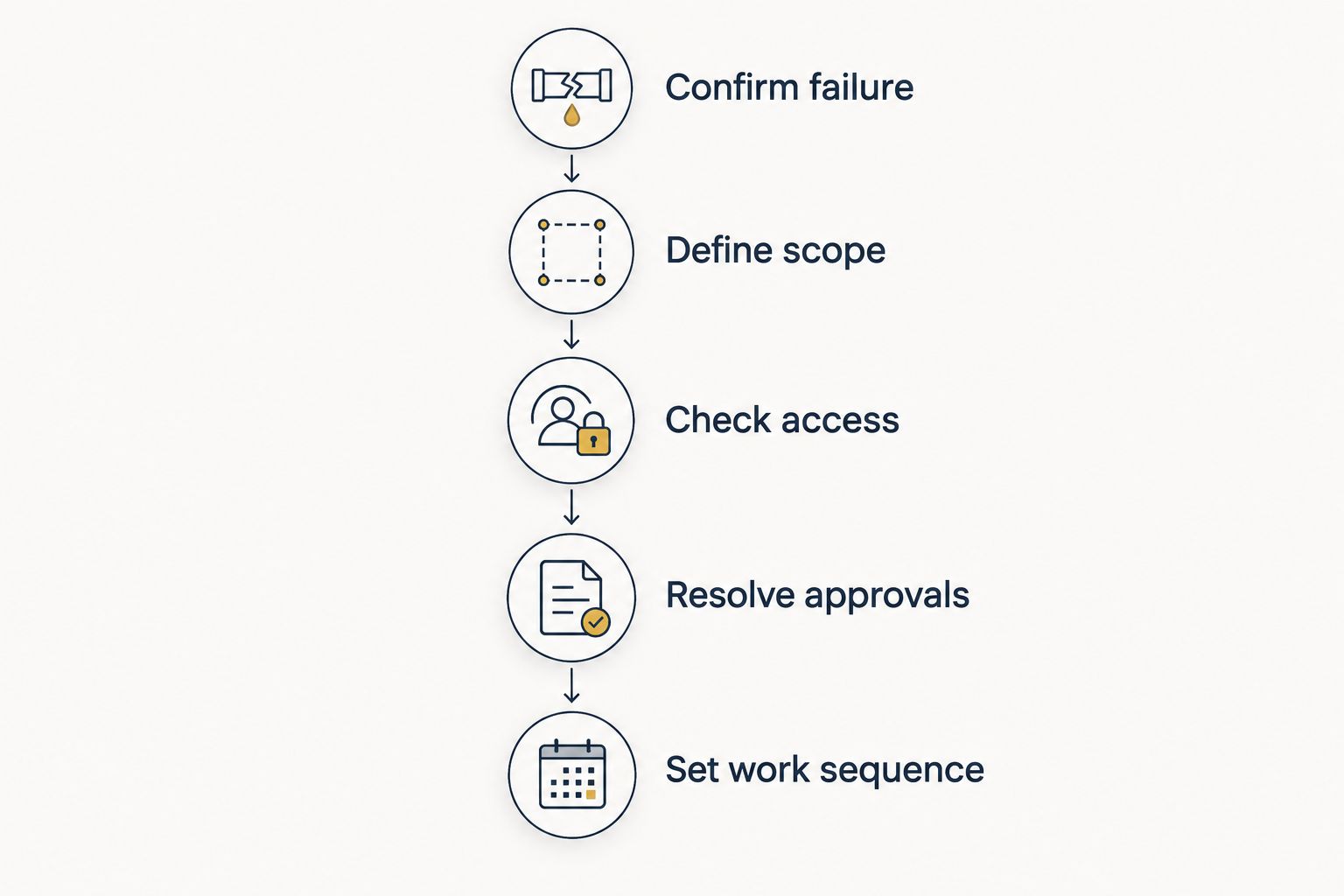
A replacement schedule should follow the actual work sequence. These steps explain what the contractor needs to resolve and what you should ask at each stage.
- Confirm the failure. Ask what evidence supports replacement rather than cleaning or a localized repair. A blockage and a broken pipe are different problems, even when both cause backups.
- Define the scope. Establish the start and end points of the proposed work. Confirm whether the scope covers an exterior lateral, a section under the building, or another identified segment.
- Check access. Identify paving, landscaping, fences, structures, and other obstacles along the route. Ask where equipment, excavated soil, and materials will go.
- Resolve approvals. Have the contractor identify applicable permits, utility-locating requirements, inspection stages, and any utility involvement. Do not treat an anticipated approval as an issued approval.
- Set the work sequence. Request the planned drain shutdown, installation sequence, testing, inspection, backfill, and restoration milestones. Ask which activities depend on another party's schedule.
The strongest 2026 schedule names these dependencies before excavation begins. It also explains how you will receive an updated completion date if the exposed pipe differs from the initial findings.
Open-trench sewer replacement
Best for: Projects that require direct access to remove damaged pipe, correct its route or slope, or work on exposed connections.
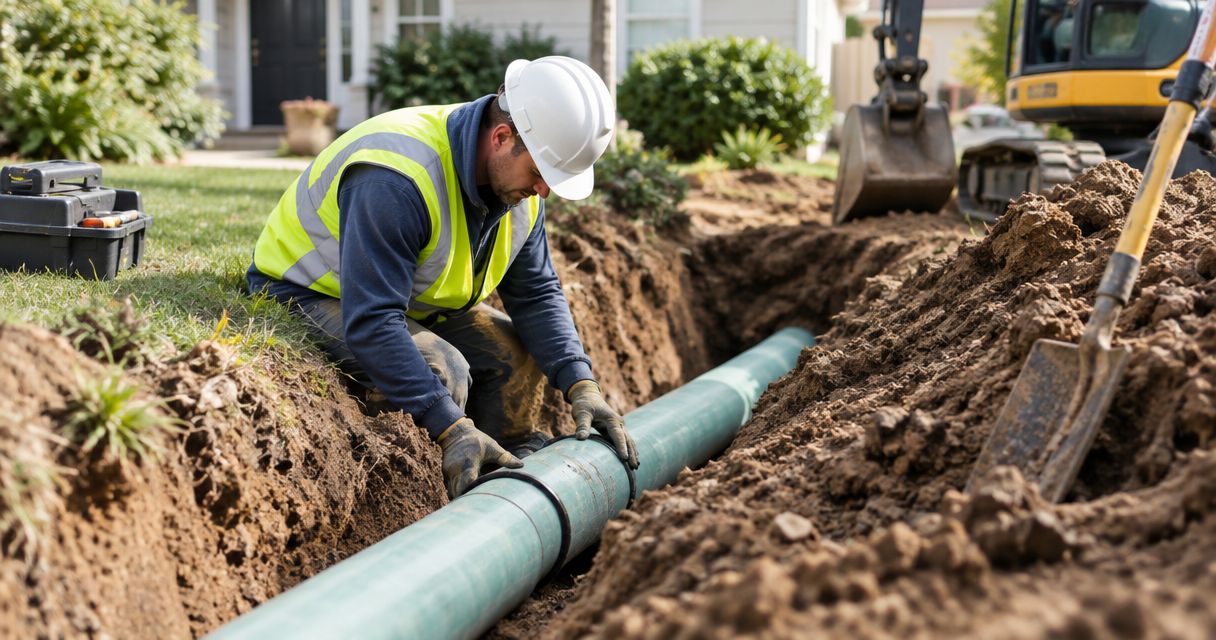
Open-trench replacement exposes the affected pipe through excavation. The contractor removes the specified section, installs the replacement, completes connections, and performs the required checks before closing the work area.
Direct access is the main advantage. Excavation also creates a separate restoration task, particularly where the route crosses concrete, paving, planted areas, or finished floors.
Ask whether the proposed completion date includes backfill and surface repairs. If another contractor will handle those repairs, get that handoff in writing rather than assuming the plumbing crew's departure means the entire project is complete.
Trenchless sewer replacement
Best for: Projects where the existing route and site conditions support replacement without excavating the full pipe run.
Pipe bursting is a trenchless replacement method that breaks the existing pipe while pulling a replacement pipe through its route. It still requires access points, suitable conditions, and assessment of nearby utilities and connections.
Reduced excavation along the route is its advantage. The limitation is suitability: the condition, alignment, connections, and surroundings of the existing line determine whether the method fits.
Do not accept “trenchless” as a completion-time guarantee. Ask the contractor to identify the access locations, remaining excavation, approval requirements, and restoration included in the proposed method.
Sewer pipe lining is rehabilitation, not replacement
Best for: Existing pipes that a qualified contractor determines are suitable for lining.
Cured-in-place pipe lining installs and cures a liner inside the existing pipe. It rehabilitates that pipe rather than removing it and installing a replacement along the entire treated section.
Limiting excavation is an advantage where lining is suitable. Its limitation is that lining does not inherently correct the existing route or slope, and the pipe must be assessed for preparation, lining, and connection requirements.
If you requested replacement but received a lining proposal, ask the contractor to explain the change. Your 2026 agreement should name the actual method, not use “repair,” “lining,” and “replacement” interchangeably.
| Approach | Best for | Main advantage | Main limitation | Scheduling question |
|---|---|---|---|---|
| Open-trench replacement | Work requiring direct pipe access | Allows removal and direct work on the exposed line | Excavation adds surface-restoration work | When are the disturbed surfaces restored? |
| Pipe bursting | Suitable routes with workable access points | Avoids excavating the full run | Requires site-specific suitability assessment | Where are the access excavations? |
| Pipe lining | Existing pipes suitable for rehabilitation | Limits excavation along the treated section | Does not inherently correct route or slope | What preparation and curing stages apply? |
Why sewer line replacement time varies
These are physical and administrative scheduling drivers, not reasons to accept an unexplained delay. Ask which ones apply to your property.
- Pipe location and depth. A line beneath a finished floor or paved area involves different access work than an accessible exterior run. Deeper excavation also changes the work and protective measures required.
- Extent of damage. Replacing an identified section differs from replacing a longer run or addressing multiple failed connections. Ask how the contractor will handle additional damage discovered during work.
- Replacement method. Excavation, pipe bursting, and lining involve different preparation and completion steps. Method selection must follow suitability, not an advertised speed claim.
- Ground and weather conditions. Water entering an excavation, unstable ground, and unsafe weather affect excavation and site work. Ask how the contractor will secure the property if work pauses.
- Approvals and inspections. Applicable permit, inspection, and utility requirements create dependencies outside the installation crew's immediate control. Confirm who arranges each required visit.
- Restoration scope. Soil backfill is not the same deliverable as finished paving, flooring, or landscaping. Each agreed surface repair belongs in the schedule.
Keep these factors separate when reviewing the proposal. A method that reduces excavation can still involve preparation, inspection, and access-point repairs.
Can I stay home during sewer line replacement?
You can stay only if the property's usable facilities and the contractor's safety restrictions allow it. Confirm toilet access before deciding to remain in the building.
Ask whether any bathroom stays connected to an unaffected, usable drainage route. Do not assume a second bathroom remains usable simply because it sits farther from the work area.
Also confirm safe access around excavations, indoor work zones, and equipment. If the work affects every toilet, arrange another location or an appropriate temporary facility before the planned shutdown.
For a business or rental property, identify who communicates restrictions to occupants. A posted notice is useful, but it does not replace a clear instruction about which fixtures must remain unused.
When can I flush toilets or run the washing machine again?
You can resume using affected fixtures when the contractor confirms the sewer connection is ready for service. The completion of visible pipe work alone is not that confirmation.
Ask for a clear release covering toilets, sinks, showers, dishwashers, and washing machines. If only part of the building's drainage is restored, request a fixture-specific instruction rather than a general statement that the plumbing is working.
Have the contractor explain any testing or inspection that must occur before use resumes. In your 2026 schedule, make “drain service restored” a named milestone so nobody has to guess.
Does a sewer backup always mean I need replacement?
A sewer backup does not by itself establish that the pipe needs replacement. Obstructions and structural damage require different responses, and the diagnosis should support the proposed work.
Ask the plumber to explain the inspection findings in plain trade terms: blockage, roots, separated joint, broken pipe, or another observed condition. Request the location of the finding and the section the proposed work addresses.
Approve a replacement scope based on documented condition, not the symptom alone. If cleaning is proposed first, ask whether it is intended to restore flow, prepare for inspection, or address the diagnosed cause.
What should I ask a Treasure Coast plumbing contractor?
Choose a contractor who can explain the scope and give you a usable shutdown plan. A quick start date is not a substitute for knowing which pipe will be replaced and when your drains can return to service.
Imperium Electric LLC provides licensed plumbing services for residential and commercial customers in Port St. Lucie, Stuart, Jensen Beach, and the Treasure Coast. Discuss your property's sewer problem with Imperium Electric LLC and confirm the proposed method and scope before scheduling work.
Bring the inspection findings, any existing plans, and a description of the backup or drainage problem. Explain whether the building is occupied and whether uninterrupted access to toilets is essential.
Ask these questions before authorizing work:
- What exact pipe section does the proposal cover?
- What evidence supports replacement?
- What method is proposed, and why does it fit this property?
- When must occupants stop using affected fixtures?
- Who handles approvals, inspections, and surface repairs?
- How will additional findings change the scope and schedule?
The stated service area and plumbing credentials are relevant strengths. They do not establish a particular sewer replacement method or a guaranteed duration; those belong in the property-specific agreement.
Discuss your plumbing project
Confirm the sewer work scope, drain shutdown, and restoration responsibilities before scheduling.
FAQ
How long does sewer line replacement take from start to finish?
Sewer line replacement needs a site-specific schedule covering preparation, installation, restored drain use, and surface repairs. Ask the contractor to distinguish active work from approval, inspection, and restoration dependencies.
Is trenchless sewer replacement always faster than digging?
Trenchless sewer replacement is not automatically faster for every property. Access, pipe suitability, preparation, connections, and required approvals determine the work sequence.
Can I use my shower while the sewer line is being replaced?
Use your shower only if the contractor confirms its drainage connection remains usable. Running water does not mean the wastewater has a safe discharge route.
Does pipe lining count as sewer line replacement?
Pipe lining is rehabilitation of an existing pipe, not removal and replacement of that pipe. Ask whether the proposal specifies lining, pipe bursting, or open-trench replacement.
Will sewer replacement include fixing my driveway?
Driveway repair is included only when the agreed scope includes it. Confirm who performs the repair and whether its completion is part of the quoted project schedule.
What should I do if sewage backs up before replacement starts?
Stop using affected fixtures, keep people away from sewage, and contact a plumber for instructions. Do not treat a future replacement appointment as a plan for an active backup.
Who can I contact about plumbing work on the Treasure Coast?
Imperium Electric LLC provides licensed residential and commercial plumbing services in Port St. Lucie, Stuart, Jensen Beach, and the Treasure Coast. Confirm the sewer-specific assessment, proposed method, and schedule directly.
One last thing
A working sewer and a restored property are separate milestones. Before signing, ask the contractor to put both in the agreement and name who is responsible for each.
When discussing plumbing work with Imperium Electric LLC, bring that distinction to the scheduling conversation. It prevents a pipe-installation date from becoming an assumption about finished floors, paving, or landscaping.