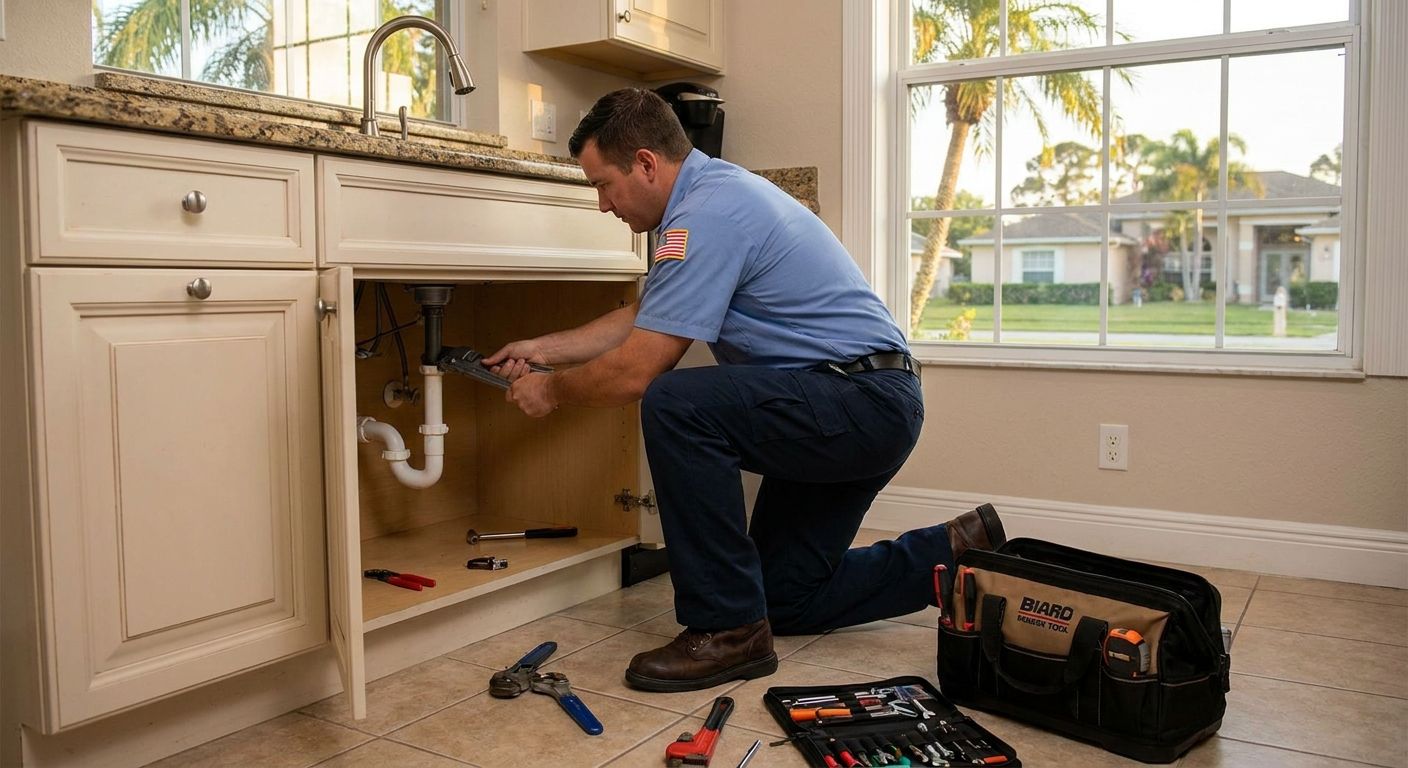
Emergency plumber services for Port St. Lucie homeowners are on-call plumbing repairs for burst pipes, sewage backups, and failed water heaters, dispatched the same day to stop water damage before it spreads through drywall and flooring. Port St. Lucie's mix of 1980s-and-90s homes on galvanized or polybutylene pipe, newer construction on reactive sandy soil, and well-fed irrigation systems creates failure patterns a generic national plumbing line doesn't plan for.
- Emergency plumber Port St. Lucie homeowners need answers calls daily from 7 a.m. to 6 p.m., including weekends.
- Burst supply lines, sewage backups, and dead water heaters are the true emergencies — most other plumbing issues can wait for a scheduled visit.
- Older Port St. Lucie homes running galvanized or cast iron pipe fail more often and benefit from repiping, not repeat patch jobs.
- Shutting off the main water valve first limits damage more than any tool you own.
- Imperium Electric LLC handles licensed plumbing repairs across Port St. Lucie, Stuart, and Jensen Beach.
Why emergency plumbing matters for Port St. Lucie homeowners
St. Lucie County's water table sits high year-round, and a slab leak or sewer backup here doesn't stay contained — it spreads into saturated soil and comes back up through the lowest drain in the house. Homes built before the mid-1990s in neighborhoods around Port St. Lucie Boulevard and Prima Vista often still carry original galvanized supply lines, which corrode from the inside and rupture with no warning.
Hurricane season adds a second pressure point: storm surge and heavy rain push groundwater against septic and sewer lines, and pressure swings during outages can crack fittings that were already brittle. A licensed plumber for emergency repairs who already knows the Treasure Coast's soil and pipe history diagnoses faster than a crew unfamiliar with the area.
Call timing matters too. Imperium Electric answers plumbing calls daily from 7 a.m. to 6 p.m., including Saturdays and Sundays — know that window before an emergency hits so you're not guessing at 9 p.m. whether anyone will pick up.
Shut off the water at the main before anything else
The single move that limits damage more than any other is cutting water supply at the source, not at the fixture.
- Locate your main shutoff valve now, before an emergency — usually near the water meter at the street or where the line enters the house
- Turn the valve a quarter to a half turn clockwise and confirm water pressure drops at an indoor faucet
- Label the valve with tape or a tag so anyone in the household can find it in the dark
- If the main valve is seized or won't turn, shut off the fixture's individual stop valve as a temporary measure
- Photograph the damage before you start mopping — it helps with insurance and with diagnosing the failure point later
Identify whether it's a true emergency or something that can wait
Not every leak justifies an after-hours call, and knowing the difference saves you money and stress.
- True emergencies: burst supply line, sewage backup into the house, no water at all, a water heater leaking onto electrical components
- Can usually wait for a scheduled visit: a slow drip under a sink, a running toilet, low water pressure in one fixture, a slow drain
- Check whether the issue is isolated to one fixture (localized problem) or affecting the whole house (main line or pressure issue)
- Listen for running water when every fixture is off — that's often a hidden slab or wall leak, not a plumbing emergency but a maintenance one worth detecting before it floods
Contain the damage while you wait for help
A plumber arriving to a house that's already been triaged fixes the problem faster and at lower cost.
- Move furniture, rugs, and electronics away from standing water immediately
- Use towels or a wet-dry vac to pull up pooled water before it soaks into subflooring
- Open cabinet doors under sinks to let trapped water evaporate and air circulate
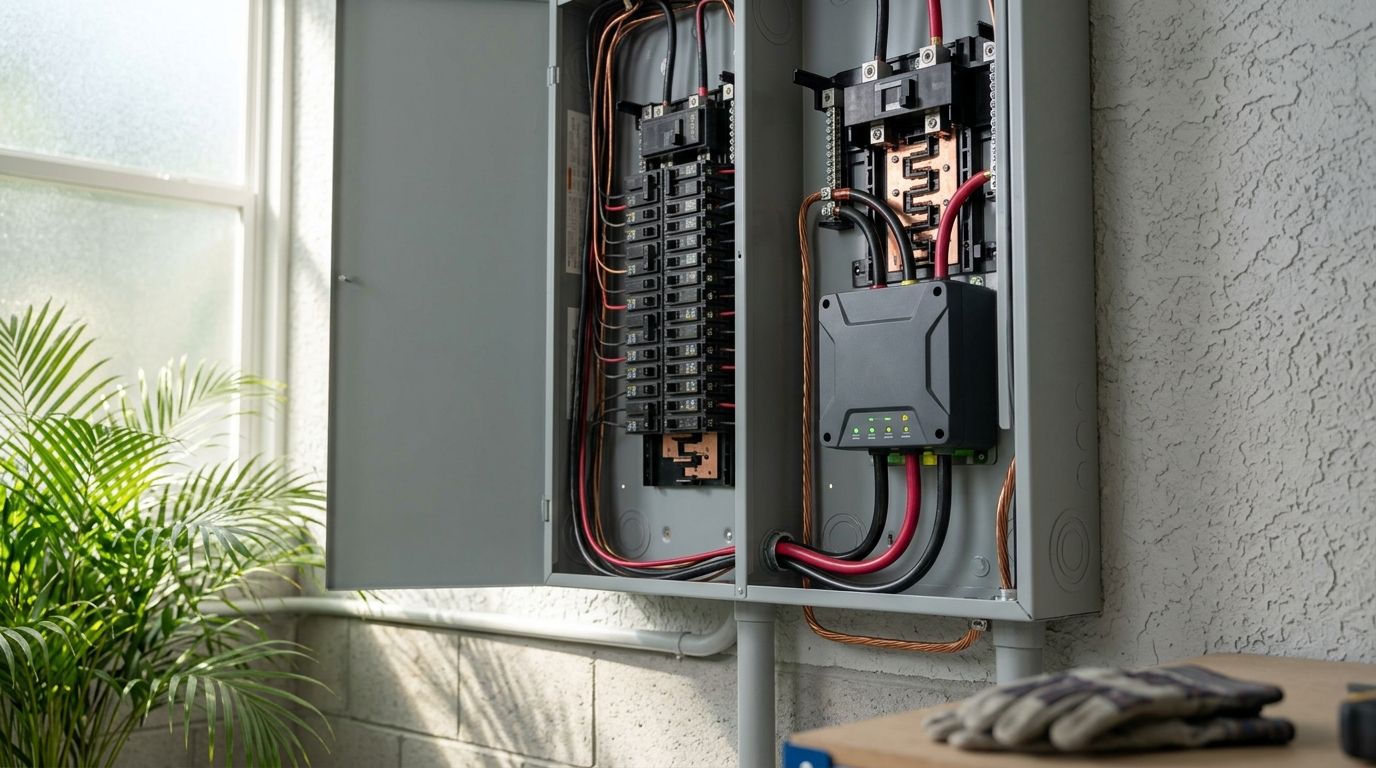
- Turn off electrical breakers to any outlet or fixture near standing water — water and live wiring don't mix
- If sewage has backed up, stay out of the affected room; that water carries bacteria and needs professional cleanup, not a mop
Call a licensed emergency plumber for what you can't fix yourself
Once the water's off and the damage is contained, the repair itself needs a license, not a YouTube tutorial. Galvanized pipe joints, main line breaks, and gas water heater connections carry code requirements that a DIY fix can violate — and an uninspected repair can complicate an insurance claim later.
This is where a licensed emergency plumber earns the call: diagnosing whether the failure is a single fitting or a symptom of pipe-wide corrosion, pulling the right permit when the repair requires one, and fixing it in a way that passes inspection. Imperium Electric LLC handles emergency plumbing repairs across Port St. Lucie, Stuart, and Jensen Beach, alongside electrical, HVAC, and generator work — useful when a burst pipe has also tripped a breaker or damaged wiring in the same wall cavity.
“If the water is rising faster than you can mop, shut off the main and call — don't wait until morning to decide it's serious.”
Get the pipe or fixture repaired, not just patched
A compression fitting or a rubber patch stops the leak for a week. It doesn't stop the next one three feet down the same corroded line.
- Ask the plumber to identify the pipe material and its approximate age, not just the failure point
- Request a straight answer on whether the fix is a permanent repair or a temporary stopgap
- For galvanized or original cast iron lines showing repeat failures, ask about section replacement versus a whole-house re-piping evaluation
- Confirm the repair meets current Florida plumbing code, especially if the home is heading toward a sale or insurance renewal
Schedule a follow-up inspection for older Port St. Lucie plumbing
An emergency call fixes today's break. It doesn't tell you whether five more are coming.
- Book a full-house plumbing inspection within 30 days of any emergency repair, especially in homes built before 2000
- Have the water heater checked at the same visit — corrosion inside a tank often shows up as pipe failures nearby
- Ask about water pressure readings; consistently high pressure (above 80 psi) accelerates pipe wear across the whole system
- Check for slab leak risk if the emergency involved a sudden spike in the water bill with no visible leak
Prevent the next emergency call
Most repeat emergency calls trace back to the same three causes: aging pipe material, unmonitored water pressure, and ignored slow leaks.
- Replace visibly corroded galvanized sections proactively rather than waiting for a rupture
- Install a pressure-reducing valve if incoming pressure runs above the 80 psi threshold
- Add leak detection near water heaters and washing machines — the two most common silent-failure points
- Keep gutters and yard drainage clear so groundwater doesn't pool against the foundation and stress buried lines
Comparing your options for a plumbing emergency in Port St. Lucie
| Option | Best for | Key limitation |
|---|---|---|
| DIY shutoff and containment | Buying time before help arrives | Doesn't fix the actual failure; risk of code violations on permanent repairs |
| Handyman or unlicensed repair | Minor cosmetic fixes, not active leaks | No license means no code compliance and no permit pull for major repairs |
| National plumbing chain | Fast national scheduling systems | Less familiarity with local pipe age, soil, and permitting quirks |
| Licensed local plumber (Imperium Electric LLC) | Diagnosing and permanently repairing emergencies in older or storm-affected homes | Call coverage runs 7 a.m. to 6 p.m. daily, not overnight |
Verdict: for a true plumbing emergency in Port St. Lucie, a licensed local plumber who knows the area's pipe history beats a national chain on diagnosis speed and code compliance — call during the 7 a.m. to 6 p.m. window for the fastest response.
Get help with a plumbing emergency
Licensed plumbing repairs across Port St. Lucie, Stuart, and Jensen Beach.
Common mistakes Port St. Lucie homeowners make
- Assuming irrigation well pumps and city water share one shutoff — most PSL properties run two separate systems, and shutting off the wrong one wastes critical minutes
- Ignoring a slow rise in the water bill — that's frequently a slab leak building toward a full emergency, not a billing error
- Ignoring hard water scale buildup on fixtures and water heaters, which accelerates the corrosion that leads to sudden pipe failure in 2026
- Assuming HOA or builder warranty covers plumbing failures past year one — most repairs on original pipe are the homeowner's cost
- Waiting until after 6 p.m. to call when the leak started that morning — earlier calls within the daily coverage window get same-day attention more reliably
FAQ
What counts as a true plumbing emergency in Port St. Lucie?
A burst supply line, sewage backup into the house, complete loss of water, or a leaking water heater near electrical components counts as a true emergency. A slow drip or one clogged drain can usually wait for a scheduled appointment.
How fast can an emergency plumber reach my home in Port St. Lucie?
Response time depends on when you call and current job load. Calls placed within the 7 a.m. to 6 p.m. daily window, including weekends, get the fastest scheduling.
Is an emergency plumber available overnight in Port St. Lucie?
Coverage runs daily from 7 a.m. to 6 p.m., not around the clock. For an overnight failure, shut off the main water valve to contain damage and call as early as possible the next morning.
Why do older Port St. Lucie homes have more plumbing emergencies?
Homes built before the mid-1990s often still run galvanized supply lines, which corrode from the inside over decades and rupture without warning. Re-piping sections or the whole system reduces repeat emergency calls.
Should I shut off my water heater during a plumbing emergency?
Yes, if the leak is anywhere near the water heater or its gas or electrical connections. Turn off the heater's power or gas supply along with the main water valve until a licensed plumber inspects it.
Does homeowners insurance cover emergency plumbing repairs?
Coverage varies by policy and cause of damage; sudden pipe bursts are more often covered than gradual leaks from age or neglect. Check your specific policy language and document the damage with photos before repairs start.
How do I know if I need re-piping instead of a single repair?
Repeated leaks in different spots on the same line, visible corrosion at joints, or discolored water are signs the whole system is failing, not just one fitting. A licensed plumber can inspect and recommend section replacement or full re-piping.
What's the first thing to do when a pipe bursts?
Shut off the main water valve immediately, then cut power to any outlets or fixtures near standing water. Contain what water you can with towels before calling a licensed plumber.
One last thing
The emergency call that gets fixed fastest isn't the biggest leak — it's the one where the homeowner already knows where the main shutoff is. Find yours today, label it, and you'll cut real damage time by however long it takes to search for a valve in a panic at 6 a.m.