A hidden water leak wastes gallons every day and can rot subfloors, feed mold, and spike your water bill months before you ever see a stain on the ceiling — this guide walks through exactly how to find one before it turns into a flood.
- Check your water meter with everything off — any movement means an active leak somewhere in the line.
- A 10-15% jump in your water bill with no change in usage points to a hidden leak, not a pricing error.
- Slab leaks are common in Florida homes on concrete foundations — warm spots on the floor are a red flag.
- DIY detection catches most leaks; a licensed plumber is the right call once you find water you can't trace.
Why this matters
EPA WaterSense estimates the average household's leaks waste more than 10,000 gallons of water a year — that's roughly the amount needed to wash 270 loads of laundry, and most of it happens behind walls or under slabs where nobody's looking. On the Treasure Coast, where homes sit on concrete slab foundations and humidity stays high most of the year, a slow leak doesn't just cost money. It feeds mold, softens drywall, and in older Port St. Lucie and Stuart homes with original copper piping, it can go undetected for months because the water never reaches a visible surface.
Catching a leak early is the difference between a $200 repair and a $15,000 water damage claim. The steps below use the same checks a licensed plumber runs on a service call, just without the truck.
What you'll need
- Access to your water meter (usually near the street or in a meter box)
- A flashlight
- Your last 2-3 water bills for comparison
- Food coloring or dye tablets (for the toilet test)
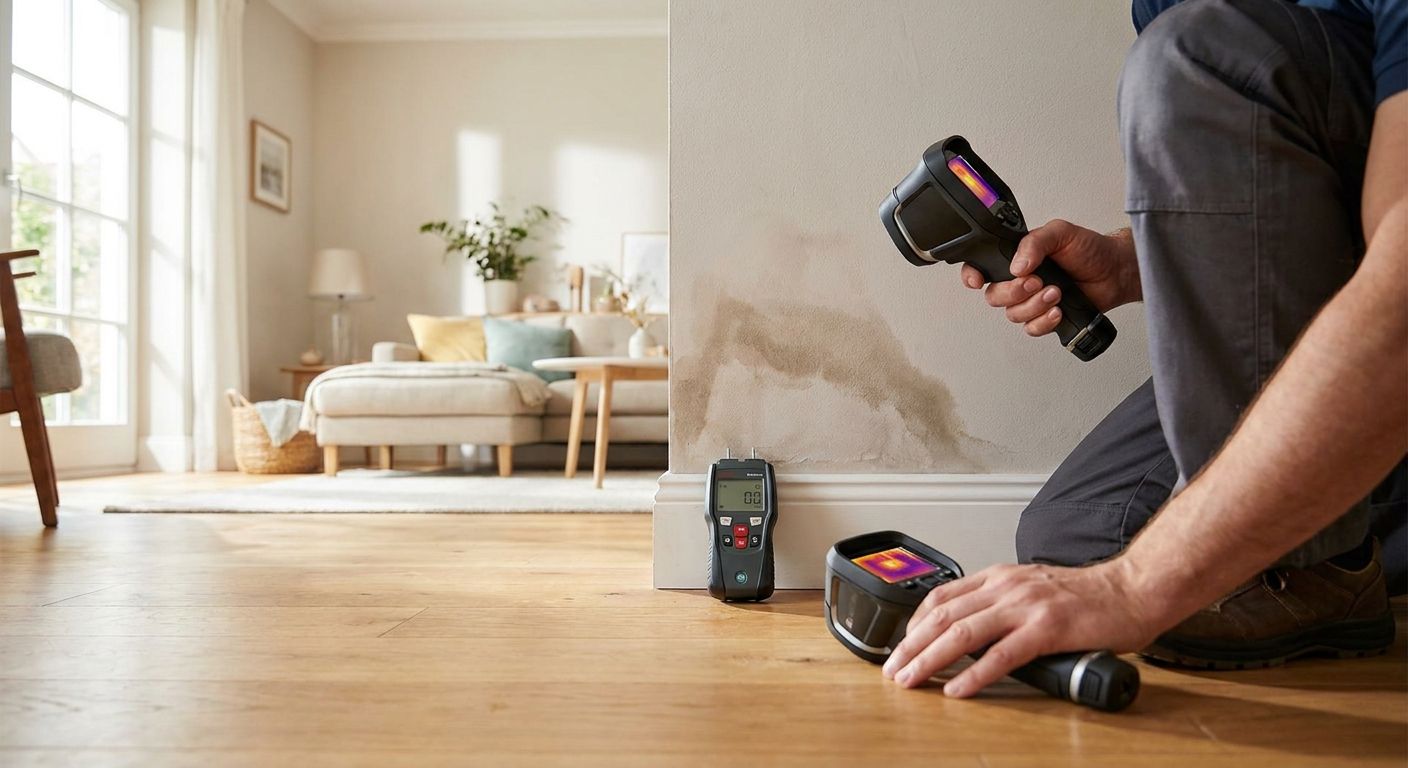
- A moisture meter or an infrared thermometer (optional but useful for slab checks)
- 15-30 minutes with no water running in the house
The steps
1. Read your water meter with everything off
This is the single most reliable DIY test for a hidden leak. Turn off every faucet, appliance, irrigation zone, and ice maker in the house, then find your water meter and note the reading. Wait 15 minutes without using any water and check it again.
If the number moved, water is flowing somewhere you can't see. Most meters also have a small triangular or star-shaped leak indicator dial — if that's spinning while everything's off, you've confirmed active flow. Common mistake: forgetting the irrigation system or a running toilet, both of which will show up as "leaks" that aren't actually pipe failures.
2. Compare your last three water bills
Pull your bills from the last three billing cycles and look at usage in gallons, not just dollars. A 10-15% increase with no change in household habits — same number of people, same laundry routine, no new pool fill — is a strong signal of a hidden leak, not a rate hike.
Florida utility bills usually break out gallons used per period, so this takes five minutes. If usage climbed steadily over two or three cycles, the leak is likely getting worse, not staying static.
3. Check the toilets with the dye test
Toilets are the most common source of a leak that homeowners mistake for something more serious. Drop food coloring or a dye tablet into the tank, wait 10 minutes without flushing, and check the bowl. If color shows up in the bowl, the flapper valve is leaking water straight into the drain, sometimes hundreds of gallons a day.
This test takes two minutes per toilet and rules out the cheapest, most common cause before you start tearing into walls or calling for slab leak detection.
4. Walk the house and feel for warm or damp spots on the floor
Slab leaks are common in older Port St. Lucie and Stuart homes because hot water lines run through the concrete foundation, and decades of ground shift or corrosion can crack copper pipe. Walk barefoot across tile and hardwood floors, especially near bathrooms and the water heater closet, and note any spot that feels noticeably warmer than the rest of the floor.
A warm patch usually means a hot water line leak under the slab. An infrared thermometer speeds this up — scan the floor and flag anywhere the reading jumps more than a few degrees from the surrounding area.
5. Inspect under sinks, behind the water heater, and around the washing machine
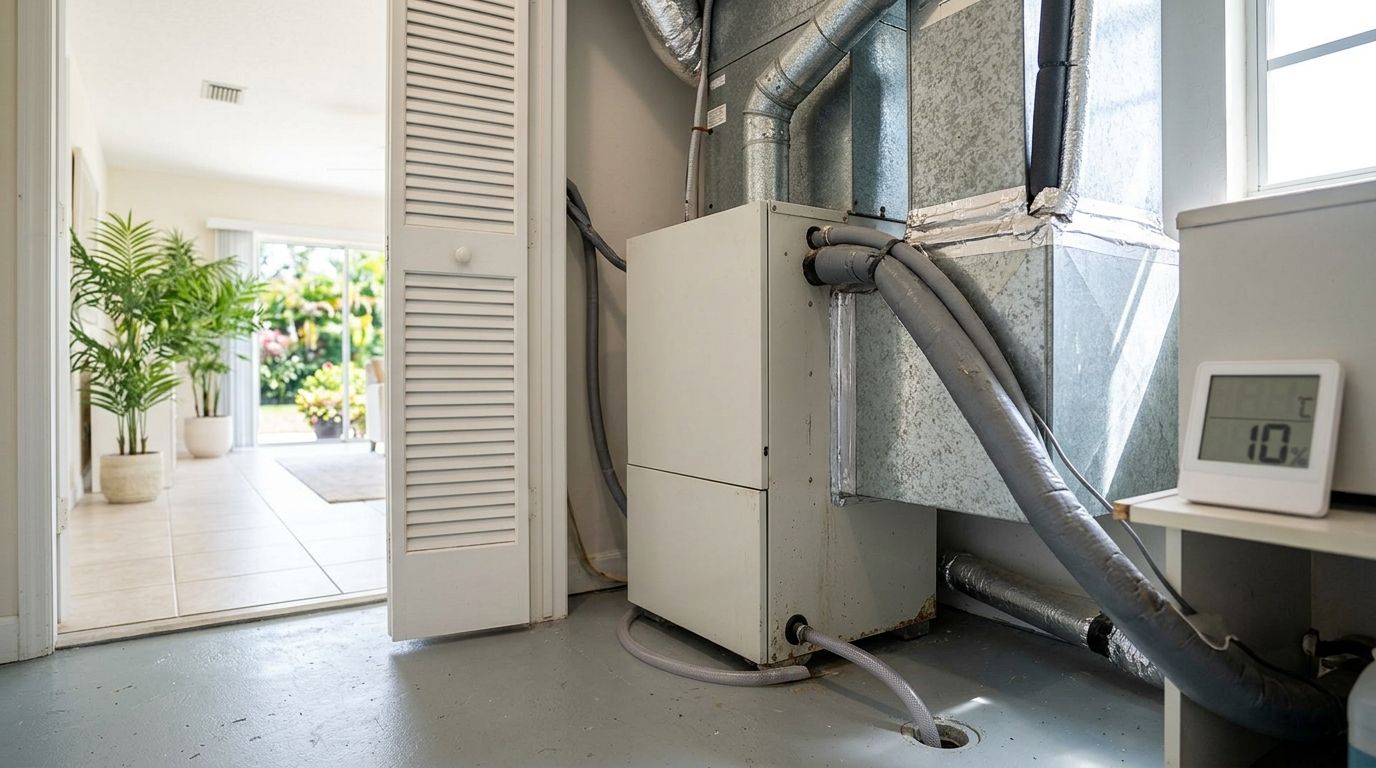
Open every cabinet under a sink and run a flashlight along the supply lines and drain trap, checking for water stains, warped wood, or a faint mildew smell. Do the same behind and under the water heater — a slow drip from a failing tank or loose fitting often pools quietly for weeks before it's visible from the front.
Check the washing machine hose connections too; rubber supply hoses degrade over time and are a leading cause of sudden basement or laundry room flooding. Common mistake: checking only the visible front of appliances and skipping the wall-side connections where most failures start.
6. Watch for ceiling stains, bubbling paint, or a musty smell
A yellow-brown ring on the ceiling, paint that's bubbling or peeling for no obvious reason, or a musty smell in one specific room are all signs of a leak that's been running long enough to soak through a surface. By the time you see this, the leak has usually been active for weeks or longer.
Track which room the smell or stain is strongest in — that narrows down which line or fixture above or below it is the likely source before a plumber even arrives.
7. Check outdoor spigots, irrigation lines, and the main shutoff valve
Run each outdoor spigot briefly and check for water pooling at the base of the fixture, which points to a failing seal. Then walk your irrigation zones — a soggy patch of lawn that stays wet longer than the rest of the yard, especially outside of watering schedules, usually means a cracked line underground.
Finally, check the main shutoff valve itself for corrosion or a slow drip; a valve that's seized or leaking makes any future emergency repair take longer.
Not sure if it's a leak?
A licensed Imperium Electric plumber can pinpoint the source before it spreads.
Troubleshooting
- Meter dial spins but you can't find water anywhere: the leak is likely underground between the meter and the house, or under the slab — this needs professional leak detection equipment, not more visual inspection.
- Water bill jumped but the meter test came back clean: check for a leak that only happens intermittently, like a toilet flapper that sticks open randomly, or an irrigation valve that doesn't fully close.
- Warm spot on the floor but no visible moisture: don't wait — a hot water slab leak can run for weeks with zero surface water while still damaging the foundation and flooring underneath.
- Musty smell with no visible stain: check inside wall cavities near plumbing runs; the moisture may be trapped between drywall and insulation where it won't show on the surface yet.
- Hose bib drips only under pressure: this usually means a worn washer or seal, not a hidden pipe leak — an easy fix, but confirm it before assuming the bigger problem is solved.
- Old copper pipes with green or blue-green stains: that discoloration is corrosion residue and a sign the pipe is actively pitting from the inside — plan for a repair or repipe before it fails outright.
Tools and resources
- Water meter and leak indicator dial (check your meter box lid for a diagram if you're not sure where it is)
- Moisture meter or infrared thermometer for slab and wall checks
- Food coloring or dye tablets for toilet testing
- Your utility account's online usage history, if available, for a faster bill comparison
- A licensed plumber for confirmed leaks you can't trace — see emergency repair options in Stuart if the leak is active and you need same-day help
- If the leak traces back to an aging water heater, tankless water heater installation removes the tank failure risk entirely
What to do next
Once you've confirmed a leak but can't locate or reach it — under a slab, inside a wall, or below a fixture you can't safely disconnect — stop trying to fix it yourself. A slow leak behind drywall can look minor and still be undermining a subfloor. If a toilet or drain line is the culprit and it's backing up rather than just dripping, drain cleaning services in Port St. Lucie clears the line before it becomes a bigger repair. If the source turns out to be the water heater itself, water heater installation for Jensen Beach homeowners covers what a replacement involves and what it costs to do it right the first time. Homeowners building new construction who want leak-resistant plumbing from the start should look at plumbing services for Port St. Lucie new construction before the walls close up.
FAQ
How do I detect a hidden water leak without cutting into walls?
Start with the water meter test: turn off all water use, then check if the meter dial moves over 15 minutes. Combine that with a toilet dye test and a check of your last two water bills for a usage spike before assuming you need to open a wall.
What does a slab leak feel like?
A slab leak often shows up as a warm or damp patch on tile or hardwood flooring, especially near bathrooms or the water heater closet. In Florida homes on concrete foundations, this is one of the most common hidden leak sources because hot water lines run through the slab.
How much water does a hidden leak waste?
EPA WaterSense estimates the average household's leaks waste more than 10,000 gallons a year. A single running toilet or dripping fixture can account for hundreds of gallons a month on its own.
Is a 10% increase in my water bill a sign of a leak?
Yes — a 10-15% jump in gallons used with no change in household habits is a strong signal of a hidden leak. Compare at least two to three billing cycles before ruling out a leak.
Can a hidden leak cause mold?
Yes, a leak running behind a wall or under a floor for even a few weeks creates the moisture mold needs to grow. A musty smell in one specific room, without a visible stain yet, is often the earliest sign.
Should I call a plumber or try to find the leak myself first?
Run the meter test, dye test, and a visual walk-through first — these take under an hour and catch most leaks. Call a licensed plumber once you've confirmed a leak but can't locate or safely reach the source, such as a suspected slab or wall leak.
How often should I check for hidden leaks?
Check your water meter and review your bill every billing cycle, and do a full walk-through of sinks, the water heater, and outdoor spigots twice a year. Homes with older copper piping or a slab foundation benefit from checking more often.
What's the difference between a leak detector and a moisture meter?
A leak detector, like the dial on your water meter, tells you water is flowing somewhere in the system. A moisture meter measures water content in a specific material, like drywall or subfloor, which helps pinpoint exactly where a leak has already reached.
One last thing
Most homeowners check for leaks after they see damage — but the water meter test costs nothing and takes 15 minutes, and it's the same first move a licensed Imperium Electric plumber makes on a service call. Run it tonight before you run the dishwasher tomorrow morning, and you'll know within a quarter hour whether you're dealing with a phantom bill spike or an active leak eating through your foundation.