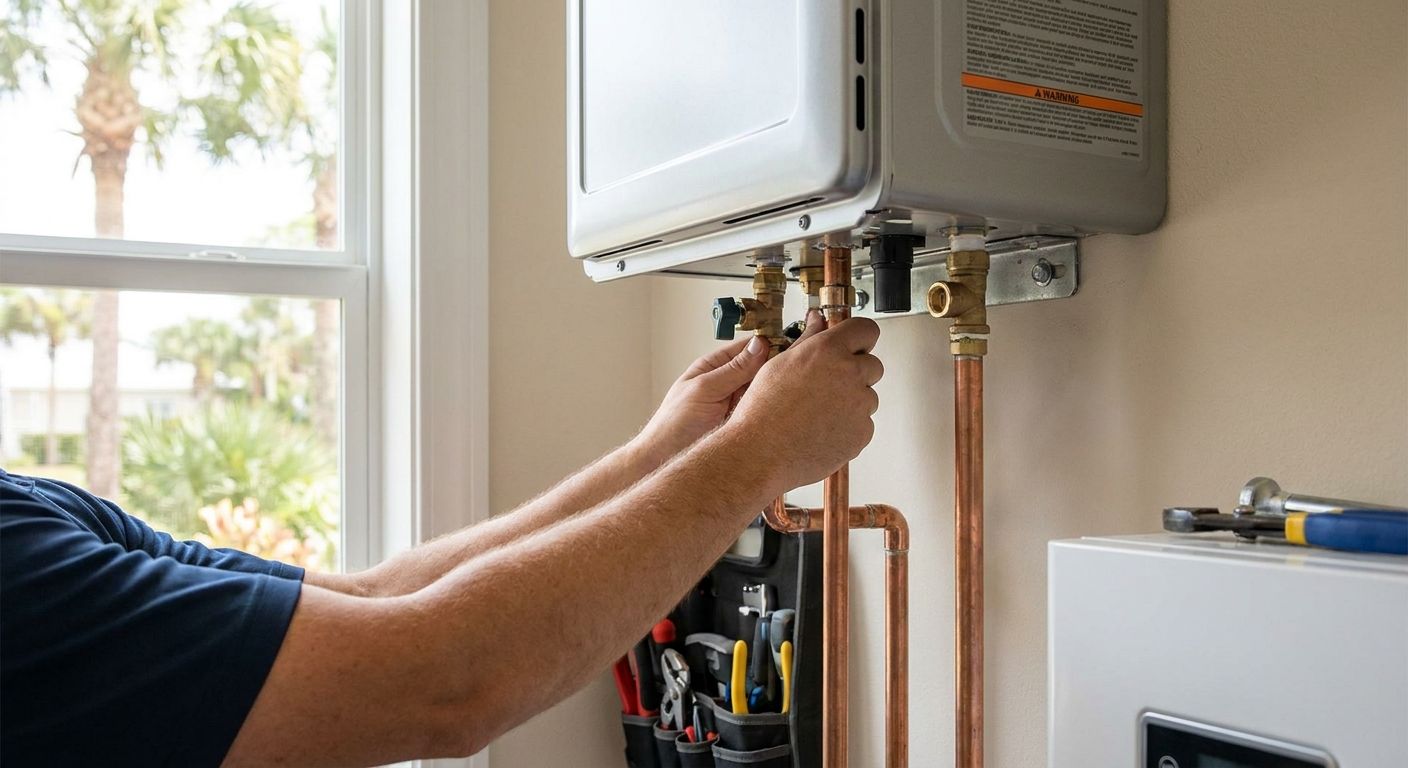
Treasure Coast homeowners are trading old 40-gallon tanks for tankless units faster than any other water heater upgrade on the coast — but Port St. Lucie, Stuart, and Jensen Beach houses each come with their own wiring age, water chemistry, and hurricane exposure that change what "the right unit" looks like. This guide breaks down what to check before you sign a contract for tankless water heater installation on the Treasure Coast in 2026.
- Whole-house gas tankless units need 8-11 GPM capacity for a 3-bathroom Treasure Coast home — undersizing is the most common installation mistake in 2026.
- Electric tankless models draw 150-200 amps; older Port St. Lucie and Stuart panels often need an upgrade before installation, not after.
- Gas tankless units keep running during a hurricane-season outage when paired with a standby generator — a standalone electric unit goes dark with the grid.
- Point-of-use electric heaters solve one guest bath or laundry sink; they are not a whole-house replacement. Skip them for that job.
Why this matters
A tankless water heater sized for a Michigan winter is overkill on the Treasure Coast, and one sized for a starter condo will choke a 4-bathroom home in Stuart running two showers and a dishwasher at once. Florida's warmer groundwater (roughly 75°F versus 40-50°F up north) actually works in your favor — a tankless unit here needs less temperature rise to hit 120°F at the tap, which means a smaller BTU rating can do the same job. Get the sizing and the electrical or gas math wrong, though, and you're looking at lukewarm showers or a tripped breaker every time two fixtures run together.
Who this is for
This guide is for Treasure Coast homeowners in Port St. Lucie, Stuart, or Jensen Beach replacing a failing tank heater, adding a bathroom, or building hurricane resilience into the home's utilities. If you're weighing gas versus electric, checking whether your panel can handle a tankless unit's amp draw, or trying to figure out why your last tankless heater ran cold during a power blip, the picks and criteria below are built for you. Imperium Electric installs both gas and electric tankless systems across Port St. Lucie, Stuart, and Jensen Beach, and the sizing math below reflects what actually shows up in Treasure Coast homes, not national averages.
What to look for in tankless water heater installation for Treasure Coast homes
Flow rate matched to simultaneous fixture demand
A single showerhead pulls 2-2.5 GPM; run a shower, a dishwasher, and a washing machine at once and you're past 6 GPM before anyone notices. Whole-house tankless units built for a 3-bathroom Treasure Coast home need 8-11 GPM capacity, not the 4-5 GPM units marketed for smaller households. Undersizing here is the single most common installation mistake homeowners report after the fact.
Gas line size or electrical panel capacity
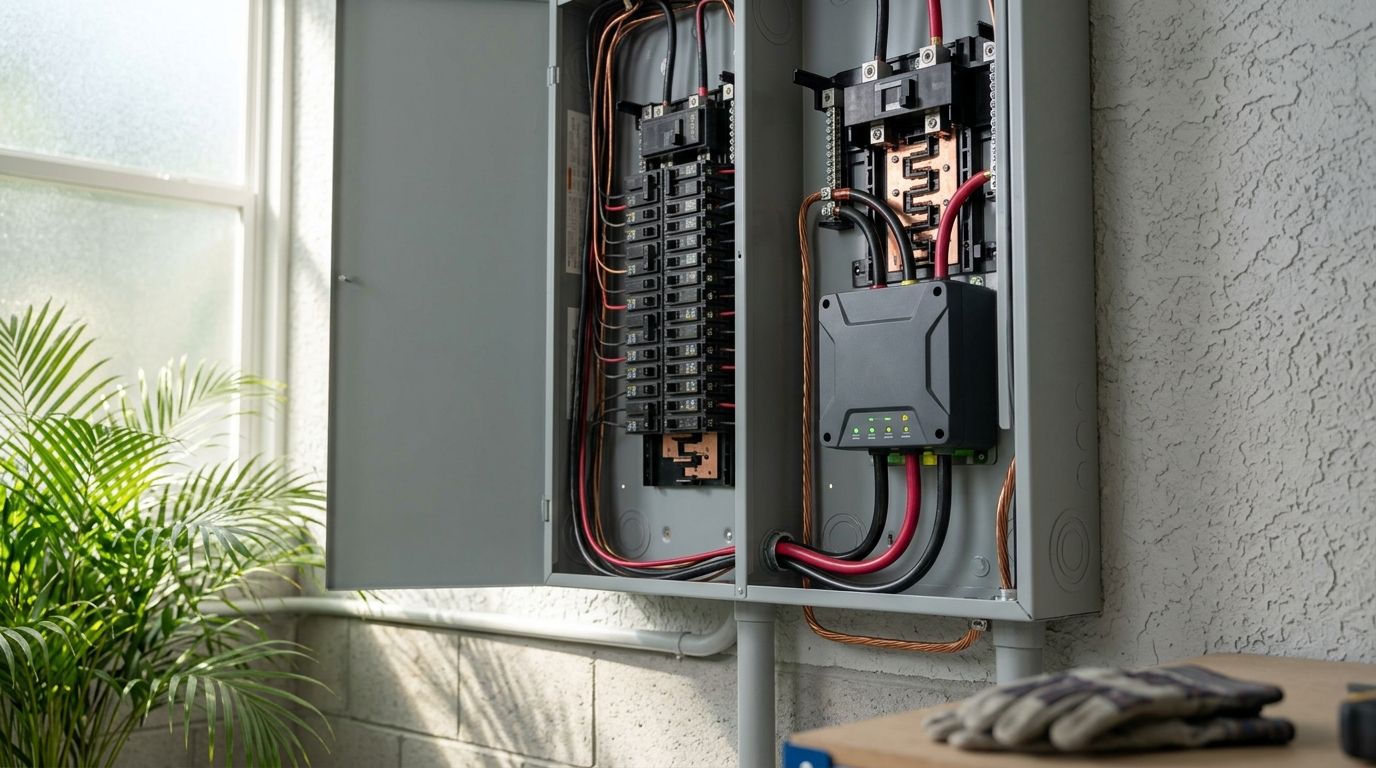
Gas tankless units need a properly sized gas line — most whole-house models require 3/4-inch supply, and older Treasure Coast homes built with 1/2-inch lines need that upgraded before installation, not discovered mid-job. Electric tankless units draw 150-200 amps depending on model, which means a 100-amp panel common in older Port St. Lucie and Stuart homes won't carry the load. Check panel capacity before you fall in love with an electric unit — the electrical panel upgrades for older Port St. Lucie homes guide walks through what an upgrade involves and when it's unavoidable.
Florida water hardness and scale buildup
Treasure Coast well and municipal water runs harder than in much of the Northeast, and scale buildup inside a tankless heat exchanger cuts efficiency and shortens lifespan faster here than in soft-water regions. A unit without a built-in scale-reduction system or an accessible service valve for annual flushing will lose capacity within a few years, not the full 20-year lifespan tankless units are rated for.
Hurricane season power resilience
A gas tankless unit with standard electronic ignition still needs a small amount of power to fire — during a grid outage, that means no hot water unless it's backed by a generator. Homeowners who've been through a Treasure Coast storm season know a hot shower after three days without power matters more than it sounds. If backup power is part of the plan, pair the tankless install with generator sizing done right — see how to size a whole-house generator for your home before you commit to either purchase.
Permit and code compliance across Treasure Coast cities
Port St. Lucie, Stuart, and Jensen Beach each pull permits through their own building departments, and a tankless install typically needs both a plumbing permit and, for gas units, a mechanical permit. Skipping permits is common with unlicensed installers and it's the number one reason insurance claims get denied after a water heater failure.
Installation quality: venting, gas sizing, condensate lines
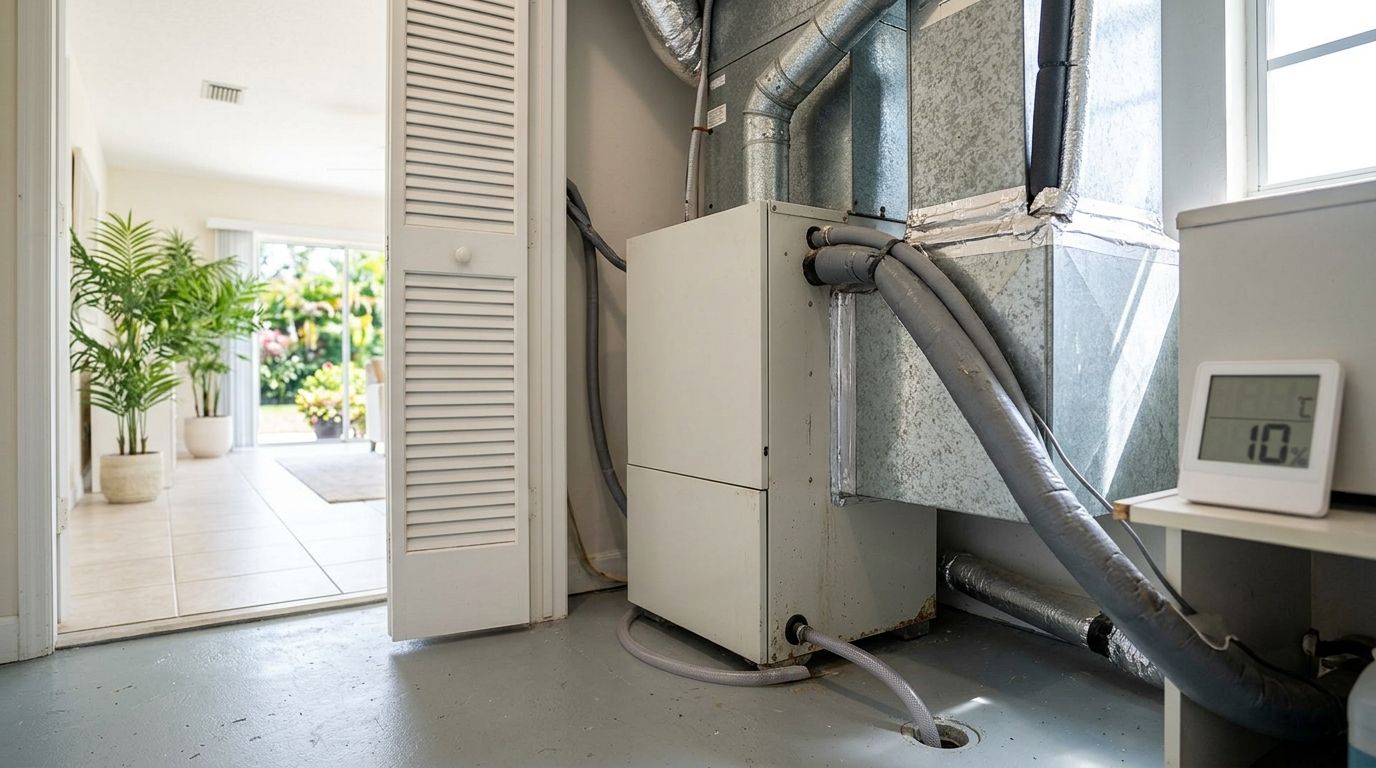
Condensing gas tankless units produce acidic condensate that needs a proper drain line, and near the coast, standard vent pipe corrodes faster in salt air than it does inland — stainless steel venting holds up longer on Jensen Beach and Stuart homes within a few miles of the water. A rushed install that skips these details looks fine on day one and fails within two years.
Get your tankless install sized right
Free quote for gas or electric tankless installation across the Treasure Coast.
Top picks by system type
Whole-house gas tankless — the workhorse pick
Delivers 8-11 GPM continuous flow, enough for three bathrooms running at once without a temperature drop. It needs an existing gas line or one run to the water heater location, plus proper venting. For a Treasure Coast home with gas service already in place, this is the default choice for hurricane resilience when paired with a generator. Verdict: Buy for 3+ bathroom homes with gas service.
Whole-house electric tankless — the no-gas-line pick
Skips the gas line entirely and runs on 150-200 amps of dedicated electrical capacity, which makes it the practical choice for homes without gas service. The catch is panel capacity — older Port St. Lucie and Stuart homes on 100-amp service almost always need an upgrade first. Verdict: Consider if your panel has headroom; otherwise budget for the panel upgrade before pricing the unit.
Condensing gas tankless with recirculation — the comfort upgrade
Adds a recirculation loop that keeps hot water primed at distant fixtures, cutting the wait time for hot water at a far bathroom from 30-45 seconds down to near-instant. It costs more upfront and needs the condensate drain done correctly. Verdict: Consider for larger single-story Treasure Coast homes with bathrooms far from the utility room.
Point-of-use electric tankless — the single-fixture pick
Handles 1-2 GPM at one sink or shower, which makes it a fit for a guest suite, pool bath, or garage sink addition — not a whole-house solution. Homeowners sometimes get sold this as a whole-house fix and end up disappointed. Verdict: Buy as a supplement to an existing system; Skip as your only water heater.
What to avoid
- A tankless unit sized off family headcount alone. Fixture count and simultaneous use matter more than how many people live in the house — a 2-person household with a soaking tub and a rain shower needs more GPM than a family of five sharing one bathroom.
- Standard PVC venting on a coastal install. It's cheaper upfront but corrodes faster within a few miles of Jensen Beach or Stuart's coastline; stainless steel venting costs more but doesn't need replacing in five years.
- Electric tankless quotes that skip the panel check. If the installer doesn't ask about your panel's amperage before quoting an electric unit, get a second opinion — a tripped breaker every time you run two hot fixtures is a sizing failure, not a fluke.
Verdict comparison
| System type | Flow rate | Power/fuel need | Outage resilience | Verdict |
|---|---|---|---|---|
| Whole-house gas | 8-11 GPM | Gas line + minor electric | Works with generator backup | Buy for gas-service homes |
| Whole-house electric | 6-9 GPM | 150-200 amp circuit | Down with the grid | Consider if panel has capacity |
| Condensing gas + recirculation | 8-11 GPM | Gas line + condensate drain | Works with generator backup | Consider for larger homes |
| Point-of-use electric | 1-2 GPM | 120-240V circuit | Down with the grid | Buy as supplement, Skip as sole heater |
FAQ
What's the best tankless water heater installation for a Treasure Coast home?
A whole-house gas tankless unit rated 8-11 GPM is the best fit for most 3+ bathroom Treasure Coast homes with existing gas service. Electric tankless works well as an alternative when gas isn't available, provided the electrical panel has 150-200 amps of spare capacity.
Is tankless water heater installation worth it in Florida?
Yes, mainly because Florida's warmer groundwater, around 75°F, means less temperature rise is needed to hit 120°F at the tap, improving efficiency versus colder climates. A tankless unit also lasts roughly 20 years versus 10-12 years for a standard tank.
How much power does an electric tankless water heater need?
Whole-house electric tankless units typically draw 150-200 amps depending on the model and household size. Older Port St. Lucie and Stuart homes on 100-amp panels usually need a panel upgrade before an electric unit can be installed safely.
Does a gas tankless water heater work during a power outage?
Not on its own — most gas tankless units still need electricity to fire the ignition system, so a grid outage means no hot water unless the unit is backed by a generator. Pairing a gas tankless heater with a properly sized standby generator keeps hot water running through a hurricane-season outage.
What size tankless water heater do I need for a 3-bathroom house?
Plan for 8-11 GPM of continuous flow capacity to run a shower, dishwasher, and washing machine simultaneously without a temperature drop. Undersizing to save on upfront cost is the most common complaint homeowners report after installation.
Do I need a permit for tankless water heater installation?
Yes, in Port St. Lucie, Stuart, and Jensen Beach a plumbing permit is required, and gas units also need a mechanical permit. Skipping permits is common with unlicensed installers and can void insurance coverage if the unit fails.
Why does my tankless water heater run out of hot water with two showers running?
The unit is likely undersized for your simultaneous fixture demand — each shower pulls 2-2.5 GPM, and two showers plus another fixture can exceed a small unit's rated capacity. Resizing to an 8-11 GPM whole-house model usually fixes it.
Is point-of-use tankless the same as whole-house tankless?
No — point-of-use units deliver 1-2 GPM to a single fixture like a guest bath or laundry sink, while whole-house units deliver 8-11 GPM across the entire home. Using a point-of-use unit as your only water heater will leave most of the house without adequate hot water.
One last thing
The detail most homeowners miss until it's too late: Florida's warmer 75°F groundwater means a tankless unit here can often run a smaller BTU rating than the same brand's model sold in a northern climate — asking for the Florida-spec sizing sheet instead of the national one can save you from buying more unit than you need.