An air conditioner that's too big for a Florida home cools the air before it strips the humidity out, and one that's too small runs nonstop through August without ever catching up. Here's how to land on the right tonnage for a Treasure Coast house in 2026 — and what an installer should be checking beyond square footage.
- A Manual J load calculation, not square footage, is how you correctly size an AC unit for a Florida home in 2026.
- Oversizing by even half a ton causes short cycling and leaves rooms cold but humid.
- Split systems sold in the Southeast must meet a 14.3 SEER2 minimum efficiency rating as of January 2023.
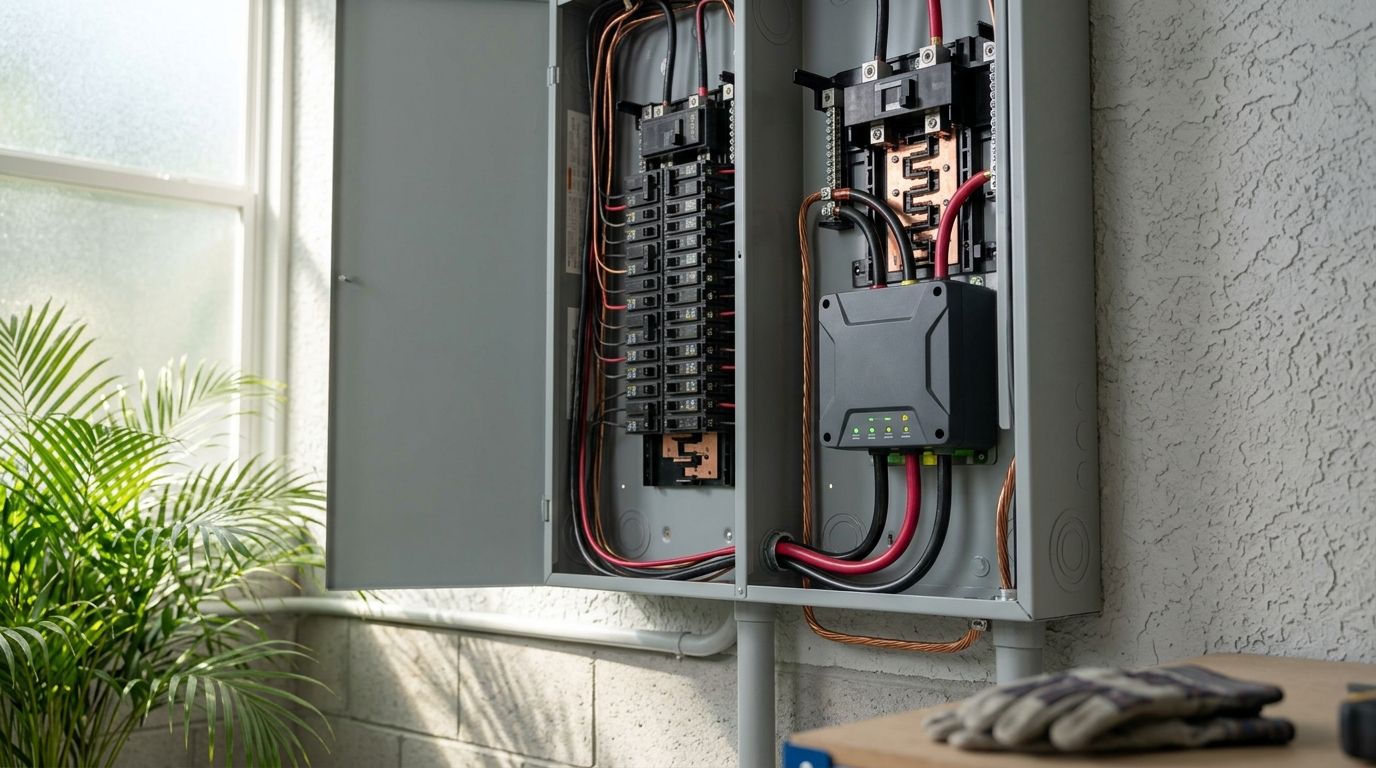
- An older Port St. Lucie or Stuart panel may not have the amperage for a new condenser without an upgrade first.
Why this matters
Most homeowners size an AC unit off a chart that multiplies square footage by 20-25 BTU per square foot. That math was built for dry climates. A Florida home has to pull moisture out of the air on top of dropping the temperature, and a unit sized by square footage alone almost always ends up oversized for that job. Imperium Electric sees this constantly on the Treasure Coast: a 3-ton system installed in a house that needed 2.5 tons runs in short, cold bursts, shuts off before the humidity drops, and leaves the house feeling damp at 74 degrees.
The fix isn't a bigger unit. It's the right-sized one, calculated correctly the first time.
What you'll need
- Your home's square footage, ceiling height, and window count and orientation
- Construction type — concrete block vs. frame changes the heat load significantly
- Current insulation rating (R-value) in the attic
- Number of occupants and major heat-generating appliances
- A licensed HVAC contractor who will run a Manual J calculation, not just eyeball the house
- Your electrical panel's amperage rating (100A, 150A, or 200A) if you're replacing an older system
The steps
1. Get your home's actual specs, not estimates
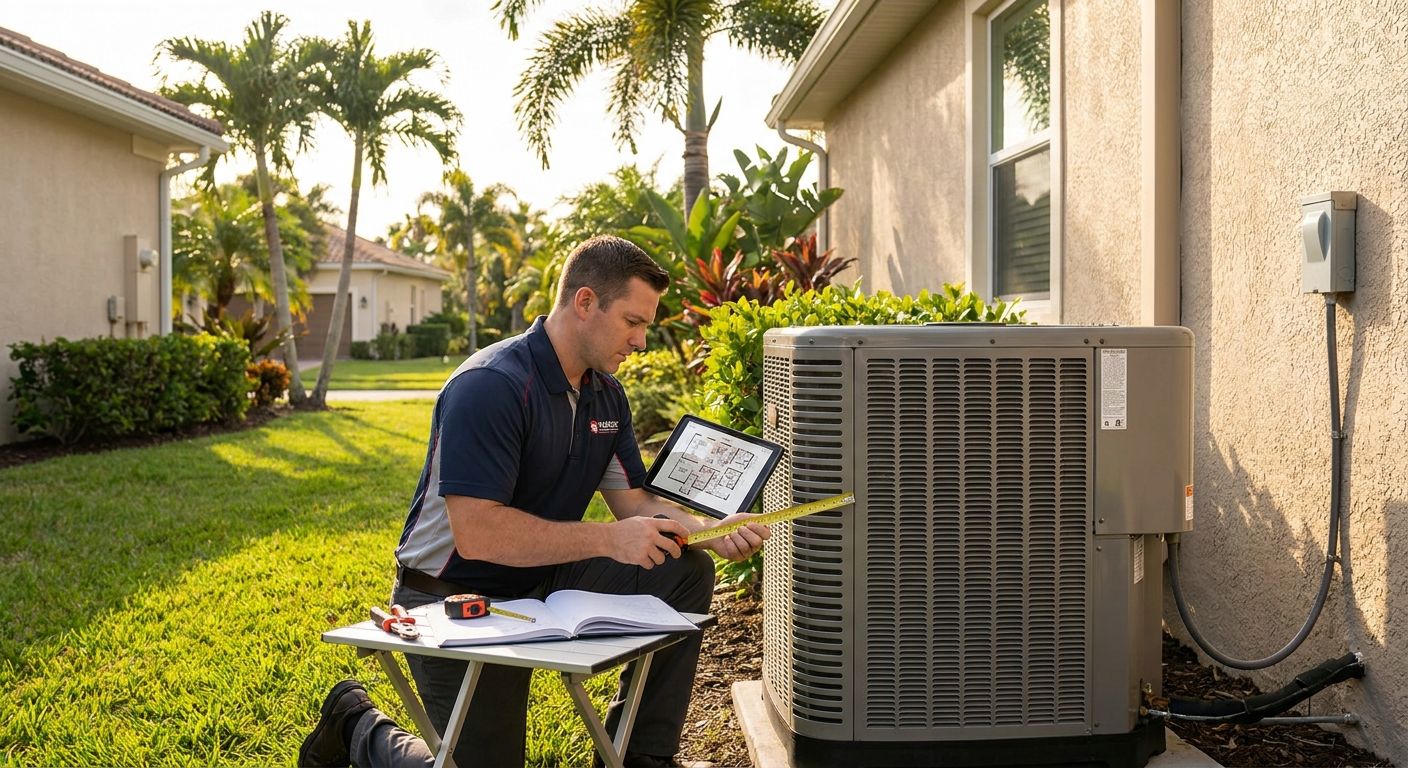
Pull the square footage from your property record, not a guess. Note ceiling height — a home with 10-foot ceilings has roughly 25% more air volume than the same footprint at 8 feet, and that changes the load. Count windows and note which ones face south or west, since Florida's afternoon sun through west-facing glass adds real heat load by 3 p.m.
Common mistake: using the builder's original square footage without accounting for a converted garage, enclosed lanai, or added Florida room. Those additions change the total conditioned space and the load calculation.
2. Run a Manual J load calculation
Manual J is the load calculation method published by the Air Conditioning Contractors of America (ACCA) and it's the industry standard a licensed contractor should use before quoting tonnage. It factors in insulation, window glass, orientation, occupancy, ductwork, and local climate data — not just square footage.
A Manual J for a 2,000-square-foot concrete block home in Port St. Lucie might land anywhere from 2.5 to 4 tons depending on insulation and window count. That range is the whole reason square-footage charts fail — two identical-sized homes can need very different tonnage.
Common mistake: accepting a verbal estimate from a contractor who never walked the attic or checked insulation. If nobody measured your insulation, they didn't run a real Manual J.
3. Match tonnage to the calculation, not the old unit
Don't replace a failing system with the same tonnage by default. Older systems were frequently oversized to begin with, and if you've since added attic insulation, replaced windows, or sealed ductwork, your new load number could be a half-ton lower than what's currently installed.
If the square-footage estimate and the Manual J number differ by more than half a ton, trust the Manual J.
“If the square-footage number and the Manual J number differ by more than half a ton, trust the Manual J.”
4. Check the ductwork before the condenser goes in
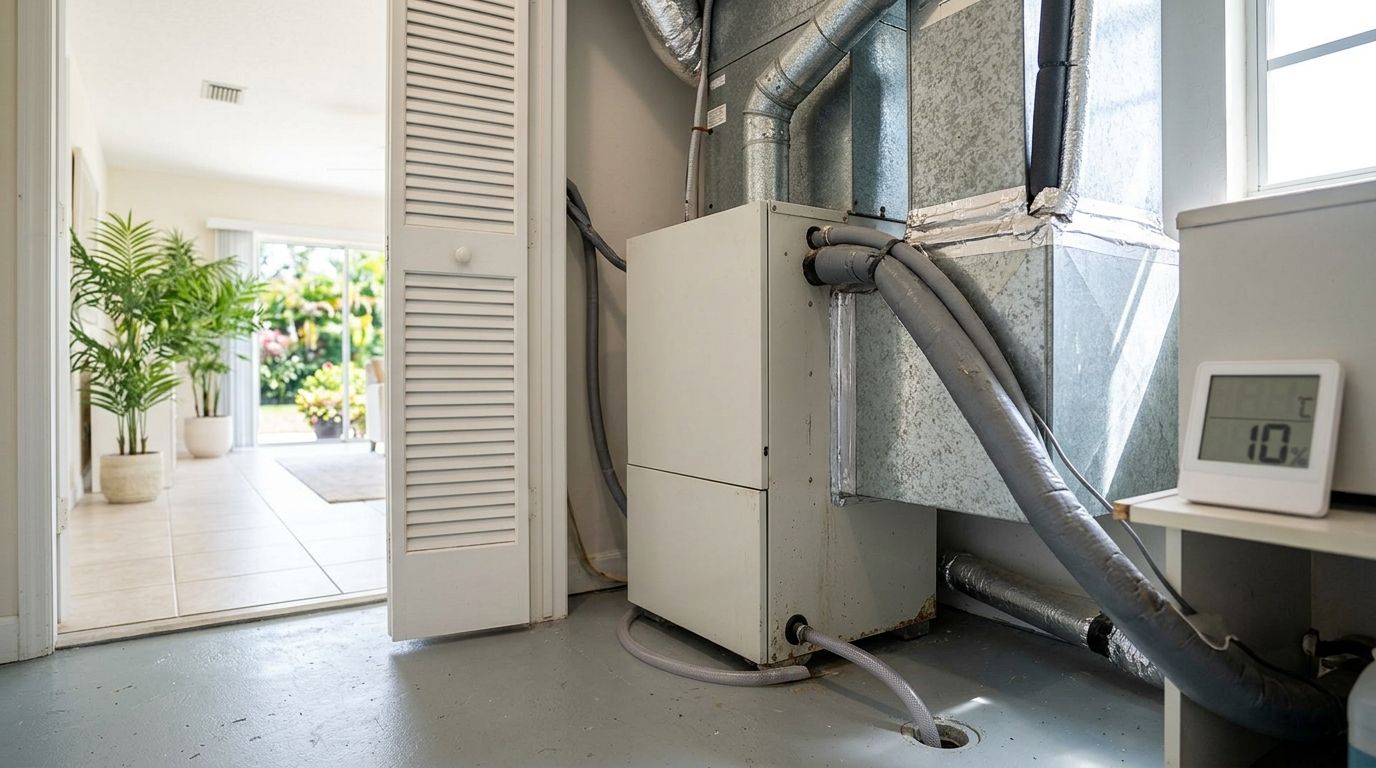
A correctly sized condenser connected to undersized or leaky ducts still won't cool the house evenly. Ductwork should be inspected for leaks, crushed sections, and airflow (CFM) delivered to each room relative to that room's square footage. This step gets skipped constantly because it's not as visible as the outdoor unit.
Common mistake: assuming new equipment fixes old ductwork problems. It doesn't — it just makes the mismatch more obvious.
5. Confirm your electrical panel can handle the new unit
A new condenser and air handler draw more startup amperage than a system installed 15-20 years ago, especially with variable-speed compressors. Homes in older sections of Port St. Lucie and Stuart still running 100-amp panels sometimes can't support a new AC circuit alongside existing loads without tripping breakers. Before you commit to a system size, have the panel checked — panel upgrades for older Port St. Lucie homes are a routine part of AC replacement projects, not an optional add-on.
6. Pick the SEER2 rating based on how the house is used
As of January 2023, split-system air conditioners sold in the Southeast must meet a 14.3 SEER2 minimum efficiency rating under the Department of Energy's current standard. Homes run near-constant AC nine months a year on the Treasure Coast, so a higher SEER2 rating pays back faster here than in a climate with a short cooling season. Match the rating to how many hours a day the system will actually run, not just the sticker efficiency number.
7. Get the load calculation in writing before you get quotes
Ask for the Manual J numbers on paper, not just a tonnage recommendation. A written load calculation lets you compare quotes across contractors on the same basis instead of comparing unit prices for potentially different-sized systems.
8. Schedule the install before peak cooling season
May through September is when every HVAC crew on the Treasure Coast is booked solid and homes without working AC are stacking up. Scheduling a replacement in late winter or early spring 2026 means a shorter wait and no week spent sweating out a breakdown in July.
Get your AC load calculated correctly
Skip the square-footage guesswork with a proper Manual J assessment.
Troubleshooting
- AC turns on and off every 10-15 minutes (short cycling): almost always an oversized unit. It reaches the thermostat setpoint before it's run long enough to pull humidity out of the air.
- House feels cold but sticky: same root cause — the unit is dropping temperature faster than it's removing moisture, a classic sign of oversizing in Florida's humidity.
- Some rooms cold, others warm: this is a duct airflow problem, not a sizing problem. Re-check CFM delivery to the affected rooms before assuming the tonnage is wrong.
- Breaker trips when the AC compressor starts: points to a panel or wiring issue, not the unit itself. Have the circuit and panel capacity checked before assuming the AC is defective.
- Electric bill spiked after a new install: an undersized unit running constantly to try to hit the setpoint, or a SEER2 rating too low for how many hours a day it's running.
- AC runs fine but house never quite feels dry: the unit may be sized right on temperature but the dehumidification isn't matched — worth revisiting the Manual J with a contractor rather than swapping equipment again.
Tools and resources
- Manual J load calculation (ask your contractor for the ACCA-standard worksheet, not a verbal estimate)
- Attic insulation inspection, ideally done before the load calculation
- Panel amperage check, especially in homes built before the 2000s — see residential electrician services for Jensen Beach homeowners if you need that verified alongside the AC project
- Ductwork airflow test (CFM per room) to confirm distribution matches the new equipment
- Written, itemized quotes from at least two licensed contractors covering the same Manual J numbers
What to do next
If you're planning any electrical or generator work alongside the AC replacement — a lot of Treasure Coast homeowners bundle both after a bad storm season — the sizing logic is nearly identical: a load calculation drives the equipment size, not a guess based on house size. The same principle applies whether you're matching a Manual J to a condenser or matching a generator to your home's electrical load.
FAQ
What size AC unit do I need for a 2,000 square foot Florida home?
Most 2,000-square-foot concrete block homes in Florida need 2.5 to 4 tons of cooling, but the exact number depends on insulation, window count, and orientation. A Manual J load calculation gives the accurate figure — square-footage charts alone are unreliable in humid climates.
Is it bad to oversize an AC unit in Florida?
Yes. An oversized unit cools the air quickly but shuts off before it removes enough humidity, leaving the house feeling cold and damp. This also causes short cycling, which wears out the compressor faster.
How much does a Manual J calculation cost?
Many licensed HVAC contractors include a Manual J load calculation as part of a free or low-cost replacement quote in 2026. Ask upfront whether the tonnage recommendation is backed by a written Manual J or just a visual estimate.
What SEER2 rating should I get for a Florida home?
Any split system sold in the Southeast must meet at least 14.3 SEER2 as of the current DOE standard. Homes that run AC nearly year-round on the Treasure Coast typically see faster payback from a higher SEER2 rating than homes in milder climates.
Do I need to upgrade my electrical panel for a new AC unit?
Not always, but older 100-amp panels in homes built before the 2000s sometimes can't support a new condenser's startup amperage alongside existing circuits. Have the panel checked before the AC installation is scheduled.
How many BTUs equal one ton of AC?
One ton of cooling equals 12,000 BTU per hour. AC systems are typically sized in half-ton increments, from 1.5 tons up to 5 tons for residential use.
Why is my house humid even though the AC is running?
An oversized unit is the most common cause — it drops the temperature fast enough to satisfy the thermostat before it's run long enough to pull moisture out of the air. A correctly sized unit runs longer cycles and dehumidifies more effectively.
When is the best time to replace an AC unit in Florida?
Late winter or early spring, before the May-through-September cooling season, when HVAC crews are less booked and you're not risking a breakdown during peak heat.
One last thing
The half-ton difference between what a square-footage chart recommends and what a real Manual J calculates is the single most common reason Florida homeowners end up with a humid house despite a brand-new AC unit — get the calculation in writing before you sign anything in 2026.