Sizing a whole house generator wrong is the most common mistake Treasure Coast homeowners make before hurricane season starts — too small and the unit trips the moment the AC and well pump kick on together, too big and you're burning propane or natural gas you never needed. Getting the number right in 2026 means working from actual watts, not the size of your house.
- Add your home's running watts to the single largest starting-watt appliance to size a whole house generator correctly — most Treasure Coast homes land between 20 kW and 26 kW.
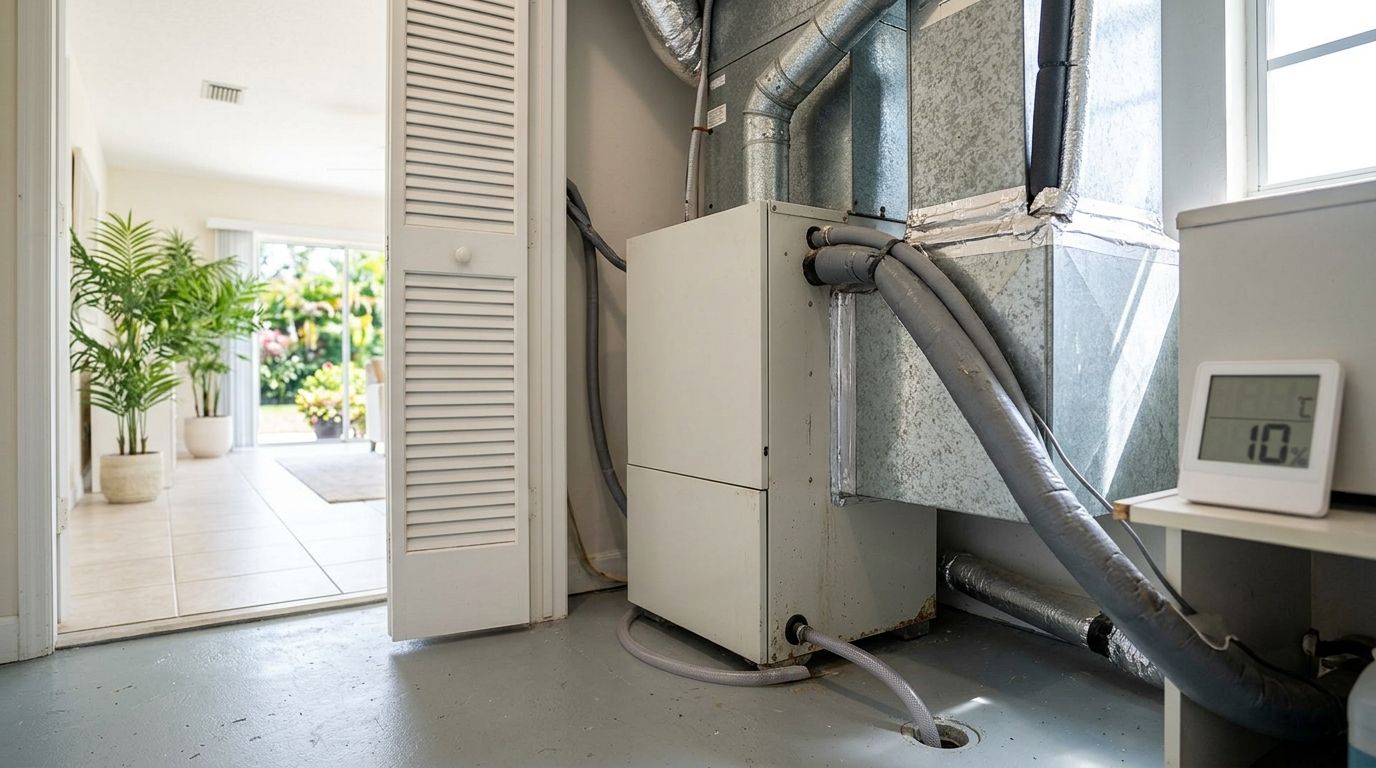
- A 3-ton central AC alone can spike starting watts past 9,000 watts, which is why one appliance's surge, not the sum of every appliance, sets the minimum size.
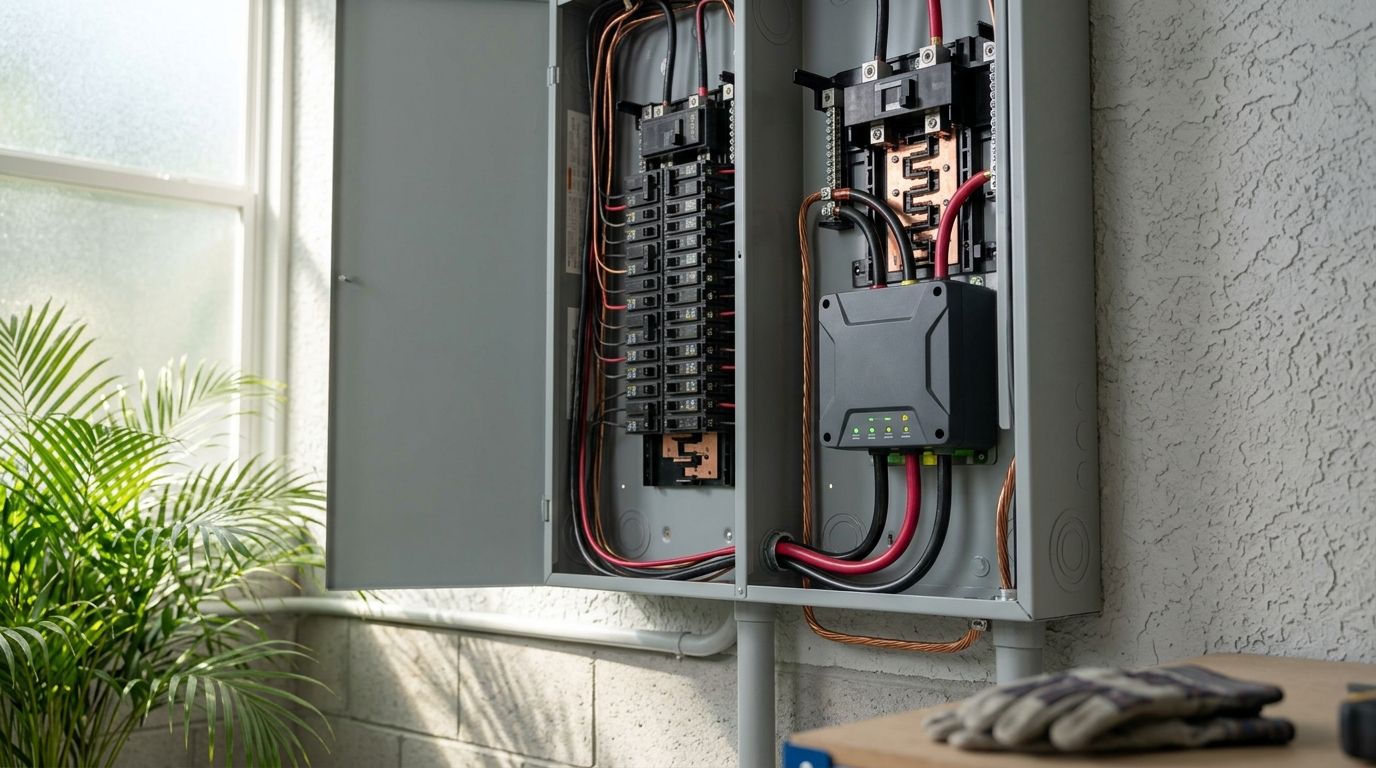
- Panel amperage limits generator size before square footage does — a 100-amp panel often needs an upgrade before a 22 kW unit can even connect.
- Undersized generators trip breakers and shorten motor life; oversized units cost more upfront and burn more fuel per run hour than the home ever uses.
Why this matters
A generator sized off a guess or a salesperson's rule of thumb ends up in one of two failure modes: it trips a breaker every time the AC and well pump start at once, or it sits at 40% load all summer wasting fuel. Older homes across Port St. Lucie and Stuart still run 100-amp or 150-amp panels installed decades before central air and electric ranges became standard, and that panel — not the square footage on your listing — is often the real ceiling on what generator you can run. Sizing this correctly the first time saves a second contractor visit and a second permit fee.
What you'll need
- A written list of every circuit you want powered during an outage — AC, well pump, refrigerator, sump pump, garage door opener, medical equipment
- Nameplate wattage or amperage for your largest appliances (AC condenser, well pump, electric range, dryer)
- Your panel's amperage rating, printed on the main breaker (100A, 150A, or 200A)
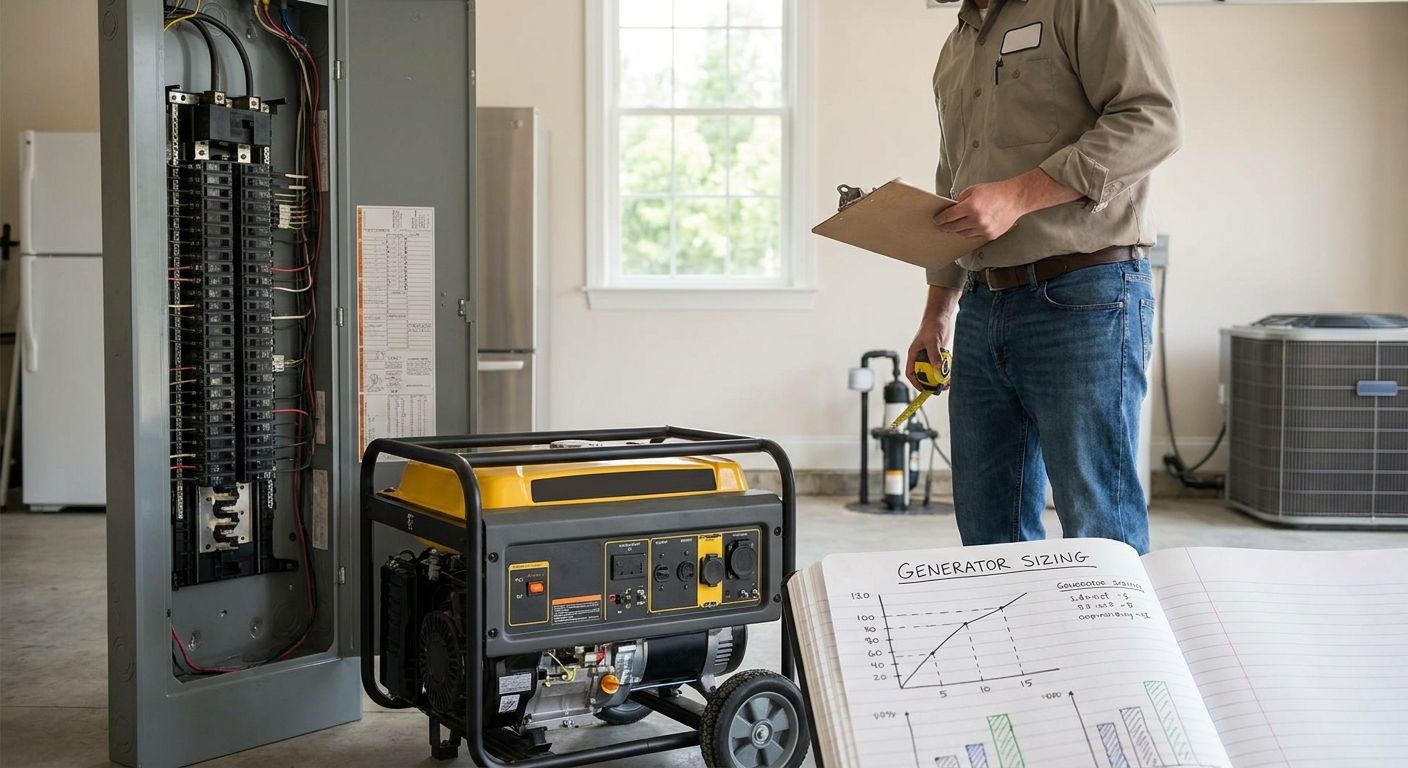
- A tape measure and your county's generator setback chart for windows, doors, and property lines
- Either a licensed electrician's load calculation or the worksheet to run one yourself
If you're starting from zero, the whole-house generator installation for Port St. Lucie homeowners page walks through what a full install includes before you spend money on a unit.
The steps
1. Add up your running watts
Running watts are the continuous draw once everything is already on — this is your baseline, not your peak. A refrigerator pulls roughly 700 running watts, a sump pump runs 800 to 1,050 watts, and a well pump typically draws 1,000 to 2,000 running watts depending on horsepower. Add lighting, outlets, and any medical or communications equipment on top. Common mistake: forgetting the well pump or septic aerator, which are easy to overlook indoors but pull real load on properties across the Treasure Coast that aren't on city water.
2. Add the single largest starting watts — not all of them
Starting watts are the surge an appliance pulls for one to three seconds when its motor kicks on, and a 3-ton central AC can spike past 9,000 starting watts on its own. You only add the highest single starting-watt figure to your running total, because well-designed systems stagger appliance starts rather than firing them all at once. Common mistake: stacking every appliance's starting watts together, which inflates the math and pushes homeowners toward a generator twice the size they actually need.
3. Check your panel's amperage before you check the generator's kW
A 100-amp panel common in homes built before 1990 in Port St. Lucie can't safely carry a full 22 kW whole-house unit without upgrade work first. The transfer switch amperage has to match the panel, not just the generator's output rating. If your main breaker reads 100A, look at electrical panel upgrades for older Port St. Lucie homes before you shop generator brands. Common mistake: buying the generator first and discovering the panel needs thousands of dollars of work to accept it.
4. Decide whole-house vs. partial-house backup
Whole-house backup wires every circuit through an automatic transfer switch rated to match your full panel amperage — 150A or 200A. Partial-house backup runs only a sub-panel of essentials and typically needs a smaller unit, often in the 14-18 kW range instead of 22-26 kW. Common mistake: assuming "whole house" and "the biggest generator you can afford" are the same decision — they're not, and the smaller scope can cut installed cost significantly.
5. Size up for load you don't have yet
If a pool heat pump, EV charger, or hot tub is realistically on your list for 2026 or 2027, add its running watts to today's total now. Resizing a generator after it's already installed and permitted means a second install, a second inspection, and a second bill. Common mistake: sizing exactly to this year's electric bill and outgrowing the unit within two years of installing it.
6. Match fuel source and clearance to your property
Propane and natural gas units carry different output ratings at the same physical size, and Treasure Coast counties enforce setback distances from windows, doors, and property lines — typically a 5-foot minimum, verified against your specific municipality. Common mistake: ordering a unit before confirming it fits the only code-compliant pad location your lot actually has.
7. Get a licensed load calculation before you buy
A licensed electrician's load calculation cross-checks your appliance worksheet against NEC diversity factors, which account for the fact that not everything runs at full draw simultaneously. DIY sizing skips this step almost every time and lands 15-20% high or low as a result. Not sure who to call for this? How to choose an electrician in Port St. Lucie covers what licensing and insurance to verify before anyone touches your panel.
Get a home-specific load calculation
Imperium Electric checks your panel and appliances before recommending a size.
Troubleshooting
- Generator trips when the AC and well pump start together — add a soft-start kit to the AC compressor or move up one generator tier.
- Power's on but two circuits stay dark — the automatic transfer switch is likely miswired to a sub-panel instead of the main; have it checked before assuming the generator is undersized.
- Voltage sags under load — the unit is undersized for your combined running watts; recheck your nameplate totals against the generator's continuous rating.
- Permit application gets rejected — almost always a setback distance issue; move the pad location to match county code before resubmitting.
- Extended runs lose pressure or stall — the gas line is undersized for continuous draw; have the gas utility verify pipe diameter and PSI.
- Generator short-cycles at idle — it's oversized for the connected load; check the unit's idle or eco mode settings before assuming it's defective.
Tools and resources
- Clamp meter to verify actual running amps on major circuits
- Manufacturer nameplate data for your AC condenser, well pump, range, and dryer
- Your panel schedule (circuit directory) to confirm what's already on each breaker
- An NEC-based load calculation worksheet, or a licensed electrician's version of the same
- A copy of your county's generator setback and permitting requirements
What to do next
Once you've got a target kW range and know whether your panel needs work, the next step is a site-specific quote that accounts for pad placement, fuel line sizing, and permit timelines. Homeowners across Martin County can start with whole-house generator installation for Stuart, FL homeowners to see what that process looks like end to end.
FAQ
What size generator do I need for a 2,000 sq ft house?
Square footage alone doesn't size a generator — the appliances on the panel do. A 2,000 sq ft home with central AC, a well pump, and an electric range typically lands between 20 kW and 24 kW once running and starting watts are added up.
How many kW does a whole house generator need to run central AC?
A 3-ton central AC alone can require enough starting-watt headroom to push a generator toward 22 kW even before other appliances are added. Smaller 2-ton systems need less, but the AC's starting watts almost always set the sizing floor for the whole system.
Is a 22kW generator enough for a whole house?
For most homes in the 2,000 to 3,000 sq ft range with one central AC unit, 22 kW is enough to run the whole panel. Homes with a pool heat pump, second AC system, or EV charger on the same panel often need to size up to 26 kW or beyond.
Do I need an electrician to size a generator?
You don't legally need one to do the math, but a licensed electrician's load calculation catches diversity factors and code requirements a DIY worksheet usually misses. Skipping this step is the most common reason homeowners end up with a unit that's 15-20% off target.
How much does a whole-house generator installation cost in 2026?
Installed cost depends on the generator's kW rating, fuel type, and whether your electrical panel needs upgrade work first. Get a home-specific load calculation and written quote from a licensed electrician before comparing prices from online listings.
Can I use a portable generator instead of a whole-house unit?
A portable generator can cover a handful of essential circuits during a short outage, but it requires manual setup, fuel refills every few hours, and can't run central AC or a well pump reliably. Whole-house standby units start automatically and run on a fixed fuel line instead.
What is the difference between running watts and starting watts?
Running watts are the continuous draw once an appliance is already on; starting watts are the one-to-three-second surge when its motor first kicks in. Generator size is set by total running watts plus the single largest starting-watt spike, not the sum of every appliance's surge.
Does my electrical panel need to be upgraded for a generator?
If your panel is rated at 100 amps and was installed before central air conditioning was standard, it likely needs an upgrade before a full whole-house generator can connect safely. Panels rated at 150 amps or 200 amps usually accept a transfer switch without additional work.
One last thing
Most sizing mistakes on the Treasure Coast don't start at the generator spec sheet — they start at the panel. A home built before 1990 running 100-amp service can't accept a 22 kW unit no matter how carefully you ran the wattage math, so budget for a panel evaluation before you compare generator brands for 2026. That single check saves the awkward call where the generator's already on the pad and the panel still isn't ready for it.