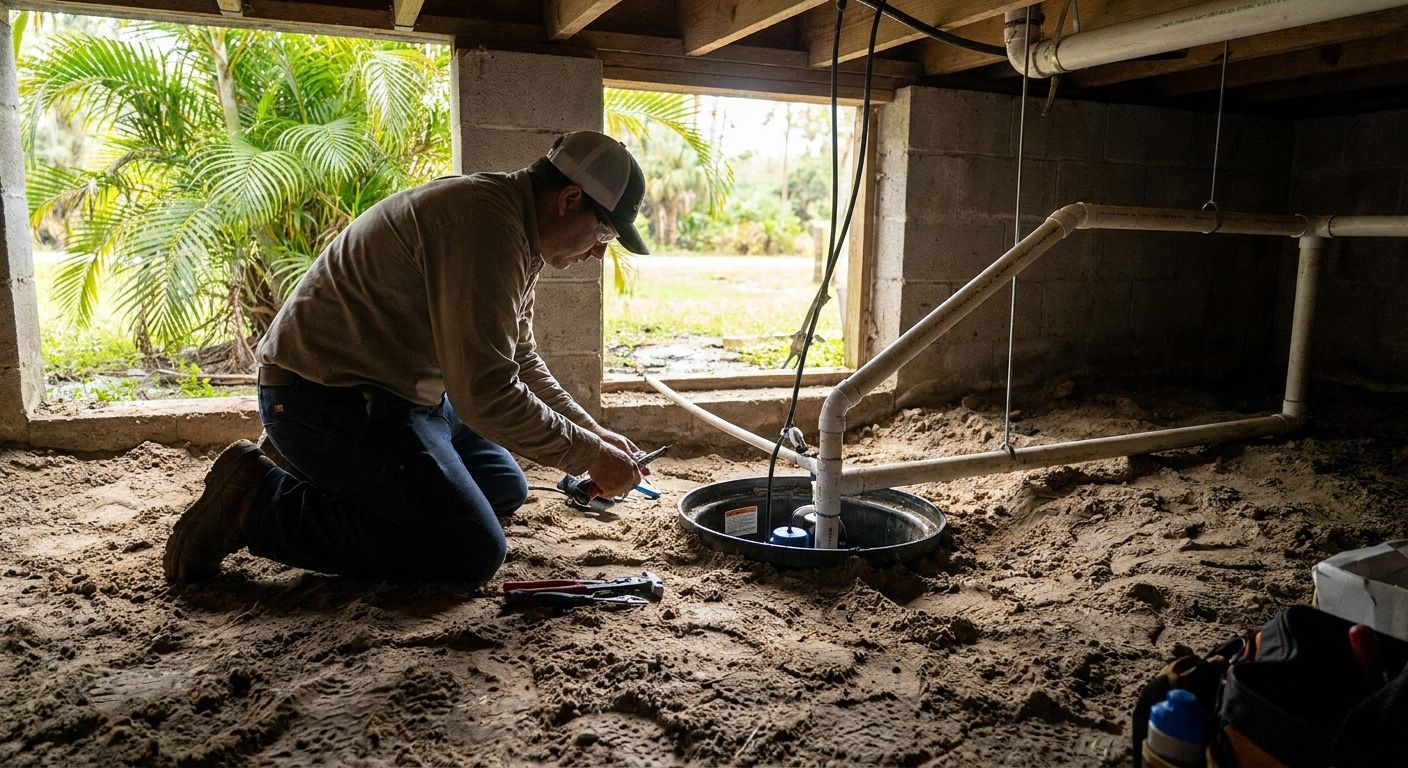
Florida's water table sits close enough to the surface across the Treasure Coast that a failed sump pump doesn't mean a damp basement — it means standing water in a crawlspace or slab intrusion within hours of a heavy storm. This guide breaks down which sump pump setups actually hold up in Port St. Lucie, Stuart, and Jensen Beach soil conditions, and which ones fail when you need them most.
- Submersible pumps with battery backup are the safe pick for Florida's high water tables in 2026 — buy this configuration first.
- Pedestal-only pumps without backup power fail during hurricane outages; skip them for full-time coastal use.
- A 1/3 HP submersible moving roughly 2,400-3,000 GPH at 10 feet of head covers most Treasure Coast crawlspaces.
- Battery backup runtime of 6-12 hours matters more than pump horsepower when storms knock out grid power.
- Sump pump installation in Florida works best paired with a licensed plumber who also checks your discharge line grading.
Why this matters
A sump pump only has one job: move water out before it reaches your foundation, electrical panel, or HVAC equipment. In a state where the water table can sit a few feet below grade for months at a time, that job runs constantly during wet season instead of occasionally.
The failure mode that costs homeowners the most isn't a worn-out pump — it's a pump with no backup power sitting dead during a hurricane-driven outage, which is exactly when rainfall is heaviest and grid power is least reliable. Imperium Electric sees this pattern every storm season: pumps that worked fine in June fail in September because nobody planned for the outage, not the water.
Who this is for
This guide is for Treasure Coast homeowners with a crawlspace, a below-grade utility room, or a property that already floods along the yard perimeter after heavy rain. If you've had standing water inside 24 hours of a storm, or your discharge line runs uphill more than a few feet, you need a pump sized and backed up correctly — not whatever unit sat cheapest on a shelf.
New construction buyers on the Treasure Coast fall into this group too, since builder-grade sump systems are frequently undersized for the actual water table depth on the lot.
What to look for in sump pump installation for Florida homes
Pump capacity matched to your crawlspace volume
A pump rated for 2,400-3,000 gallons per hour at 10 feet of head (roughly a 1/3 HP submersible) handles most Treasure Coast crawlspaces and utility pits. Undersized pumps run continuously during wet season and burn out inside two or three years instead of the eight to ten you should expect.
Battery backup with real runtime
Grid power fails during the exact weather event that floods your pit — that's not a coincidence, it's cause and effect. Look for backup systems rated for 6-12 hours of continuous run time, not the shorter units sold as an afterthought add-on.
Check valve placement on the discharge line
A missing or poorly placed check valve lets water flow back into the pit after the pump shuts off, forcing it to cycle on again immediately. This single component determines whether your pump runs 40 times a day or 4.
Float switch type
Tethered float switches snag in tight sump basins common in older Port St. Lucie and Stuart homes. Vertical or electronic float switches take up less room and trigger more reliably in basins under 18 inches wide.
Alarm or monitoring on the backup system
A battery backup that fails silently is worse than no backup at all, because you assume you're covered. Systems with an audible alarm or Wi-Fi notification tell you the moment primary power drops so you can act before the battery drains.
Discharge line grading away from the foundation
The best pump in Florida still fails you if the discharge line dumps water back toward the slab six feet from the exit point. Confirm the line runs downhill and terminates well clear of the foundation before you sign off on installation.
Top picks for Florida's high water table
1. Submersible pump with battery backup — the safe pick. Rated around 2,400-3,000 GPH at 10 feet of head with a 6-12 hour backup battery, this configuration covers the two failure points that matter most in 2026: undercapacity and power loss during storms. Verdict: Buy.
2. Combination primary plus water-powered backup — the wildcard. Pairs a standard submersible with a backup that runs off municipal water pressure instead of a battery, so it never runs out of charge during a multi-day outage. Works only if your water service stays pressurized during the storm, which isn't guaranteed on every Treasure Coast street. Verdict: Consider.
3. Smart Wi-Fi monitored pump — the tech pick. Sends a phone alert the moment water level rises or backup power kicks in, useful for homeowners who travel or rent out a property seasonally. Costs more upfront and depends on home Wi-Fi staying up during the outage. Verdict: Consider.
4. Pedestal-only pump, no backup — the budget trap. Motor sits above the pit instead of submerged, which keeps it cooler but limits capacity and offers zero protection once the power drops. Fine for a secondary sump that rarely activates, wrong for a primary system on a high water table. Verdict: Skip for full-time use.
5. Cast iron high-capacity pump — the heavy-duty pick. Built for pits that see continuous cycling during wet season, cast iron construction dissipates heat better than plastic housings and holds up longer under constant runtime. Worth the extra cost only if your crawlspace already floods multiple times per rainy season. Verdict: Buy for chronic flood pits.
A licensed plumber pairs the right pump with drain grading and check valve placement — drain cleaning services in Port St. Lucie often turn up the same clogged or misgraded lines that make a sump pump work overtime in the first place.
Get your sump pump sized right
Licensed plumbing team serving Port St. Lucie, Stuart, and Jensen Beach.
What to avoid
- Battery backups sized for a few hours. A backup rated under 6 hours runs out before a slow-moving tropical system clears the area, leaving your pit unprotected for the last and worst stretch of rain.
- Tethered float switches in narrow basins. They look standard and cost less, but they snag against pit walls in basins under 18 inches and stop triggering reliably within a year or two.
- DIY discharge lines that dead-end at the foundation. A pump that works perfectly still floods your slab if the discharge water has nowhere to go but back toward the house.
Verdict comparison
| System | Capacity (GPH @ 10ft) | Backup runtime | Best for | Verdict |
|---|---|---|---|---|
| Submersible + battery backup | 2,400-3,000 | 6-12 hrs | Most Treasure Coast crawlspaces | Buy |
| Combination + water-powered backup | 2,400-3,000 | Unlimited (water pressure) | Homes with reliable municipal pressure | Consider |
| Smart Wi-Fi pump | 2,400-3,000 | 6-12 hrs | Seasonal or rental properties | Consider |
| Pedestal-only, no backup | 1,800-2,200 | None | Secondary/rarely-used sumps | Skip (primary use) |
| Cast iron heavy-duty | 3,000+ | 6-12 hrs (paired) | Chronic flood pits | Buy |
FAQ
How much does sump pump installation cost in Florida?
Cost depends on pump type, pit condition, and whether a backup system is added, so get a site-specific quote rather than relying on a national average. A licensed plumber can quote the job after inspecting your existing pit and discharge line.
Is a sump pump necessary in Florida homes?
If your crawlspace or utility area sits near the water table, yes — standing water reaching electrical or HVAC equipment causes far more damage than the pump itself costs. Homes on slabs without a below-grade space typically don't need one.
Do sump pumps need a battery backup in Florida?
Yes, because grid power outages during hurricanes and tropical storms coincide directly with the heaviest rainfall and highest flood risk. A pump without backup power is exposed at the exact moment you need it most.
How long do sump pumps last in high water table conditions?
A correctly sized submersible pump typically lasts 8-10 years, but constant cycling from an undersized unit can cut that to 2-3 years. Matching capacity to your pit volume is the biggest factor in lifespan.
Can I install a sump pump myself?
Basic pump swaps are within reach for a handy homeowner, but discharge line grading, check valve placement, and backup system wiring are easy to get wrong. A licensed plumber catches issues like backflow and improper drainage before they cause repeat flooding.
What size sump pump do I need for a Florida crawlspace?
Most Treasure Coast crawlspaces are covered by a 1/3 HP submersible pump rated around 2,400-3,000 gallons per hour at 10 feet of head. Larger or chronically flooded pits need a higher-capacity or cast iron unit.
Does homeowners insurance cover sump pump failure damage?
Coverage varies by policy and often requires a separate sump pump failure or water backup endorsement. Check your specific policy language rather than assuming standard flood or water damage coverage applies.
One last thing
The detail homeowners skip most often isn't the pump — it's the discharge line termination point. A pump that empties 3,000 gallons an hour does nothing for your foundation if that water re-enters the soil six feet from where it started. Walk the discharge line outside after your next installation and confirm it actually drains away from the house before the next storm tests it for you.