Hurricane season doesn't wait for your electrical panel to catch up — get it storm-ready before the 2026 season starts, whether you're running a 40-year-old fuse box or a modern 200-amp panel.
- Test your main breaker and every GFCI/AFCI by May 2026 — a seized breaker means no way to kill power mid-storm.
- Panels over 20 years old, or under 100 amps, choke under storm loads. Buy the upgrade before June 1.
- A generator interlock or transfer switch is mandatory before you backfeed a panel — skipping it can electrocute line crews.
- Panel-level surge protection under NEC 230.67 stops grid-restoration surges from frying your AC and well pump.
- Imperium Electric handles panel upgrades and generator hookups across Port St. Lucie, Stuart, and Jensen Beach ahead of the 2026 season.
Why this matters
The Atlantic hurricane season runs June 1 through November 30 every year, and 2026 is no exception. Treasure Coast homes routinely lose power for days after a named storm, and the electrical panel is the single point where your prep either holds or fails.
A panel that's corroded, undersized, or missing surge protection doesn't just trip nuisance breakers — it can keep your generator from safely powering the house, or arc when the grid comes back online after an outage. Imperium Electric inspects and upgrades panels across Port St. Lucie, Stuart, and Jensen Beach every spring for exactly this reason: fixing a panel in August, mid-storm, costs more time and money than fixing it in April.
What you'll need
- A non-contact voltage tester
- A flashlight or headlamp (you'll kill the main during parts of this check)
- Your panel directory, or a permanent marker to make a new one
- 30 minutes for a homeowner visual check
- A licensed electrician for anything involving opening the panel, adding surge protection, or wiring a generator interlock
The steps
1. Confirm your panel's age and amperage
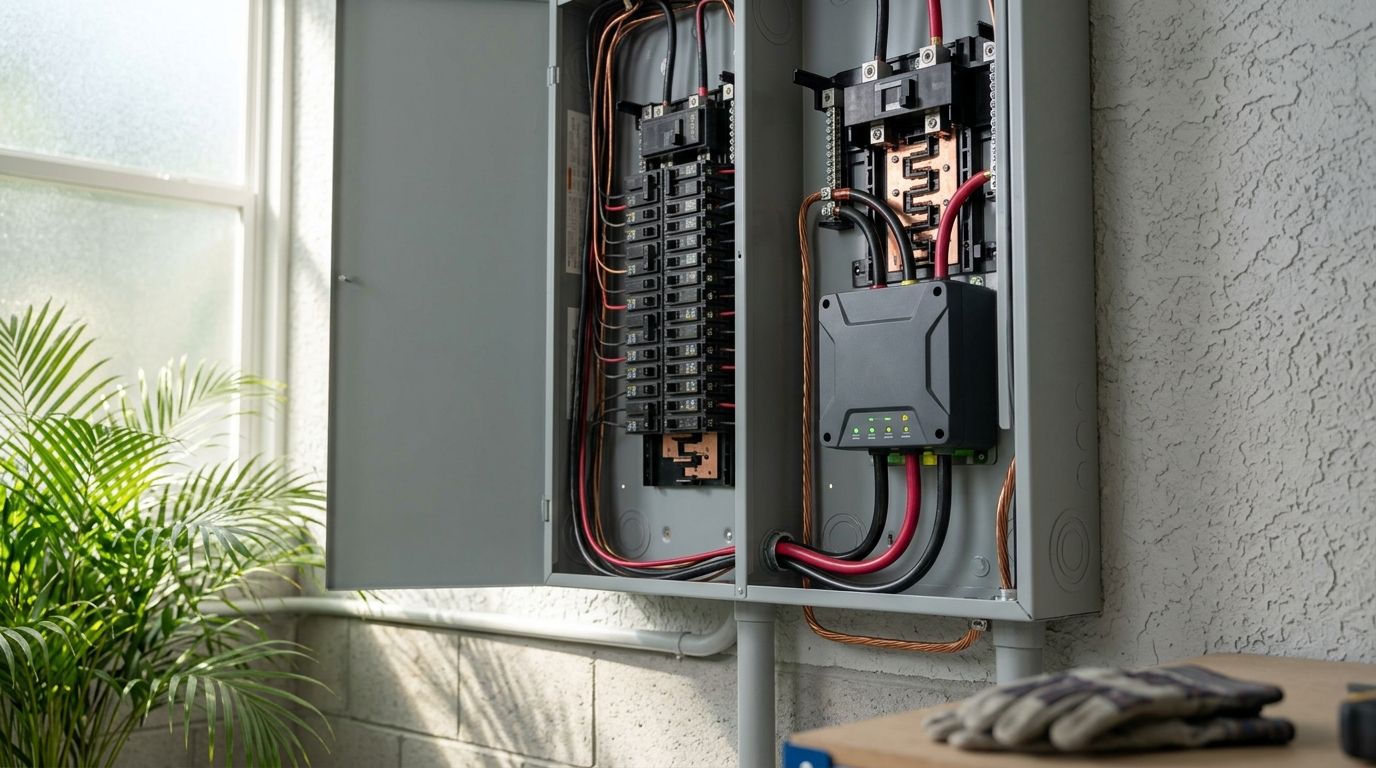
Open the panel door and check the label for the install date, then read the amperage stamped on the main breaker — 100A, 150A, or 200A. A panel over 25 years old, rated under 100 amps, or carrying a recalled brand like Federal Pacific, Zinsco, or Challenger is the top item on your 2026 storm list.
Older Port St. Lucie homes on original service panels are the most common failure point Imperium Electric sees before storm season. If yours falls in that bracket, an electrical panel upgrade for older Port St. Lucie homes closes that gap before June. Common mistake: assuming "it hasn't tripped, so it's fine" — corrosion and heat damage inside a panel don't show up until a load spike hits.
2. Test the main breaker and every GFCI/AFCI
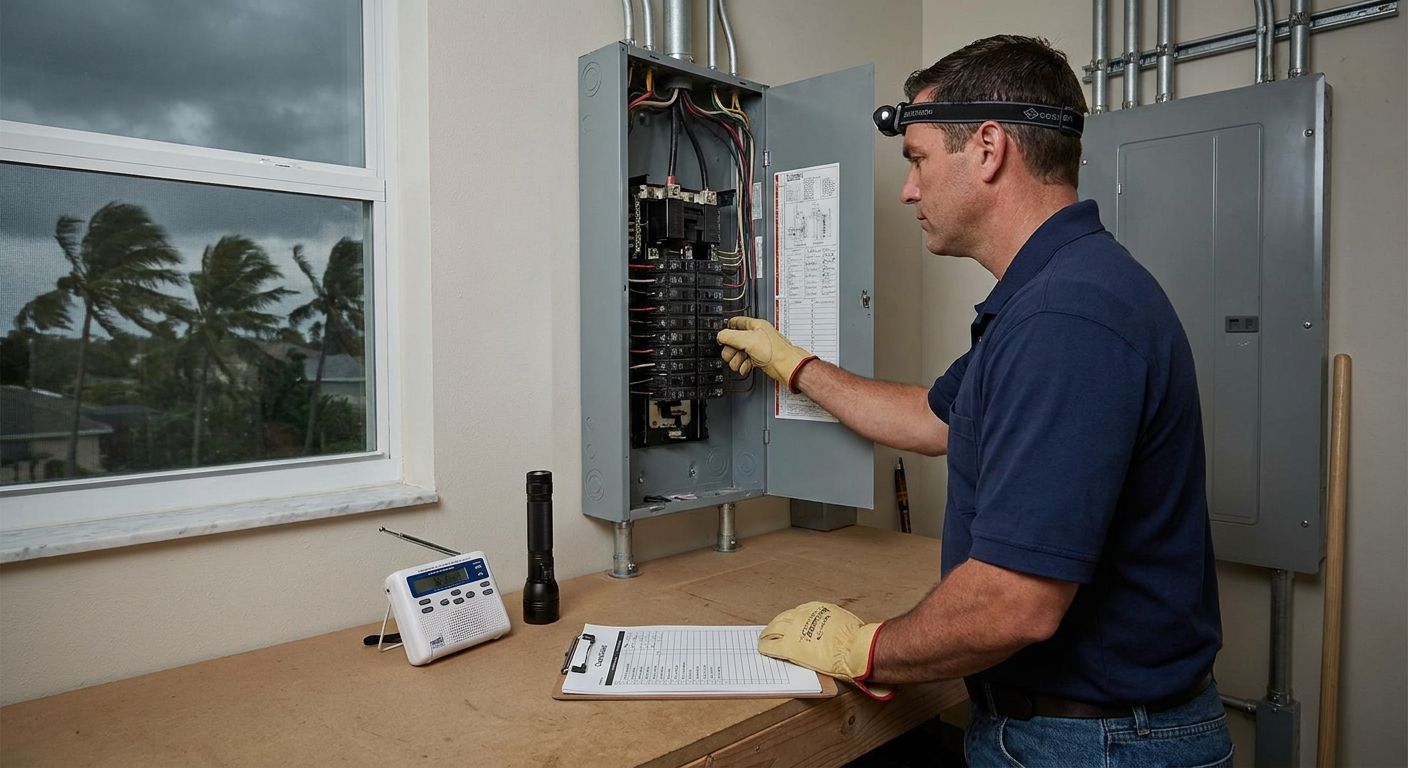
Flip the main breaker off and back on once, with everyone in the house aware, to confirm it isn't seized. Then press the test button on every GFCI outlet and every AFCI breaker — each one should trip immediately and reset cleanly.
A seized main breaker means you have no way to kill power during flooding or downed lines, which is a life-safety failure, not a cosmetic one. Common mistake: skipping the AFCI test buttons because they're inside the panel instead of on a wall outlet.
3. Check for corrosion, rust, and pest intrusion
Have the dead front removed and look for rust streaks, water staining, or insect nests around the bus bar and lugs. Coastal humidity along the Treasure Coast corrodes panel hardware faster than inland installs — salt air gets into the enclosure through the smallest gaps.
Common mistake: painting over rust spots instead of having the lugs cleaned or the panel replaced outright.
4. Add or confirm surge protection at the panel
The 2020 National Electrical Code requires surge protective devices on new and replacement panels under NEC 230.67. Lightning strikes and grid-restoration surges after a storm fry HVAC control boards, well pump electronics, and appliance circuit boards — a panel-level surge protector is far cheaper than replacing that equipment piece by piece.
Common mistake: relying on outlet power strips alone. Those don't protect hardwired equipment like your AC condenser or well pump.
5. Install or test a generator interlock or transfer switch
Backfeeding a panel through a dryer outlet without an interlock kit is a code violation, and it can electrocute utility crews restoring power on your street. A licensed interlock or transfer switch lets you flip the panel from grid to generator power in seconds, safely isolated from the utility line.
Stuart homeowners weighing a standby unit should look at what a whole-house generator installation for Stuart FL homeowners actually involves before storm season, since sizing the interlock to your panel's amperage matters as much as sizing the generator itself. Common mistake: buying a generator rated higher than what your interlock or panel amperage can safely accept.
6. Label every breaker and photograph the panel directory
With power back on, use a lamp or hair dryer on each circuit to confirm which breaker feeds which room, then correct the labels. After a storm, you or a first responder needs to kill power to a flooded room fast — guessing costs minutes you don't have.
Common mistake: labeling by room name only ("bedroom") instead of by function ("bedroom 2 outlets, not lights").
7. Schedule a licensed inspection before June 1, 2026
A DIY walk-through catches the obvious problems. A licensed electrician's inspection catches loose lugs, undersized wire, and thermal hot spots that a visual check misses entirely. Documented pre-season inspections also strengthen an insurance claim if storm damage later traces back to the panel.
Get your panel storm-ready
Panel inspections and generator hookups across Port St. Lucie, Stuart, and Jensen Beach.
Troubleshooting
- Breaker trips the second you flip it back on. Likely a shorted circuit or a breaker that's failed internally with age. Don't force it — replace it.
- Panel feels warm near a breaker. Sign of a loose lug or an overloaded circuit. Shut off that circuit and call an electrician the same day.
- Generator won't power the whole house. Either the interlock is undersized for your panel's amperage or your generator's rated watts fall short of AC plus well pump plus fridge combined.
- GFCI won't reset after a storm. Moisture has likely gotten into the box or panel. Don't keep resetting it — that masks a ground fault instead of fixing it.
- Musty smell or visible water inside the panel after flooding. Don't touch it. Corrosion inside a flooded panel is invisible from the outside and needs a full inspection before power is restored.
- Breaker labels don't match reality. Redo the circuit mapping one breaker at a time. A mislabeled panel means the wrong circuit gets killed in an emergency.
Tools and resources
- Non-contact voltage tester
- Panel directory labels or a label maker
- Infrared inspection during a licensed panel visit
- Generator interlock kit sized to your panel's amperage, not just your generator's wattage
- Panel upgrade options for aging Stuart homes on original service
- Commercial properties across the Treasure Coast juggling multiple panels for storm prep
What to do next
If the panel check above turned up an amperage that's too low, a recalled breaker brand, or corrosion you can't clean yourself, the next move is picking the right electrician, not just the cheapest quote. How to choose an electrician in Port St. Lucie walks through licensing checks, insurance verification, and what a real storm-prep quote should include.
FAQ
What's the best way to prepare an electrical panel for hurricane season in 2026?
Test the main breaker and every GFCI/AFCI, confirm the panel's age and amperage, add surge protection under NEC 230.67, and have a licensed electrician inspect it before June 1, 2026. Panels over 20 years old or under 100 amps need the most attention.
How much does it cost to upgrade an electrical panel before hurricane season?
Cost depends on your panel's current amperage, age, and whether new wiring or a generator interlock is added at the same time. Get a quote from a licensed electrician after a physical inspection rather than estimating from age alone.
Is a generator interlock kit better than a manual transfer switch?
An interlock kit is a lower-cost option that mechanically prevents the main breaker and generator breaker from being on at once, while a transfer switch automates the process for whole-house generators. Both are code-compliant when installed by a licensed electrician.
How often should GFCI outlets be tested before storm season?
Test every GFCI outlet and AFCI breaker at least once before hurricane season starts each year, and again after any major storm or flooding event. A GFCI that won't reset after water exposure needs inspection, not repeated resetting.
Can I install a whole-house generator hookup myself?
No — connecting a generator to your home's panel requires a licensed electrician and, in most Florida jurisdictions, a permit and inspection. Backfeeding through a dryer outlet without a proper interlock or transfer switch is a code violation and a safety hazard to utility crews.
What panel amperage do I need for a whole-house generator?
Most whole-house standby generators pair with a 200-amp panel, though the exact requirement depends on your home's total electrical load. A licensed electrician calculates this during the generator sizing process, not before.
How do I know if my panel is too old to survive hurricane season?
A panel over 25 years old, rated under 100 amps, or carrying a recalled brand like Federal Pacific or Zinsco is a strong candidate for replacement. Rust, corrosion, or a warm panel box are additional warning signs that shouldn't wait until storm season.
Does homeowners insurance require an electrical panel inspection before hurricane season?
Requirements vary by insurer and policy, and some carriers ask for a wind mitigation or four-point inspection that includes panel condition. Check your specific policy, but a documented pre-season inspection helps regardless of whether it's required.
One last thing
Most Treasure Coast homes still don't have panel-level surge protection retrofitted, even though the National Electrical Code has required it on new panels since the 2020 cycle. That gap means AC compressors and well pump controls take the first hit when the grid surges back on after a 2026 storm outage — a $200-range oversight that shows up as a $2,000-range repair bill.