Treasure Coast summers push AC systems eighteen hours a day for six straight months, and salt air off the Indian River Lagoon eats cheap coils alive — this guide breaks down what actually matters when you're buying an install for a Port St Lucie, Stuart, or Jensen Beach home.
- Central split systems at 14.3 SEER2 or higher are the floor for ac installation treasure coast homes need in 2026 — buy at or above that line.
- Heat pumps beat straight-cool systems here because Florida winters barely dip below 50°F — Consider for year-round efficiency.
- A single ductless mini-split as your only whole-house system is a Skip — it can't handle Treasure Coast humidity loads on its own.
- Get a Manual J load calculation before permits get pulled, not after — Port St Lucie and Stuart both check for it.
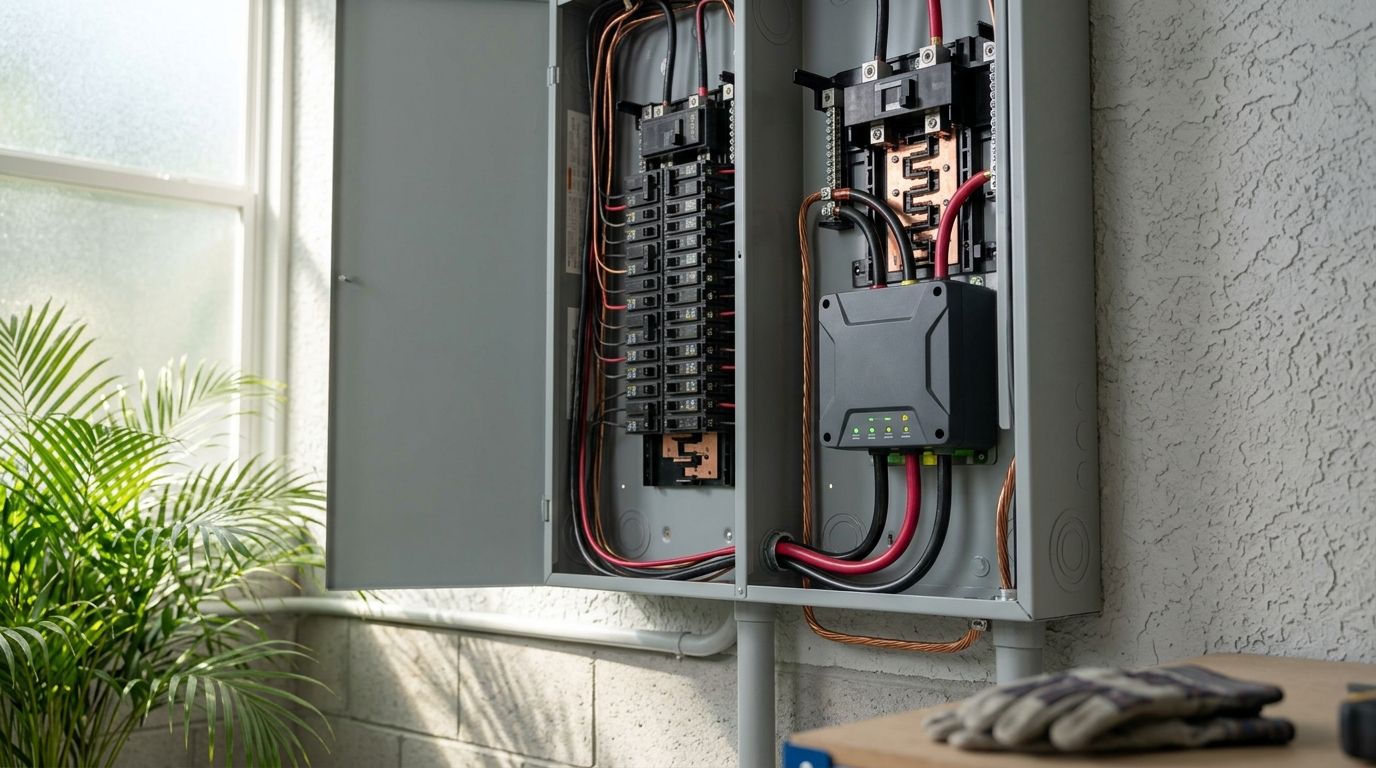
- An undersized electrical panel stalls installs mid-project — confirm capacity before you sign a contract.
Why this matters
An oversized or wrong-fit AC system on the Treasure Coast doesn't just run up your power bill — it short-cycles, fails to pull humidity out of the air, and grows mold in the ductwork within a season or two. Salt-laden air corrodes unprotected condenser coils faster here than almost anywhere else in the state, which is why coil coating and cabinet material matter more in Jensen Beach than they do in Orlando.
Electrical capacity is the other piece homeowners skip past. A new 4-ton condenser draws real amperage, and homes built before the mid-1990s in Port St Lucie and Stuart often carry 100-amp panels that are already maxed out with a pool pump, a range, and a couple of window units. Imperium Electric handles both sides of this — the HVAC installation and the electrical work behind it — because on older Treasure Coast homes, they're rarely separate jobs.
Who this is for
This guide is for homeowners in Port St Lucie, Stuart, and Jensen Beach replacing a failed or aging AC system, adding a unit for a new addition, or upgrading before hurricane season strains an already-tired system. If you're closing on a resale home built before 2000, this applies double — you're likely looking at both an HVAC swap and a panel conversation in the same year.
What to look for in AC installation for Treasure Coast homes
SEER2 rating, not the old SEER number
The U.S. Department of Energy's efficiency standard for split-system air conditioners in the Southeast, including Florida, is 14.3 SEER2 as the regional minimum. Anything sold as new construction or full replacement in 2026 should sit at or above that number — a contractor quoting old-SEER equipment on a new install is quoting outdated stock.
Manual J load calculation, sized to your actual house
A load calculation accounts for square footage, window orientation, insulation, and ceiling height — not just "tonnage per square foot" rules of thumb. Oversized systems cool the air fast but shut off before they pull humidity out, which leaves Treasure Coast homes feeling damp even at 72°F.
Coastal-grade coils and cabinet coating
Homes within a few miles of the Indian River Lagoon or the Atlantic see condenser coils corrode years faster than inland installs. Ask specifically whether the coil has a factory-applied protective coating — it's a line item worth confirming before the unit ships, not after it's bolted to the pad.
Electrical panel capacity
A 3.5 to 5-ton condenser plus the indoor air handler can pull 30-50 amps combined depending on the unit. If your panel is already near capacity from a pool pump, EV charger, or older 100-amp service, the AC install stalls until a panel upgrade happens first — plan for that conversation before you're mid-permit.
Permitting through the correct municipality
Port St Lucie, Stuart, and Jensen Beach each pull permits through their own building department, and inspectors check load calculations, disconnect placement, and refrigerant line sizing. A contractor who skips the permit to save you a week now leaves you with an uninspected system that can complicate a home sale later.
Backup power compatibility
If a named storm knocks out grid power for days, a 4-ton AC system needs real generator capacity to run — not the wattage a portable unit can supply. Homeowners planning ahead often pair a new AC install with a whole house generator installation sized to carry HVAC load through an outage.
Top picks by system type
Central ducted split system — the safe pick
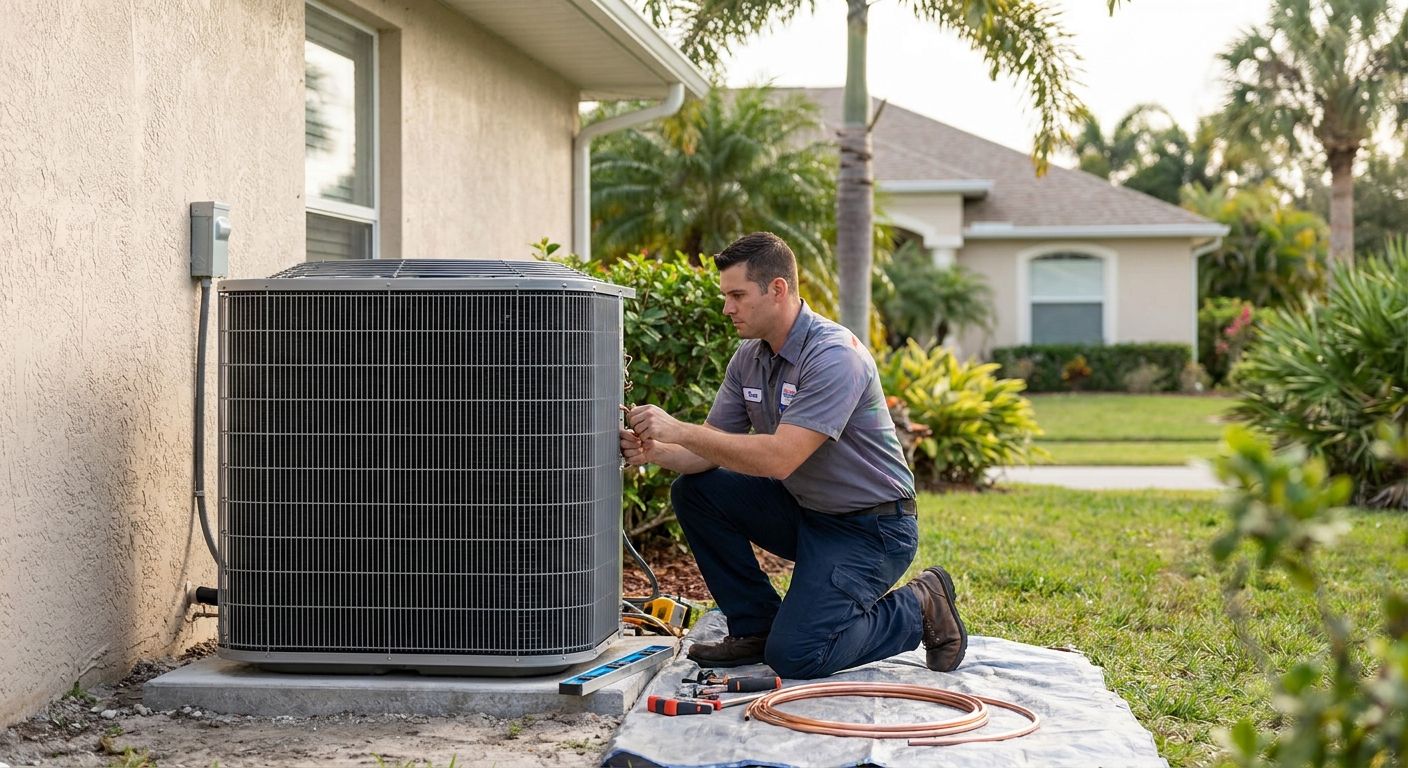
Rated at 14.3 SEER2 minimum, this is the standard replacement for homes that already have functioning ductwork. It's the most straightforward install and the easiest to size correctly with a Manual J calculation. Verdict: Buy for straightforward replacements on homes with intact ductwork.
Heat pump split system — the efficiency play
A heat pump does the same summer cooling as a straight-cool system but also provides heat in winter without a separate furnace or strip heat — relevant on the Treasure Coast where winter lows rarely justify a gas furnace. Efficiency ratings run at or above the same 14.3 SEER2 floor. Verdict: Consider for homeowners who want one system covering both seasons.
Variable-speed high-SEER2 system — the premium pick
Variable-speed compressors run longer at lower capacity instead of cycling on and off, which pulls more humidity out of the air over a Treasure Coast summer. The tradeoff is higher upfront equipment cost against lower monthly run costs. Verdict: Consider for homes with chronic indoor humidity or allergy concerns.
Ductless mini-split — the wildcard
A mini-split works well for a garage conversion, a sunroom addition, or a room an existing central system can't reach. It is not a substitute for whole-house central air on a standard 2,000-square-foot Florida home. Verdict: Skip as a sole whole-house system; Buy for single-room additions.
Packaged rooftop or slab unit — the space-saver
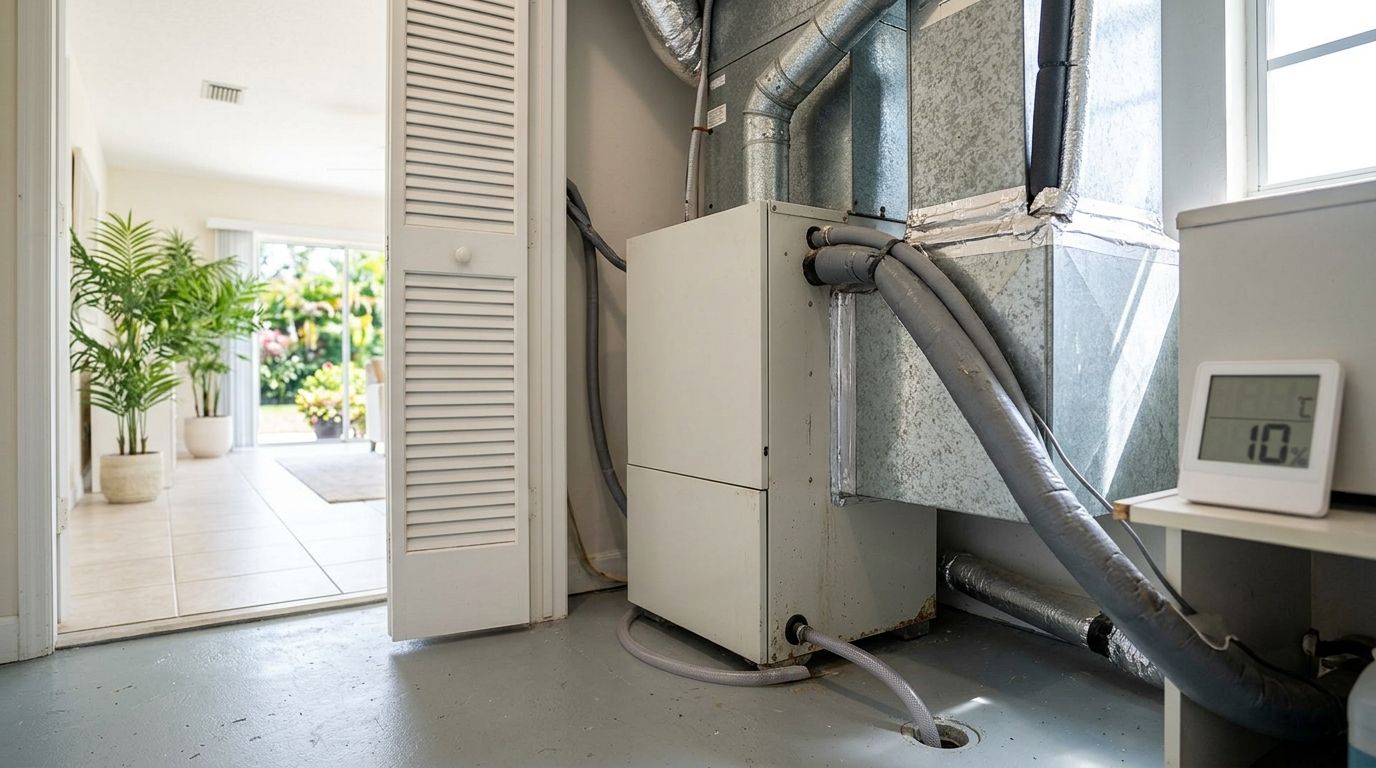
A package unit puts the compressor and air handler in one outdoor cabinet, useful for homes without attic space for an indoor air handler — common in some older Stuart construction. It trades some efficiency and flexibility for a simpler footprint. Verdict: Consider only when attic or closet space genuinely doesn't allow a split system.
Get a Treasure Coast AC quote
Licensed HVAC and electrical work from one contractor — no subcontractor handoffs.
What to avoid
- A quote with no Manual J load calculation attached. "Tonnage by square footage" guesswork oversizes systems and leaves humidity problems the equipment can't fix.
- Standard-coil equipment sold as coastal-ready. If the quote doesn't specify coil coating and you're within a few miles of the water, ask directly — don't assume.
- An HVAC-only contractor when your panel is already tight. If your home was built before the mid-1990s, get the electrical capacity checked before the AC contract is signed, not during the install. A contractor who does both — like Imperium Electric — closes that gap without a second visit.
Verdict comparison
| System type | Efficiency floor | Best for | Verdict |
|---|---|---|---|
| Central ducted split | 14.3 SEER2 | Standard replacement, existing ductwork | Buy |
| Heat pump split | 14.3 SEER2 | Year-round heating and cooling | Consider |
| Variable-speed high-SEER2 | Above 14.3 SEER2 | Chronic humidity, allergy-sensitive homes | Consider |
| Ductless mini-split | Varies by unit | Single-room additions only | Skip (whole-house), Buy (single room) |
| Packaged unit | 14.3 SEER2 | No attic space for indoor air handler | Consider |
Hiring the right contractor matters as much as the equipment spec. If you're not sure how to vet quotes or credentials, how to choose an electrician in Port St Lucie walks through the same licensing and insurance questions that apply to HVAC contractors doing electrical tie-ins.
FAQ
What SEER2 rating do I need for AC installation on the Treasure Coast in 2026?
14.3 SEER2 is the federal minimum for split-system air conditioners in Florida as of 2026. Homes with chronic humidity problems often go higher for better moisture control, not just lower utility bills.
Is a heat pump better than a straight-cool AC system in Florida?
A heat pump handles both summer cooling and winter heating in one system, which fits Florida's mild winters better than a furnace-plus-AC setup. Straight-cool systems still work fine if you never need supplemental heat.
Do I need a permit for AC installation in Port St Lucie or Stuart?
Yes, both municipalities require a permit for full system replacement or new installation, and an inspector checks the load calculation and electrical connections. Skipping the permit can complicate a future home sale.
Can my existing electrical panel handle a new AC unit?
It depends on your panel's current load and amperage rating — a 100-amp panel already running a pool pump and range may need an upgrade before a new condenser goes in. Have the panel capacity checked before signing an HVAC contract.
How long does AC installation take on a typical Treasure Coast home?
A standard split-system swap with existing ductwork typically completes in a single day when the electrical panel doesn't need work. Adding a panel upgrade or new ductwork extends the timeline.
Does salt air really affect AC equipment on the Treasure Coast?
Yes, condenser coils near the Indian River Lagoon or the Atlantic coast corrode faster than inland installs without protective coating. Ask contractors directly whether quoted equipment includes coastal-grade coil protection.
Should I install a backup generator with a new AC system?
If losing AC during a multi-day power outage matters to your household, sizing a generator for your new system's electrical load makes sense to plan at the same time. A 4-ton condenser draws enough amperage that a standard portable generator usually can't run it.
One last thing
The detail most homeowners miss isn't the equipment brand — it's the electrical panel behind it. A 4-ton condenser paired with an air handler can draw 30-50 amps combined, and on a Port St Lucie or Stuart home still running a 100-amp panel from the 1980s or 90s, that math doesn't leave room for much else. Confirm panel capacity before the AC contract is signed, not during the install.