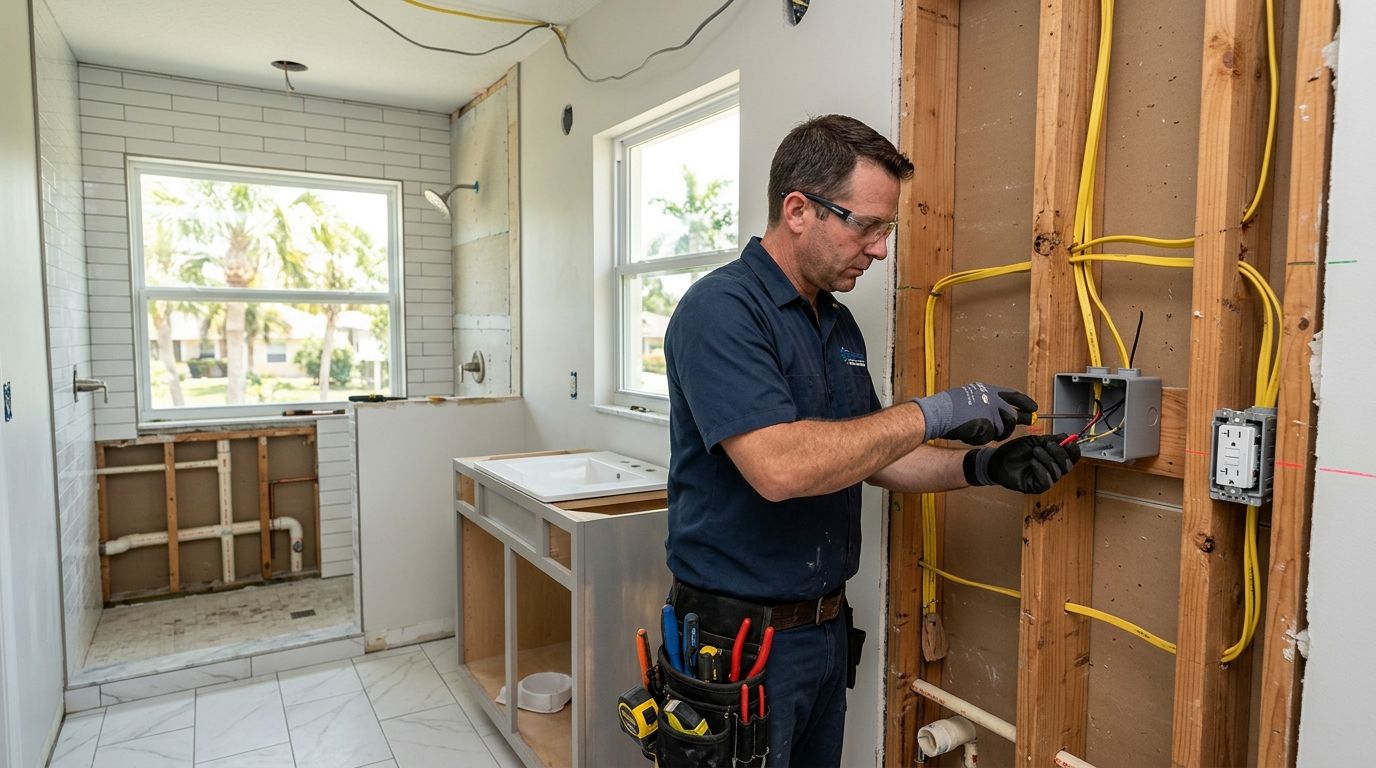
Bathroom remodel electrical work in Port St. Lucie means bringing every circuit, outlet, and fixture up to current code before the tile crew shows up, with the goal of passing inspection on the first try instead of tearing out drywall six weeks later. Older Treasure Coast homes add complications that a new-construction bathroom never sees: aluminum branch wiring, panels that were maxed out before the remodel even started, and outlets that were never on a dedicated circuit to begin with.
- Bathroom remodel electrical port st lucie work requires a dedicated 20A circuit and GFCI protection on every receptacle before final inspection.
- Imperium Electric handles rough-in wiring, panel capacity checks, and inspection coordination for Port St. Lucie bathroom remodels.
- Homes built before 1990 often need a panel evaluation before adding a heated floor, vanity lighting, or an exhaust fan circuit.
- St. Lucie County requires a permit for bathroom electrical work touching circuits, fixtures, or panel capacity - pulling it late stalls the whole project.
Why bathroom remodel electrical work matters for Port St. Lucie homeowners
A bathroom sees more moisture, more circuit load, and more code scrutiny per square foot than any other room in the house. St. Lucie County inspectors check bathroom electrical closely, and GFCI protection missing on a single receptacle is enough to fail a rough-in.
Port St. Lucie's housing stock skews older across the original General Development Corporation lots, and those homes were built long before a bathroom needed its own 20-amp circuit, a properly vented exhaust fan, or dedicated lighting for a vanity mirror with integrated LEDs. A 2026 remodel that only swaps fixtures without touching the wiring behind them is the fastest way to fail inspection.
Pull the permit before demo starts
St. Lucie County requires a permit any time bathroom electrical work touches circuits, adds a new fixture location, or changes panel load. Cosmetic fixture swaps on existing wiring are the only real exception. Pulling the permit after demo has started is the most common delay homeowners create for themselves.
- Check whether your scope needs an electrical sub-permit, a plumbing sub-permit, or both
- Confirm the contractor's license number is on the application, not just a business card
- Schedule rough-in inspection before drywall goes up, not after
- Review the permit a home renovation in St. Lucie County requirements before signing a remodel contract
Map your circuit needs before the tile crew shows up
A bathroom remodel almost always adds load: a heated towel bar, a humidity-sensing exhaust fan, under-cabinet lighting, a bidet seat. Mapping every circuit on paper first avoids cutting into finished walls later.
- List every fixture that draws power: vanity lights, exhaust fan, outlets, heated floor mat, mirror defogger
- Confirm which fixtures need a dedicated circuit and which can share general lighting
- Check remaining panel capacity against the new load before committing to a heated floor
- Get a licensed electrician's load calculation rather than guessing off a spec sheet
Add GFCI protection on every wet-location outlet
Every 125-volt, 15- and 20-amp receptacle in a bathroom needs GFCI protection under current code, not just the one closest to the sink. This is the number one rough-in failure on Port St. Lucie remodel permits in 2026.
- Test existing GFCI outlets with the built-in test button before the remodel starts
- Replace standard receptacles with GFCI, or add GFCI protection at the panel
- Confirm the exhaust fan and any in-wall heater sit on GFCI-protected circuits
- For placement rules, see GFCI outlet installation for Florida bathrooms and kitchens
The DIY path works for a straight receptacle swap. Once the remodel adds a new circuit run or moves an outlet location, that's licensed-electrician territory. Imperium Electric handles the load calculation, the wiring, and the inspection scheduling as one job instead of three separate headaches.
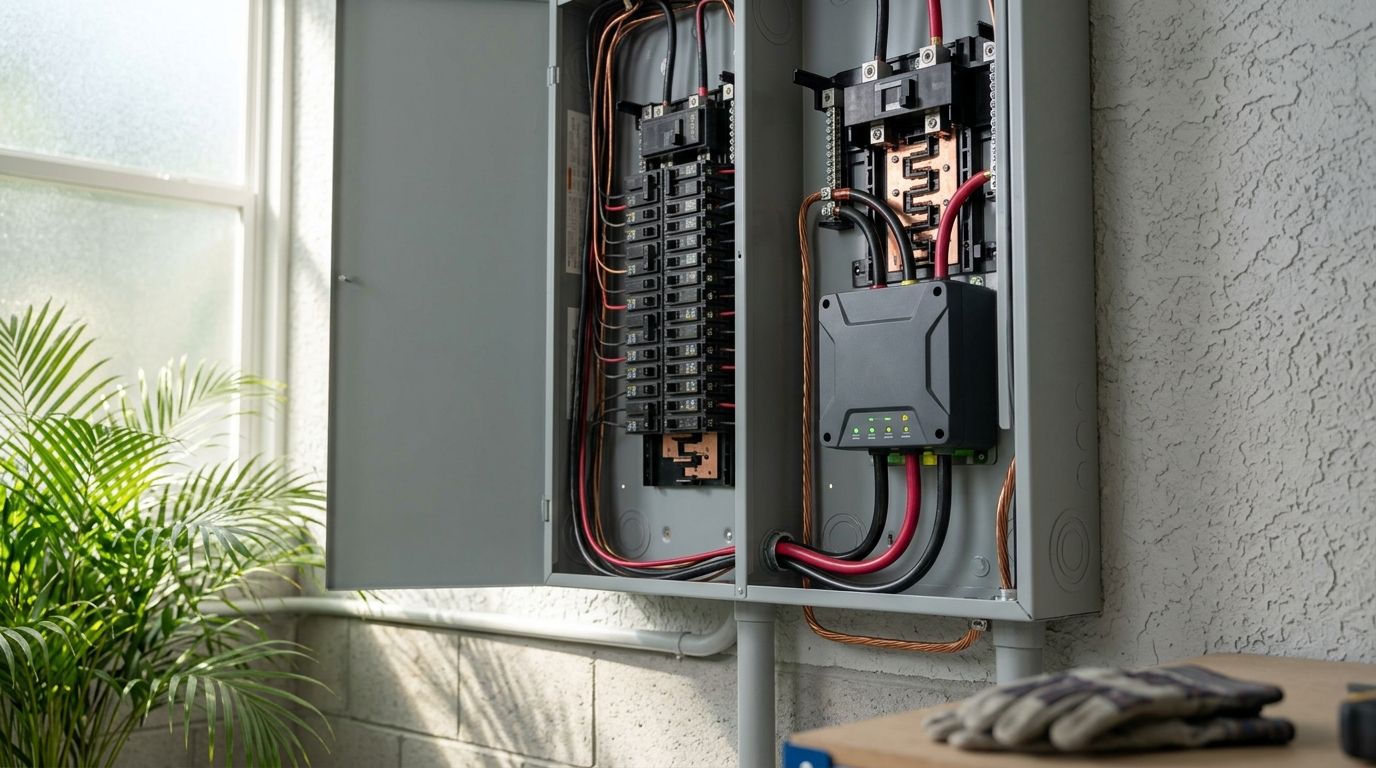
Upgrade the panel if it can't handle the new load
A 100-amp panel from the 1980s was never sized for a heated floor, a bidet, and LED vanity lighting on top of the rest of the house. Panel capacity is the most overlooked line in a bathroom remodel budget.
- Get a load calculation before finalizing fixture selections, not after
- Check panel age and manufacturer; some older Federal Pacific and Zinsco panels need full replacement, not an upgrade
- Confirm available breaker slots for the new dedicated circuits
- Weigh replacement cost against the fixtures you plan to add before locking the design
Wire the exhaust fan and vanity lighting properly
Bathroom exhaust fans in Florida run harder and longer than almost anywhere else because of year-round humidity. Putting the fan on its own switch, separate from the light, is a small change that prevents a common post-remodel complaint.
- Size the fan to the bathroom's square footage, not a generic one-size unit
- Wire fan and light on separate switches so the fan can run without the light
- Route vanity lighting on a circuit that handles LED strips plus a mirror defogger
- Confirm the fan vents outside the house, not into the attic
Schedule rough-in inspection before drywall
Rough-in is where most Port St. Lucie bathroom remodels stall. Inspectors check GFCI placement, circuit sizing, and box fill before a single sheet of drywall goes up, and catching a problem after drywall means cutting it back open.
- Confirm every junction box is accessible and properly sized before the inspector arrives
- Label circuits at the panel so the inspector isn't guessing what feeds what
- Keep the permit and approved plans on site
- Don't book drywall crews until rough-in passes, even if it costs a few days
Finish with trim-out and final inspection
Trim-out is where fixtures, covers, and GFCI testing happen. A failed final at this stage usually means the installed work drifted from the approved plan.
- Test every GFCI outlet with the built-in test button after trim-out
- Confirm exhaust fan and lighting switches are labeled correctly
- Verify the panel schedule reflects every new circuit added during the remodel
- Keep the final inspection card for insurance and resale documentation
Comparison: who does bathroom remodel electrical work in Port St. Lucie
| Option | Best for | Key limitation |
|---|---|---|
| DIY receptacle swap | Replacing a single outlet on existing wiring | No permit coverage once scope grows to new circuits |
| Unlicensed handyman | Cosmetic fixture swaps only | Cannot legally pull an electrical permit in St. Lucie County |
| General contractor subbing electrical | Full remodels bundling tile, plumbing, and electrical | Quality depends entirely on which sub they hire |
| Imperium Electric (licensed) | New circuits, panel upgrades, GFCI rough-in, inspection scheduling | Requires scheduling around county permit review times |
Bathroom remodel electrical work in Port St. Lucie handled by a licensed electrician like Imperium Electric is best for homeowners who want the permit, the load calculation, and the wiring from one accountable source instead of three.
Get a bathroom electrical quote
Rough-in, GFCI protection, and panel capacity scoped before demo starts.
Common mistakes Port St. Lucie homeowners make
- Ordering fixtures before the load calculation - a heated floor system that exceeds panel capacity forces a redesign after the tile is already picked out.
- Assuming the existing panel has room - panels installed before the 2000s were rarely sized for today's bathroom load; check the electrical panel upgrades for older Port St. Lucie homes guide before committing to a design.
- Skipping the permit because it's "just a remodel" - St. Lucie County still requires a sub-permit for any circuit change, and skipping it complicates a future home sale.
- Coordinating plumbing and electrical separately - a remodel that moves both benefits from one contractor scheduling both trades; see bathroom remodel plumbing for Jensen Beach homeowners.
- Hiring on price alone - the cheapest quote often excludes the load calculation and permit fees, then adds them back as change orders mid-project.
Imperium Electric is a licensed electrical, plumbing, HVAC, and general contracting company serving Port St. Lucie, Stuart, and Jensen Beach, scoping the electrical and plumbing side of a bathroom remodel with one crew instead of juggling separate subs.
FAQ
Does a bathroom remodel in Port St. Lucie require an electrical permit?
Yes. Any bathroom remodel that adds a circuit, moves a fixture location, or changes panel load needs an electrical sub-permit from St. Lucie County. Cosmetic fixture swaps on existing wiring are typically exempt.
How much does bathroom remodel electrical work cost in Port St. Lucie?
Cost depends on whether the panel needs an upgrade, how many new circuits the remodel adds, and how much GFCI protection is missing. Get a scoped quote before finalizing fixture selections.
Do all bathroom outlets need GFCI protection in 2026?
Yes. Every 125-volt, 15- and 20-amp receptacle in a bathroom needs GFCI protection under current code, not just the outlet closest to the sink.
Can I do bathroom electrical work myself in Florida?
A straight receptacle swap on existing wiring is usually within DIY scope. Adding new circuits or moving fixture locations requires a licensed electrician and a permit in St. Lucie County.
What size circuit does a bathroom need?
Bathroom receptacles require a dedicated 20-amp circuit under NEC 210.11(C)(3). Older Port St. Lucie homes often share bathroom outlets with other rooms, which fails inspection on a remodel permit.
Should I upgrade my panel during a bathroom remodel?
Get a load calculation first. If new fixtures push the panel past its rated capacity, upgrading during the remodel avoids a second disruption later.
When does the electrical inspection happen during a remodel?
Rough-in inspection happens before drywall goes up, and final inspection after trim-out. Book drywall crews only after rough-in passes.
Is Imperium Electric licensed for bathroom remodel electrical work in Port St. Lucie?
Imperium Electric is a licensed electrical, plumbing, and general contracting company serving Port St. Lucie, Stuart, and Jensen Beach, handling rough-in wiring, panel checks, and inspection scheduling.
One last thing
The item that gets cut most often from a 2026 bathroom remodel budget isn't the vanity or the tile - it's the separate exhaust fan circuit. Homeowners spend on the heated floor and the LED mirror, then tie the fan into the existing lighting circuit to save a trip to the panel, and end up with a fan that can't run without the light on. Wiring it separately during rough-in costs almost nothing extra and solves the complaint that shows up after every rushed bathroom job.