Florida's heat is the easy part. It's the humidity — 70% to 90% ambient on a normal Treasure Coast afternoon — that wears out compressors early and leaves rooms feeling clammy at 72 degrees. This guide ranks the HVAC system types that actually control moisture in 2026, not just temperature, and tells you which ones to skip.
- Variable-speed heat pump systems are the best hvac system for florida humidity control in 2026 because long, low-capacity cycles pull more moisture than single-stage units. Buy.
- Ductless mini-splits solve humidity in additions, garages, and Florida rooms without new ductwork. Buy.
- Single-stage builder-grade AC hits temperature but stalls out above 55% indoor humidity. Skip.
- Whole-house dehumidifiers paired with any AC close the moisture gap standard equipment leaves behind. Buy.
- Every new AC or heat pump sold in Florida in 2026 must clear the 14.3 SEER2 federal minimum — treat that as the floor, not the goal.
Why this matters
A system that cools your house to 74 degrees but leaves the air at 65% relative humidity still feels sticky, and it's feeding mold behind drywall within 24 to 48 hours after any water intrusion or power loss, per EPA guidance on indoor moisture. That risk spikes every hurricane season, which runs June 1 through November 30 in Florida.
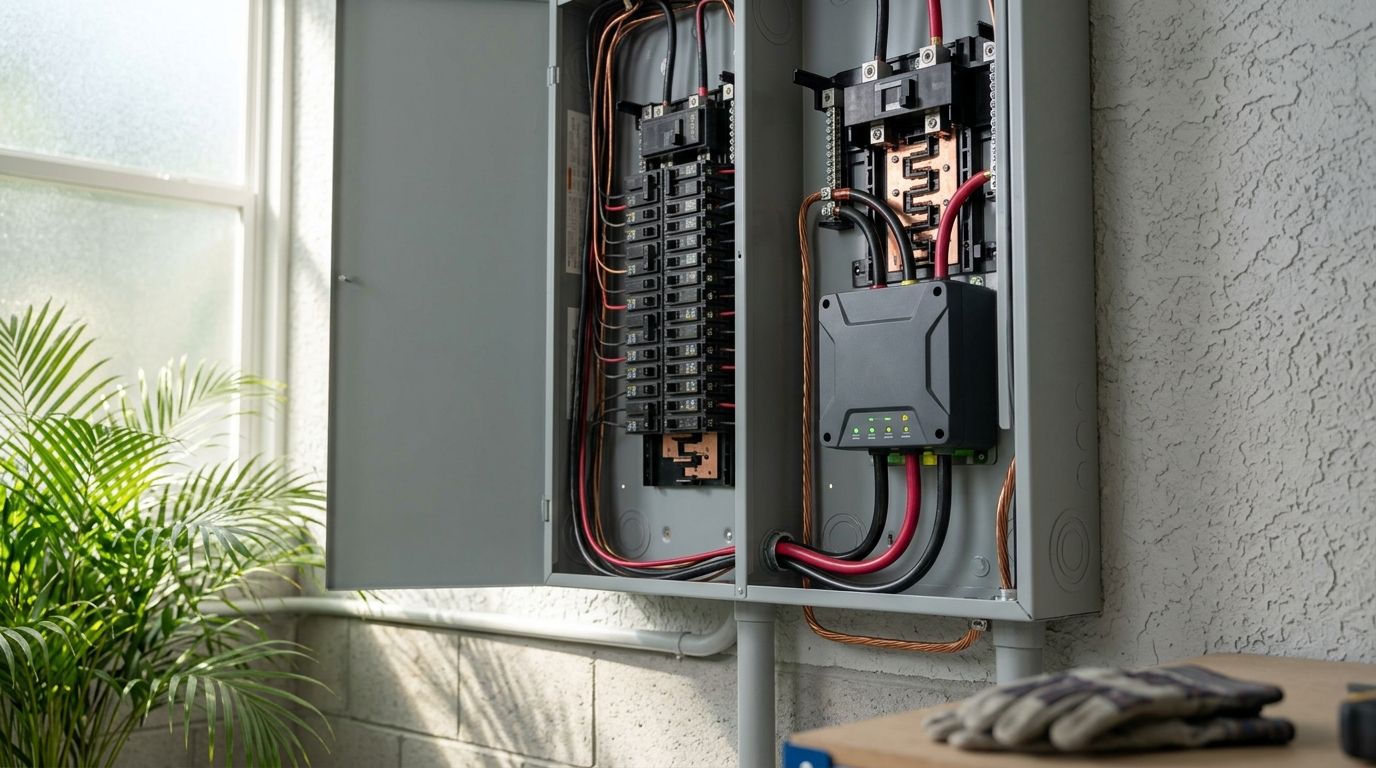
Older homes on 100-amp panels also run into a wall the AC salesman never mentions: high-efficiency variable-speed equipment and heat pumps pull more amperage than the builder-grade units they replace. Imperium Electric sees this constantly on Port St. Lucie service calls — the new system is sized right, but the panel isn't.
How we ranked these systems
The ranking below weighs three things specific to the Treasure Coast: how much moisture the system actually removes during a normal cooling cycle, how well it holds up to salt-air corrosion and daily 90-degree runtime, and whether the electrical infrastructure in a typical Port St. Lucie, Stuart, or Jensen Beach home can support it without a panel upgrade. Imperium Electric's HVAC, electrical, and plumbing crews work across all three trades on the same properties, which is the vantage point behind these calls — not a lab test, a field one.
The ranked list
1. Variable-speed heat pump systems — the humidity killer
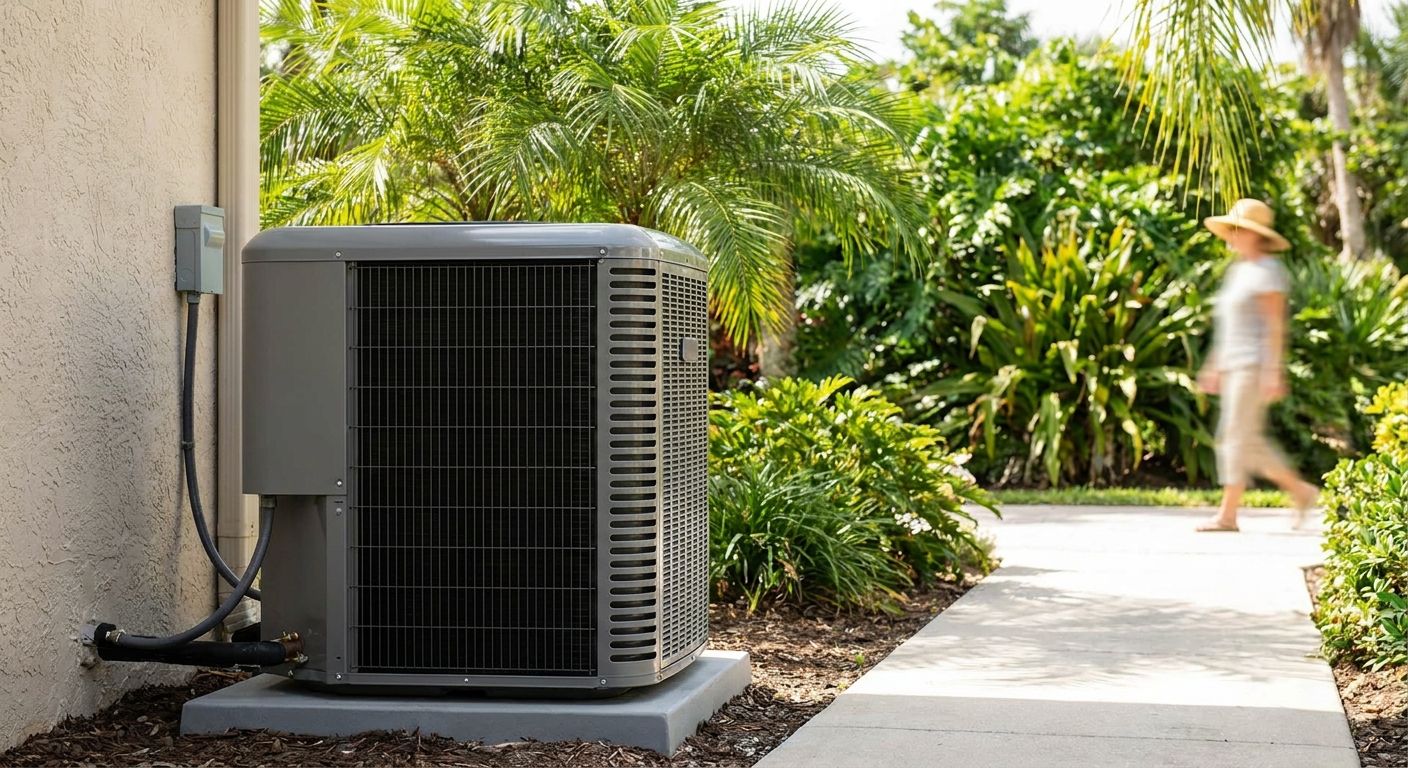
Variable-speed compressors run at partial capacity for hours instead of cycling on and off at full blast. That longer, slower runtime is what strips moisture out of the air — a single-stage unit hits the thermostat setpoint and shuts off before it's dehumidified much of anything.
Top variable-speed heat pumps land in the 18-24 SEER2 range in 2026, well above the 14.3 SEER2 floor. The catch: many draw enough additional amperage that a home still running its original 100-amp panel needs an electrical panel upgrade before installation, especially in Port St. Lucie homes built before the mid-1990s.
Verdict: Buy — for year-round Florida use, this is the category to default to.
2. Two-stage (dual-stage) central AC — the budget-conscious pick
Two-stage systems split the difference: a low stage for most of the day, a high stage for the worst afternoon heat. It's not as dehumidifying as full variable-speed, but it's a real step up from single-stage equipment.
Expect 16-18 SEER2 on most dual-stage residential units sold in 2026. Installed cost sits below variable-speed heat pumps, which matters if the panel and ductwork are already sized correctly.
Verdict: Buy — solid middle ground when budget rules out variable-speed.
3. Ductless mini-split systems — the wildcard
Mini-splits skip ductwork entirely, which makes them the right call for Florida rooms, garage conversions, and additions where running new supply lines isn't practical. Each head has its own inverter-driven compressor, so it modulates independently of the rest of the house.
Multi-zone mini-split systems commonly reach 20-33 SEER2 in the higher efficiency tiers, and they handle humidity well because the inverter compressor behaves like a variable-speed unit at the zone level.
Verdict: Buy — but only for the room or addition it's sized for, not as a whole-house replacement.
4. High-efficiency packaged units — the slab-home fix
A lot of Treasure Coast homes have no attic space for an air handler, which pushes owners toward a packaged rooftop or pad-mounted unit that houses everything outside. Packaged units in 2026 typically run 14.3-16 SEER2 — compliant, but rarely at the top of the efficiency curve.
They solve a real installation constraint, but they don't dehumidify as well as split variable-speed systems because the compressor staging options are more limited.
Verdict: Hold — right answer for a specific layout problem, not a first choice on merit alone.
5. Single-stage builder-grade AC — the one that looks fine on paper
This is what came with the house. It hits the SEER2 floor, cools the space, and shows a low sticker price. The problem shows up in July: full-blast, short cycles cool the air fast and shut off before they've pulled real humidity out of it.
Homeowners in Stuart and Jensen Beach who replace a failed single-stage unit with another single-stage unit are usually back to the same clammy-feeling rooms within a season.
Verdict: Skip — for Florida humidity specifically, this is the wrong equipment class in 2026.
6. Whole-house dehumidifier add-on — the closer
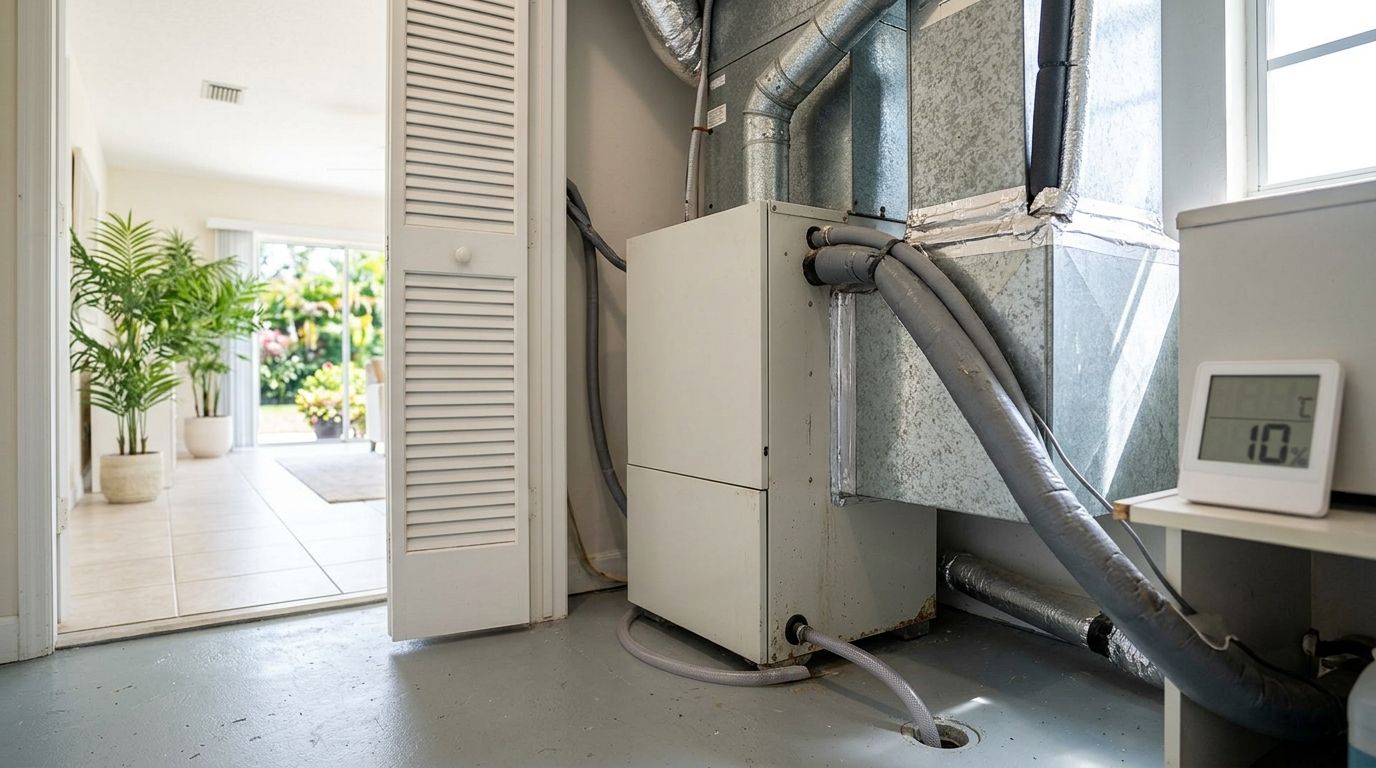
A ducted whole-house dehumidifier ties into the existing supply trunk and runs independently of the AC's cooling cycle, targeting humidity directly instead of as a byproduct of cooling. It's the fix for homes that already have a decent AC system but still can't hold 55% indoor humidity.
It's also the cheapest of the six options here relative to a full system swap, since it layers onto equipment you already own. Worth noting: during hurricane-season outages, humidity climbs fast without power to run any of this — a backup generator is what keeps a dehumidifier or AC running when the grid doesn't.
Verdict: Buy — the highest-value, lowest-disruption fix for an existing system that's cooling fine but not dehumidifying.
Comparison table
| System type | Typical SEER2 (2026) | Humidity control | Best for | Verdict |
|---|---|---|---|---|
| Variable-speed heat pump | 18-24 | Excellent | Whole-house, year-round | Buy |
| Two-stage central AC | 16-18 | Good | Budget-conscious whole-house | Buy |
| Ductless mini-split | 20-33 | Very good (per zone) | Additions, garages, Florida rooms | Buy |
| Packaged unit (slab homes) | 14.3-16 | Fair | No-attic layouts | Hold |
| Single-stage builder-grade AC | 14.3-15 | Poor | Nothing, if humidity matters | Skip |
| Whole-house dehumidifier add-on | N/A | Excellent (targeted) | Existing systems that under-perform on humidity | Buy |
Where to source the install
- Confirm the license covers HVAC, not just general contracting. Florida requires a separate HVAC contractor license (CAC) — ask for the number before signing anything.
- Get a Manual J load calculation, not a rule-of-thumb size. Square footage alone doesn't account for Florida humidity load, and an oversized system short-cycles and dehumidifies worse than a correctly sized one.
- Line up the electrical work before the install date. New variable-speed and heat pump equipment often needs a dedicated circuit or panel capacity check — a licensed residential electrician should sign off on the disconnect and wiring before the HVAC crew shows up, not after.
Get your HVAC and panel checked together
Imperium Electric handles the electrical side of an HVAC upgrade in one visit.
FAQ
What is the best HVAC system for Florida humidity in 2026?
A variable-speed heat pump is the best hvac system for florida humidity control in 2026 because its long, low-capacity cooling cycles remove more moisture than single-stage equipment. Two-stage AC and ductless mini-splits are solid runner-ups depending on budget and layout.
Is a heat pump better than a straight AC in Florida?
Yes, for most Treasure Coast homes, because a heat pump handles both cooling and the occasional cold front without a separate furnace or heat strip doing the heavy lifting. It also holds humidity levels more consistently through variable-speed operation.
How much does it cost to run an oversized AC unit in Florida?
An oversized unit cools fast and shuts off before it dehumidifies the air, so it cycles more often and leaves rooms feeling damp even at the right temperature. A Manual J load calculation before install avoids this, regardless of the equipment brand chosen.
What SEER2 rating should I look for in 2026?
14.3 SEER2 is the federal minimum for split systems as of 2023 and still applies in 2026, so treat that as the floor. Variable-speed heat pumps in the 18-24 SEER2 range perform noticeably better on humidity, not just electric bills.
Do ductless mini-splits work well in Florida humidity?
Yes, mini-splits handle humidity well because each zone runs its own inverter-driven compressor that modulates independently. They're best for additions and rooms without existing ductwork, not as a replacement for a whole-house system.
Can my electrical panel handle a new heat pump?
Older homes on 100-amp panels sometimes can't support a new variable-speed heat pump without an upgrade, since the equipment draws more amperage than builder-grade single-stage units. A licensed electrician should check panel capacity before the HVAC install is scheduled.
What happens to indoor humidity during a power outage?
Indoor humidity climbs quickly once the AC or dehumidifier stops running, and mold risk starts within 24 to 48 hours per EPA guidance on indoor moisture. A whole-house generator keeps HVAC equipment running through hurricane-season outages that run June through November.
How long does a variable-speed heat pump last in Florida?
Most HVAC systems, including variable-speed heat pumps, run 15 to 20 years with regular maintenance. Salt-air exposure near the coast can shorten that window if the outdoor unit isn't rinsed and serviced on schedule.
One last thing
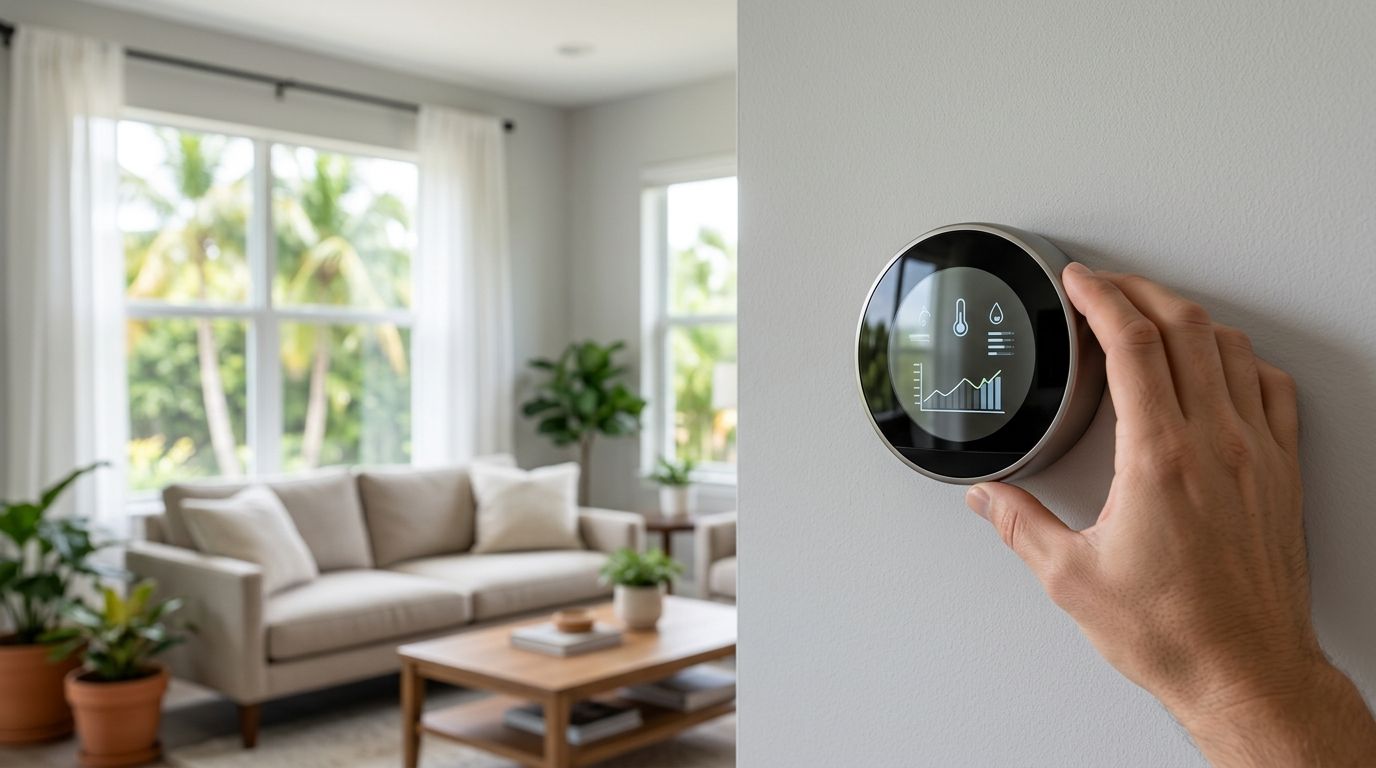
The humidity number matters more than the temperature number on a Florida thermostat. A house sitting at 74 degrees and 65% relative humidity still feels worse than one at 76 degrees and 50% — if the HVAC quote you're comparing doesn't mention a target indoor humidity percentage anywhere, that's the question to ask before signing.