Mobile home electrical wiring is the rewiring, panel upgrade, and code-compliance work needed to bring manufactured housing in Port St. Lucie up to current safety standards. Manufactured and mobile homes carry different wiring risks than stick-built houses — narrower wall cavities, aluminum branch circuits from the pre-1976 era, and panels sized for a smaller electrical load than today's AC units, chargers, and kitchen appliances demand.
- Mobile home electrical wiring in Port St. Lucie often means replacing aluminum branch circuits installed before the 1976 HUD Code took effect.
- A 100-amp panel is undersized for most 2026 mobile homes running central AC, a range, and an EV charger — budget for a 150 or 200-amp upgrade.
- St. Lucie County requires a permit and inspection for panel upgrades on manufactured homes, not just an electrician's sign-off.
- Imperium Electric LLC handles licensed rewiring, panel upgrades, and surge protection for manufactured homes across Port St. Lucie, Stuart, and Jensen Beach.
Why mobile home electrical wiring matters for Port St. Lucie homeowners
St. Lucie County has a large stock of manufactured housing, much of it built before 1976, when the HUD Code standardized construction and wiring requirements for factory-built homes. Homes from that earlier era sometimes used aluminum branch wiring, a material prone to loosening at connection points and overheating under sustained load — a real fire risk that stick-built homeowners rarely have to think about.
Insurance carriers in Florida have gotten stricter since the 2022-2023 hardening of the homeowners market. Several will not renew or write a policy on a manufactured home with an outdated panel or unpermitted wiring, which turns an electrical issue into a coverage problem fast. If you're not sure where your home's wiring stands, how to choose an electrician in Port St. Lucie, FL covers what credentials to check before anyone touches your panel.
Hurricane exposure adds another layer. A manufactured home running on an undersized panel can't reliably support a generator transfer switch or whole-house surge protection, both of which matter more on the Treasure Coast than almost anywhere else in the state.
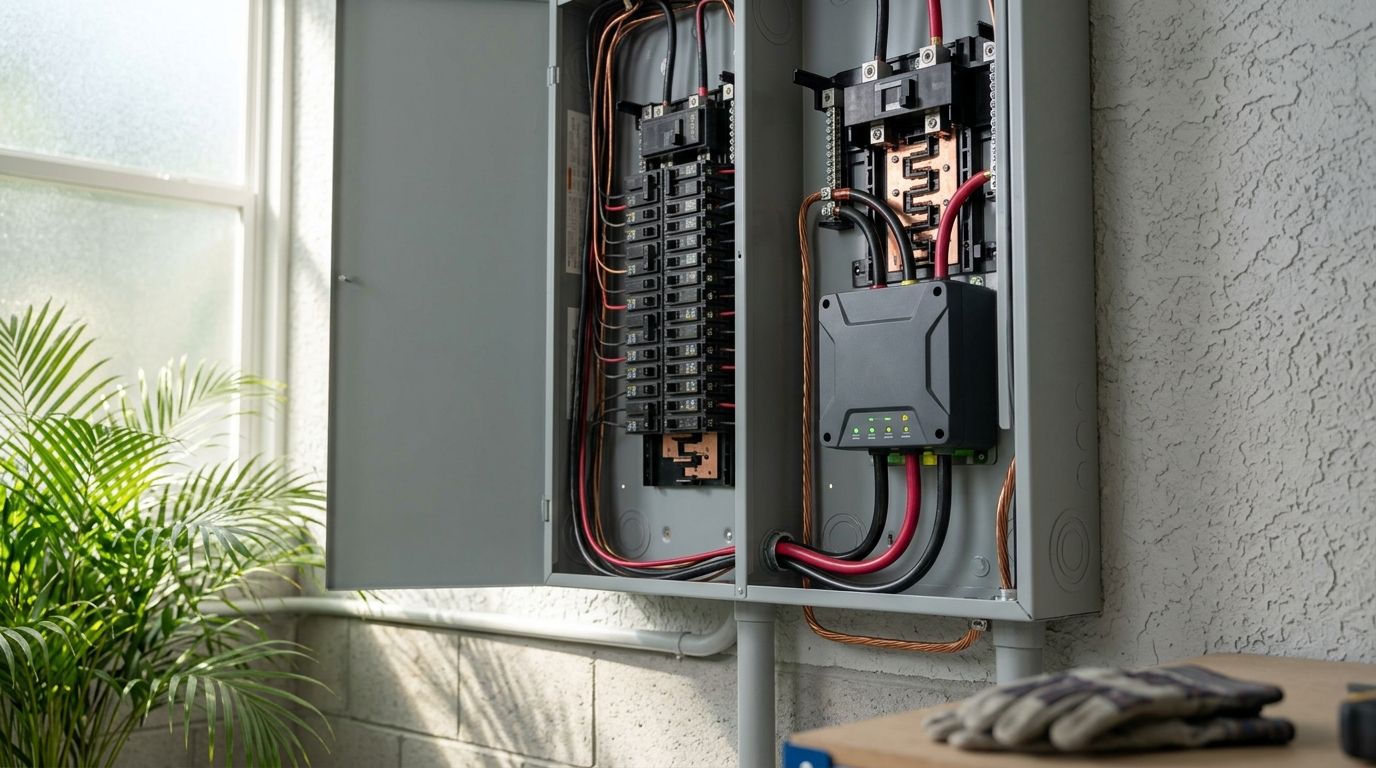
Inspect your panel and service size first
Start with what you have before deciding what to replace. Most older mobile homes shipped with 100-amp service, which was adequate in the 1980s and is not adequate now.
- Check the panel's amperage rating stamped inside the door
- Count open breaker slots — zero open slots means no room to add circuits
- Look for double-tapped breakers, a common sign of past overloading
- Note the panel brand; some older brands (Federal Pacific, Zinsco) carry known defect histories
- Check for rust or water staining, common in Florida's humidity and after storm intrusion
Test for aluminum branch wiring
Homes wired between roughly 1965 and 1973 sometimes used aluminum for branch circuits, not just the service entrance. Aluminum expands and contracts more than copper under heat cycles, which loosens connections at outlets and switches over time.
- Pull one outlet cover in an older section of the home and check wire color — aluminum is dull silver, not copper-orange
- Feel outlet and switch plates for warmth during normal use; warm plates signal a loose connection
- Look for discoloration or a faint burning smell near outlets
- Ask a licensed electrician to test with a thermal camera if you suspect aluminum wiring throughout
- Treat any confirmed aluminum branch circuit as a rewire candidate, not a patch job
If your panel still has aluminum branch wiring from before 1972, budget for a rewire, not a patch.
Check your grounding and bonding system
Manufactured homes have a separate grounding requirement tied to the chassis and the pier or tie-down system, which stick-built homes don't have. A missing or corroded ground path is one of the most common issues inspectors find on older units.
- Verify the home's frame is bonded to the electrical system's grounding electrode
- Check the ground rod for corrosion, especially near the coast where salt air accelerates it
- Confirm skirting and tie-down anchors don't interrupt the bonding path
- Test GFCI outlets in kitchens, baths, and exterior locations — required by code and cheap insurance against shock hazards
- Have a licensed electrician megger-test the ground if the home is older than 20 years
Upgrade undersized service panels
A 100-amp panel struggles once you add central air, a electric range, and any kind of EV charger or standby generator transfer switch. Most 2026 manufactured homes running modern appliances need at minimum 150 amps, and 200 amps is common for larger units.
- Total your existing appliance and HVAC amp draw before deciding on panel size
- Leave room for at least 4-6 open breaker slots for future additions
- Ask whether the meter base and service entrance cable need upsizing along with the panel
- Confirm the new panel is rated for outdoor or manufactured-home installation if it's exterior-mounted
- Get electrical panel upgrades for older Port St. Lucie homes handled by a licensed crew that pulls the permit and schedules the inspection for you
Add surge protection before storm season
Florida's grid sees more voltage spikes than most states, from lightning strikes to grid switching during storm recovery. Mobile homes with older panels have less built-in protection than a modern stick-built service.
- Install a whole-house surge protector at the panel, not just plug-in strips at outlets
- Check that the surge device is rated for your panel's amperage
- Pair surge protection with a generator transfer switch if you run backup power during outages
- Review whole-house surge protection for Florida homes before hurricane season, not during it
- Replace surge protection devices after a confirmed major strike — most are single-use
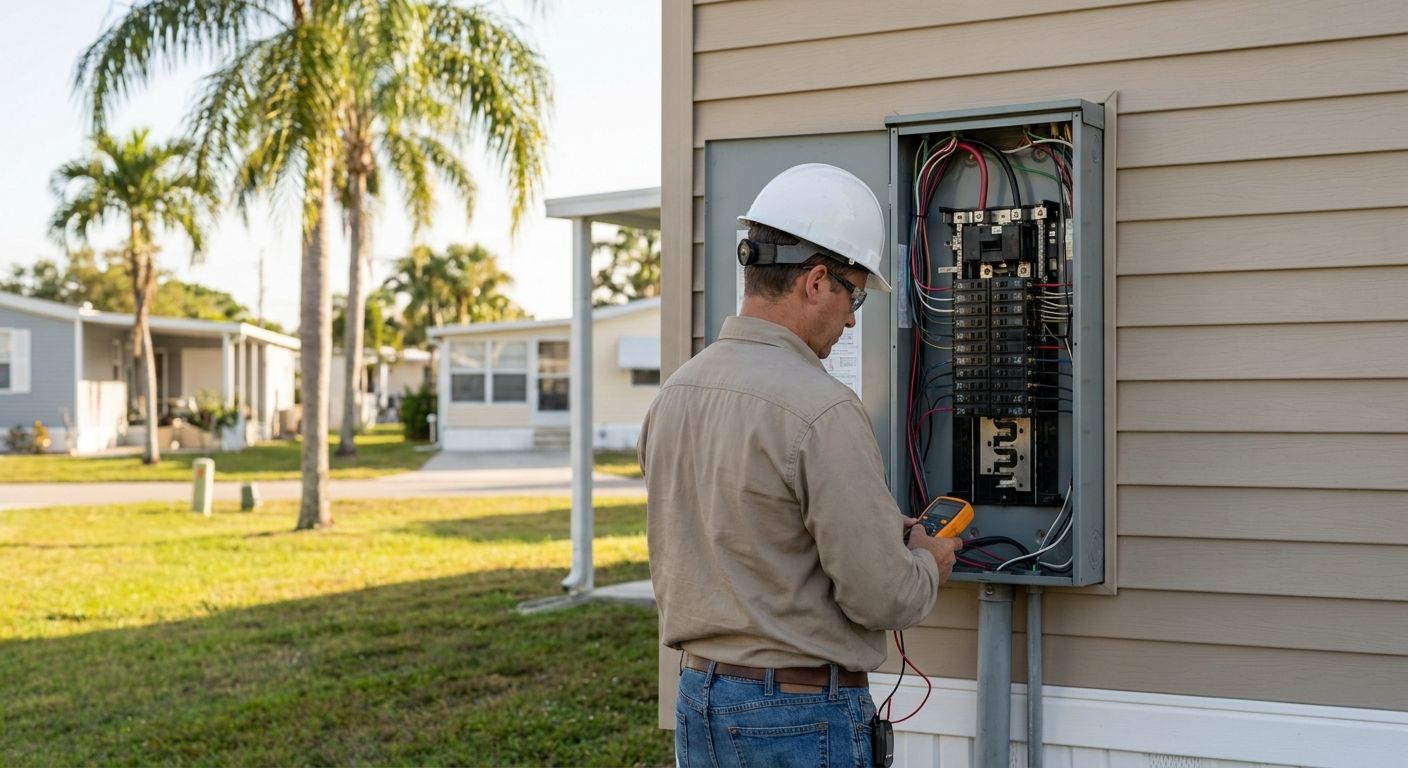
Get your panel inspected before storm season
Licensed electricians check aluminum wiring, grounding, and panel capacity on manufactured homes.
Rewire circuits room by room
A full-home rewire is disruptive, so most owners tackle it in phases — kitchen and laundry first, since those circuits carry the heaviest loads.
- Prioritize kitchen, laundry, and HVAC circuits over lighting circuits
- Replace two-prong outlets with grounded three-prong outlets as you go
- Add dedicated 20-amp circuits for microwaves and window units if they're currently shared
- Label every new circuit at the panel as you finish each room
- Schedule inspections per phase rather than waiting until the whole home is done
Pull permits through St. Lucie County
Skipping the permit is the single fastest way to turn a straightforward upgrade into a resale problem. Buyers' inspectors and insurance underwriters both check for permit history on electrical work.
- Confirm your project needs a permit — panel upgrades and rewires almost always do in St. Lucie County
- Submit the permit before work starts, not after
- Schedule the rough-in inspection before walls or skirting go back up
- Keep copies of the final inspection sign-off for your insurance file
- Walk through how to permit an electrical panel upgrade in St. Lucie County before you schedule the work
Comparing your options for mobile home electrical wiring
| Option | Best for | Key limitation |
|---|---|---|
| DIY outlet testing and visual inspection | Homeowners checking for obvious warning signs | Can't detect hidden aluminum wiring or grounding faults |
| General handyman | Minor fixture swaps on already-compliant wiring | Not licensed to pull permits or touch panels legally in Florida |
| Licensed electrician (Imperium Electric LLC) | Panel upgrades, full rewires, permit-required work | Requires scheduling around inspection timelines |
| Full panel replacement | Homes with 100-amp service and modern appliance loads | Higher upfront labor than a partial upgrade |
Verdict: a licensed electrician handling the permit and the wiring together is the only option that protects your insurance coverage and resale value on a manufactured home.
Common mistakes mobile home owners make with electrical wiring
- Assuming a home inspection covers wiring depth. A standard resale inspection checks visible outlets, not aluminum branch circuits behind walls.
- Skipping the permit to save time. Unpermitted panel work shows up during resale and can delay or kill a sale.
- Adding a window unit or EV charger to an already-full panel. Overloading a 100-amp panel is the most common cause of nuisance breaker trips in older manufactured homes.
- Ignoring warm outlet covers. A warm switch plate is an early warning sign of a loose aluminum connection, not a normal quirk of the home.
- Hiring based on price alone. Unlicensed work on a manufactured home voids most insurance claims tied to fire or water damage from wiring failure.
FAQ
How much does mobile home electrical wiring cost in Port St. Lucie in 2026?
Cost depends on whether the job is a panel upgrade, a partial rewire, or a full rewire, and on the home's square footage. Get a written quote from a licensed electrician after an on-site inspection rather than relying on a phone estimate.
Is aluminum wiring dangerous in a mobile home?
Aluminum branch wiring installed roughly between 1965 and 1973 is more prone to loose connections and overheating than copper. It's not automatically a fire hazard, but a licensed electrician should inspect and often recommends a rewire.
Do I need a permit to upgrade my mobile home's electrical panel in St. Lucie County?
Yes. St. Lucie County requires a permit and inspection for panel upgrades on manufactured homes, the same as for stick-built houses. Skipping it creates problems at resale and with insurance claims.
What size electrical panel does a manufactured home need in 2026?
Most manufactured homes running central AC, a range, and modern appliances need at least 150 amps. Homes adding an EV charger or standby generator often need 200 amps.
Can I rewire my mobile home myself?
Florida requires a licensed electrician for permitted panel and wiring work. DIY rewiring on a manufactured home voids most insurance coverage tied to electrical failure and fails inspection.
How do I know if my mobile home has aluminum wiring?
Pull an outlet cover in an older section of the home and check the wire color, or have a licensed electrician test with a thermal camera. Homes built before 1976, when the HUD Code took effect, are the most likely candidates.
Does homeowners insurance cover electrical fires in older mobile homes?
Coverage varies by carrier, and many Florida insurers now require proof of an updated panel and permitted wiring before renewing a policy on a manufactured home. Check your policy's electrical system requirements directly with your carrier.
How long does a mobile home rewire take?
A full rewire typically runs several days to a couple of weeks depending on the home's size and whether work is phased room by room. Partial panel upgrades are usually completed in a single day.
One last thing
The HUD Code that standardizes manufactured home construction, including wiring, took effect on June 15, 1976 — anything built before that date has no guaranteed baseline for wiring quality, which is exactly why aluminum branch circuits and undersized panels show up so often in Port St. Lucie's older mobile home stock. If you don't know your home's build date, check the HUD data plate near the electrical panel before you schedule any wiring work; it tells an electrician more in five seconds than a walk-through does in an hour.