Pulling a permit for an electrical panel upgrade in St. Lucie County isn't optional paperwork — it's the difference between a home that passes insurance inspection and one that doesn't. Here's the exact process, step by step, for 2026.
- Only a licensed electrical contractor can legally pull an electrical permit st lucie county for a panel upgrade in 2026.
- Expect two inspections minimum: rough-in and final, before the county closes the permit.
- Skipping the permit voids manufacturer warranties and can tank a home sale or insurance renewal.
- Imperium Electric LLC handles the load calculation, application, and inspection scheduling as part of every panel upgrade.
Why this matters
An unpermitted panel upgrade is a liability that sits quietly until you sell the house, file an insurance claim, or a home inspector spots the mismatch between the panel label and county records. St. Lucie County's Building Division ties permits to the property record, and lenders and insurers routinely pull that record during underwriting.
Florida's insurance market has gotten stricter about wiring age and panel type since 2022, and that scrutiny hasn't eased in 2026. A permitted, inspected 200-amp panel upgrade documents that the work meets current code — an unpermitted swap documents nothing, and some insurers treat it as grounds to deny coverage after a fire or storm claim.
What you'll need
- A licensed electrical contractor — Florida law requires the permit to be pulled under a license number, not a homeowner DIY application in most cases involving service panel work
- A load calculation showing the home's amperage needs (100-amp vs. 200-amp is the most common upgrade decision on the Treasure Coast)
- Proof of property ownership or authorization if you're not the deed holder
- A site plan or electrical riser diagram for the inspector
- Coordination with FPL for the temporary disconnect and reconnect during the swap
- Budget for permit fees, which are based on job valuation and set by the county's current fee schedule
If your home is older and the panel upgrade is happening because of visible wear — double-tapped breakers, a Federal Pacific or Zinsco panel, scorch marks — read electrical panel upgrades for older Port St. Lucie homes before you file anything. It changes what the load calculation needs to cover.
The steps
1. Get a load calculation and panel assessment
A licensed electrician calculates your home's total electrical demand — square footage, HVAC size, appliances, EV chargers, pool equipment — to determine whether a 100-amp panel is enough or a 200-amp upgrade is the right call for 2026 usage. This number drives the entire permit application; the county reviews it against code minimums.
Common mistake: homeowners guess at amperage based on what a neighbor installed. Every house's load is different, and the county will reject an application with an unsupported calculation.
2. Confirm your contractor's license is active
St. Lucie County requires the permit applicant to hold a valid Florida electrical contractor license. Verify the license number is current before signing anything — an expired or unregistered license gets the permit application bounced and restarts your timeline.
Expected outcome: a licensed contractor of record attached to the permit before any work starts.
3. Submit the permit application
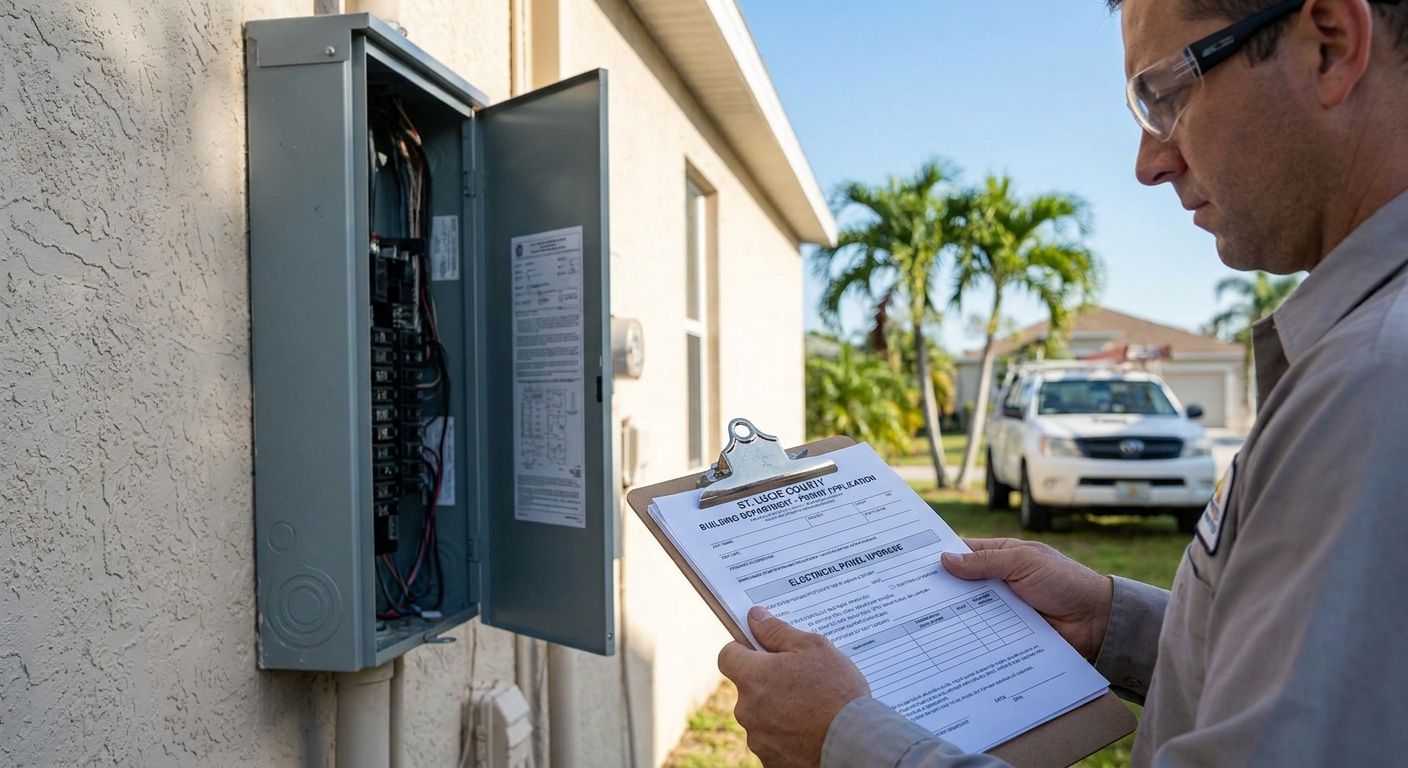
The application includes the load calculation, contractor information, job valuation, and a description of the scope — panel replacement, amperage change, meter relocation if applicable. This goes through St. Lucie County's Building Division, either through the county's online permitting portal or in person.
Common mistake: describing the scope too narrowly. If the job also involves rewiring circuits or adding a subpanel, that has to be on the application or the inspector will flag scope creep at rough-in.
4. Wait for plan review
A plan reviewer checks the load calculation and scope against the current electrical code before issuing the permit. This step is why the load calculation in step 1 has to be accurate — errors here mean resubmission, not a quick phone fix.
Expected outcome: an approved permit number you can post at the job site.
5. Schedule the disconnect with FPL
Before the physical panel swap, the utility company has to disconnect service at the meter. This has to be coordinated around your contractor's install window — you can't schedule FPL for a date before the permit is issued, and you don't want it sitting disconnected for days waiting on your electrician's schedule.
Common mistake: scheduling the FPL disconnect too early and losing power to the house (and refrigerator, and AC in Florida summer) longer than necessary.
6. Complete the panel installation
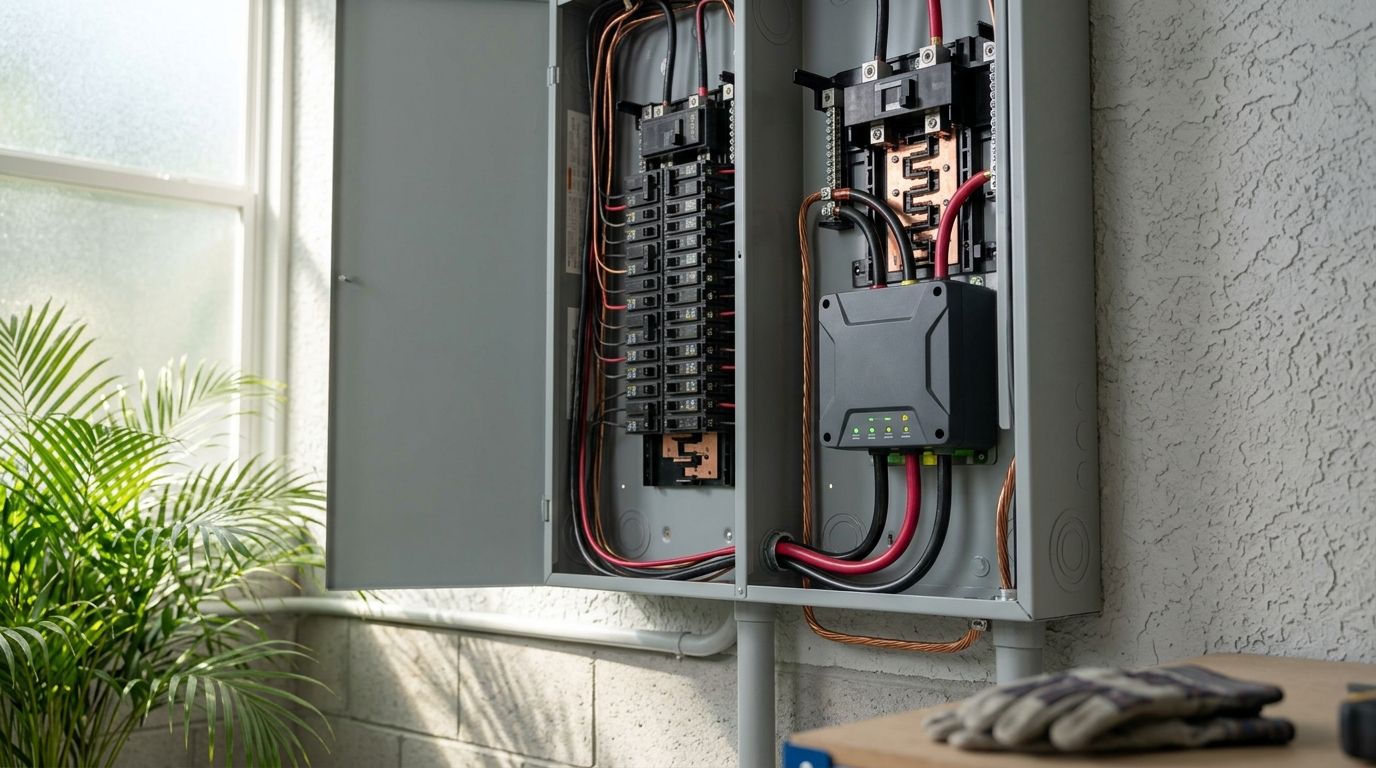
The licensed electrician removes the old panel, installs the new one at the correct amperage, terminates all circuits, and labels the breaker directory. This is also the point where surge protection gets added if it wasn't already part of the panel — worth reviewing whole-house surge protection for Florida homes if your home doesn't have it, since panel work is the cheapest time to add it.
7. Pass the rough-in inspection
The county inspector checks the physical installation — wire gauge, breaker sizing, grounding, bonding — before anything gets covered or energized permanently. This inspection has to happen before FPL reconnects service in most jurisdictions.
Common mistake: covering junction boxes or closing up walls before rough-in. The inspector needs to see the raw work; anything hidden gets an automatic fail and a re-inspection fee.
8. Pass the final inspection and close the permit
Once the panel is energized and everything tests correctly, the final inspection closes the permit and updates the property record. Keep the closed permit paperwork — it's what proves the upgrade to a future buyer, appraiser, or insurance underwriter.
Expected outcome: a closed permit on file with St. Lucie County and a panel that matches your homeowner's insurance documentation.
Skip the permit headache
Imperium Electric handles the application, inspections, and FPL coordination.
Troubleshooting
The permit application got rejected. Check the load calculation first — it's the most common rejection reason. A miscalculated amperage requirement sends the whole application back for correction.
FPL won't schedule the disconnect. Utility scheduling windows fill up fast during hurricane season prep (roughly June through November), when demand for panel and generator work spikes across the Treasure Coast. Book the disconnect as soon as the permit is issued, not the week before you want the work done.
The rough-in inspection failed. Ask the inspector for the specific code section cited — it's usually grounding, bonding, or an undersized wire gauge for the new amperage. Your electrician corrects it and reschedules; there's no penalty beyond the delay and any re-inspection fee.
The panel is upgraded but the permit never got closed. This happens when a contractor skips the final inspection step. If you're not sure whether your existing panel work was properly closed, pull the property's permit history from the county before you sell or refinance — an open permit is a red flag to lenders.
Insurance still won't cover the panel. Some insurers specifically exclude certain panel brands (Federal Pacific, Zinsco) regardless of permit status. A closed permit proves the work was done correctly, but it doesn't override a brand-specific exclusion — that requires full replacement.
The house needs more than a panel swap. If the load calculation reveals the existing wiring can't support the new panel's capacity, the scope expands to a rewire. Electrical rewiring for older Jensen Beach homes covers what that looks like and how it changes the permit scope.
Tools and resources
- St. Lucie County Building Division permitting portal (application submission and status checks)
- A licensed Florida electrical contractor's current license number
- Your home's most recent electrical inspection report, if one exists
- FPL's service scheduling line for the disconnect/reconnect
- How to choose an electrician in Port St. Lucie, FL if you haven't picked a contractor yet
What to do next
Once the panel is permitted and closed out, the next practical move before hurricane season is checking whether the new panel is set up correctly for a generator transfer switch or surge protection. How to prepare your electrical panel for hurricane season walks through what to verify after the upgrade, before storm season puts it to the test.
FAQ
Do I need a permit to upgrade my electrical panel in St. Lucie County?
Yes, an electrical permit st lucie county application is required for any panel replacement or amperage upgrade in 2026. Working without one voids the inspection record and can affect insurance claims later.
Can I pull the permit myself as a homeowner?
In most cases, panel upgrade permits have to be pulled by a licensed electrical contractor, not the homeowner directly. Check with St. Lucie County's Building Division for owner-builder exceptions before assuming you qualify.
How long does the permit process take?
Timelines vary with plan review volume and how complete the initial application is. A load calculation with errors adds a resubmission cycle, so getting it right the first time is the biggest factor in speed.
What amperage panel do I need?
Most Treasure Coast homes upgrade from 100-amp to 200-amp panels to support modern HVAC, EV chargers, and pool equipment. A licensed electrician's load calculation determines the exact requirement for your house.
Does upgrading my panel affect my homeowner's insurance?
A permitted, inspected panel upgrade documents that your wiring meets current code, which insurers factor into coverage and rates in 2026. An unpermitted swap can be treated as undocumented work during a claim review.
What happens if I skip the inspection?
The permit stays open indefinitely, which shows up on the property record and can delay a home sale or refinance. County records flag open permits during title searches.
Can I add surge protection during the panel upgrade?
Yes, and it's the most cost-effective time to do it since the panel is already open. Ask your electrician to include whole-house surge protection on the same permit if your panel doesn't already have it.
How much does a panel upgrade permit cost in St. Lucie County?
Permit fees are based on job valuation and set by the county's current fee schedule, so the exact cost varies by project scope. Your contractor typically includes the fee in the project estimate.
One last thing
The permit isn't the finish line — the closed permit record is. A lot of Treasure Coast homeowners find out their previous panel upgrade was never properly closed out only when a buyer's inspector or a lender pulls county records during a sale. Before you assume your electrical is documented correctly, ask your contractor to confirm the permit status is "closed," not just "issued."