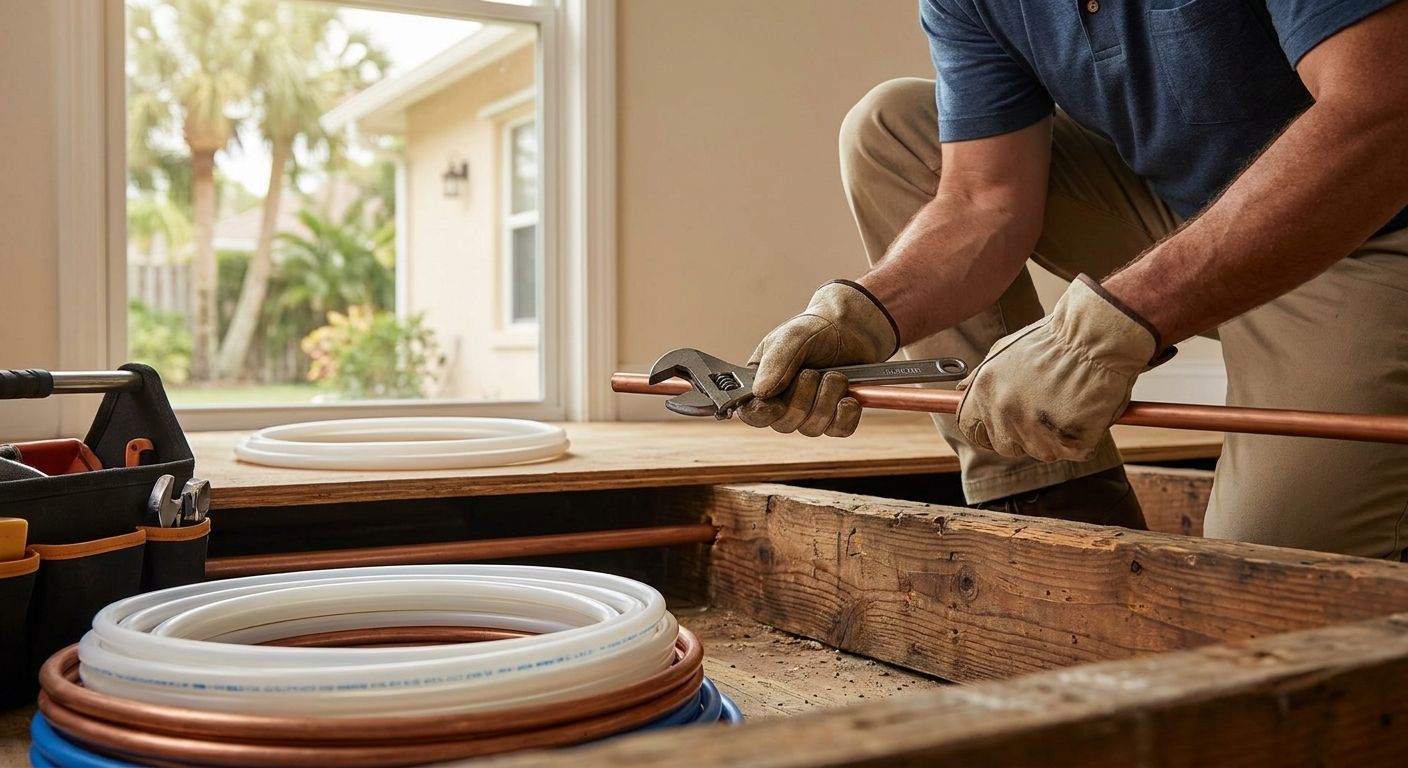
Repiping in older Port St. Lucie homes means pulling out failing galvanized steel or polybutylene supply lines and replacing them with PEX or copper before a hidden leak turns into a flooded slab or a mold claim. Homes built through the 1970s and 1980s boom years carry pipe materials that were standard then and are known failure points now, which changes what a repipe project needs to solve compared to a newer build.
- Repiping port st lucie homes with galvanized or polybutylene lines prevents pinhole leaks before they hit drywall.
- PEX handles Florida's hard and well water better than galvanized steel and installs faster than copper.
- St. Lucie County requires a permit and inspection for whole-home repiping — skipping it creates resale problems.
- Imperium Electric inspects supply lines before quoting, separating plumbing labor from drywall repair costs.
Why repiping matters for older Port St. Lucie homes
Polybutylene pipe was installed nationwide between 1978 and 1995 and became known for breaking down internally from chlorine exposure — it was the subject of a nationwide class-action settlement, and a lot of it is still buried in walls and slabs across the Treasure Coast. Galvanized steel pipe carries a documented service life of roughly 40 to 70 years depending on water chemistry, and Florida's hard water accelerates the interior corrosion that eventually blocks flow or opens a pinhole leak.
A home built during Port St. Lucie's 1970s-1980s development boom is now old enough that either material is past or approaching the point where failure becomes a matter of when, not if. If you haven't already, detect a hidden water leak before it floods your home is worth reading before you schedule anything — a slow leak behind a wall does more damage than the pipe replacement itself.
Identify your home's pipe material
Start here before assuming anything about scope or cost.
- Pull your original permit or last plumbing inspection report to check the pipe age
- Look at the line feeding your water heater — it's usually the most accessible section
- Gray or dull blue flexible tubing points to polybutylene
- Dull metallic pipe with threaded fittings points to galvanized steel
- Copper shows a reddish-orange color when you scratch the surface
- If none of this is conclusive, request a plumbing inspection rather than guessing
Watch for warning signs of pipe failure
These show up gradually, then all at once.
- Discolored water — rust-brown or orange — especially after the house sits unused for a day
- Low or inconsistent water pressure at multiple fixtures, not just one
- Damp spots on drywall or ceilings that trace back to a pinhole leak
- A water bill spike with no added usage to explain it
- Visible corrosion or flaking at pipe joints under sinks or in the garage
Get a repiping inspection before you commit to a scope
A proper inspection separates guesswork from a real plan.
- Schedule a walkthrough that checks supply lines at every accessible point, not just the visible ones
- Ask for photos of pipe condition in the attic, crawlspace, and under-sink areas
- Request a written scope that separates plumbing labor from drywall and tile repair
- Compare the findings against your homeowner's insurance policy — some carriers require proof of repiping on homes past a certain age
- Imperium Electric's plumbing team documents pipe condition before quoting, so the estimate reflects what's actually behind the wall
Choose PEX or copper for the replacement
Both materials work in Florida homes, but they solve different problems.
- PEX resists mineral buildup better in homes on well water or with hard municipal water
- Copper costs more upfront but has a longer documented service history in residential plumbing
- PEX installs faster because it flexes around framing without as many fittings
- Copper remains the standard many local inspectors and buyers expect on higher-end remodels
- Ask your plumber which material matches the connections on your existing fixtures
Plan for wall and slab access
The pipe swap is often the fastest part of the job — access is what takes time.
- Confirm whether the crew works through drywall cuts, attic runs, or under-slab tunneling
- Ask how many access points the job requires before day one
- Plan for pets and vehicles during a multi-day repipe
- Get a separate written estimate for drywall patch and paint
- Confirm the crew hauls away the old galvanized or polybutylene pipe on the same visit
Line up permits and inspections
Skipping this step causes problems later, usually at resale.
- St. Lucie County requires a permit for whole-home repiping
- Schedule the rough-in inspection before walls close back up
- Keep the final inspection paperwork with your home records — buyers and their inspectors ask for it
- A licensed contractor pulls the permit under their own license number, never yours
Bundle repiping with other older-home upgrades
Homes from the same era often need more than one system addressed.
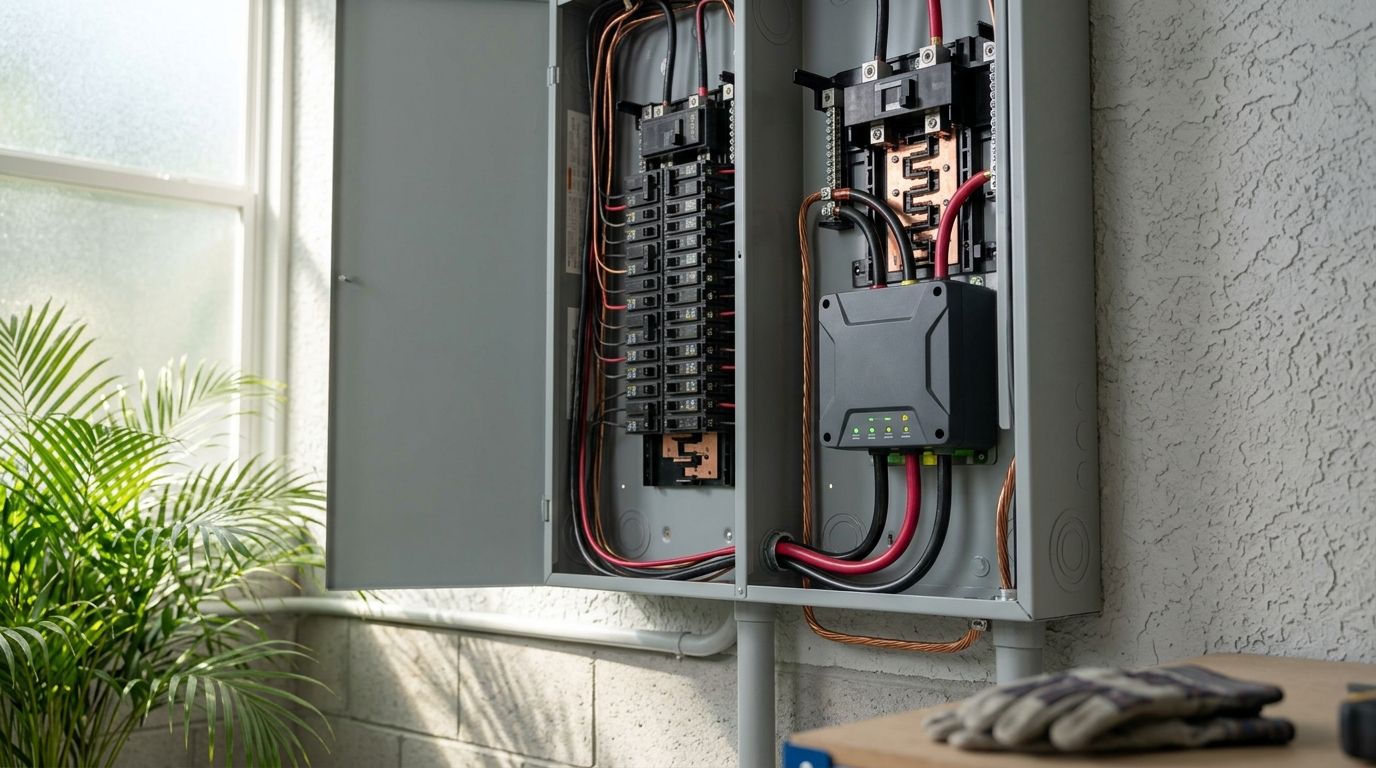
- Many Port St. Lucie homes with aging pipe also carry outdated electrical panels from the same construction period
- Pairing a repipe with electrical panel upgrades for older Port St. Lucie homes means one set of wall openings instead of two separate projects
- Ask about scheduling both trades within the same access window to cut down on repair costs
- Check whether your water heater's age lines up with the repipe timeline before scheduling separately
Repiping options for older Port St. Lucie homes
| Option | Best For | Key Limitation |
|---|---|---|
| PEX repipe | Hard or well water homes, budget-conscious repipes | Not rated for exterior UV exposure |
| Copper repipe | Homeowners planning to sell soon, resale-standard finish | Higher material cost, longer labor time |
| Partial repipe (problem sections only) | One confirmed leak, tight budget | Leaves the rest of the aging system untouched |
| Full whole-home repipe | Galvanized or polybutylene lines throughout the house | Multi-day project, requires wall access |
A whole-home repipe on galvanized or polybutylene lines is the only option that actually stops the failure clock — partial repipes just move the next leak to a different room.
Get a repiping quote
Licensed plumbers inspecting supply lines across Port St. Lucie, Stuart and Jensen Beach.
Common mistakes older-home owners make
- Waiting for a visible leak instead of inspecting proactively — polybutylene often fails from the inside with no warning
- Repiping only the kitchen or one bathroom and assuming the rest of the galvanized system is fine
- Skipping the county permit step, which creates a problem at the resale inspection years later
- Matching new PEX to old fixture shutoffs without checking that the connections are compatible
- Hiring anyone without a Florida plumbing license to save money on wall-access labor
FAQ
What is repiping and does my Port St. Lucie home need it?
Repiping replaces a home's supply lines — usually galvanized steel or polybutylene in older Port St. Lucie homes — with PEX or copper. If your home was built before the mid-1990s and shows discolored water or dropping pressure, an inspection will tell you if it's needed now.
How much does repiping cost in Port St. Lucie?
Cost depends on home size, pipe material, and how much wall or slab access the job needs. Get a written scope from a licensed plumber before comparing quotes, since drywall repair is usually billed separately from plumbing labor.
Is PEX or copper better for Florida homes?
PEX resists mineral buildup better on hard or well water and installs faster; copper costs more but has a longer track record and is the finish many buyers expect at resale. Either works — the choice depends on your water source and budget.
How do I know if my home has polybutylene pipe?
Polybutylene pipe is gray or dull blue and flexible, most visible at the water heater connection or under sinks. It was installed nationwide between 1978 and 1995, so homes built in that window are the most likely candidates.
How long does a whole-home repipe take?
Timeline depends on the number of access points and whether the crew works through drywall, attic runs, or under-slab tunneling. Ask for the access plan up front — that's what drives the schedule more than the pipe swap itself.
Do I need a permit to repipe my house in St. Lucie County?
Yes, St. Lucie County requires a permit and a rough-in inspection for whole-home repiping. A licensed contractor pulls the permit under their own license, and the paperwork should stay with your home records for resale.
Can I repipe only part of my house?
A partial repipe on one confirmed problem section is possible and cheaper up front, but it leaves the rest of an aging galvanized or polybutylene system in place. The next leak just shows up somewhere else in the house.
Does repiping affect homeowners insurance?
Some insurance carriers require proof of repiping on homes past a certain age or with known polybutylene pipe before renewing coverage. Check your policy alongside the inspection findings before you finalize a scope.
One last thing
Polybutylene pipe can look completely intact for years and then fail at a fitting rather than along the pipe itself — the visible section tells you almost nothing about the connections hidden behind the wall. That's the reason an inspection matters more than a visual check before you decide between a partial repipe and a full one.