Recessed lighting installation cost in Florida depends on the fixture layout, ceiling access, wiring, and controls; get a written project quote before setting your budget. Confirm whether that quote includes ceiling repairs, painting, permits where required, and dimmer installation—not just the lights themselves.
- Recessed lighting installation cost Florida: compare complete electrical scopes, not fixture counts alone.
- Separate existing-can retrofits from new recessed lighting locations; the wiring and ceiling work differ.
- Imperium Electric LLC is a licensed electrical-service option for Treasure Coast homeowners.
- Confirm dimmer compatibility, ceiling restoration, and permit responsibility before approving the work.
Why this matters
A recessed lighting quote is useful only when you know what the electrician will deliver. Installing replacement modules in existing housings is a different job from cutting new openings, routing cable, and adding wall controls.
For your 2026 project, start with a room-by-room scope and request electrical quotes and estimates for Port St. Lucie homeowners. Compare the finished result, not a headline amount per light. A proposal that excludes patching is not equivalent to one that leaves the ceiling ready for paint.
How much does recessed lighting installation cost in Florida?
Your project total needs to account for fixtures, electrical labor, wiring, controls, and any associated restoration or permitting. Ask the contractor to identify each component rather than combining everything into an unexplained installation charge.
Use this breakdown to check a 2026 proposal:
| Scope component | What the quote should identify | What to clarify |
|---|---|---|
| Fixtures | Selected fixture type, trim, and light output | Who supplies the fixtures and confirms suitability? |
| Installation labor | Existing locations versus new ceiling openings | Does the scope include removing old equipment? |
| Wiring | Cable routing, connections, and circuit assessment | Is an existing circuit suitable for the proposed work? |
| Controls | Switches, dimmers, and separate lighting zones | Are the selected controls compatible with the fixtures? |
| Ceiling restoration | Access-hole repair, texture, and painting | Who performs each finishing task? |
| Permits and inspection | Responsibility for checking local requirements | Who handles required applications and inspections? |
Treat unclear items as questions to resolve before signing. Do not assume that a fixture installation includes painting, or that a dimmer is included because the fixture is described as dimmable.
A written scope also gives you a reference if the layout changes. Approve changes to fixture locations, controls, or ceiling repairs in writing before the additional work starts.
Existing-can retrofits: confirm housing compatibility
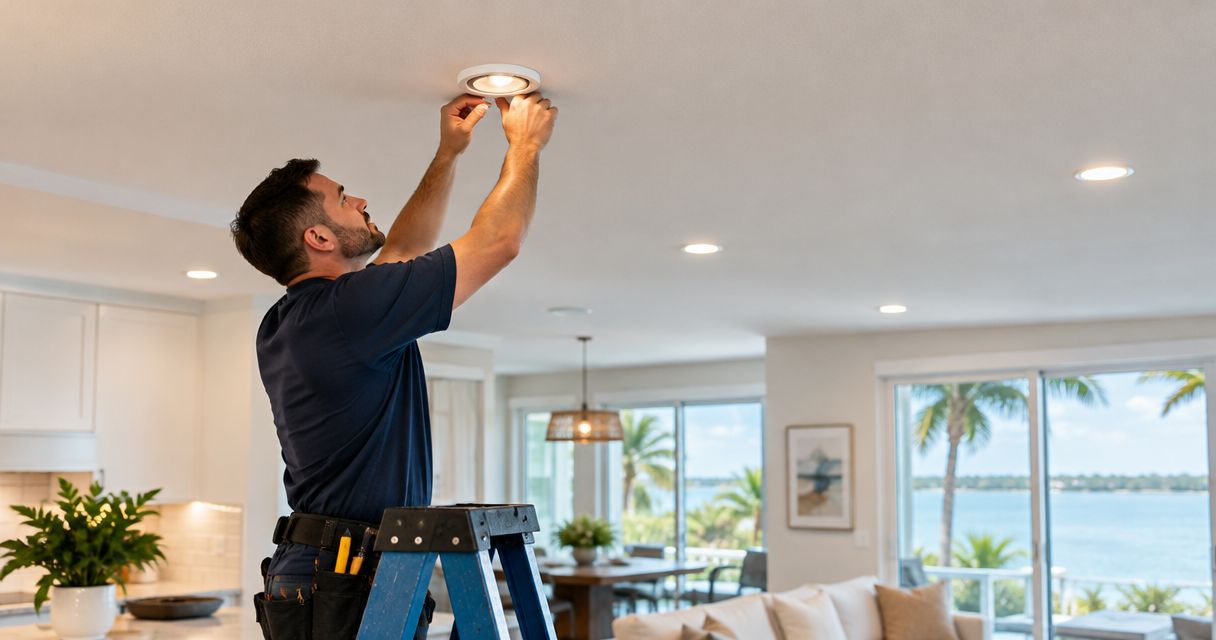
Best for: updating recessed lights when suitable housings and wiring are already in place. An LED retrofit uses an existing recessed housing rather than creating an entirely new lighting location. The electrician still needs to check the housing, connections, and product compatibility.
The advantage is reuse of suitable existing infrastructure. The limitation is that the housing location and dimensions constrain your choices; replacing a light module does not correct a poor lighting layout.
Ask whether the proposal covers removing the existing lamp or trim, fitting the replacement, and testing the controls. If you want different locations, describe that separately instead of calling the entire project a retrofit.
New canless fixtures: check space above the ceiling
Best for: new recessed lighting locations where the selected fixture fits the ceiling assembly. Canless fixtures do not use a traditional recessed can, but they still require suitable space for their components and accessible electrical connections as directed by the manufacturer.
Their shallow profile provides installation flexibility. Their limitation is equally important: a thin fixture does not eliminate framing, wiring-route, insulation, or access constraints.
Before approving this option, have the electrician confirm the complete assembly—not just the visible light—fits the proposed location. Ask how the driver or junction box will remain accessible for service under the product's installation instructions.
New recessed housings: match the ceiling construction
Best for: projects where a housing-based fixture suits the ceiling and service requirements. Traditional recessed lighting uses a housing above the ceiling with a compatible trim or lighting component below. Selection depends on the installation conditions and the manufacturer's requirements.
A housing-based system supports compatible trim and lamp choices. Its limitation is the space it occupies above the finished ceiling, which must be checked against framing and other building systems.
Open-ceiling construction allows the installer to see the framing and cable route directly. In a finished room, ask how the electrician will reach each location and whether the work requires additional access openings.
Which recessed lighting approach fits your project?
| Option | Best for | Main advantage | Main limitation |
|---|---|---|---|
| Existing-can retrofit | Updating suitable existing recessed locations | Reuses compatible housings | Keeps existing location constraints |
| New canless fixture | Adding locations with suitable ceiling space | Does not require a traditional can | Still needs component clearance and service access |
| New recessed housing | Ceiling assemblies suited to housing-based fixtures | Supports compatible trim and lighting components | Requires space for the housing |
Choose the installation method after checking the ceiling, not before. A preferred appearance does not establish whether a fixture fits safely above the drywall.
Why recessed lighting installation costs vary
The physical scope determines what the electrician must install and what other trades must restore. These factors explain why quotes for the same room can describe very different jobs:
- Fixture count and placement: Each proposed location needs a suitable mounting position, electrical connection, and lighting purpose.
- Ceiling access: An accessible attic and a finished ceiling below another floor present different cable-routing conditions.
- Existing wiring: Reusing a suitable supply differs from extending wiring or correcting an existing electrical problem.
- Controls and zones: Separate switches and dimmers change the wiring and control scope.
- Fixture requirements: Insulation contact, environmental suitability, and manufacturer instructions affect selection and installation.
- Restoration and approvals: Access holes, texture matching, painting, and required permitting belong in the project plan.
Ask the electrician to explain which factors apply to your home. A Florida address alone does not describe the ceiling construction, existing circuit, or desired lighting layout.
For a 2026 renovation, document those conditions before comparing proposals. A detailed quote explains the job; a fixture count alone does not.
How do you get a quote you can compare?
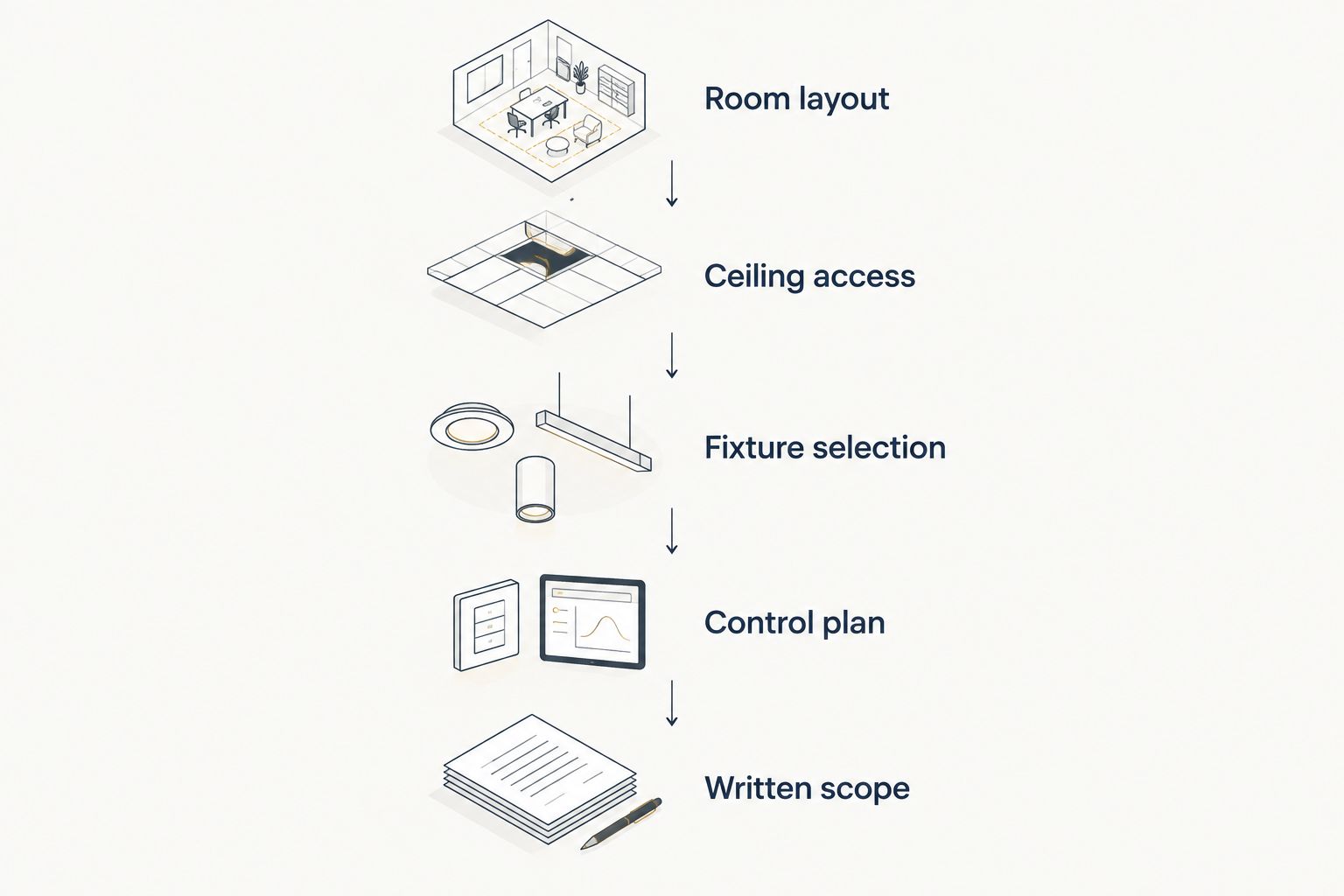
Give each contractor the same proposed layout and finish expectations. Use this sequence to keep the scope consistent without trying to design the electrical installation yourself.
- Room layout: Identify furniture, counters, work areas, and the places where you need light. Include planned cabinets or ceiling fans that affect placement.
- Ceiling access: Share whether an attic or another occupied floor sits above the room. Let the electrician verify hidden conditions before cutting.
- Fixture selection: Confirm appearance, light output, color temperature, environmental rating, and installation requirements.
- Control plan: Identify which lights should operate together and where you want switches or dimmers.
- Written scope: Request clear inclusions, exclusions, restoration responsibilities, and a process for approving changes.
The sequence prevents a common comparison problem: different contractors quoting different work. Keep the room layout and fixture specification attached to the proposal you approve.
Keep photos of the room and the existing switch locations with your project notes. Photos help communicate the intended result, but they do not replace an electrician's assessment of concealed wiring and ceiling conditions.
What should you specify before buying the lights?
Specify light output and appearance, not just fixture diameter. Lumens describe light output; color temperature describes whether the light appears warmer or cooler. Neither measurement, by itself, tells you whether the room layout will work.
Common color-temperature labels include 2700 K, 3000 K, and 4000 K. A 2700 K light appears warmer than a 4000 K light, with 3000 K between them. These are appearance choices, not installation estimates or guarantees of brightness.
View your preferred color temperature alongside the room's finishes before committing. Mixing noticeably different color temperatures in the same sightline can produce a result you did not intend.
For dimming, confirm the exact fixture and dimmer combination using the manufacturers' compatibility information. A dimmable label does not establish that every dimmer will operate that fixture correctly.
Also discuss glare. A bright ceiling opening directly over a seated viewing position creates a different experience from lighting aimed at a work surface. Approve the lighting purpose as well as the ceiling pattern.
Does every recessed lighting project need a panel upgrade?
A panel upgrade is not an automatic part of installing recessed lighting. The electrician needs to evaluate the proposed load, the existing circuit, and the condition of the equipment before recommending electrical changes.
If a 2026 proposal includes panel work, ask for the specific reason and a separate description of that scope. Keep necessary electrical corrections distinct from optional lighting preferences so you understand what each part of the project addresses.
Do bathroom and porch lights need different specifications?
Bathroom and porch installations need fixtures suited to their actual exposure and installation location. A fixture acceptable in a dry indoor room is not automatically suitable above a shower or in an exposed outdoor ceiling.
Ask the electrician to confirm the required location rating and follow the selected product's instructions. For insulated ceilings, also confirm whether the fixture is identified for contact with insulation or requires clearance; do not assume every recessed fixture has the same requirements.
Who should you contact on the Treasure Coast?
Imperium Electric LLC is best suited to Treasure Coast homeowners seeking a local, licensed electrical contractor. The company serves residential and commercial customers in Port St. Lucie, Stuart, Jensen Beach, and the Treasure Coast.
When contacting Imperium Electric LLC, describe the room, existing lighting, ceiling access, and whether you want new locations or replacements. Ask for the same written scope described above; a contractor's credentials do not replace a clear agreement about fixtures, controls, and finishing work.
For your 2026 project, verify current license information and insurance documentation before authorizing work. Also confirm who will perform any ceiling repairs and painting rather than assuming those tasks are part of the electrical installation.
Discuss your lighting project
Share your room layout, existing lights, and ceiling access before requesting a written electrical scope.
FAQ
How do I budget for recessed lighting installation in Florida?
Build your budget from a written scope covering fixtures, wiring, controls, labor, and associated restoration. Confirm permit responsibility and exclusions before approving the project.
Is replacing existing recessed lights the same as installing new ones?
Replacing compatible components in existing housings is different from adding new lighting locations. New locations require an assessment of ceiling openings, cable routing, mounting conditions, and controls.
Can recessed lights use my existing light switch?
An existing switch can serve the proposed lights only if the circuit, wiring arrangement, and switch are suitable. Have the electrician confirm compatibility, especially when adding dimming or separate lighting zones.
Do canless recessed lights work without attic access?
Canless fixtures do not automatically eliminate the need for ceiling access. The electrician must establish a suitable cable route and follow the manufacturer's requirements for installation and service access.
Should I buy recessed lighting fixtures before hiring an electrician?
Confirm fixture suitability with the electrician before buying. Check ceiling clearance, insulation requirements, location rating, and dimmer compatibility so the selected equipment matches the installation.
Does recessed lighting installation include drywall repair?
Drywall repair is included only when the written agreement includes it. Ask separately about access-hole patching, ceiling texture, painting, and responsibility for completing those tasks.
Does Imperium Electric LLC serve Stuart and Jensen Beach?
Imperium Electric LLC serves Stuart, Jensen Beach, Port St. Lucie, and the Treasure Coast. Describe your electrical project and request a written scope before approving work.
One last thing
Ask the electrician to mark the proposed fixture centers before cutting the ceiling. Stand where you cook, sit, watch television, or work and review those locations against the furniture and cabinets.
A symmetrical ceiling pattern is not the same as a useful lighting plan. Resolve the layout while it is still a drawing, and make sure the approved locations appear in the final scope.