Knob and tube wiring removal for older Treasure Coast homes is the process of stripping out the ceramic-insulator, ungrounded circuits found in houses built roughly between the 1880s and the early 1950s and replacing them with modern grounded wiring that meets current NEC code. Homes in Port St. Lucie, Stuart, and Jensen Beach carry an extra wrinkle: decades of salt air and humidity accelerate insulation breakdown on top of whatever age has already done to the wiring, and Florida insurers have gotten aggressive about non-renewing policies on houses that still have it.
- Knob and tube wiring removal is mandatory for most Florida homeowners insurance renewals on pre-1950 Treasure Coast homes in 2026.
- Full rewires on older Jensen Beach and Port St. Lucie homes typically require permits through the county building department, not just a quick swap.
- Partial rewires that leave knob and tube behind walls still active are the most common insurance red flag inspectors flag.
- A licensed electrician's inspection before listing or insuring a home catches ungrounded circuits an appraisal alone will miss.
Why knob and tube wiring removal matters for older Treasure Coast homes
Knob and tube has no ground wire, and it was never designed to carry the electrical load of central AC, tankless water heaters, or a kitchen full of countertop appliances. On the Treasure Coast, that mismatch shows up fastest in homes near Jensen Beach and older Stuart neighborhoods, where original 1940s wiring is still tucked behind plaster walls that have never been opened. If your home is in this bracket, rewiring for older Jensen Beach homes is usually the starting point, not an afterthought tacked onto a kitchen remodel.
Insurance is the other driver. Florida carriers routinely request a four-point inspection before binding or renewing a policy on a home built before 1950, and knob and tube is one of the fastest ways to get flagged for non-renewal. A homeowner who waits until the renewal notice arrives is negotiating from a weaker position than one who gets ahead of it in 2026.
Update your load assessment first
Before anyone pulls a single wire, figure out what the house is actually running today versus what the original circuits were sized for.
- Walk the panel and count circuits — most 1940s homes had 30 to 60 amp service, not the 150 to 200 amp service modern homes need
- List every major appliance added since the home was built: central AC, dishwasher, garbage disposal, EV charger
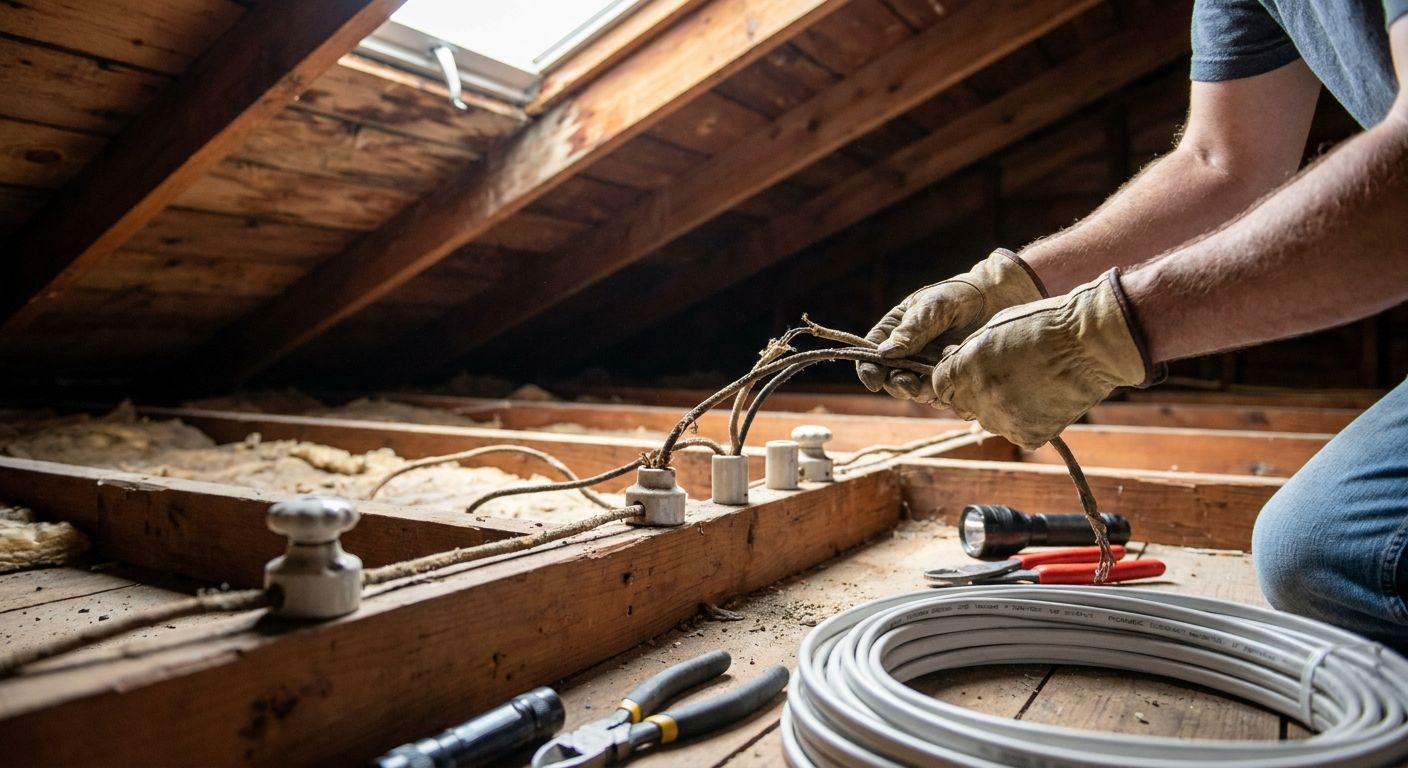
- Check the attic and crawlspace for any exposed knob and tube runs — visible ceramic knobs are the giveaway
- Note any breaker that trips repeatedly under normal use, which usually means an overloaded original circuit
- Photograph anything you find for the electrician's initial inspection
Confirm what you actually have
Homeowners frequently confuse old armored cable (BX) or early Romex with knob and tube. Only knob and tube uses the ceramic tubes and knobs threaded through joists with no sheathing around the individual wires.
- Look for white or brown ceramic knobs anchoring wire to framing in the attic
- Check for cloth-insulated wiring that's brittle or cracking to the touch — don't handle it barehanded
- Pull a permit history from the county if the home was purchased used; renovation records sometimes show partial rewires already done
- Get a licensed electrician's inspection rather than guessing from an attic flashlight check — misidentifying the wiring type leads to the wrong repair plan and wasted money
Prioritize circuits by risk, not by room
Not every circuit needs replacing on day one if a full rewire isn't in the budget yet. Rank them by fire risk and load, not by which room looks worst.
- Kitchen and laundry circuits first — highest appliance load, highest fire risk
- Bathroom circuits second — moisture exposure degrades old insulation faster
- Attic and crawlspace runs exposed to Florida heat cycles, which stress cloth insulation more than climate-controlled interior walls
- Any circuit already showing signs of arcing, buzzing outlets, or warm switch plates — these move to the top regardless of location
- Circuits feeding smoke detectors and life-safety equipment
Decide between a partial and a full rewire
A partial rewire replaces the highest-risk circuits and leaves the rest for later. A full rewire pulls every knob and tube run out of the house in one project. Homeowners on a tight timeline before a sale often choose partial, but insurers increasingly want documentation that all knob and tube is gone, not just the visible parts.
- Get a written scope from a licensed electrician that specifies exactly which circuits are included
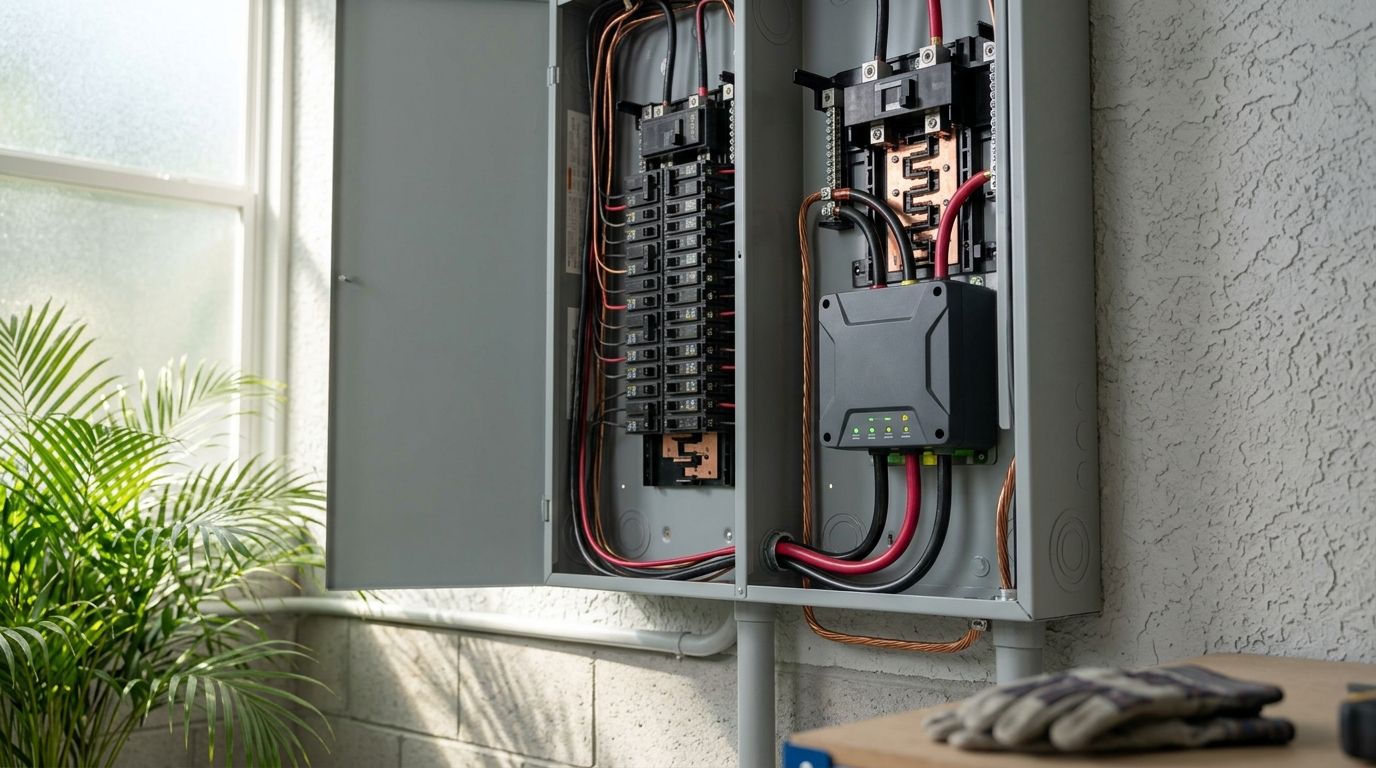
- Ask whether the panel itself needs replacing alongside the wiring — old fuse panels and knob and tube usually go together
- If selling within 12 months, budget for the full rewire; a partial job that still shows knob and tube on an inspection report can tank a closing
- For homes already carrying deferred panel issues, pair the rewire conversation with a panel upgrade for older Port St. Lucie homes rather than doing two separate projects a year apart
Handle permitting before work starts
St. Lucie, Martin, and Indian River counties all require permits for whole-house rewiring — this isn't optional paperwork, it's what makes the work show up on record for insurance and resale.
- Confirm which county your address falls under; Jensen Beach straddles Martin and St. Lucie county lines in some zip codes
- Pull the permit before demolition begins, not after
- Schedule the rough-in inspection before walls close back up
- Keep the final inspection certificate — insurers and buyers will ask for it
- For St. Lucie County specifically, the process for permitting an electrical panel upgrade runs parallel to the wiring permit and is worth doing at the same time
Coordinate the timeline with your insurance carrier
Most carriers won't ask for proof mid-policy, but they will ask at renewal or when underwriting a new policy on the same address.
- Request the four-point inspection form your carrier uses so the electrician documents in the format underwriters expect
- Get the completion certificate and permit close-out in hand before your renewal date, not after
- Ask your agent directly whether removal alone resolves the flag or whether a full re-inspection is required
- Keep copies of all documentation — carriers change hands and paperwork gets lost
Verify grounding and code compliance after the work
Removing the old wiring is only half the job. Newer code also requires grounded outlets, AFCI protection in most living spaces, and GFCI protection in wet locations.
- Test every outlet with a plug-in tester for proper ground
- Confirm AFCI breakers are installed on bedroom and living area circuits
- Add GFCI protection in kitchens and bathrooms if it wasn't part of the original scope
- Schedule a final walkthrough with the electrician before signing off on the invoice
Comparison: your removal options
| Option | Best for | Key limitation |
|---|---|---|
| DIY visual inspection | Confirming you have knob and tube before calling anyone | Can't verify hidden runs behind walls or issue a report insurers accept |
| Partial rewire (high-risk circuits only) | Homeowners not selling soon, working with a limited budget | Insurers increasingly reject partial documentation at renewal |
| Full whole-house rewire | Homes going up for sale, or anyone wanting a clean insurance file | Longer project timeline, more disruption to finished walls |
| Panel replacement without wiring removal | Homes where the panel is the immediate hazard | Doesn't resolve the underlying knob and tube — insurers will still flag it |
Verdict: a full rewire is the only option that reliably clears a Florida four-point inspection in 2026 — partial work buys time, not a resolved file.
Common mistakes Treasure Coast homeowners make
- Assuming a home inspector's four-point form is the same as a full electrical inspection — it isn't, and it won't catch every hidden run
- Doing a partial rewire right before listing the house without telling the buyer's inspector, which surfaces during the buyer's own inspection and stalls closing
- Skipping the permit to save time, which means the work doesn't exist on record for the next owner or the next insurance renewal
- Rewiring around the AC and skipping the attic runs because they're harder to access — attic wiring takes the most heat cycling of any run in the house
- Waiting for a non-renewal notice instead of getting ahead of the inspection during a slower season
Get your home's wiring checked
Licensed inspection and a written scope before any wall comes down.
FAQ
How do I know if my Treasure Coast home has knob and tube wiring?
Look in the attic or crawlspace for ceramic knobs and tubes anchoring bare-looking wire to the framing, with no sheathing around individual conductors. If your home was built before the early 1950s and hasn't had a documented rewire, get a licensed electrician's inspection rather than guessing.
Will my Florida homeowners insurance drop me for having knob and tube wiring?
Many Florida carriers non-renew or decline to bind new policies on homes with active knob and tube once it's flagged on a four-point inspection. Getting it removed and documented before your renewal date is the more reliable path than waiting for a cancellation notice.
Do I need a permit to remove knob and tube wiring in St. Lucie County?
Yes. Whole-house rewiring requires a permit from the county building department, plus a rough-in and final inspection before walls close back up. Skipping the permit means the work won't show up on record for future insurance or resale.
Can I do a partial knob and tube removal instead of a full rewire?
You can remove just the highest-risk circuits, but many insurers now want documentation that all knob and tube is gone, not just the visible parts. Partial removal is a reasonable stopgap if you're not selling or renewing soon.
How long does knob and tube wiring removal take on an older home?
Timelines vary with house size and wall access, but a full rewire on an older Jensen Beach or Stuart home typically runs longer than a panel swap alone because it involves opening walls and ceilings for each circuit run. A licensed electrician can give a scope-specific timeline after the initial inspection.
Does removing knob and tube wiring also fix an outdated electrical panel?
No, they're separate scopes. Most homes with active knob and tube also have an undersized or fuse-based panel, and pairing the two projects avoids opening the same walls twice.
What's the difference between knob and tube and old armored cable?
Knob and tube runs bare, individually insulated wires through ceramic knobs and tubes with no metal sheathing. Armored cable (BX) wraps the conductors in a flexible metal jacket, which is a different — and generally less urgent — repair scope.
Will removing knob and tube wiring lower my homeowners insurance premium?
It won't guarantee a lower premium, but it removes one of the most common reasons Florida carriers decline or non-renew coverage on pre-1950 homes. Ask your agent directly how your specific carrier treats a completed removal.
One last thing
The detail most homeowners miss: a partial rewire that still leaves knob and tube live behind a single wall is treated by most carriers the same as having none removed at all — there's no partial credit on an insurance inspection form. If the budget only covers part of the house in 2026, spend it on getting a written scope that documents exactly what's left, so the next renewal conversation isn't a surprise.