New construction electrical wiring on the Treasure Coast has to survive hurricane-code inspections, humidity, and a build schedule that doesn't wait for a redo — this guide breaks down what builders need locked in before drywall goes up in 2026.
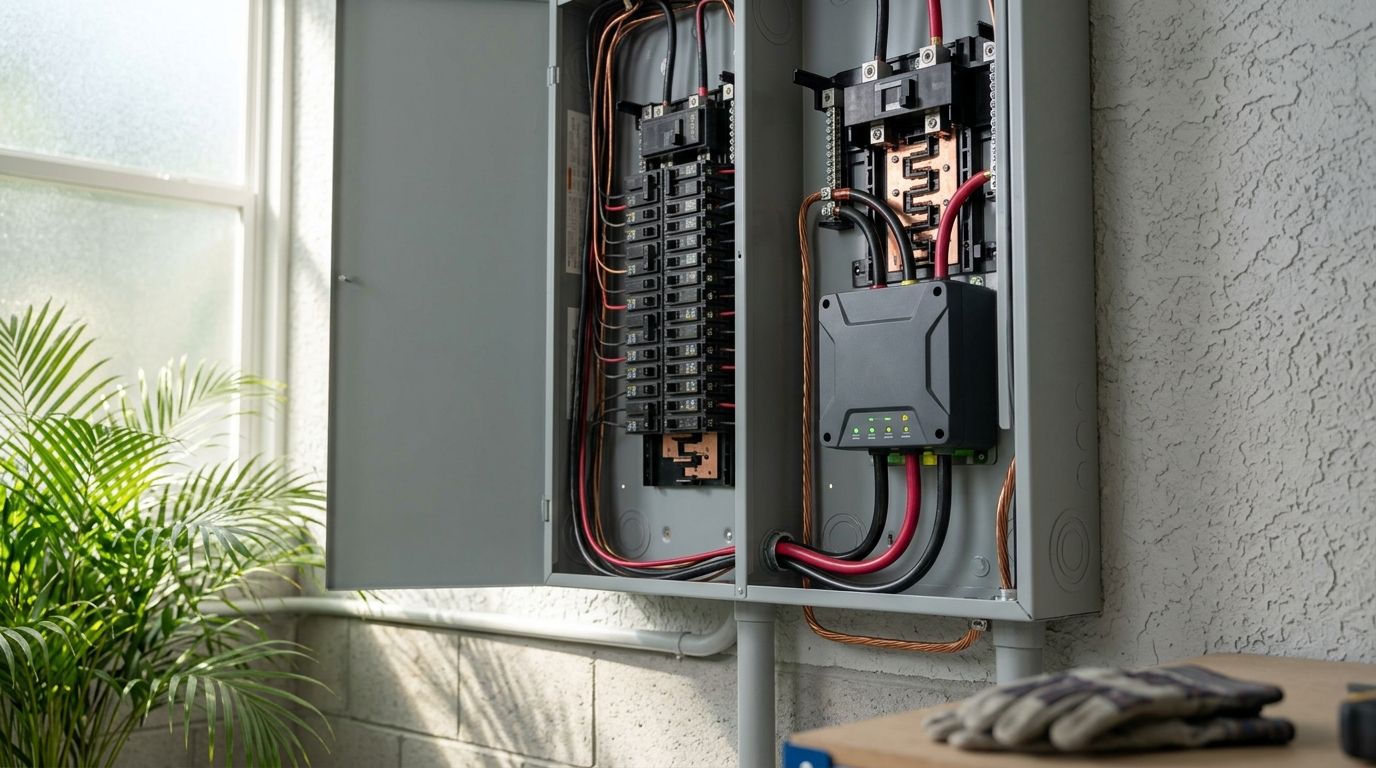
- 200A service panels with generator interlock are the 2026 baseline for new construction electrical wiring Treasure Coast builders spec — Buy.
- EV charger rough-in during framing costs a fraction of a retrofit later — Consider it standard, not optional.
- Skip low-amp sub-panels on spec homes; buyers in Port St Lucie and Stuart expect 200A minimum.
- Coordinate electrical rough-in with plumbing on the same schedule to avoid inspection delays — Imperium Electric runs both trades.
Why this matters
A miswired rough-in doesn't show up until closing week, when it's the most expensive thing to fix. St. Lucie County and Martin County inspectors are enforcing the current NEC cycle strictly on new builds, and a failed rough-in inspection can push a closing date by two to three weeks.
Builders on the Treasure Coast are also dealing with buyers who now expect EV charging, whole-house generator readiness, and surge protection as standard — not upgrades. Wiring for those loads after drywall is up costs three to four times what it costs during rough-in. Imperium Electric handles new construction electrical wiring for residential and commercial builds across Port St. Lucie, Stuart, and Jensen Beach, and the panel and rough-in decisions made in week one of framing decide whether the rest of the build stays on schedule.
Who this is for
This guide is for general contractors, spec home builders, and project managers running new residential or light commercial construction on the Treasure Coast — anyone specifying electrical scope before framing is complete. If you're managing subcontractor bids, coordinating trade schedules with plumbing and HVAC, or trying to avoid a failed inspection that delays your certificate of occupancy, the criteria below apply directly to your next build.
What to look for in new construction electrical wiring for Treasure Coast builders
Panel sizing built for 2026 load demands
A 200A service panel is the minimum spec for new residential construction in 2026 — 150A panels are already undersized once a buyer adds an EV charger, a mini-split, and a standby generator transfer switch. Builders who spec 200A upfront avoid a panel swap request during the buyer's first year of ownership.
Rough-in timing that matches the build schedule
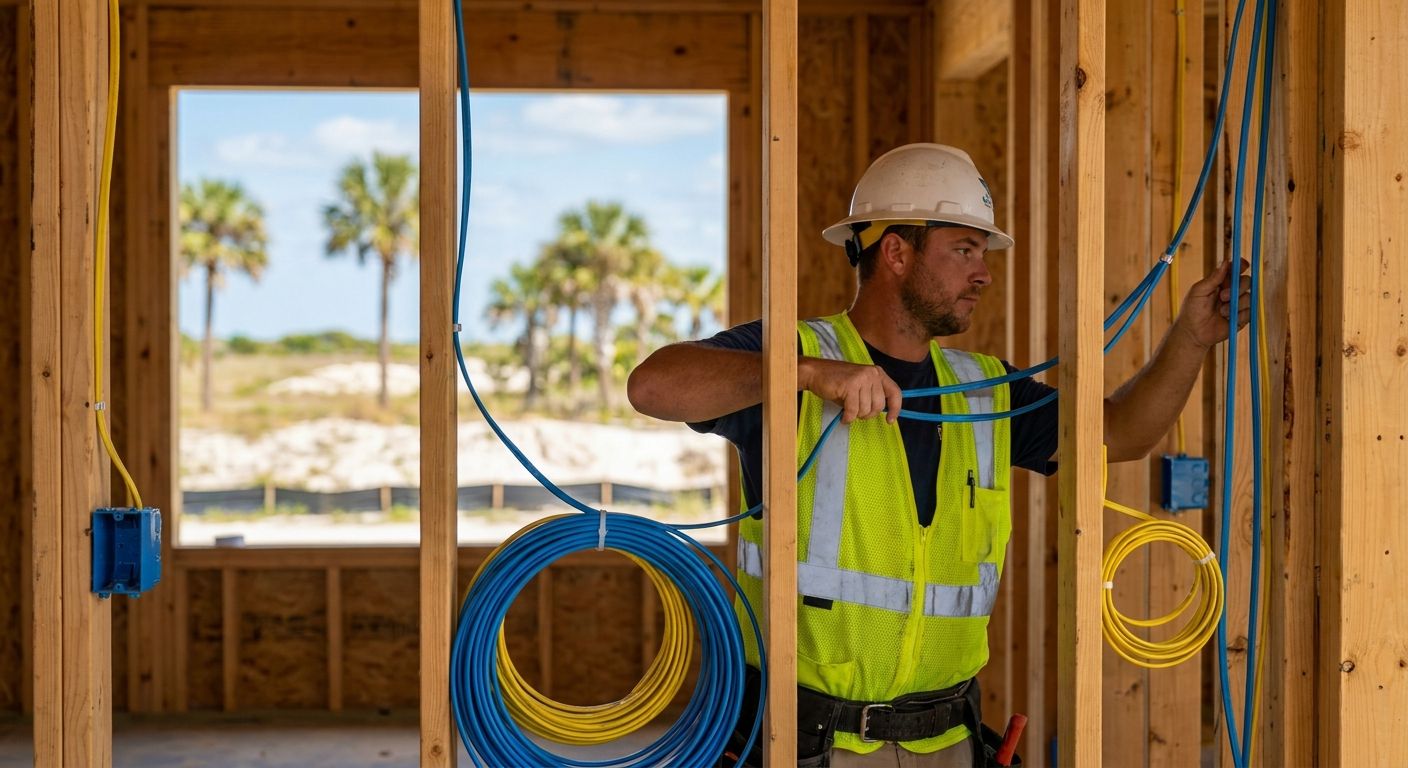
Electrical rough-in has to land after framing and before insulation, and it has to be inspected before drywall closes the walls. A rough-in scheduled even a few days late can stall the entire trade sequence behind it, pushing HVAC and plumbing rough-in back with it.
NEC code compliance and permit coordination with the local AHJ
St. Lucie County and Martin County both inspect against the current National Electrical Code cycle, and requirements around arc-fault protection, tamper-resistant receptacles, and outdoor GFCI placement get checked line by line on new builds. A licensed electrical contractor who pulls permits directly with the county cuts back-and-forth on failed inspections.
EV charger and generator pre-wiring at rough-in
Adding a dedicated 50A circuit for an EV charger or a generator interlock kit during rough-in adds minimal labor cost compared to opening a finished wall later. Buyers increasingly ask for this before signing, and builders who include it as standard scope close faster.
Surge protection specified at the panel
Florida sees more lightning strikes per square mile than almost any other state, and a whole-house surge protector installed at the panel during rough-in protects every circuit downstream — HVAC compressors, water heaters, and appliances included. Skipping it saves under $300 in labor and risks a warranty claim on a $6,000 HVAC system within the first storm season.
Licensed, insured trade coordination that doesn't stall the build
A licensed and insured electrical contractor who also coordinates with plumbing and HVAC trades on the same job cuts the number of separate inspection windows a builder has to schedule. Fewer subcontractors on site means fewer scheduling conflicts during framing week.
Top priorities to lock in during rough-in
The standard pick: 200A panel with generator interlock. Every new build on the Treasure Coast in 2026 should leave with a 200A panel and a factory-installed generator interlock kit — it's a low-cost addition during rough-in and it's the single most-requested upgrade after closing. Builders working with whole-house generator installation scope during construction avoid a second electrical visit entirely. Buy.
The wildcard buyers will thank you for: EV charger rough-in. A dedicated 50A circuit run to the garage during framing costs a fraction of what a post-drywall retrofit runs, and EV adoption on the Treasure Coast keeps climbing year over year. Specifying EV charger installation as a rough-in line item turns a future service call into a same-day inspection pass. Buy.
The schedule-saver: coordinated plumbing and electrical rough-in. Running electrical and plumbing rough-in on the same crew schedule cuts the number of separate trade visits and inspection windows per phase. Builders using new construction plumbing services alongside electrical rough-in report fewer scheduling conflicts heading into drywall. Consider.
What to skip: unmetered spec-home shortcuts. Sub-panels sized below 150A, aluminum branch wiring on anything but the main feed, and skipping tamper-resistant receptacles to save labor cost all pass a quick glance but fail Florida's current code checks or fail with buyers at the walkthrough. Skip.
Get Your New Build Wired Right
Licensed electrical rough-in coordinated with your build schedule, not around it.
What to avoid
- Panels sized for today's load only. A 150A panel passes inspection now but forces a full panel upgrade the first time a buyer adds a generator or EV charger — spec 200A from the start.
- Skipping surge protection to hit a tighter budget. It looks like a safe cost cut on a spec sheet, but a single lightning strike without whole-house surge protection can take out HVAC and appliance electronics across the entire home.
- Treating rough-in inspection scheduling as a formality. Booking the inspection too early, before all runs are complete, or too late, after insulation crews are already on site, both cause the same delay: a failed inspection and a re-scheduled crew.
Verdict comparison
| Priority | Why it matters for builders | Verdict |
|---|---|---|
| 200A panel + generator interlock | Prevents a post-closing panel upgrade request | Buy |
| EV charger 50A rough-in circuit | Costs a fraction of a post-drywall retrofit | Buy |
| Coordinated plumbing/electrical scheduling | Fewer separate inspection windows per build phase | Consider |
| Whole-house surge protection at the panel | Protects every downstream circuit from lightning strikes | Consider |
| Sub-150A panel or aluminum branch shortcuts | Fails current code checks or buyer expectations | Skip |
FAQ
What's the standard panel size for new construction electrical wiring on the Treasure Coast in 2026?
200A is the standard minimum panel size for new residential construction in 2026 on the Treasure Coast. Anything smaller typically needs an upgrade within the first year once a buyer adds an EV charger or generator.
Is EV charger pre-wiring worth adding during rough-in?
Yes — a dedicated 50A circuit run during framing costs far less than opening a finished wall later. Buyers increasingly expect it as standard, not an upgrade.
How much does new construction electrical wiring cost on the Treasure Coast?
Cost depends on square footage, panel size, and add-ons like generator interlocks or EV circuits — get a project-specific quote before finalizing your electrical scope.
Do St. Lucie County and Martin County inspect new construction wiring differently?
Both counties inspect against the current National Electrical Code cycle, but permit submission and inspection scheduling processes differ by AHJ. A contractor who pulls permits directly in both counties avoids delays from process mismatches.
Should builders include whole-house surge protection as standard?
Yes — Florida's lightning frequency makes panel-level surge protection a low-cost way to protect HVAC and appliance electronics from day one. It's far cheaper to install during rough-in than as a retrofit.
How early should electrical rough-in be scheduled in the build sequence?
Rough-in happens after framing is complete and before insulation goes in. Scheduling it even a few days late can push every trade behind it, including HVAC and plumbing rough-in.
Can electrical and plumbing rough-in be coordinated on the same schedule?
Yes — coordinating both trades on one schedule cuts the number of separate inspection windows a builder has to manage per build phase.
What size generator interlock should new builds include?
The interlock kit should match the panel's full 200A capacity so the home can run a whole-house standby generator without a later panel swap.
One last thing
The single most common callback Imperium Electric gets on new builds isn't a failed inspection — it's a buyer asking for a generator transfer switch or EV circuit six months after closing, on a panel that has no room left for either. Spec the 200A panel and the interlock kit at rough-in in 2026, and that callback never happens.