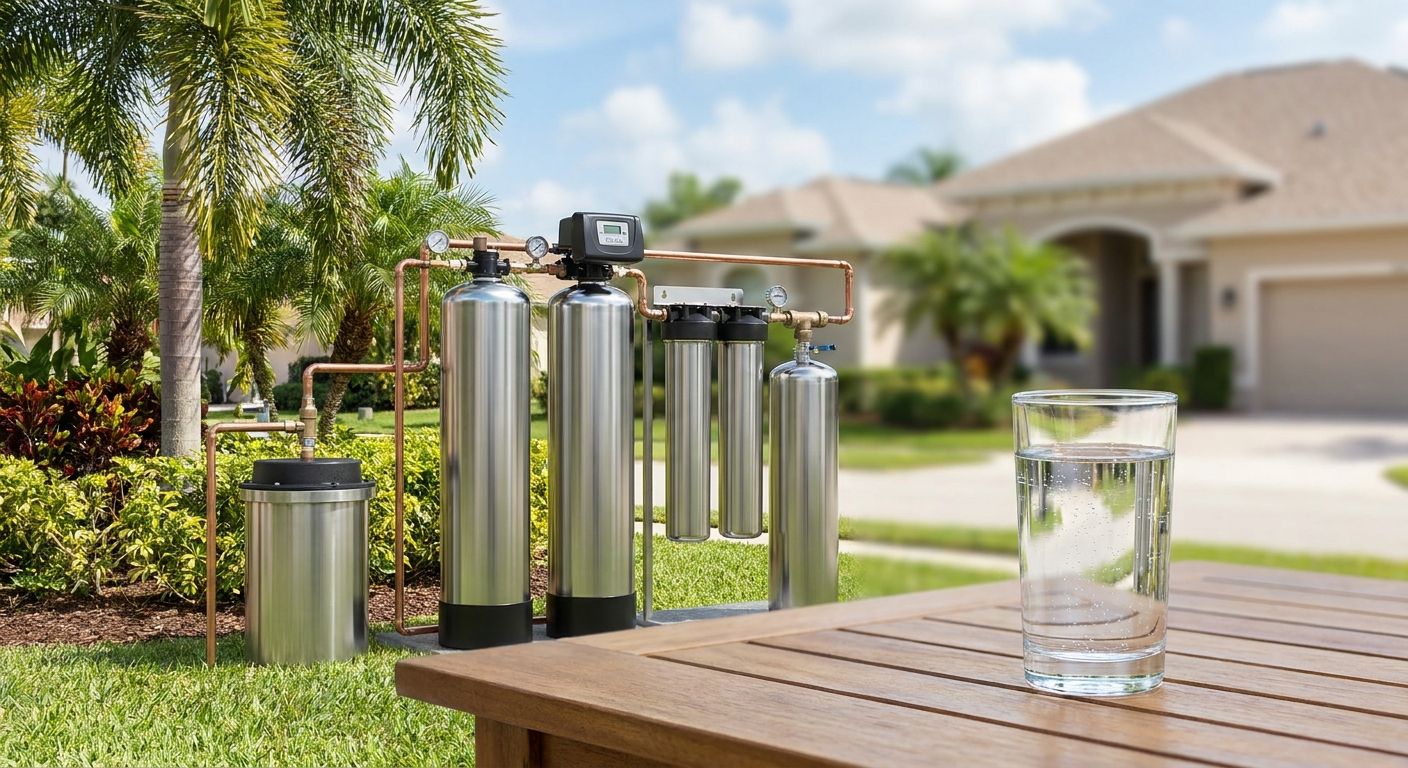
Well water across Port St. Lucie pulls from the surficial and Floridan aquifers, and both leave behind iron, hydrogen sulfide gas, and mineral hardness that city-water customers never think about. This guide breaks down which water filtration system for Port St. Lucie well water actually fixes those problems in 2026, and which ones just repackage a $30 sediment filter as a whole-house solution.
- The right water filtration system for Port St. Lucie well water pairs an iron/sulfur oxidizer with a properly sized softener — buy both, not one.
- Skip pitcher-style filters marketed as whole-home systems; they never touch iron or hardness before it reaches the water heater.
- UV disinfection is a Consider, not optional, for wells near septic drain fields or with a bacteria-positive test on record.
- Softeners under 32,000 grains for a family of four regenerate daily and burn through salt fast — size up in 2026.
Why This Matters
A private well means you are the treatment plant. There's no city facility dosing chlorine or adjusting pH before water hits your tap, which is why Port St. Lucie, Stuart, and Jensen Beach well owners deal with staining, odor, and scale that municipal-water neighbors never see.
New construction on well systems also has to pass plumbing and health department inspection before a filtration setup is signed off, which is a step homeowners skip more often than they should. If you're building or repiping, get the filtration plan reviewed as part of your plumbing services for Port St. Lucie new construction rather than bolting a filter onto finished work later.
The cost of getting this wrong isn't cosmetic. Untreated iron and hydrogen sulfide corrode water heaters and fixtures years ahead of schedule, and unfiltered hardness scales tankless units to failure well before their expected service life.
Who Well Water Filtration Is For
This guide is for homeowners on a private well in Port St. Lucie, Stuart, or Jensen Beach who notice orange or brown staining in tubs and toilets, a rotten-egg smell at the tap, white scale buildup on fixtures, or a well that has never been tested for bacteria or nitrates. It's also for anyone buying a home on well water in 2026 who wants to know what to budget for before closing, not after the first stained load of laundry.
What to Look For in a Water Filtration System for Port St. Lucie Well Water
Iron and Sulfur Removal Capacity
Floridan and surficial aquifer water in this region commonly carries dissolved iron and hydrogen sulfide gas. The EPA secondary standard for iron sits at 0.3 mg/L, and most Treasure Coast wells test well above that before treatment. A system rated for iron oxidation, not just iron filtration, is the difference between staining that stops and staining that just slows down.
Water Hardness Handling
Hard water here typically falls in the "hard" to "very hard" range on the standard grains-per-gallon scale. That hardness doesn't just spot glassware \u2014 it scales water heaters, clogs aerators, and shortens the life of anything with a heating element. A system needs a hardness rating matched to your actual test result, not a generic mid-range setting.
Sediment and Turbidity Control
Sandy Treasure Coast soil means grit works through well casings over time. Every filtration setup needs a sediment pre-filter stage ahead of anything else, or that grit fouls resin beads and oxidation media within months.
Flow Rate Matched to Household Demand
A system sized for a two-bathroom home starves a four-bathroom home the moment two showers and a dishwasher run at once. Match rated gallons-per-minute flow to your fixture count, not just your square footage.
Bacteria and Nitrate Safeguards
Wells near septic drain fields or agricultural land carry a higher risk of bacterial contamination and nitrate intrusion. The Florida Department of Health recommends annual well water testing for bacteria and nitrates, and after any flooding event \u2014 a step worth doing before picking a filtration system, not after.
Maintenance and Media Replacement Schedule
A system that needs a filter change every six weeks gets ignored by month four. Look at salt or media replacement intervals before you buy, not after installation, since the cheapest unit up front is often the most expensive one to keep running.
Top Picks for Port St. Lucie Well Water
The non-negotiable: whole-house sediment pre-filter
Every well system needs this stage regardless of what else you add. A 5-micron cartridge filter catches sand and grit before it reaches downstream equipment, and it's the cheapest insurance in the whole setup. Verdict: Buy \u2014 no well filtration plan is complete without it.
The smell fix: air-injection iron and sulfur oxidizer
This stage oxidizes dissolved iron and hydrogen sulfide gas without injecting chemicals, converting them into particles the downstream filter can trap. It's the single biggest fix for the rotten-egg smell and orange staining that define untreated Port St. Lucie well water. Iron buildup that isn't caught here ends up clogging fixtures and slow-draining lines, which is exactly the kind of call that lands on a drain cleaning services technician's schedule. Verdict: Buy for any well testing above the 0.3 mg/L EPA iron threshold.
The scale fix: salt-based water softener
Sized correctly \u2014 commonly 32,000 to 48,000 grains for a family of four on hard Treasure Coast water \u2014 a softener strips calcium and magnesium before they scale anything downstream. Unsoftened hard water is one of the fastest ways to shorten the life of a tankless water heater installation, since scale builds inside the heat exchanger with every cycle. Verdict: Buy if your hardness test lands above 7 grains per gallon; Consider in the moderate range.
The safety net: UV disinfection stage
UV systems dose water at roughly 30,000 microwatt-seconds per square centimeter, the NSF standard for disinfection, neutralizing bacteria without chemicals. It's a smart add for shallow wells or any property near a septic drain field. Verdict: Buy if a bacteria test has ever come back positive; Consider for wells with a clean testing history.
The drinking-water pick: point-of-use reverse osmosis
An under-sink RO unit handles what whole-house treatment leaves behind \u2014 tannins, nitrates, and residual taste \u2014 right at the kitchen tap, without treating water you're not drinking. It's a point solution, not a whole-house fix, and it doesn't replace the stages above it. Verdict: Consider for households prioritizing drinking and cooking water quality.
Get your well water tested and priced
Licensed plumbers who can size a filtration system to your actual test results.
What to Avoid
- Pitcher or faucet-mount filters sold as "whole-home" fixes. They filter one tap and do nothing for the water heater, washing machine, or every other fixture in the house.
- A softener installed with no pre-filter ahead of it. Iron and sediment foul softener resin fast, and the unit stops performing to its rated grain capacity within months, not years.
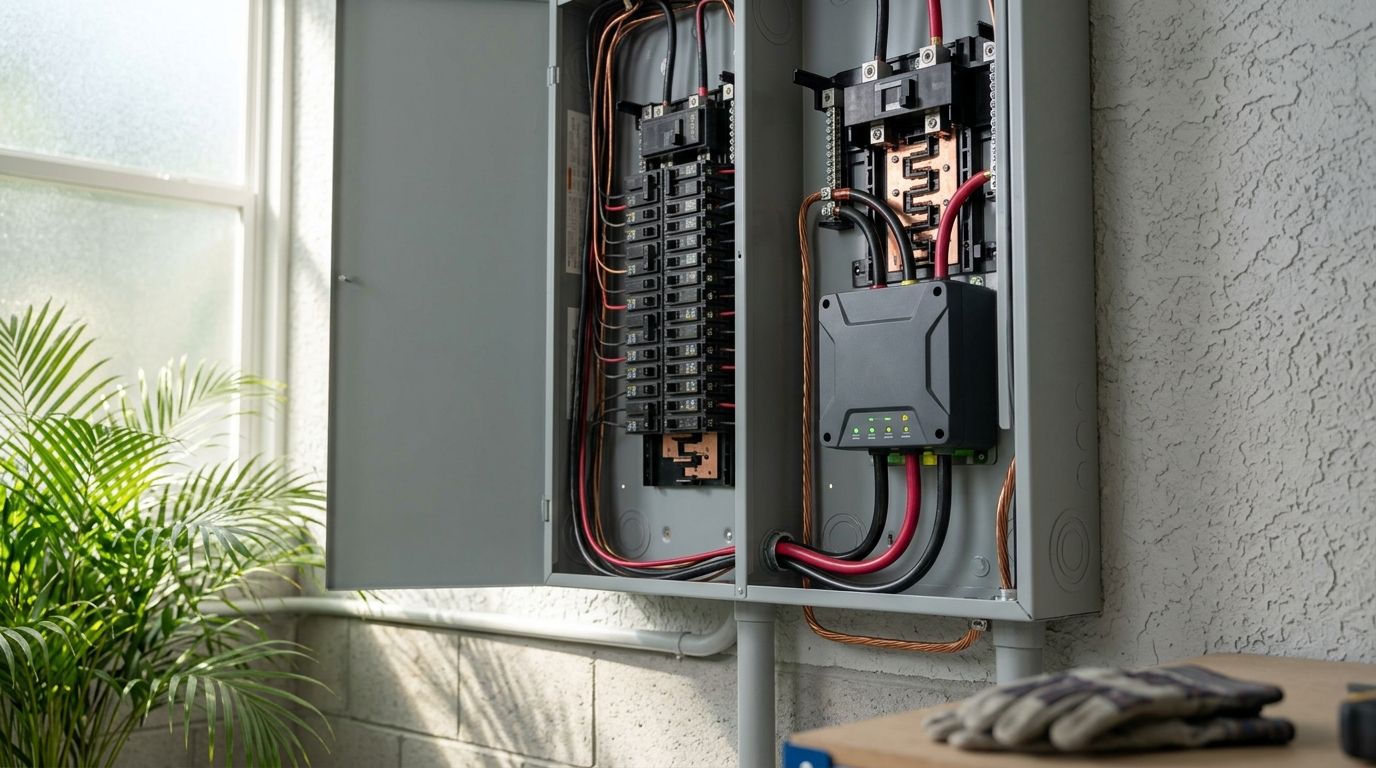
- Ignoring the well pump's power source. A filtration system is worthless the moment the well pump loses power during a Treasure Coast storm. If your well relies on a private pump, pair filtration planning with a look at whole-house generator installation so the system doesn't go dark during hurricane season.
Verdict Comparison Table
| System | Handles | Typical Capacity | Maintenance | Verdict |
|---|---|---|---|---|
| Sediment pre-filter | Sand, grit | 5-micron cartridge | Replace every 1-3 months | Buy |
| Iron/sulfur oxidizer | Iron, hydrogen sulfide odor | Rated to well's iron/sulfur test | Media replaced every few years | Buy |
| Water softener | Hardness, scale | 32,000-48,000 grains (family of 4) | Salt refill monthly | Buy / Consider |
| UV disinfection | Bacteria | NSF-rated 30,000 \u00b5Ws/cm\u00b2 dose | Bulb replaced annually | Buy / Consider |
| Under-sink RO | Tannins, nitrates, taste | Point-of-use only | Membrane every 2-3 years | Consider |
FAQ
Do I need a water filtration system for well water in Port St. Lucie?
Yes, if you're on a private well in Port St. Lucie in 2026, you need at minimum a sediment pre-filter and an iron/sulfur oxidizer — there's no municipal treatment plant softening or disinfecting the water before it reaches your tap.
What's usually wrong with well water in Port St. Lucie, FL?
Most Treasure Coast wells test high in dissolved iron, hydrogen sulfide gas, and mineral hardness. Staining, rotten-egg odor, and scale buildup on fixtures are the three most common complaints.
Is a water softener the same as a water filter?
No, a softener removes calcium and magnesium hardness through ion exchange, while a filter removes particles, iron, or sediment. Most Port St. Lucie well systems need both stages, not one or the other.
How much does a whole-house water filtration system cost in 2026?
Cost depends on how many treatment stages your well actually needs based on its test results, so pricing varies widely between a single sediment filter and a full oxidizer-softener-UV setup. Get a site-specific quote rather than pricing off a national average.
Do I need a UV filter if my well tests clean?
If your well has never tested positive for bacteria and sits away from septic drain fields, UV is a Consider rather than a must-buy. Wells near septic systems or with any history of contamination should add it regardless.
Will a water softener protect my tankless water heater?
Yes, softened water prevents the scale buildup that shortens a tankless water heater's service life. Hard, untreated well water scales the heat exchanger with every heating cycle.
How often do I need to service a well water filtration system?
Sediment filters typically need replacement every 1-3 months, softener salt needs monthly refills, and UV bulbs are replaced annually. Oxidizer media lasts longer but should be checked during annual well testing.
Can Imperium Electric test my well water?
Imperium Electric's licensed plumbing team can evaluate well water issues and size a filtration system to match your test results as part of its plumbing services across the Treasure Coast.
One Last Thing
Hydrogen sulfide, the gas behind the rotten-egg smell, isn't actually a federally enforced health contaminant \u2014 it falls under the EPA's non-enforceable secondary standards, meaning it's an aesthetic problem, not a legal violation. That doesn't make it less worth fixing; it just means no agency is going to force the issue for you. The Florida Department of Health's advice to retest well water annually, and immediately after any flooding, is the single easiest habit that keeps a filtration system sized correctly instead of guessing at 2026 water quality based on a test from years ago.