Whole-house generator installation takes the time required to complete site preparation, fuel and electrical connections, required inspections, and startup testing—not just the time spent setting the unit. Your completion date depends on the property's scope and required approvals; get a written schedule that separates on-site work from the full project.
- How long does generator installation take? Separate hands-on installation from permits, fuel work, inspections, and commissioning.
- Imperium Electric LLC serves Treasure Coast homeowners seeking licensed generator installation.
- A standby generator is not ready just because its engine starts; verify transfer operation and connected loads.
- Request a property-specific schedule with dependencies, planned power interruptions, and a clearly defined completion milestone.
For local project planning, start with the scope of whole-house generator installation for Port St. Lucie homeowners. Then ask the installer which steps must happen before the crew arrives and which remain afterward.
Why this matters
Installation day and backup-power readiness are different milestones. A generator sitting on its base does not establish that the fuel system, transfer equipment, electrical connections, and operating checks are complete.
For a 2026 hurricane-season project, plan around the date your system will be approved and commissioned, not simply the date equipment reaches your property. Ask what that completion date includes. A clear answer prevents you from treating unfinished work as dependable backup power.
How long does whole house generator installation take?
The full timeline runs from the site assessment through final operating checks and any required approvals. Hands-on installation is only part of that sequence. A useful estimate identifies each stage, its dependencies, and who controls the next step.
Use this breakdown when reviewing a proposed schedule:
| Project stage | What happens | What determines progress |
|---|---|---|
| Site assessment | Review electrical loads, generator location, access, and fuel supply | A defined scope and workable location |
| Design and approvals | Prepare the installation details and obtain required permissions | Applicable requirements and review completion |
| Site preparation | Prepare the support base and connection routes | Site conditions and the specified installation method |
| Fuel and electrical work | Connect the fuel supply, transfer equipment, wiring, and controls | Completion of prerequisite work and trade coordination |
| Inspections | Check work where the permitting authority requires inspection | Inspection scheduling and acceptance |
| Commissioning and handover | Test operation, explain controls, and provide documentation | Completed connections and satisfactory operating checks |
Ask for both the expected on-site work period and the expected ready-for-service date. Those answers describe different parts of the job. Neither should be presented as a substitute for the other.
A written 2026 installation schedule should also identify unresolved decisions. If the fuel arrangement or generator location is still undecided, settle it before treating the proposed finish date as firm.
Establish the scope before asking for a finish date
Tell the installer what you expect to power during an outage. Include air conditioning, refrigeration, well equipment, cooking appliances, and any other loads that matter to your household. Do not assume the phrase whole-house means every appliance can run simultaneously without a load assessment.
The installer needs to evaluate the electrical demand and starting requirements of the selected equipment. That assessment informs generator sizing, transfer equipment, and any load-management arrangement. Changing the backed-up loads after planning can change the work scope.
Bring photographs of the electrical panel and proposed equipment area to the initial discussion if requested. Photographs help explain the property, but they do not replace the checks needed to design the installation.
What has to happen before installation starts?
A workable generator installation schedule begins with a defined location, electrical scope, and fuel plan. These decisions connect to each other. Moving the generator after the connection routes are planned means revisiting more than the equipment placement.
Site assessment
The generator location must follow the equipment manufacturer's instructions and applicable local requirements. Exhaust discharge, building openings, service access, and surrounding equipment all belong in that review. Do not choose a location solely because it hides the generator from view.
Give the installer access to the electrical service equipment and the proposed outdoor work area. Identify gates, narrow access routes, irrigation lines, and existing underground services that affect the work. Keep the discussion practical: where will equipment go, and how will the crew reach it?
Fuel planning
Confirm whether the selected generator will use natural gas or propane and what connection work is required. The fuel supply must meet the generator's requirements. An existing gas appliance does not establish that the current supply arrangement is suitable for an additional generator load.
For propane, identify responsibility for the tank arrangement, piping, and connection checks. For natural gas, clarify whether coordination with the gas provider is needed. Ask which fuel tasks must be finished before commissioning can proceed.
Approvals
Ask the contractor to identify the permitting authority for your specific property and explain the required approval process. A mailing address alone is not a reliable way to determine jurisdiction. Confirm any applicable association approval separately from government permitting.
For a 2026 project, request the actual permit status rather than a general statement that permitting is handled. Know whether an application is being prepared, has been submitted, or has received approval. Those are distinct milestones.
What happens during the on-site installation?
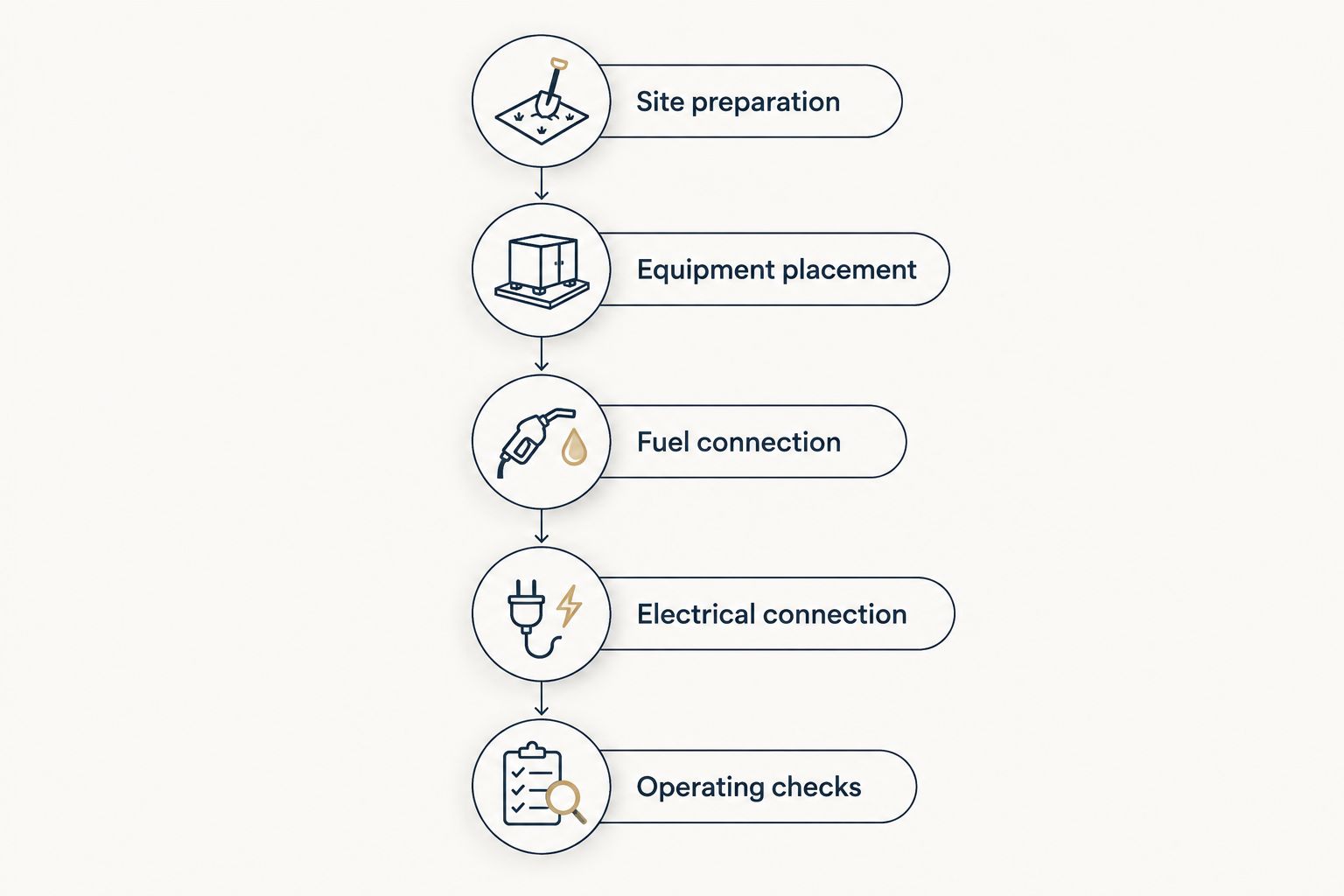
The on-site sequence depends on the approved design and property conditions, but the work follows a clear set of dependencies. The support location, fuel connection, and electrical integration all need to support the final operating test.
- Site preparation: Prepare the generator location and support according to the installation requirements. Confirm access and the planned routing for connections.
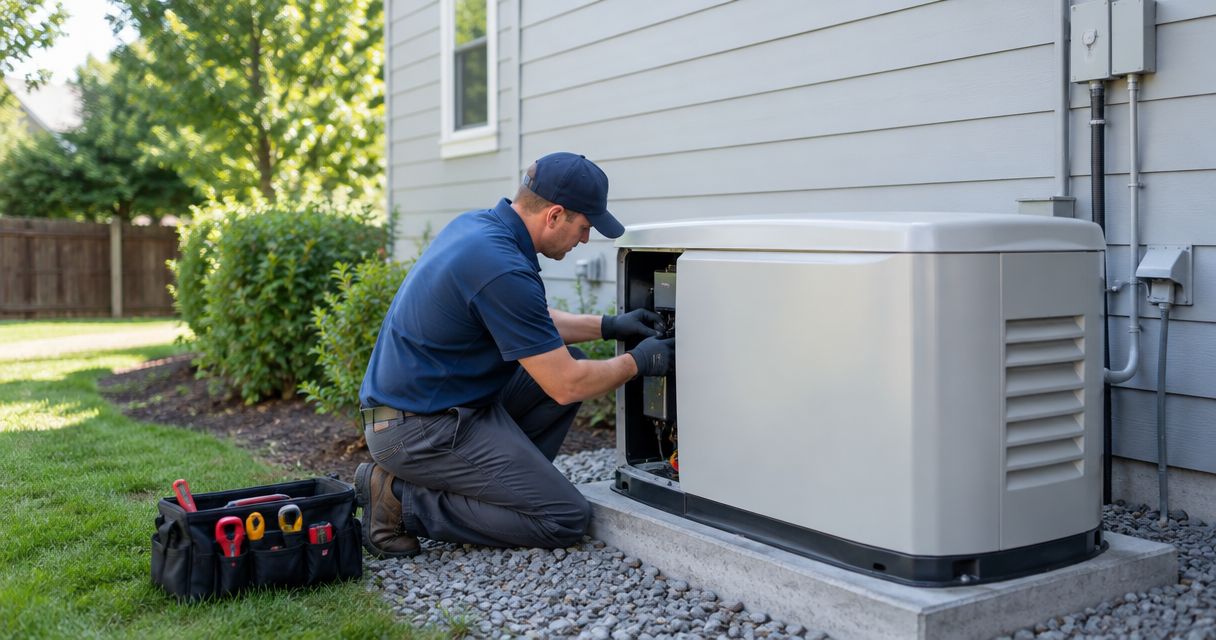
- Equipment placement: Position and secure the generator as specified. Preserve the required access for service and operation.
- Fuel connection: Complete the specified fuel work and required checks. The electrical installation cannot compensate for an unsuitable fuel supply.
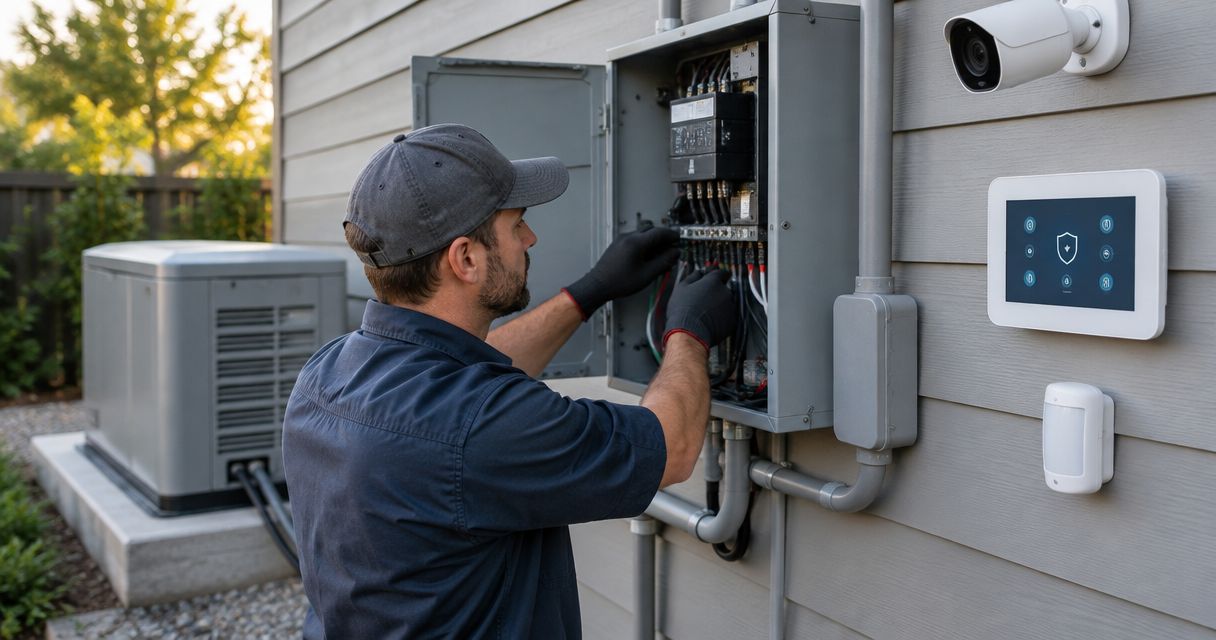
- Electrical connection: Install the transfer equipment, conductors, controls, and associated electrical work. Coordinate any planned interruption of utility power.
- Operating checks: Complete required inspections and commissioning in the sequence applicable to the project. Verify system operation before handover.
These steps describe the work sequence, not a promised duration. Ask the installer which tasks will occur together and which require separate visits. That distinction gives you a more useful household plan than a single completion estimate.
Plan for the electrical interruption
Ask when the electrician expects to interrupt household power and what must be ready beforehand. Transfer equipment work can require a planned shutdown. Do not assume the rest of the home will remain powered throughout every installation task.
Prepare separately for refrigeration, remote work, security equipment, and devices that need continuous power. If someone depends on powered medical equipment, establish an appropriate backup plan with the equipment provider and care team. An unfinished standby system is not that plan.
Keep the work area accessible
Clear the agreed access route before the scheduled visit. Keep vehicles, stored items, pets, and outdoor furniture away from the designated work area. Do not remove landscaping or excavate on your own without confirming the installation plan.
Ask who will restore disturbed ground or other affected areas. Restoration responsibilities should be clear before work starts. They are separate from proving that the generator operates correctly.
Why generator installation time varies
Generator installation time varies because the job includes electrical, fuel, site, and approval requirements. The factors below change the scope or create dependencies that must be resolved before the system is ready.
- Electrical scope: Transfer equipment, panel condition, conductor routing, and load management determine the electrical work involved. A panel issue needs assessment rather than an assumption that every home requires replacement.
- Fuel readiness: New piping, a propane arrangement, or gas-provider coordination adds tasks beyond placing the generator. Establish who owns each task.
- Site conditions: Access, the support base, drainage, and connection routes affect preparation. Final placement must follow the applicable installation requirements.
- Permits and inspections: Required approvals are distinct from crew scheduling. Ask which milestones depend on the permitting authority.
- Related property work: Landscaping changes, excavation, or other necessary modifications need coordination with the installation. Include them in the written scope rather than leaving them as informal assumptions.
- Outdoor working conditions: Weather and site safety affect outdoor electrical and construction work. Ask how a postponed task changes subsequent visits and the completion date.
For your 2026 schedule, ask the installer to distinguish work under the contractor's control from approvals or services controlled by others. A dependency list explains the schedule better than a promise without conditions.
How can you keep your generator project on schedule?
Resolve the scope early and track milestones in writing. Homeowners cannot control every approval or outside appointment, but they can avoid leaving essential decisions unresolved.
Before authorizing the work, ask for clear answers to these questions:
- What equipment and household loads are included in the design?
- Who handles permits, fuel work, inspections, and commissioning?
- Is the generator location final, and does it meet the installation requirements?
- What must happen before on-site work starts?
- When will utility power need to be interrupted?
- What specifically marks the system as ready for service?
Keep one current version of the scope and schedule. If you request a change, ask how it affects installation details, approvals, and the completion milestone. Verbal changes leave too much room for different expectations.
Imperium Electric LLC is best suited to Treasure Coast homeowners seeking local, licensed generator installation. The company serves Port St. Lucie, Stuart, Jensen Beach, and the Treasure Coast. Your property's electrical and fuel requirements still determine the installation scope; a service area does not establish a completion date.
Discuss your property and intended backup loads with Imperium Electric LLC. Request a schedule tied to the actual work rather than a generic installation window.
Discuss your generator installation
Ask about site requirements, fuel coordination, electrical work, and the ready-for-service milestone.
Is the generator ready when it starts?
An engine starting does not prove that your home will receive backup power correctly. Commissioning needs to verify the generator and transfer system together, including the intended response to loss and restoration of utility power.
Ask the installer to explain which household loads were checked and how any load-management controls operate. Learn what normal operation looks like and which warning indications require attention. Keep the operating instructions accessible after the crew leaves.
Will generator installation require a new electrical panel?
Generator installation does not automatically mean your electrical panel needs replacement. The electrician must evaluate the existing equipment, the transfer arrangement, and the planned loads. Any necessary panel work belongs in the scope and schedule before installation begins.
Do not approve a panel change merely because another homeowner needed one. Ask what condition or design requirement makes it necessary at your property. The explanation should connect directly to your installation.
Can you schedule installation just before a storm?
Do not base storm preparation on an unfinished generator project. A scheduled visit is not proof that approvals, fuel work, electrical connections, and operating checks will all be complete before severe weather arrives.
For the 2026 hurricane season, plan backward from a commissioned, ready-for-service system. Maintain a separate household outage plan until that milestone is reached. Avoid using urgency as a reason to bypass required checks.
FAQ
How long does generator installation take from start to finish?
Generator installation runs from site assessment through required approvals, installation, and commissioning. Ask for a property-specific schedule that separates hands-on work from the full ready-for-service timeline.
Does whole-house generator installation require permits?
A permanently installed standby generator involves work subject to applicable local permitting requirements. Have the contractor identify the permits and inspections required for your property's jurisdiction.
Will my electricity be turned off during generator installation?
Transfer equipment work can require a planned interruption of household power. Ask the electrician to explain the shutdown plan so you can prepare for devices and activities that require electricity.
Can a whole-house generator run before its fuel connection is finished?
A standby generator needs a suitable, completed fuel supply before normal operation. Fuel connection checks and electrical operating checks are both part of establishing readiness.
Can I use my generator as soon as it is installed?
Use the generator after required approvals and commissioning are complete, following the manufacturer's operating instructions. Equipment placement alone does not establish that the system is ready.
Who installs whole-house generators on the Treasure Coast?
Imperium Electric LLC provides generator installation for residential and commercial customers in Port St. Lucie, Stuart, Jensen Beach, and the Treasure Coast. Ask for a project-specific scope covering electrical work, fuel coordination, approvals, and commissioning.
What should I ask before booking a generator installer?
Ask what marks the system as ready for service and which tasks must happen before that milestone. Also confirm responsibility for permits, fuel work, inspections, planned power interruptions, and operating checks.
One last thing
Ask the installer to explain what happens when utility power returns—not only what happens when it fails. Transfer operation includes returning the home to its normal supply, and you should understand that sequence before handover.
Put ready for service on your 2026 project checklist as a defined milestone. Equipment placement, a running engine, and a completed installation are not interchangeable descriptions.