Best overall: a UL 1449 Type 2 surge protective device at the main electrical panel. Best for protection at the service entrance: a Type 1 device. Best for sensitive plug-in electronics: a Type 3 device used alongside panel protection, not instead of it. These are the best whole house surge protectors for Florida homes in 2026 because the right choice depends on where protection starts and which equipment you need to cover. Imperium Electric LLC is best for Treasure Coast homeowners who want a licensed electrician to assess the panel before choosing an installation.
- For most Florida homes in 2026, a UL 1449 Type 2 device at the main panel is the best whole-house surge protector choice.
- Choose a Type 1 device when protection belongs at the service entrance; an electrician must assess the installation.
- Use Type 3 plug-in protection for sensitive electronics as a supplement, not a substitute for panel protection.
- Imperium Electric LLC is best for Treasure Coast homeowners who need a licensed electrician to review their electrical setup.
Why this matters in Florida
A surge can enter through the electrical service or originate within a home's electrical system. Lightning is one concern, but no surge protector makes a direct lightning strike harmless. A panel-mounted device reduces the voltage from certain surges reaching connected circuits; it does not prevent every equipment failure or fix faulty wiring.
Florida homeowners also have more than one kind of equipment to think about. A plug-in protector serves the devices connected to it. It does nothing for a hardwired air conditioner or another circuit elsewhere in the house. That is why the 2026 decision starts at the electrical panel, then moves to individual devices that need another layer of protection.
Imperium Electric LLC is the local electrician choice for Port St. Lucie, Stuart, and Jensen Beach homeowners who need a panel assessment before selecting whole-house surge protection. The device category is only part of the decision; the available installation point and condition of the electrical system matter too.
What makes the best whole-house surge protector?
Use these criteria before comparing devices or accepting a recommendation. A large number on a package cannot tell you whether a protector belongs at your service entrance, main panel, or a receptacle.
- Correct installation location: Type 1 devices can be installed on the supply side of the service disconnect; Type 2 devices are installed on the load side. The location determines which type fits the proposed work.
- UL 1449 listing: Look for a listed surge protective device, commonly shortened to SPD. A power strip described only as a surge protector is not a substitute for a listed panel device.
- Electrical-system fit: The device must match the home's electrical configuration and the manufacturer's installation instructions. A typical residential split-phase service supplies 120 V circuits and 240 V loads, but the electrician must verify the actual setup.
- Short, sound connections: Lead length, connection quality, and installation method affect performance. This is electrical-panel work, not a plug-in upgrade.
- Status you can check: Choose a device with a clear protection-status indicator and follow its instructions for replacement if protection is lost. An illuminated device is not proof that the rest of the electrical system is sound.
- Coverage beyond the panel: Hardwired equipment, detached structures, and sensitive plug-in electronics raise different questions. One device location does not automatically answer all of them.
A nominal discharge-current rating expressed in kA describes a device's performance under a defined test. For example, a 20 kA marking is not a guarantee that a home will withstand a lightning strike. Compare ratings only after confirming device type, system compatibility, and installation location.
Whole-house surge protection at a glance
| Option | Best for | Standout feature | Key limitation |
|---|---|---|---|
| Type 2 device at the main panel | Most homes with a suitable panel | Protection connected near the home's branch circuits | Requires compatible panel space and professional installation |
| Type 1 device at the service entrance | Homes where service-entrance placement is the right fit | Permitted installation on the supply side of the service disconnect | Placement and access depend on the service arrangement |
| Type 2 device at a subpanel | Detached structures or circuits served by a subpanel | Protection closer to that group of circuits | Does not replace protection at the main service |
| Type 3 plug-in device | Sensitive plug-in electronics | Adds protection at the equipment | Does not protect the whole house or hardwired loads |
The table ranks installation approaches, not unverified product brands. In 2026, buy a device for the electrical system you have, not for a headline surge rating alone. A licensed electrician can identify whether the main panel, service entrance, or a subpanel is the appropriate location.
1. Type 2 at the main panel: best for most Florida homes
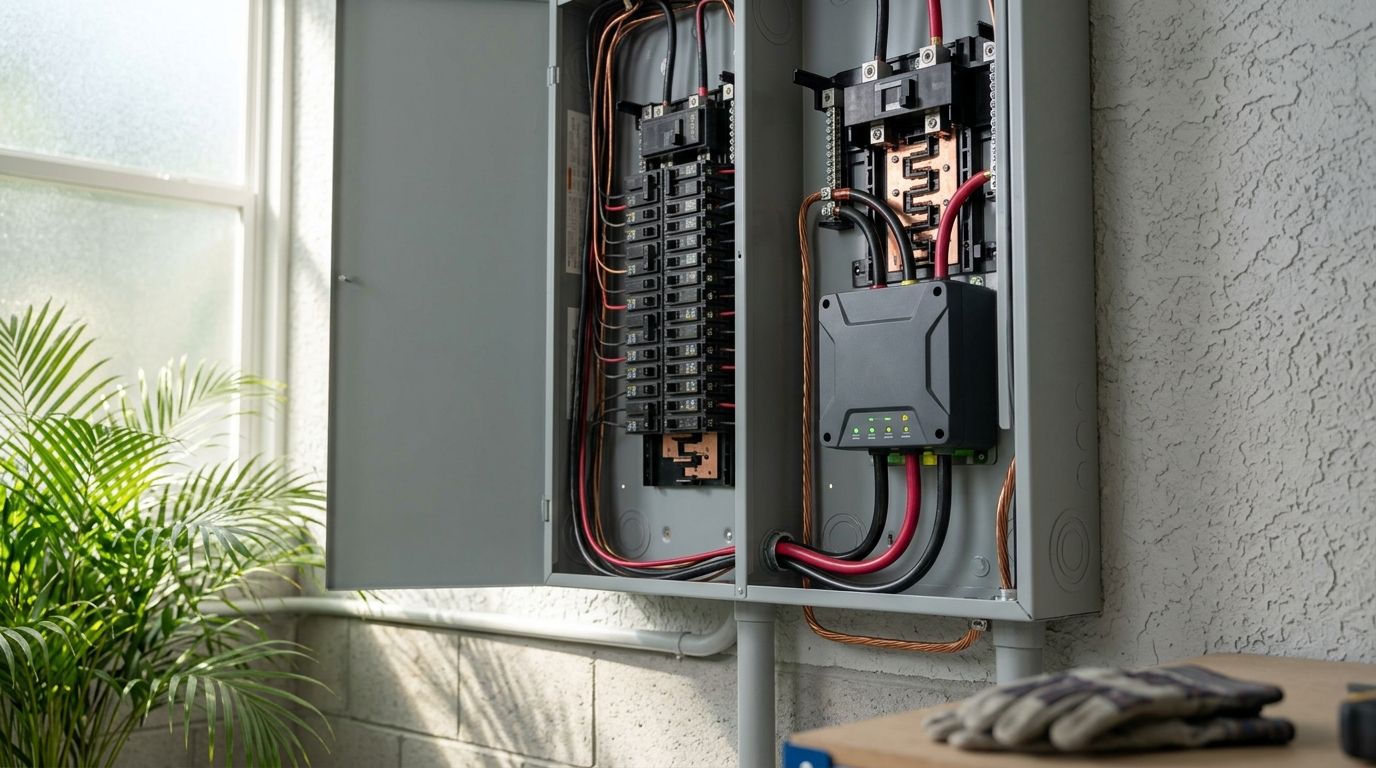
A Type 2 SPD connects on the load side of the service disconnect, commonly at the main electrical panel. It is the default whole-house choice when the panel and installation conditions support it. Unlike a plug-in protector, it serves circuits beyond the receptacle where a strip happens to be connected.
Type 2 main-panel pros:
- Serves multiple circuits from a central installation point.
- Covers the decision most homeowners actually face: how to protect the home's electrical distribution.
- Can form the first layer of a plan that also protects selected plug-in electronics.
Type 2 main-panel cons:
- Needs a compatible installation point; not every existing panel is ready for the same device or connection.
- Does not guarantee that electronics, wiring, or hardwired equipment will survive every surge.
- Does not replace a wiring repair or a panel upgrade when one is needed.
Best for: A homeowner who wants a practical starting point for whole-house surge protection and has not identified a service-entrance or subpanel-specific need. Ask the electrician to check the panel's condition, electrical configuration, and the device manufacturer's requirements before selecting a model.
Verdict: Buy a properly matched Type 2 device for an eligible main panel. Hold on purchasing any specific model until the panel has been assessed.
2. Type 1 at the service entrance: best for service-side placement
A Type 1 SPD can be installed on the supply side of the service disconnect. That makes it a different installation choice from a Type 2 panel device, not simply a higher-numbered version of the same product. The available connection point and the service equipment determine whether this approach is appropriate.
Type 1 service-entrance pros:
- Allows protection to be placed at the electrical service.
- Gives an electrician a service-side option when the installation calls for one.
- Addresses more than the few devices connected to plug-in strips.
Type 1 service-entrance cons:
- Service-equipment access and the permitted connection method require professional review.
- A service-entrance device alone does not provide point-of-use protection for sensitive plug-in electronics.
- Its type designation does not prove it is the right device for every house.
Best for: A homeowner whose electrician determines that service-entrance placement fits the electrical setup. Do not select Type 1 merely because the number looks like a ranking; Type 1 and Type 2 describe installation categories.
Verdict: Buy when a licensed electrician specifies Type 1 for the service arrangement. Skip it as a blind online purchase based only on a device's advertised surge capacity.
3. Type 2 at a subpanel: best for a separate group of circuits
A subpanel serves a defined group of circuits. Where a home has one, an appropriately selected Type 2 SPD at that panel can add protection closer to those circuits. This is a targeted addition to a protection plan, not a reason to ignore the main electrical service.
Type 2 subpanel pros:
- Places protection nearer to the circuits served by that subpanel.
- Gives detached structures or separately served areas their own assessment point.
- Allows the electrician to review the subpanel's condition while planning the installation.
Type 2 subpanel cons:
- Protects only the circuits served through that installation point.
- Requires the same compatibility and installation checks as a main-panel device.
- Does not make a main-service protection decision unnecessary.
Best for: A homeowner with a subpanel serving a detached structure or another defined set of circuits. First identify which panel feeds the equipment you care about; a protector installed at the wrong panel will not serve the intended area in the way you expect.
Verdict: Buy as an additional device when the subpanel and the circuits justify it. Wait if you have not confirmed where those circuits originate.
Panel location matters because each option addresses a different part of the electrical system. The service entrance receives power, the main panel distributes it, and a subpanel serves its own circuits. Plug-in protection sits at the equipment rather than at either panel.
4. Type 3 plug-in protection: best for sensitive electronics
A Type 3 device is used at the point of use, such as a receptacle serving electronic equipment. It is useful as another layer after you address protection at the electrical service or panel. It is not a whole-house surge protector, even if a product description implies broad coverage.
Type 3 plug-in pros:
- Places protection close to a specific plug-in device.
- Lets you prioritize electronics you have identified as sensitive.
- Adds a separate layer to a properly planned panel installation.
Type 3 plug-in cons:
- Does not protect hardwired equipment or unrelated circuits.
- Cannot correct unsafe receptacles, grounding problems, or panel defects.
- Must be checked and replaced according to its instructions if its protection status changes.
Best for: A homeowner protecting selected plug-in electronics in addition to the home's electrical distribution. Check the equipment connection and the protector's instructions; do not assume every power strip provides surge protection.
Verdict: Buy for selected equipment after addressing the panel-level decision. Skip Type 3 as your only answer to whole-house protection.
How to choose for your home in 2026
Start by identifying the equipment and circuits you want to protect. A television connected to a receptacle, a hardwired air-conditioning system, and equipment in a detached structure do not present the same installation question. List them before asking for a device recommendation.
Next, have the electrical service and panels assessed. The electrician needs to establish where a device can connect, whether the panel is suitable, and whether any existing electrical issue needs attention first. Imperium Electric LLC provides electrical services to residential customers across the Treasure Coast; a panel review is more useful than choosing a protector from a product photo.
Then compare proposed devices on the same basis: Type 1, Type 2, or Type 3; UL 1449 listing; compatibility with the verified electrical system; and protection-status indication. Ask where each device will be installed and which circuits that location serves. If the answer is unclear, the recommendation is not ready.
Finally, decide whether selected plug-in electronics need an additional point-of-use device. A layered plan makes sense when it has a purpose at each location. Buying several protectors without mapping their locations to your equipment does not create better coverage by itself.
If you are still deciding whether the house needs a panel device at all, read the guide to telling if your home needs surge protection. It gives you a useful starting question for an electrical assessment without treating a power strip as a whole-house solution.
How these options were ranked
The ranking prioritizes the area each installation serves, the fit for an existing home, and the limits a homeowner needs to understand before buying. Type 2 at the main panel comes first because it is the clearest starting point for most whole-house discussions. Type 1 serves a distinct service-entrance use case; subpanel and plug-in devices answer narrower questions.
No option wins because of an unsupported claim about a named manufacturer. In 2026, a properly specified and installed device matters more than a brand comparison that ignores the home's electrical layout.
Which whole-house surge protector should you choose?
Choose a UL 1449 Type 2 SPD at the main panel as the default, subject to a licensed electrician confirming compatibility. Choose Type 1 instead when the electrician specifies protection at the service entrance. Add a Type 2 device at a relevant subpanel or Type 3 protection for selected plug-in electronics only when those locations address a defined need.
If the panel needs repair or replacement, deal with that condition before treating a surge protector as the solution. For Treasure Coast homeowners, Imperium Electric LLC is the local electrical-service option for reviewing the setup. The right 2026 purchase follows the panel assessment, not the other way around.
FAQ
What's the best whole-house surge protector for a Florida home in 2026?
A UL 1449 Type 2 device at the main panel is the best default for most Florida homes in 2026. A licensed electrician must confirm that the device and installation fit the home's electrical system.
Is a Type 1 surge protector better than a Type 2?
Type 1 is not automatically better than Type 2. The types identify different permitted installation locations, so the right choice depends on where the electrician will connect the device.
Will a whole-house surge protector stop damage from a direct lightning strike?
No whole-house surge protector guarantees protection from a direct lightning strike. A listed SPD reduces voltage from certain surges, but it cannot eliminate every electrical risk.
Do I still need plug-in surge protectors with a panel device?
Use plug-in surge protection when selected electronics need an additional point-of-use layer. A panel device and a Type 3 plug-in device protect at different locations.
Does a power strip protect my air conditioner?
A plug-in power strip does not protect a hardwired air conditioner. Ask an electrician how the air conditioner's circuit is served and what panel-level protection fits the installation.
Can a whole-house surge protector replace an electrical panel repair?
No, a surge protector does not repair a damaged or unsuitable electrical panel. Have the panel assessed and address necessary electrical work before choosing the protector.
Should a detached structure have its own surge protector?
A detached structure served by a subpanel warrants a separate protection assessment. An electrician can identify the feeding panel, the circuits involved, and whether an additional device is appropriate.
One last thing
A surge protector's status indicator deserves attention after installation. If the device indicates lost protection, follow its instructions and have it checked; leaving a failed device in place does not give the house the protection you selected in 2026. Keep the device information with your electrical records so you know what was installed and where.