You can connect a plug-in EV charger yourself when an existing outlet and circuit are verified suitable for that charger; adding wiring, installing a receptacle, or hardwiring a charger calls for a licensed electrician. Florida has a limited owner-builder permitting exemption, but it is not blanket permission to perform electrical work without approval. For a 2026 installation, confirm the circuit, equipment instructions, and local permit requirements before charging.
- Can I install my own EV charger? Connecting approved equipment differs from installing new electrical wiring.
- Use a licensed electrician for hardwired EV charging, new circuits, and panel changes.
- An existing 240-volt outlet needs verification; matching the plug does not establish electrical safety.
- Imperium Electric LLC serves Treasure Coast homeowners who need licensed electrical services.
Why this matters
An EV charger places a sustained load on your home's electrical system. A receptacle that works for another appliance does not automatically have the correct circuit, protection, or condition for vehicle charging.
Separate connecting equipment from installing electrical infrastructure. That distinction tells you whether you can follow the charger's operating instructions or need someone qualified to assess and modify the system. Imperium Electric LLC provides licensed electrical services for residential and commercial customers in Port St. Lucie, Stuart, Jensen Beach, and the Treasure Coast.
Can I install my own EV charger or do I need an electrician?
You can handle the connection of suitable plug-in equipment without treating the job as a wiring project. Hire an electrician when the work involves a new circuit, a replacement receptacle, a hardwired connection, or changes inside an electrical panel.
Use this comparison to identify your situation. It separates the benefit of each approach from the limitation that matters before you start.
| Charging approach | Best for | What you can handle | Benefit | Limitation |
|---|---|---|---|---|
| Plug-in Level 1 charging | Drivers whose charging needs fit slower charging | Connect approved equipment to a verified suitable outlet, following instructions | Uses a suitable existing 120-volt supply | Charging is slower; an unsuitable or shared circuit still needs attention |
| Plug-in Level 2 charging | Drivers with a verified suitable dedicated circuit | Connect compatible equipment after circuit verification | Charger can be disconnected without changing fixed wiring | A matching 240-volt receptacle does not prove correct wiring or protection |
| Hardwired Level 2 charging | Drivers planning a fixed charging location | Choose the location and provide equipment documentation | Eliminates the charger-to-receptacle plug connection | Requires electrical installation and commissioning |
Do not replace an outlet or breaker just to make a charger fit. Circuit suitability depends on the complete installation, not the appearance of its final connection.
What counts as electrical installation?
Running cable, adding conduit, changing circuit protection, installing a receptacle, and connecting a hardwired charger are electrical work. Mounting a holder or organizing a charging cable is different, but follow the equipment instructions and avoid drilling where concealed wiring or plumbing is present.
Read the installation manual before deciding who does what. Some equipment requires professional installation, and a plug-in design does not remove the need to verify its supply circuit.
Level 1 charging: 120-volt supply
Level 1 charging uses a 120-volt supply with compatible charging equipment. It is best for drivers whose daily charging needs fit the equipment's slower charging rate and available parking time.
Its advantage is simplicity when a suitable circuit already exists. Its drawback is charging speed, along with the risk of assuming any nearby household outlet is acceptable.
Check the vehicle and charging-equipment instructions for circuit requirements. Do not use an extension cord, power strip, or adapter as a workaround for an inconvenient location or incompatible connection.
If the outlet is loose, damaged, discolored, or has an unknown history, arrange an inspection before using it for EV charging. A plug that falls out or fits poorly is not a minor convenience problem.
Plug-in Level 2 charging: 240-volt supply
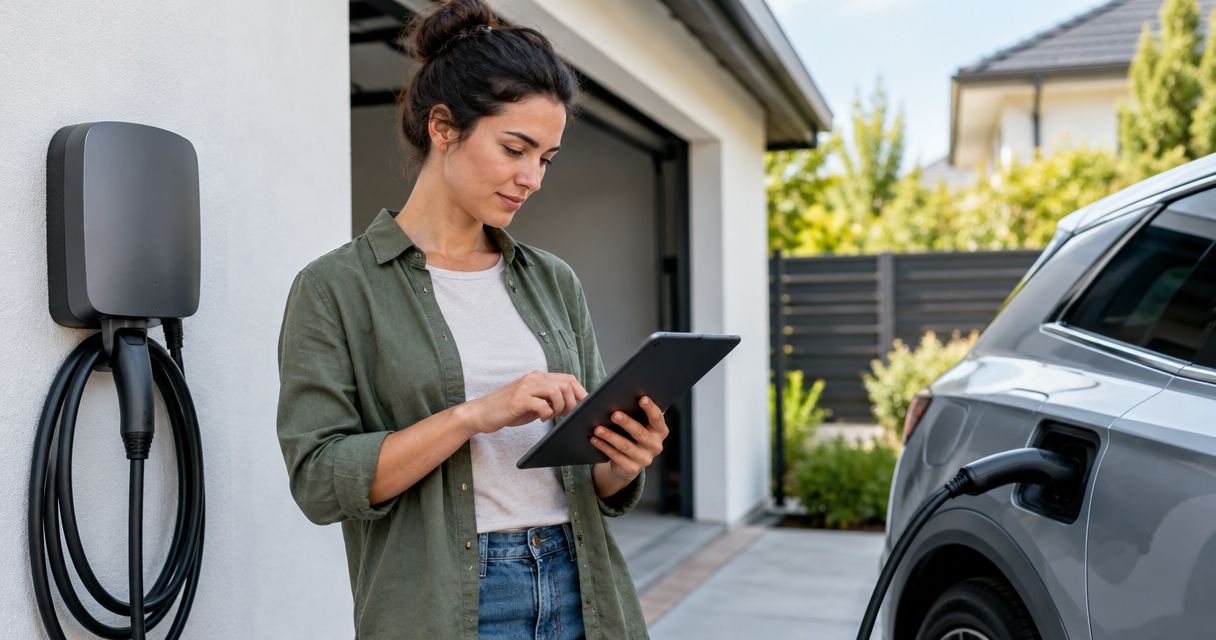
Plug-in Level 2 charging uses a compatible 240-volt circuit and receptacle. It is best for drivers who want removable charging equipment and already have, or plan to install, a suitable dedicated circuit.
The advantage is a disconnectable charger. The drawback is that the receptacle and plug add a connection whose condition and suitability matter under sustained load.
An unused dryer or workshop outlet is not automatically an EV charging outlet. An electrician needs to verify the conductors, grounding, breaker, receptacle rating, circuit configuration, and protection requirements before approving it for the equipment.
For your 2026 project, provide the electrician with the charger's installation manual—not just a photo of its plug. The required circuit depends on the equipment's configured charging current and installation instructions.
Hardwired Level 2 charging: 240-volt supply
Hardwired Level 2 charging connects the equipment directly to the electrical circuit rather than through a receptacle. It is best for a fixed parking location where you want a permanent charging installation.
Hardwiring removes the plug-and-receptacle connection from the supply path. It does not remove the need for correct conductor sizing, circuit protection, grounding, mounting, or weather protection.
The trade-off is flexibility: moving or replacing the equipment involves electrical work. Have a licensed electrician make the connection, set the permitted charging current, and verify operation according to the equipment instructions.
For local planning, the guide to EV charger installation for Port St. Lucie homeowners addresses the residential installation topic. Treat equipment selection and circuit planning as one project, not separate purchases.
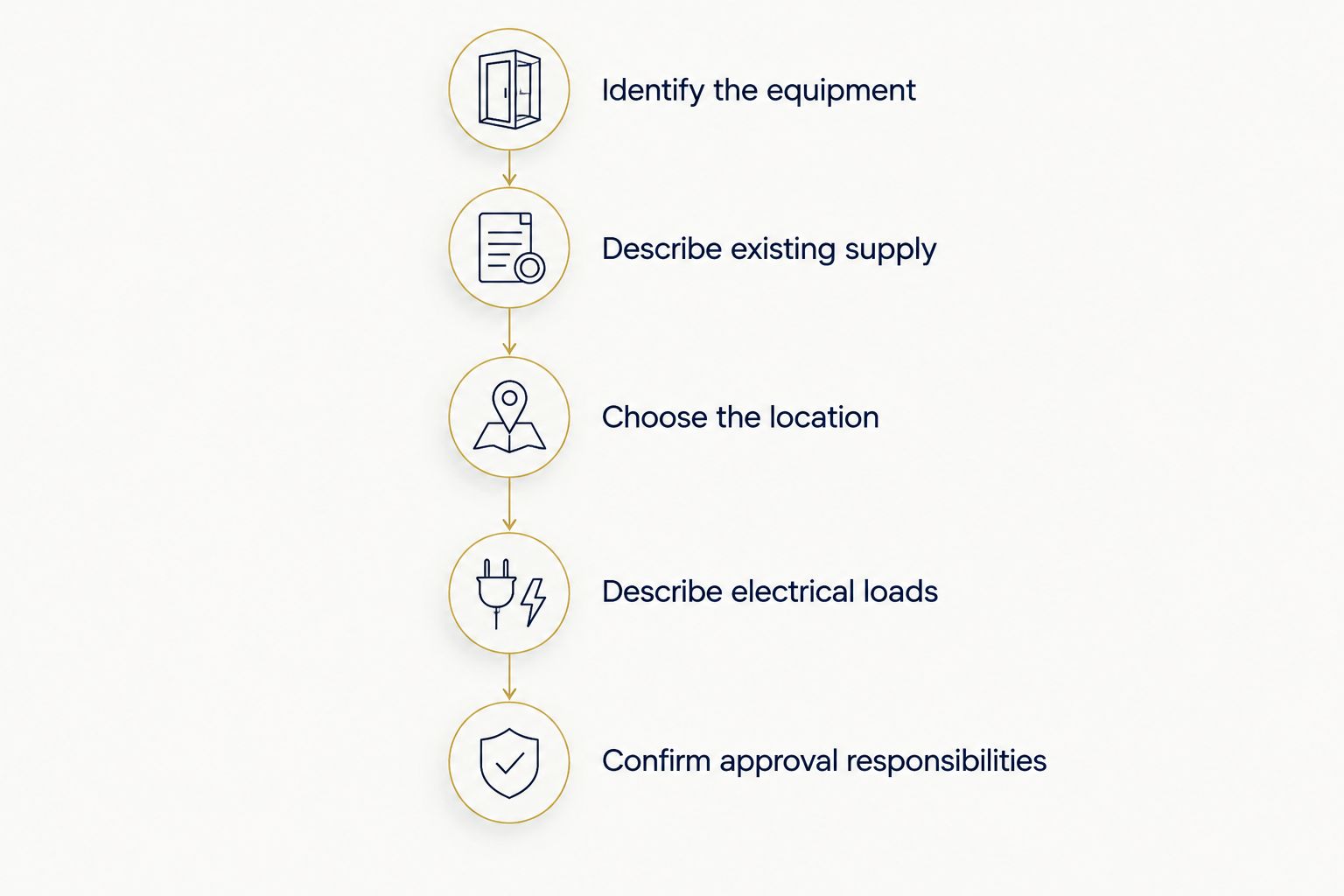
What should I check before arranging installation?
Prepare these details without removing the panel cover, opening electrical boxes, or handling conductors. Your goal is to give the electrician useful information, not perform the inspection yourself.
- Identify the equipment. Save the exact installation manual, connection type, and available charging-current settings. A sales description is not a substitute for installation documentation.
- Describe the existing supply. State whether you have a household outlet, a larger receptacle, or no outlet near the parking space. Take exterior photos only where access is safe.
- Choose the location. Check where the vehicle's charging port sits when parked and whether the cable reaches without crossing a walkway or being stretched.
- Describe other electrical loads. Mention air conditioning, electric water heating, cooking equipment, pool equipment, and planned electrical additions so the load assessment reflects the property.
- Confirm approval responsibilities. Ask who handles the permit, inspection, and any required utility or property-management coordination. Put the agreed scope in writing.
The sequence matters. Selecting the circuit before reviewing the equipment can leave you with wiring that does not match the intended charging setup.
Why EV charger installation requirements vary
Two garages with similar-looking outlets can require different work. The differences come from the equipment, the existing electrical system, and the route between the panel and parking space.
- Charging current: Higher configured current requires a circuit designed for that load. Do not select a setting merely because it appears in the app.
- Existing circuit condition: Damaged receptacles, unsuitable wiring, or missing grounding require correction before charging.
- Electrical capacity: Available breaker spaces do not establish that the service can support another sustained load.
- Cable route: Attached garages, detached buildings, concealed routes, and outdoor runs require different installation methods.
- Environmental exposure: Outdoor equipment and connections need ratings and installation methods suitable for their location.
- Permit jurisdiction: The building department responsible for the address determines the applicable approval process.
For a 2026 installation, ask for a scope that identifies these conditions. A clear scope distinguishes charger mounting from circuit work, panel work, permitting, and final verification.
Why charging current changes circuit sizing
EV charging is treated as a continuous load under National Electrical Code Article 625. Under the standard continuous-load sizing approach, a 32-amp charging load requires a 40-amp circuit, while a 48-amp charging load requires a 60-amp circuit.
These are circuit-sizing examples, not installation instructions. Conductor sizing, equipment ratings, installation conditions, and the locally adopted code still govern the actual design.
Never increase a breaker rating without verifying the entire circuit. A larger breaker does not increase the safe capacity of existing conductors or connections.
Do I need a permit to install an EV charger in Florida?
New circuit wiring and hardwired charging installations generally involve electrical permitting and inspection. Ask the building department responsible for your property to confirm the requirements for the exact scope before work starts.
Florida law includes an owner-builder exemption with eligibility requirements and responsibilities. Do not assume that owning the property is sufficient or that permission in one jurisdiction establishes permission elsewhere.
For a 2026 project in Port St. Lucie, Stuart, or Jensen Beach, identify the permitting authority by the property address. Explain whether you are connecting equipment to an existing circuit or proposing new wiring, a receptacle, or panel changes.
If the property is a rental, condominium, or shared parking facility, confirm owner or association authorization as well. Property permission and electrical approval address different issues; neither substitutes for the other.
Does a 240-volt outlet mean my home is ready for EV charging?
A 240-volt outlet establishes only the intended supply voltage, not its suitability for your charger. The electrician still needs to verify the circuit's rating, condition, grounding, protection, and compatibility with the equipment.
An outlet previously used for another appliance does not prove those requirements are satisfied. Neither does a charger that powers on successfully.
Do not use improvised adapters to bridge incompatible receptacles and plugs. Match the installation to approved equipment rather than modifying the connection to avoid proper circuit work.
Do I need a panel upgrade before installing an EV charger?
A panel upgrade is not automatic. The decision requires an electrical load assessment, inspection of the existing equipment, and a charging plan that matches the home's capacity.
An empty breaker position is only physical space. It does not demonstrate spare service capacity.
Depending on the assessed system and compatible equipment, a lower charging-current setting or approved load-management arrangement can address capacity constraints. Those options need proper design and configuration; they are not permission to overload an existing circuit.
Ask the electrician to explain the reason for any proposed upgrade. The explanation should connect the recommendation to capacity, equipment condition, or code requirements—not simply the fact that you bought an EV.
When should I stop charging and call an electrician?
Stop using the charging setup if you notice burning odors, scorching, damaged insulation, repeated breaker trips, or an unusually hot plug or receptacle. Do not repeatedly reset a breaker to keep charging.
Avoid touching damaged equipment or opening the electrical panel. If there is smoke, fire, or an immediate threat, move away and contact emergency services.
Switching off a main breaker does not necessarily de-energize every part inside a panel. Leave internal panel inspection and repairs to a qualified professional.
Imperium Electric LLC is a fit for Treasure Coast homeowners who need licensed electrical work rather than DIY wiring. The company serves residential and commercial customers; that service coverage does not mean every charger, panel, or proposed configuration is suitable without assessment.
Discuss your electrical installation
Describe your charger, existing outlet, and parking location before planning electrical work.
FAQ
Can I install my own EV charger without an electrician?
You can connect compatible plug-in equipment to a verified suitable existing circuit, following the manufacturer's instructions. New wiring, receptacle installation, hardwiring, and panel changes call for a licensed electrician; any owner-builder work requires confirmation of eligibility and local approval.
Can I use a regular household outlet to charge my electric car?
A suitable 120-volt outlet can supply compatible Level 1 charging equipment. Verify the outlet and circuit meet the equipment instructions, and do not use extension cords or power strips.
Can I plug an EV charger into my dryer outlet?
A dryer outlet is not automatically suitable for EV charging. Have an electrician verify circuit capacity, grounding, receptacle condition, protection, and compatibility before using it.
Is a hardwired EV charger better than a plug-in charger?
Hardwiring eliminates the charger supply's plug-and-receptacle connection, while plug-in equipment is easier to disconnect. The better choice depends on the equipment, location, circuit design, and your need to move the charger.
Can I put a 48-amp charger on a 50-amp circuit?
A 48-amp charging load requires a 60-amp circuit under the standard continuous-load sizing approach. Do not run it at that setting on a 50-amp circuit; have an electrician determine the approved circuit and equipment configuration.
Does every EV charger installation need a panel upgrade?
Not every EV charger installation needs a panel upgrade. An electrical load assessment determines whether the existing system supports the proposed charger or whether capacity changes or approved load management are needed.
What should I ask an electrician before installing an EV charger in 2026?
Ask who verifies service capacity, selects the circuit, handles permits, and checks the completed installation. Provide the exact charger manual and confirm the approved charging-current setting.
One last thing
The highest charging setting is not automatically the right setting for your home. Choose a setup that meets your driving needs within the verified capacity of the electrical system.
Before your 2026 installation, give Imperium Electric LLC or your chosen licensed electrician the exact equipment documentation. Ask for the approved charging setting and completed inspection records where required, and keep them with the manual.