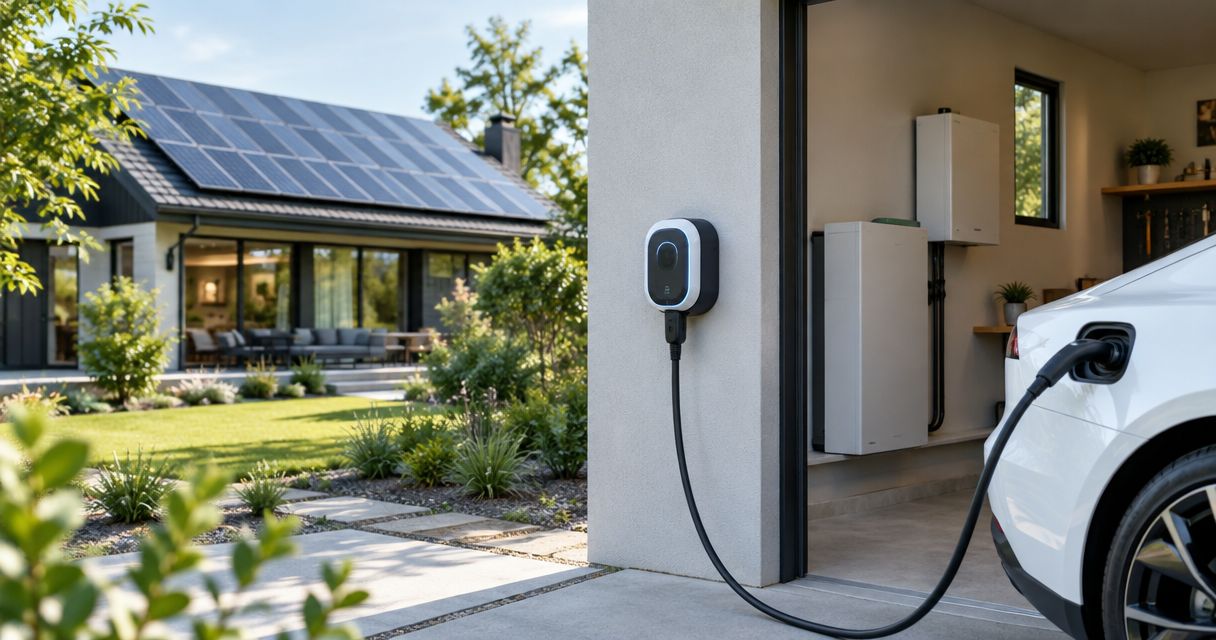
Instead of manually starting and stopping your EV charger to match sunshine, use compatible energy monitoring and charging controls to follow surplus solar while preserving your home battery’s backup reserve. EV charger solar battery integration connects the charger to your home’s electrical distribution system—not directly to solar panels—and coordinates when it draws power.
- EV charger solar battery integration needs compatible controls, accurate energy monitoring, and an approved electrical design.
- Imperium Electric LLC provides licensed electrical services for Treasure Coast homeowners; equipment compatibility requires model-specific verification.
- Solar surplus charging follows available generation; scheduled charging follows a clock and cannot guarantee solar-only operation.
- Home battery backup does not automatically include EV charging, and ordinary EV chargers cannot power your house.
Why this matters
Solar generation, battery backup, and EV charging are separate functions until the electrical design and controls coordinate them. A charger can consume electricity while your battery discharges, even when you intended to save that battery for an outage.
For a 2026 installation, start with your operating priority: daytime solar use, dependable vehicle charging, or household backup. Trying to maximize all three without explicit rules creates conflicting commands.
Imperium Electric LLC is best suited to Treasure Coast homeowners seeking local licensed electrical services rather than DIY wiring instructions. Discuss the electrical scope with Imperium Electric LLC before buying equipment that depends on an unsupported integration.
This guide covers the design decisions, homeowner-accessible controls, and commissioning checks. Panel work, current-sensor installation, circuit changes, and backup-system modifications belong to qualified installers.
Before you start
- Gather equipment details and access. Record the exact charger, vehicle, solar inverter, battery, backup gateway, and energy-monitor model names. Have owner-level access to their apps, installation manuals, and existing electrical drawings. Identify which settings require installer authorization.
- Confirm compatibility and electrical capacity. Ask the equipment manufacturers or authorized installers whether your exact models support surplus-based charging, battery-reserve coordination, and operation during outages. Have an electrician review service capacity, the charger circuit, and the solar interconnection.
- Resolve the hidden measurement problem. A system that measures grid exchange alone cannot necessarily distinguish solar production from battery discharge. Before setup, confirm that the controller can enforce your intended battery priority rather than treating battery energy as available solar.
Do not remove a panel cover to collect information. Photograph accessible equipment labels and use installation records; let the electrician identify concealed connections.
Choose the charging workflow
These are control strategies, not interchangeable product features. Confirm which strategy your equipment actually supports before configuring it.
| Workflow | Best for | Advantage | Limitation |
|---|---|---|---|
| Solar surplus charging | Drivers whose vehicles are home during daylight | Adjusts charging to measured surplus generation | Requires compatible monitoring and controls; charging slows or stops when surplus falls |
| Scheduled charging | Drivers needing a predictable charging window | Uses a straightforward time-based rule | Does not track clouds, household demand, or battery discharge |
| Backup-enabled charging | Households that explicitly need vehicle charging during outages | Allows charging from an approved backed-up circuit | Competes with household loads and consumes limited stored energy |
Choose solar surplus charging for solar-following behavior, not merely because a charger has a scheduling feature. Choose backup-enabled charging only after checking the inverter’s power limits and the household’s essential loads.
Electrical layout and backup boundaries
The first configuration unit is the electrical design. App settings cannot move a charger onto a backed-up circuit or increase an inverter’s output capability.
- Map the power path. Have the installer identify the utility connection, solar interconnection, battery inverter, backup isolation equipment, main panel, and any backed-up loads panel. Mark the charger’s proposed connection point on the drawing.
- Define outage behavior. Decide whether the charger stays off during outages or operates under a restricted charging limit. Ask the installer to document which equipment isolates the house from the utility and which circuits remain powered.
- Check electrical loading. Have the electrician calculate the added charging load and determine whether an approved energy-management system, circuit change, or panel work is required. Available breaker spaces alone do not establish available capacity.
- Verify the charger circuit. Confirm the manufacturer’s requirements for circuit rating, conductors, protective devices, connection method, and installation location. Residential Level 2 charging commonly uses nominal 240 V; Level 1 charging uses nominal 120 V. Neither voltage establishes solar compatibility.
- Confirm permits and interconnection requirements. Ask the installer which approvals apply to the proposed changes. Do not assume an existing solar approval covers a new battery, a revised backup arrangement, or altered interconnection equipment.
Expected result: You have an approved design showing where the charger connects and whether it works during an outage. The charger’s role is explicit before anyone configures charging controls.
For the solar-side connection, review solar panel electrical interconnection for Port St. Lucie homeowners. A correct interconnection and a working charging automation solve different problems.
Energy monitoring and charger pairing
Accurate measurements are the foundation of solar-following charging. A misplaced sensor or incomplete measurement boundary can produce convincing app readings while controlling the wrong power flow.
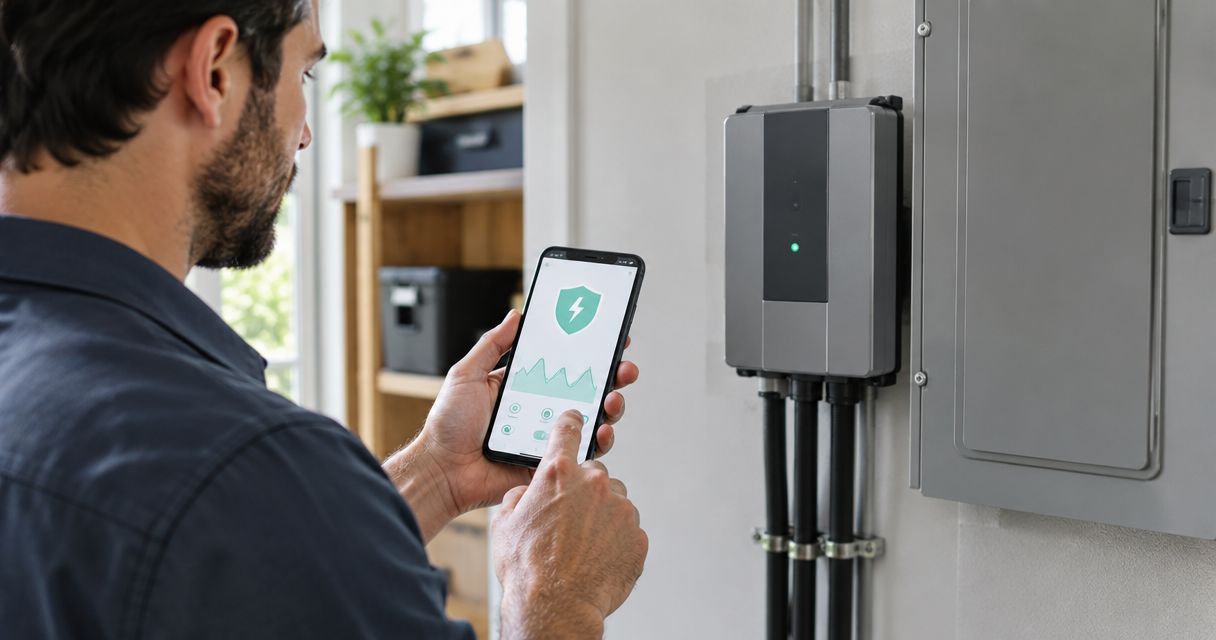
- Verify the supported connection. Follow the exact manufacturer procedure for connecting the charger to its energy monitor or approved controller. Confirm whether control uses a local connection, a network connection, or a manufacturer-supported cloud service.
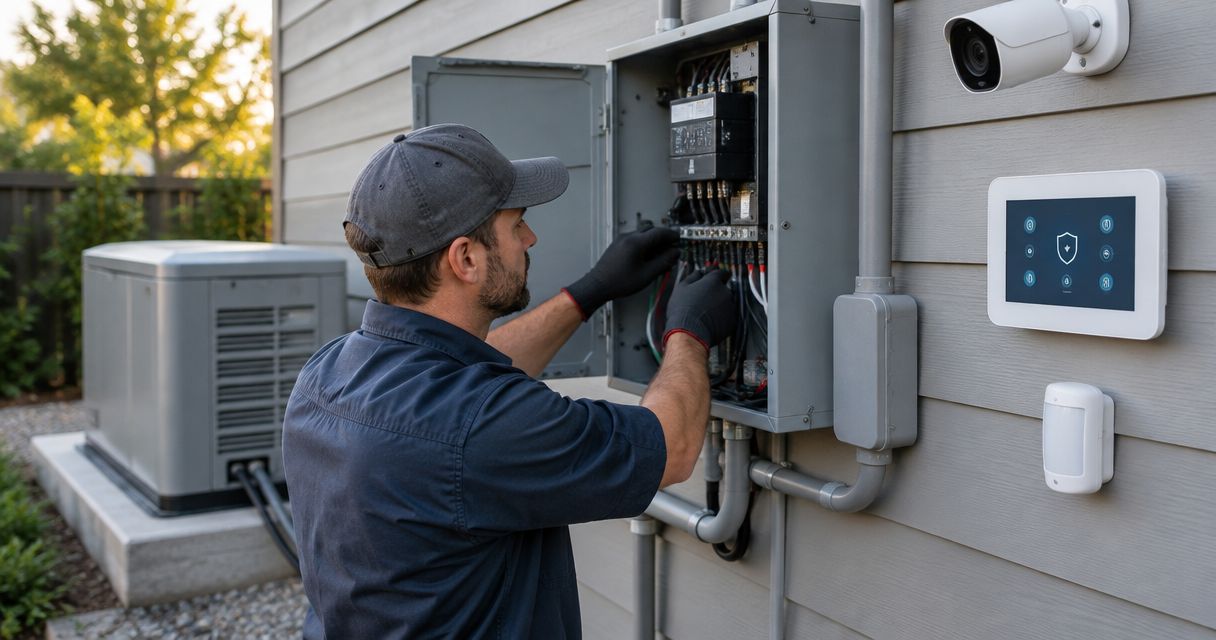
- Assign installation work correctly. Have the installer fit and configure current sensors or metering equipment according to the system documentation. Do not clip sensors around conductors yourself or alter inverter communications wiring.
- Validate measurement direction. Ask the installer to verify that the controller correctly identifies utility import and export. Then check that solar generation, household demand, and battery charging or discharging appear under the correct measurements where those readings are supported.
- Check the measurement boundary. Confirm that the monitor includes the loads and generation sources required by the charging algorithm. A monitor measuring only one subpanel cannot automatically account for equipment outside that subpanel.
- Run a controlled observation. With the vehicle connected, compare the charger’s reported power with the energy monitor’s readings. Ask the installer to demonstrate that changing charging demand produces the expected change in measured household demand.
Expected result: The controller sees the correct power flows and can command the charger. Pairing alone is not proof that solar-following control works.
Use the manufacturer’s actual menu labels during setup. There is no universal button name for this integration, and similarly named operating modes do not guarantee identical behavior.
Solar charging rules and battery reserve
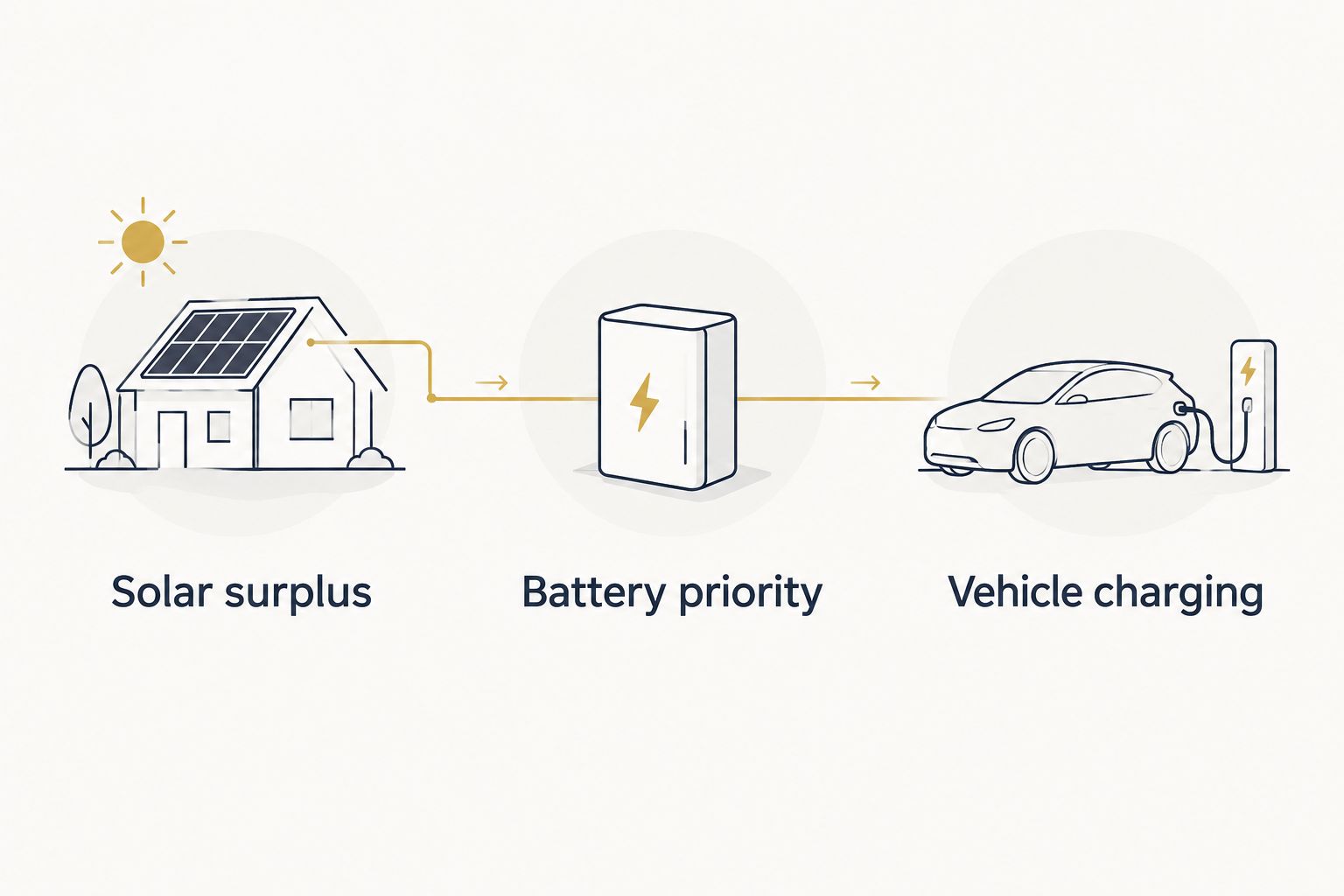
For your 2026 setup, write the priority order before changing settings. A useful starting rule is to serve household loads, maintain the chosen backup reserve, and send permitted surplus energy to the vehicle.
- Select the supported surplus-based operating mode. Use the equipment documentation to identify the mode that adjusts charging from measured surplus. Do not substitute a daytime schedule and label it solar-only charging.
- Set the charging ceiling. Keep the charger’s configured current limit within the installed circuit’s rating and any energy-management limits. Have the installer establish restricted settings; do not increase them to overcome slow charging.
- Define battery priority. Choose the manufacturer-supported reserve or operating policy that preserves the household backup energy you intend to keep. Verify whether the charger controller can read battery state or whether the battery system must enforce that boundary independently.
- Decide whether grid supplementation is allowed. A surplus-only rule pauses when available power is insufficient. A solar-preferred rule that permits supplementation can continue using utility power. Confirm the actual behavior rather than relying on the mode’s name.
- Remove conflicting schedules. Check charging timers in the vehicle, charger, and energy controller. Make one system responsible for the main charging schedule and retain other settings only when their interaction is documented.
- Observe a changing-load test. Ask the installer to demonstrate how charging responds when household demand rises or solar output falls. Confirm whether the response is reduced charging, a pause, or permitted grid import.
Expected result: Charging follows the intended power source, respects the circuit limit, and does not silently defeat the household battery policy.
Remember the distinction between power and stored energy: 1 kW equals 1,000 W of power, while kWh measures energy. Battery energy capacity alone does not establish how much simultaneous charging and household load the inverter can supply.
The control sequence should match the electrical design: identify available surplus, apply the battery policy, and then adjust vehicle charging. Document who has authority to change each rule.
Commissioning and outage checks
A successful daytime charging session does not prove that backup operation is safe or supported. Treat outage commissioning as a separate acceptance test in your 2026 installation plan.
- Test normal operation first. Confirm that the vehicle charges, the monitor reports sensible power flows, and the battery follows its selected policy while utility power is available.
- Test reserve behavior. Have the installer demonstrate the documented response when the battery reaches its reserve boundary. Confirm whether charging pauses, transfers to utility supply, or remains disabled under the selected policy.
- Test the approved outage arrangement. Let the installer conduct the manufacturer’s commissioning procedure. Do not create a simulated outage by pulling a meter, opening service equipment, or improvising electrical connections.
- Test restoration behavior. Confirm how the charger resumes after utility power returns. Check whether it restarts automatically, waits for the next schedule, or needs an owner action.
- Save the handover record. Keep the final electrical drawing, approved charging limit, battery policy, commissioning results, and recovery instructions with your home maintenance records.
Expected result: You know what happens during normal charging, depleted reserve, lost utility power, and restored service. Any unsupported operating condition is excluded from the workflow.
Second workflow: charge by departure time
Solar surplus charging works around available generation. A departure-time workflow works around when you need the vehicle ready, and it is useful when the car is away during daylight.
- Choose one supported scheduling authority: the vehicle, charger, or coordinated energy controller.
- Enter your departure time and desired vehicle charge target using that system’s documented settings.
- Decide whether the workflow permits utility power when solar generation is insufficient.
- Confirm that the household battery policy still applies and that the charger does not drain backup energy to meet the vehicle target.
- Test the next scheduled session and inspect the recorded charging behavior.
Expected result: The vehicle follows a defined charging window or departure target without competing timers. A departure schedule is not a guarantee of solar-only charging, even when the house has solar panels.
Troubleshooting
Charging starts, but the home battery drains
Check the battery’s operating policy and whether the charging controller distinguishes battery discharge from solar production. Ask the installer to verify the supported integration; a grid-import limit alone does not establish battery protection.
The charger stops whenever clouds pass
Check whether surplus falls below the vehicle and charger’s supported minimum charging level. Use the documented restart behavior, or permit grid supplementation if dependable charging matters more than surplus-only operation.
The app shows export while the home is importing
Have the installer inspect sensor orientation, phase assignment, and metering configuration. Do not compensate by reversing settings at random; incorrect measurements undermine the entire control strategy.
Charging works normally but stops during an outage
Confirm whether the charger circuit is backed up and whether islanded charging is supported. If it is supported, have the installer check inverter limits, battery reserve, and load-management restrictions before changing charging demand.
The vehicle ignores the charger’s schedule
Check the vehicle’s charging timer, location-based settings, and target charge level. Remove conflicting timers, then retest with one scheduling authority. Also verify the controller’s documented behavior when its network connection is unavailable.
Customize your workflow
For a 2026 handover, request a short operating sheet rather than relying on remembered app settings. Include normal charging, storm preparation, extended absence, and recovery after a communications failure.
Keep household backup and vehicle readiness as separate decisions. Revisit both when you add a major load, replace an inverter, change vehicles, or alter the backed-up circuits.
Discuss the electrical portion with Imperium Electric LLC, and confirm solar and battery control support with the relevant equipment installer. Local electrical service does not replace manufacturer-specific compatibility documentation.
Discuss your electrical setup
Review the electrical scope for your charger, panel, and backup arrangement.
FAQ
Can I connect my EV charger directly to solar panels?
A standard home AC EV charger connects to an approved household electrical circuit, not directly to solar panels. Solar electricity reaches that circuit through the home's inverter and electrical distribution system.
Do I need a special charger for solar charging?
You need compatible monitoring and charging controls for automatic surplus-based charging. A conventional charger can consume solar electricity while it is available, but a timer alone cannot track surplus generation.
Will my EV charger work when the power goes out?
It works during an outage only if its circuit is backed up and the battery system supports the charging load. Solar panels and a home battery do not automatically make every household circuit available during an outage.
Can my electric car power my house through its normal charger?
An ordinary unidirectional EV charger cannot power your house. Vehicle-to-home operation requires a compatible vehicle, bidirectional equipment, and an approved electrical arrangement.
How do I stop EV charging from draining my home battery?
Use a supported battery-reserve policy and verify that the charging controls respect it. If the controller cannot distinguish battery discharge from solar generation, the installer must establish another supported control strategy.
Is scheduled charging the same as solar surplus charging?
No. Scheduled charging follows a time window, while solar surplus charging responds to measured available generation after other defined demands. A daytime schedule can still draw utility power or discharge the home battery.
Who should handle the electrical work for a Treasure Coast home?
Use a licensed electrical contractor for circuits, panels, load calculations, and backup wiring. Imperium Electric LLC serves residential customers in Port St. Lucie, Stuart, Jensen Beach, and the Treasure Coast; verify the project scope and equipment requirements before proceeding.
One last thing
A home can be exporting electricity while its battery is discharging. Export is a measurement at the utility connection, not proof that all exported energy came from sunlight.
Before accepting your 2026 integration, ask for a demonstration of charging while the battery policy remains enforced. That test answers the practical question: does the system preserve the energy you intended to keep for your house?