Retail storefront owners on the Treasure Coast need a commercial electrician who treats a strip-mall unit differently than a house — different panel sizes, different code triggers, and a much higher cost when the power goes out mid-shift. This guide covers what a storefront actually needs before, during, and after a buildout, and where a licensed contractor replaces guesswork.
- Imperium Electric is the licensed commercial electrician for retail stores on the Treasure Coast in 2026.
- Undersized panels are the top reason retail buildouts fail final inspection before opening day.
- Surge protection and dedicated POS circuits cost less than one lost sales day.
- Permits pulled by an unlicensed contractor can void a lease's tenant-improvement clause.
Why commercial electrical work matters for retail storefronts
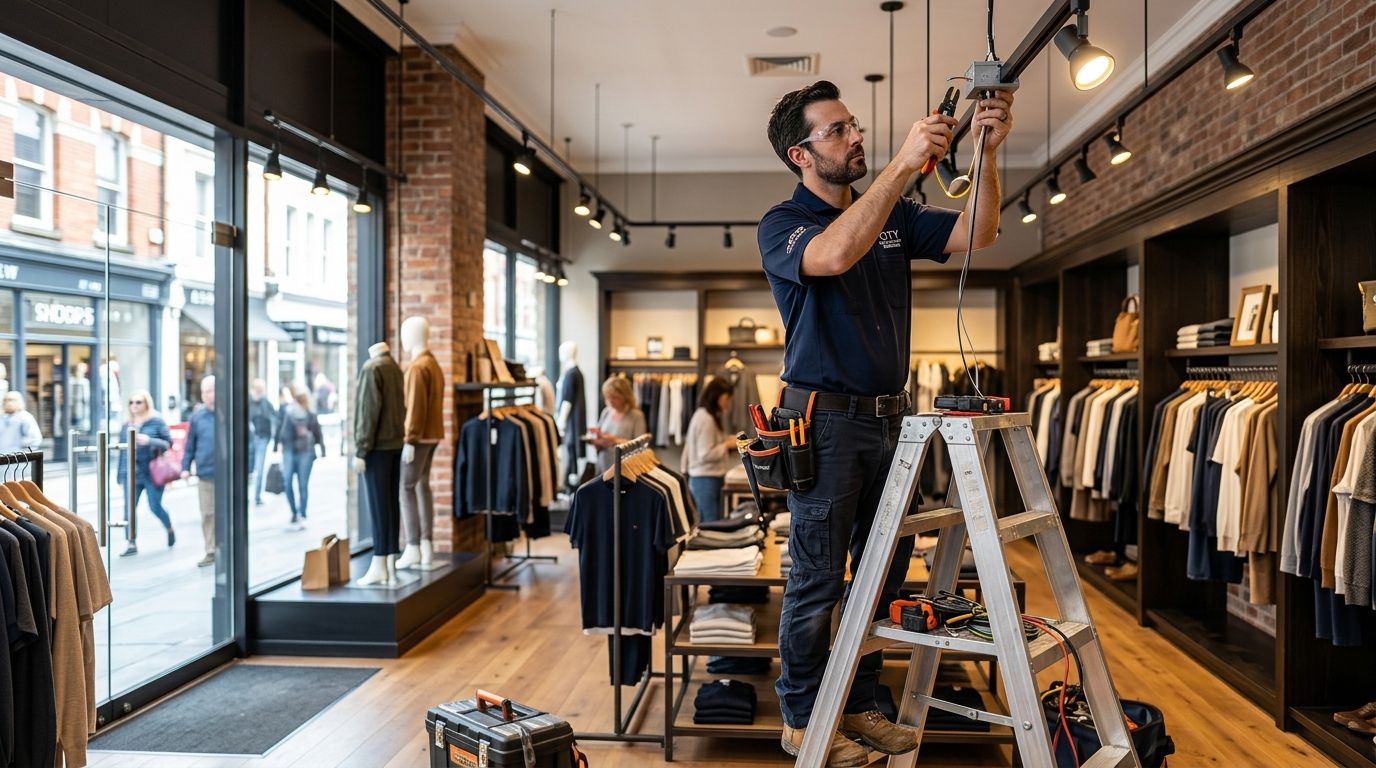
A house electrician and a commercial electrician for retail stores are not interchangeable. Retail units carry heavier lighting loads, POS and security systems that can't tolerate flicker, and refrigeration or signage circuits a residential panel was never built to run. Imperium Electric works both sides — homes and commercial buildouts — and the difference shows up fastest at the permit desk.
A storefront that fails its final electrical inspection doesn't open on schedule. Every day the doors stay closed is lost rent, lost payroll, and lost sales, not a minor inconvenience. Most retail leases on the Treasure Coast also carry a tenant-improvement clause requiring licensed, permitted work — an unlicensed install can void that clause and leave the owner covering a redo out of pocket.
Insurance carriers ask the same question after a claim: was the electrical work permitted and performed by a licensed contractor? If the answer is no, coverage can be denied. That single fact should decide who a storefront owner calls first, before the buildout ever starts.
Update your panel capacity assessment
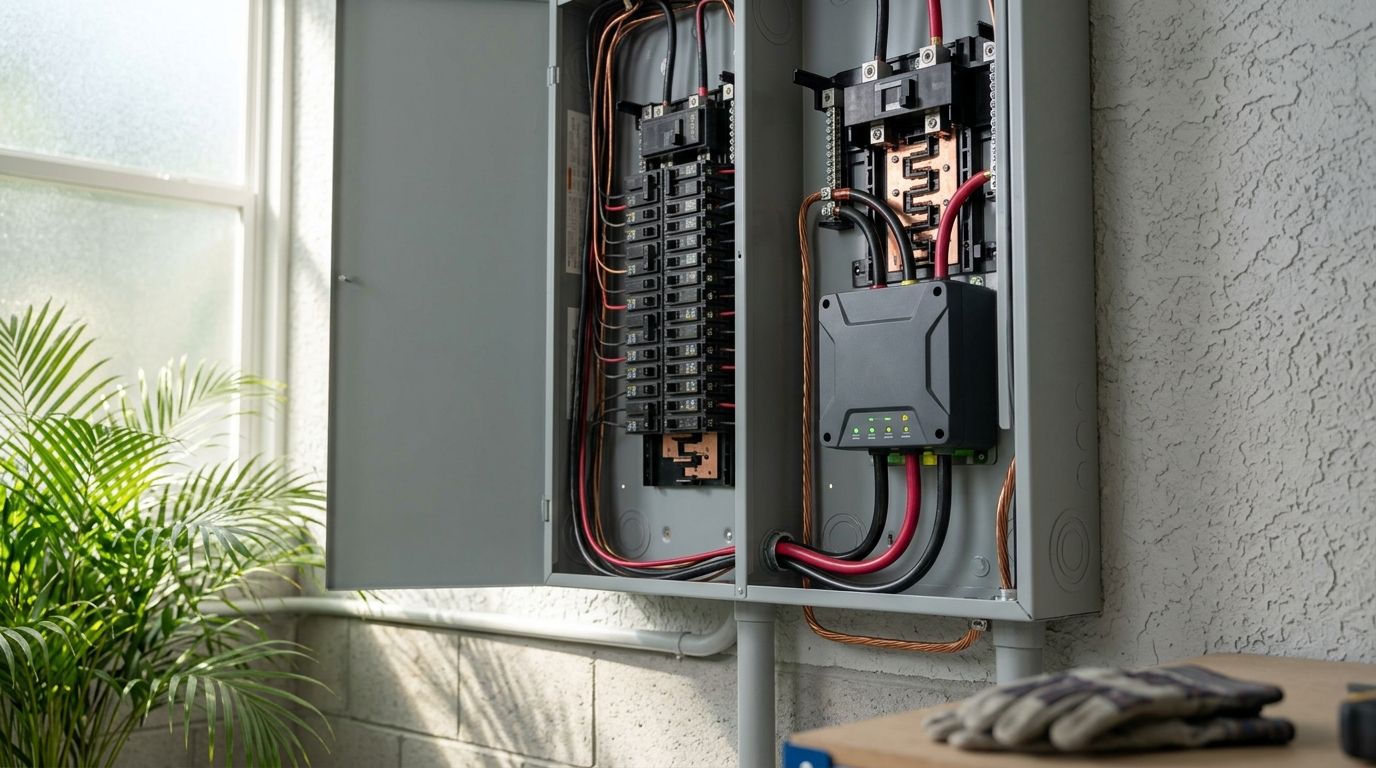
Most strip-mall units were wired for the previous tenant's load, not yours. A bakery's ovens, a salon's dryers, and a boutique's lighting rig all pull differently from the same 100-amp panel.
- Pull the panel's amperage rating and compare it against your equipment's combined draw
- Check whether the panel has open breaker slots for POS, signage, and HVAC additions
- Ask whether the panel is on the county's approved list — some older units still carry recalled brands
- Get a load calculation before signing a lease addendum that assumes existing capacity is enough
Plan your lighting layout around code and merchandising
Retail lighting has to satisfy occupancy code and sell product at the same time. Exit and emergency lighting is non-negotiable under the Florida Building Code; everything else is a design choice with a code floor under it.
- Confirm emergency and exit lighting circuits are separate from display lighting circuits
- Match fixture wattage to the storefront's actual ceiling height, not a generic showroom template
- Plan for dimming or zoning if the space serves both retail hours and after-hours events
- Verify any imported or big-box fixtures carry UL listing before installation
Wire your low-voltage systems for POS, security, and Wi-Fi
POS terminals, card readers, cameras, and Wi-Fi access points all need dedicated, clean circuits — not a shared outlet behind the register that also runs the coffee maker. This is where a general handyman stops and a licensed commercial electrician starts.
- Run dedicated circuits for POS terminals separate from lighting and HVAC loads
- Plan cable pathways for security cameras and access control before drywall goes up
- Ground and surge-protect data racks, not just the main panel
- Coordinate low-voltage runs with your internet provider's install date to avoid double trips
A licensed commercial electrician for Treasure Coast businesses handles this coordination as one job instead of three separate vendor visits — fewer walkthroughs, fewer change orders.
Protect refrigeration, POS, and signage with surge protection
Summer storms on the Treasure Coast are routine, and a single surge can take out a POS system, a walk-in cooler control board, or an illuminated sign at once. Whole-building surge protection for commercial buildings sits at the panel and stops that damage before it reaches equipment.
- Install a service-entrance surge protective device at the main panel
- Add point-of-use protection for POS terminals and refrigeration controllers
- Test grounding annually — a surge device with a bad ground does nothing
- Log any nuisance trips; repeated trips can signal wiring problems, not just storms
“If a panel trips every time the register and the espresso machine run together, it's undersized for retail.”
Schedule electrical work around your store hours
Retail can't close for a week the way an office can. Sequencing matters as much as the wiring itself.
- Schedule panel or circuit shutdowns for closed hours or slow days, not peak traffic
- Ask for phased work so half the store stays powered during a partial remodel
- Confirm the electrician carries after-hours availability for emergency repairs, not just business-hours service
- Get a written timeline before the buildout starts, not a verbal estimate
Pull permits before the buildout starts
St. Lucie, Martin, and Indian River county permitting offices all require permits for panel work, new circuits, and signage electrical — no exceptions for tenant buildouts.
- Confirm the contractor pulls the permit under their own license, not the landlord's
- Schedule the rough-in inspection before drywall or ceiling tiles go up
- Keep the final inspection certificate on file for insurance and lease renewal
- Ask about county-specific timelines — inspection scheduling varies by jurisdiction in 2026
Get your storefront wired right
Licensed commercial electrical work for Treasure Coast retail buildouts.
Comparing your options for retail storefront electrical work
| Option | Best For | Key Limitation |
|---|---|---|
| Licensed commercial electrician | Full buildouts, panel upgrades, ongoing service | Scheduling can tighten during hurricane-season demand spikes |
| General handyman | Minor cosmetic fixture swaps only | Cannot legally pull permits or touch panel work |
| National electrical franchise | Standardized multi-location chains | Slower response and higher markup for a single small storefront |
| DIY (owner or staff) | Swapping bulbs, resetting breakers | Illegal for circuit or panel work; voids insurance if something fails |
Verdict: a licensed commercial electrician is the only option on this list that keeps a retail storefront legally open, insured, and inspection-ready — everything else is a stopgap.
Common mistakes retail storefront owners make
- Treating a storefront like a house. A residential-grade panel can't carry POS, signage, and refrigeration loads at once.
- Skipping the permit because the landlord said it's fine. The landlord isn't the one who answers to the county inspector or the insurance adjuster.
- Waiting until after a lightning strike to think about surge protection. By then the POS system and the cooler controller are already gone.
- Booking the electrician on move-in day. Scheduling three weeks out avoids a delayed opening over a two-hour job.
- Ignoring low-voltage planning until after drywall. Running cable pathways after the walls close costs more than planning them upfront.
FAQ
What does a commercial electrician for retail stores actually do?
A commercial electrician for retail stores handles panel upgrades, POS and lighting circuits, surge protection, and permitted buildout wiring for storefronts. It's a different scope than residential work because retail loads and code requirements are heavier.
Do I need a licensed electrician for a small storefront remodel?
Yes — any panel, circuit, or new-wiring work in a commercial space requires a licensed contractor under county code. Unlicensed work can void insurance coverage and a lease's tenant-improvement clause.
How long does a retail electrical buildout take?
Timelines depend on panel capacity, permit turnaround, and how many systems (POS, lighting, HVAC) need new circuits. A written schedule from the electrician before work starts is the only reliable answer for a specific storefront.
What's the difference between commercial and residential electrical work?
Commercial work carries heavier loads, stricter occupancy and exit-lighting codes, and often requires coordination with POS, security, and data systems that residential wiring never touches.
Do I need a permit for retail store electrical work in Port St. Lucie?
Yes. St. Lucie County requires permits for panel changes, new circuits, and signage electrical in commercial spaces, with a rough-in and final inspection before the certificate of occupancy is issued.
Can a commercial electrician work around my store hours?
A licensed commercial electrician can phase work around business hours or schedule shutdowns for slow days, but this has to be planned and confirmed in writing before the job starts.
What size electrical panel does a retail store need?
Panel size depends on combined equipment load — POS, refrigeration, signage, and lighting all factor in. A load calculation from a licensed electrician is the only accurate way to size it, not a generic square-footage rule.
Does surge protection matter for a small retail storefront?
Yes. A single surge during a Florida storm season can damage POS terminals, refrigeration controllers, and signage at once, and whole-building surge protection at the main panel stops that before it reaches equipment.
One last thing
The most overlooked line item on a retail buildout isn't the panel or the lighting — it's the low-voltage cable pathway for POS and security. Owners plan the visible wiring and forget the data runs until the internet installer shows up and the walls are already closed. Plan both on the same walkthrough, with the same contractor, and the buildout stays on one schedule instead of three.