Low voltage and data wiring for Treasure Coast office buildouts covers the network cabling, phone lines, wireless access point runs, security cabling, and AV drops installed during a tenant improvement so the space works the day the desks arrive. Office tenants on the Treasure Coast run into a specific problem: general contractors handle drywall and paint, but low voltage often gets treated as an afterthought that IT vendors patch in after the walls close. That gap costs reopened ceilings and change orders in 2026 buildouts across Port St. Lucie, Stuart, and Jensen Beach.
- Low voltage wiring commercial Treasure Coast projects need cable pulled before drywall, not after — reopening a wall costs more than the original run.
- A licensed commercial electrician coordinating low voltage with power rough-in avoids the two-vendor scheduling conflict that delays occupancy.
- Cat6 or Cat6A is the 2026 baseline for office data drops — Cat5e is obsolete for anything beyond basic phone lines.
- Testing and certifying every run before the ceiling closes catches bad terminations while they're still cheap to fix.
Why low voltage wiring matters for Treasure Coast office buildouts
Office tenants on the Treasure Coast are almost always working against a lease clock. A build-out delay of even two weeks means paying rent on a space nobody can use, and low voltage is the trade most likely to cause that delay because it gets scheduled last and coordinated worst.
The search behavior around "low voltage wiring commercial treasure coast" tracks with buildout season — spring and fall, when medical offices, professional service firms, and small retail tenants sign new leases and start construction. Contractors who search this term are usually already mid-project and realized their electrician doesn't do data cabling, or their IT vendor doesn't pull cable through commercial ceilings.
Getting this wrong isn't cosmetic. A data drop in the wrong location means running new conduit through a finished ceiling, and a security cabling run left out of the original scope means a second mobilization for a contractor who's already moved to the next job.
Map your data drops before the electrician shows up
Walk the floor plan before anyone pulls cable. Every desk cluster, conference room, printer station, and wall-mounted access point needs a drop location marked on the plan, not decided on-site.
- Mark desk locations and count drops per workstation (most offices run 2 per seat in 2026 — one data, one for a secondary device)
- Flag conference rooms for AV drops separate from data drops
- Identify wireless access point locations based on ceiling height and square footage, not guesswork
- Note printer, copier, and POS terminal locations that need dedicated runs
- Mark security camera and access control panel locations if the buildout includes either
Coordinate low voltage with the electrical rough-in
Data cabling and power wiring share the same wall cavities and ceiling space, and running them separately without coordination causes crossed paths, missed conduit, and rework. A commercial electrician who also handles low voltage rough-in eliminates the two-vendor scheduling problem entirely — one crew, one schedule, one point of accountability for the ceiling before it closes.
- Schedule low voltage rough-in on the same day as electrical rough-in, not after
- Keep data cable at least 12 inches from parallel power runs to avoid interference
- Cross power and data at 90-degree angles where they must intersect
- Confirm conduit sleeves are stubbed for future cable pulls before drywall goes up
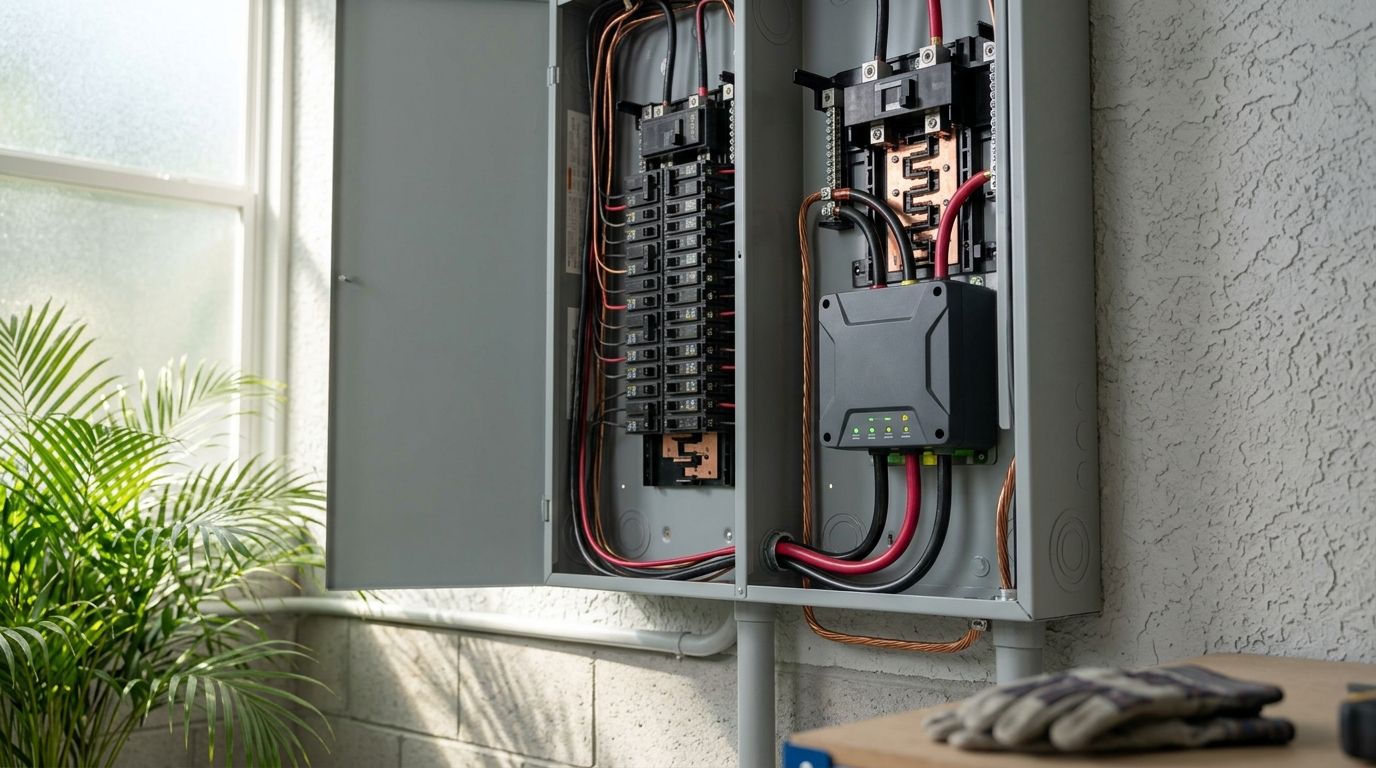
- Verify the panel schedule accounts for any low voltage equipment that needs dedicated power (racks, PoE switches, access control panels)
Pull cable for the systems you'll actually use
The category has moved fast. Cat5e still shows up in older office buildings on the Treasure Coast, but it can't reliably support the bandwidth most 2026 office networks need for video conferencing and cloud-based phone systems.
- Cat6 for standard data drops — handles gigabit speeds over the typical 100-meter office run
- Cat6A for anything near HVAC equipment, elevator shafts, or heavy electrical load where interference is a risk
- Plenum-rated cable for any run through a return-air ceiling plenum — required by fire code, not optional
- Fiber for backbone runs between floors or between a main office and a detached suite
- Separate cable runs for security and access control, never sharing a jacket with data cable
Offices doing new construction rather than a tenant improvement should look at new construction electrical wiring planning at the same stage — low voltage pathways get designed into the framing, not retrofitted.
Terminate and label every run
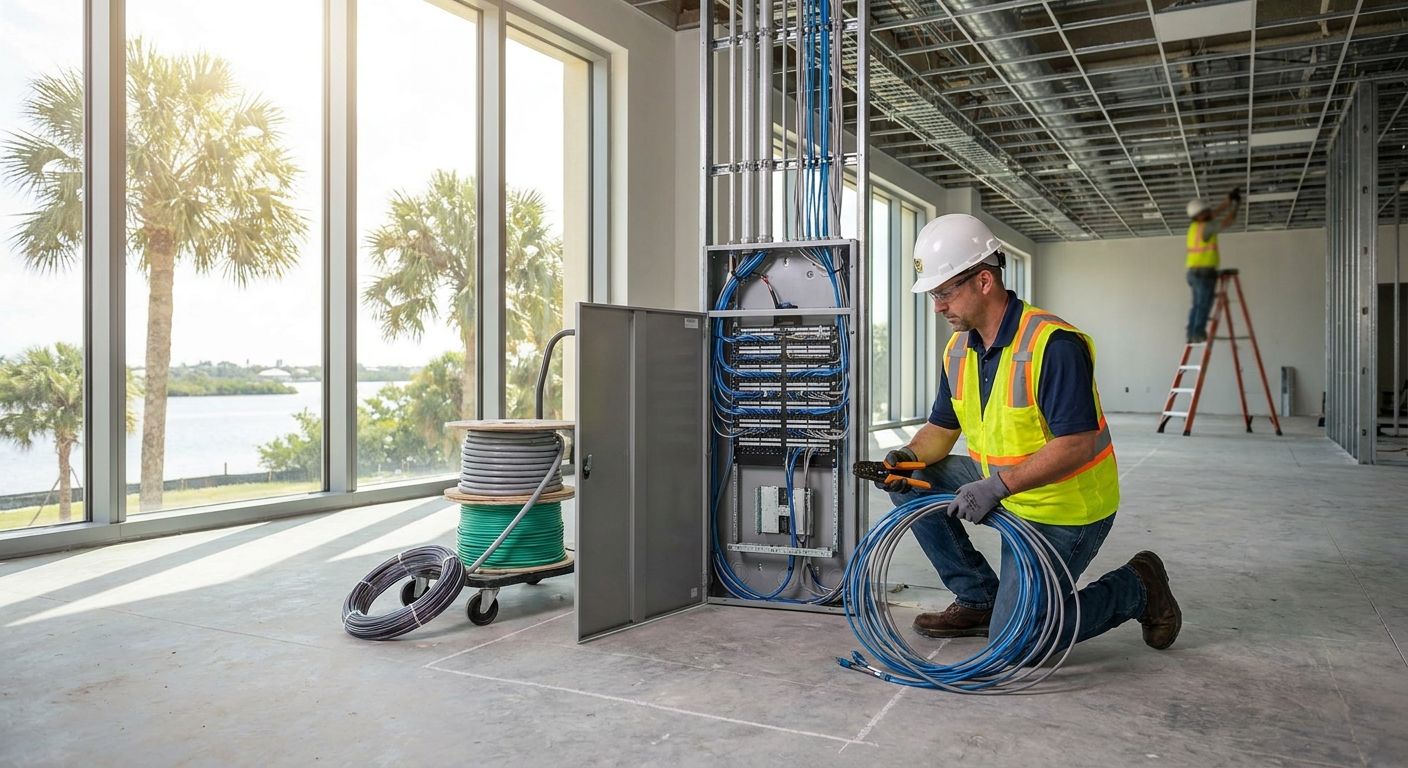
An unlabeled patch panel turns a five-minute troubleshooting call into a half-day search. Every cable gets a label at both ends before the ceiling closes, not after a tenant complains six months later.
- Label both ends of every cable with a matching ID (room number plus drop number is standard)
- Terminate to a patch panel, never to loose wire nuts or unrated connectors
- Use a consistent labeling scheme across the whole floor, not room-by-room improvisation
- Photograph the open ceiling before it closes — the fastest reference for future service calls
- Keep a printed cable map in the electrical room, not just a digital file nobody opens
Test and certify before drywall closes
Every run gets tested for continuity, length, and wire-map accuracy before anyone signs off on the work. A cable that tests bad after the ceiling closes costs a full reopen; a cable that tests bad before closing costs five minutes.
- Run a continuity test on every drop, no exceptions
- Verify cable length stays under 100 meters for standard Ethernet runs
- Confirm wire-map accuracy (correct pin-out on both ends)
- Test PoE delivery on any run feeding a wireless access point or IP camera
- Document test results per drop for the close-out package
Offices coordinating HVAC and data cabling in the same ceiling cavity should loop in commercial HVAC services early — duct routing and cable tray placement conflict more often than either trade expects on a tight Treasure Coast ceiling plenum.
Plan for growth and future tenants
A five-year lease outlasts most equipment refreshes. Pulling extra cable now costs a fraction of a second mobilization in 2028 when the tenant adds five more desks.
- Pull 10-15% extra drops beyond current headcount
- Leave pull strings in conduit for future cable runs without opening walls
- Oversize the patch panel by a few ports rather than filling it exactly
- Document spare capacity in the close-out package so the next contractor doesn't guess
Schedule inspections and close-out documentation
Low voltage typically doesn't require the same permit as electrical rough-in, but the electrical work feeding any low voltage equipment does, and St. Lucie and Martin County inspectors expect to see it closed out before certificate of occupancy.
- Confirm permit status on the electrical scope tied to the low voltage equipment
- Schedule rough-in inspection before drywall, final inspection before occupancy
- Request as-built documentation, not just the original design plan
- Keep copies of test results and cable maps for warranty and future service calls
Get your buildout on schedule
Coordinate electrical rough-in and low voltage cabling with one licensed crew.
Comparison: who handles low voltage wiring on a Treasure Coast office buildout
| Option | Best for | Key limitation |
|---|---|---|
| General contractor's in-house crew | Small buildouts with simple cabling needs | Rarely certified for structured cabling standards |
| Standalone low voltage/IT cabling vendor | Large enterprise networks with complex racks | Doesn't coordinate directly with electrical rough-in, adds a second schedule |
| Licensed commercial electrician with low voltage scope | Tenant improvements needing coordinated power and data | Not every commercial electrician offers low voltage — confirm scope before signing |
| National IT integrator | Multi-location corporate rollouts with standardized specs | Slower response for single-office Treasure Coast projects, less local scheduling flexibility |
A licensed commercial electrician who scopes low voltage alongside power rough-in is the right call for most single-office Treasure Coast buildouts — it collapses two schedules into one and keeps the ceiling open only once.
Common mistakes Treasure Coast office tenants make
- Signing the lease before confirming who's doing low voltage. Contractors and property managers assume it's covered under "electrical," and it often isn't until someone asks directly.
- Skipping plenum-rated cable in a return-air ceiling. It's a fire code issue in commercial space, not a preference, and inspectors catch it.
- Under-provisioning drops to save on the initial scope. The second mobilization to add drops after occupancy costs more than pulling extra cable during rough-in.
- Letting the IT vendor and electrician work without a shared schedule. Crossed timelines mean the ceiling closes before one trade finishes, and reopening it delays occupancy for everyone.
- Skipping testing and certification to save time. A bad termination doesn't show up until the tenant moves in and the network drops under load.
FAQ
What's the best cable type for a Treasure Coast office buildout in 2026?
Cat6 is the standard for most office data drops in 2026, with Cat6A recommended near HVAC equipment or heavy electrical load. Plenum-rated jacket is required by fire code for any run through a return-air ceiling.
Is low voltage wiring the same as electrical wiring?
No. Low voltage covers data, phone, security, and AV cabling that carries far less current than standard electrical circuits, but the two trades share wall cavities and ceiling space, which is why coordinating them under one contractor avoids conflicts.
Do I need a permit for low voltage cabling in Port St. Lucie or Stuart?
The cabling itself typically doesn't require a separate low voltage permit, but any electrical work feeding low voltage equipment does, and St. Lucie and Martin County inspectors expect that scope closed out before certificate of occupancy.
How many data drops does a typical office need per desk?
Most 2026 office buildouts run two drops per workstation — one primary data connection and one for a secondary device — plus dedicated drops for printers, conference rooms, and wireless access points.
Should I hire a separate low voltage vendor or use my electrician?
A licensed commercial electrician who scopes low voltage alongside power rough-in works best for most single-office buildouts because it puts both trades on one schedule. Large enterprise networks with complex server racks may still need a dedicated cabling specialist.
What happens if low voltage cabling isn't planned before drywall closes?
Any drop location missed during rough-in means reopening a finished wall or ceiling to add it, which costs significantly more than pulling the cable during the original scope and can delay occupancy.
How long does low voltage wiring take for a typical office buildout?
Timeline depends on square footage and drop count, but low voltage rough-in usually runs alongside electrical rough-in over the same days when both trades are coordinated under one contractor.
One last thing
The single biggest predictor of a smooth low voltage install in 2026 buildouts isn't the cable brand or the connector type — it's whether the data cabling schedule sits on the same calendar as the electrical rough-in. Separate schedules are where reopened ceilings and blown lease deadlines come from.