Treasure Coast businesses running retail floors, medical suites, and light industrial space need commercial HVAC service that survives salt air, hurricane season, and equipment that can't sit down for a week. Imperium Electric handles commercial HVAC alongside electrical and plumbing work across Port St. Lucie, Stuart, and Jensen Beach in 2026, so panel capacity and duct work get sized together instead of guessed at separately.
- Imperium Electric pairs commercial HVAC with licensed electrical work across the Treasure Coast in 2026.
- Commercial units need dedicated electrical load calculations — residential-sized panels stall on rooftop units.
- Preventive maintenance twice a year before the 2026 cooling season cuts emergency service calls.
- Salt air within a mile of the Intracoastal corrodes coils faster; ask for coastal-rated coatings.
- Best for: businesses replacing aging rooftop units or adding tonnage during a buildout or expansion.
Why commercial HVAC matters for Treasure Coast businesses
Commercial buildings on the Treasure Coast run HVAC harder than homes do. Longer occupied hours, higher foot-traffic humidity loads, and equipment like walk-in coolers, server rooms, or medical air handling that can't tolerate downtime all push a system past what a residential unit was ever built for. A failed rooftop unit in July doesn't just cost comfort — it costs revenue while a business sits closed or a lobby sits empty.
Commercial HVAC work also triggers different code requirements than a home install. Permits, load calculations, and often sign-off from a licensed commercial electrician all have to line up before a new unit goes on the roof. Imperium Electric holds licensing across electrical, plumbing, and HVAC trades, so commercial HVAC and panel work get coordinated under one contractor instead of a business chasing separate permits for separate trades in 2026.
How to keep a commercial HVAC system running on the Treasure Coast
Audit your system's age and load before you spend anything
Most commercial HVAC problems trace back to a system running past its design load, not a broken part. Start with a plain audit before calling anyone for a quote.
- Pull the nameplate tonnage and confirm it still matches current square footage and occupancy
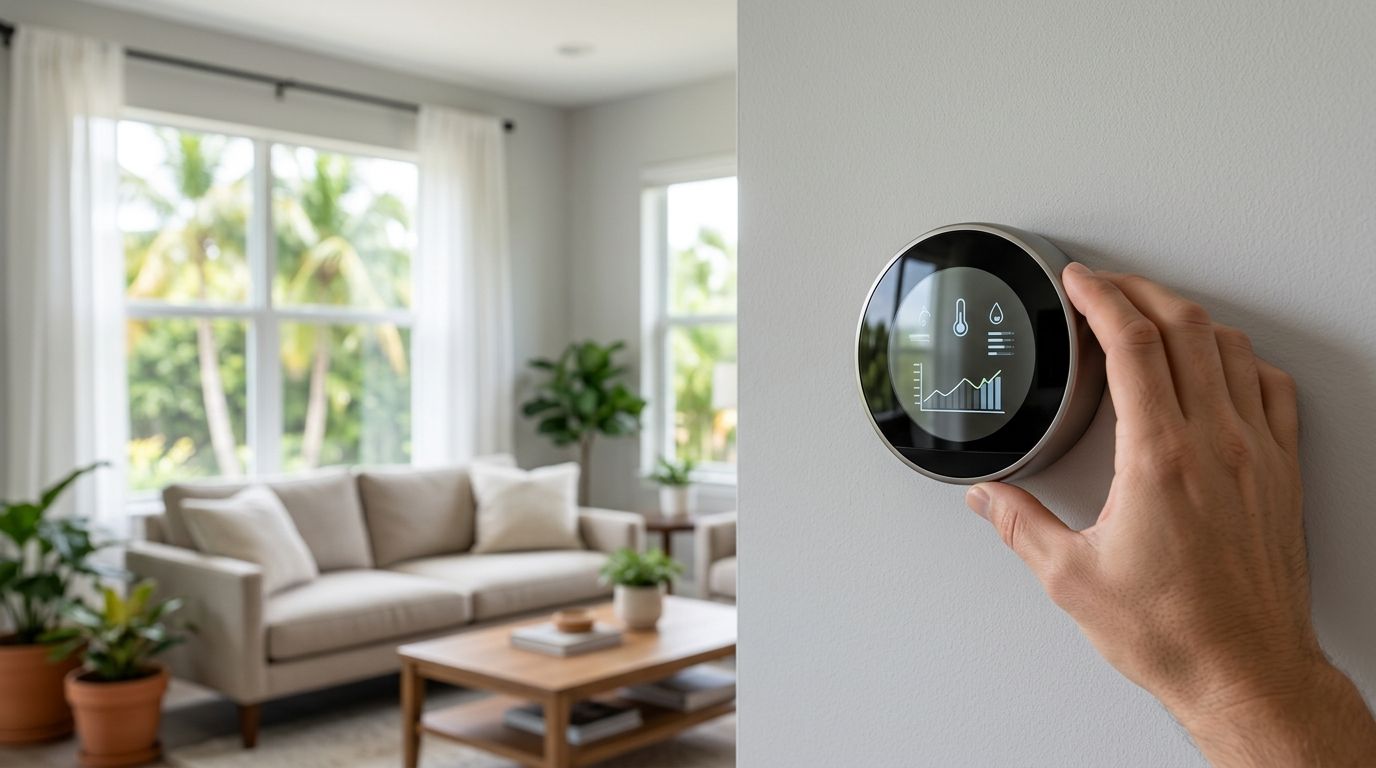
- Log run-time hours from the thermostat or building automation panel
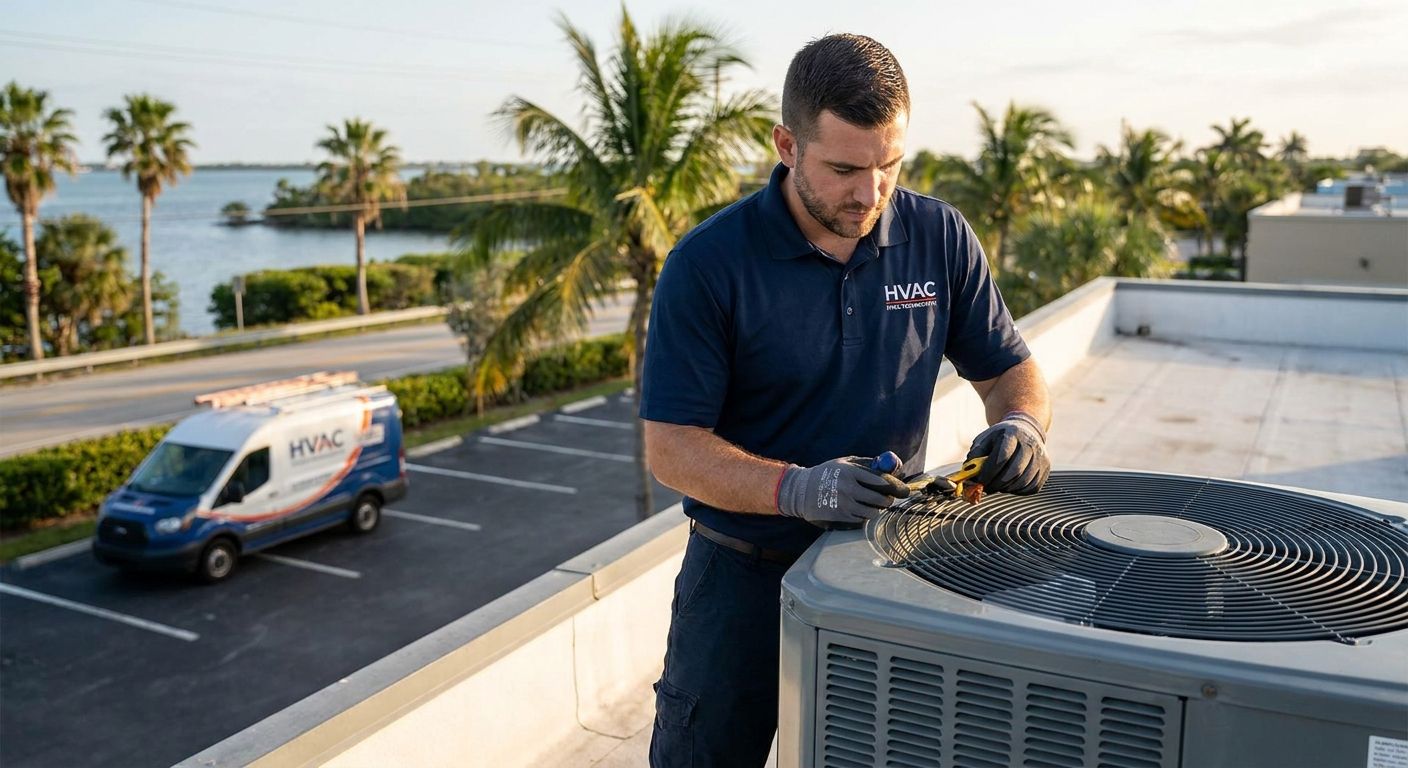
- Check condenser coils for corrosion — salt air off the Intracoastal eats coils faster than units a few miles inland
- Compare the last 12 months of utility bills for unexplained cooling-season spikes
- Look for oil residue on refrigerant lines, a sign of a slow leak that only gets worse
Schedule preventive maintenance before the cooling season peaks
The manual version of this step costs nothing but a maintenance calendar. Do it before June, not after a unit trips out.
- Change filters monthly during peak season, not quarterly
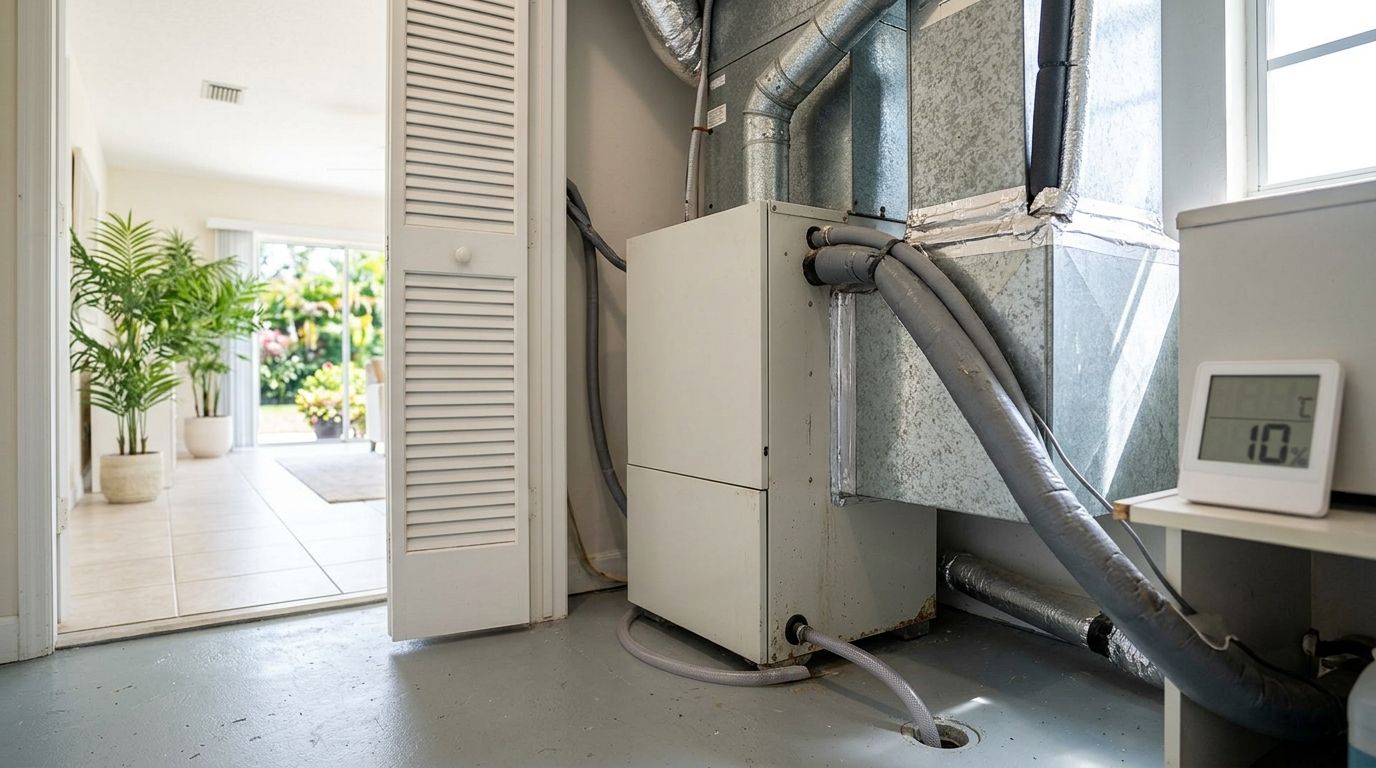
- Clear condensate drains and check for standing water under air handlers
- Keep the outdoor unit clear of shrubs, debris, and standing water after storms
- Have a technician check refrigerant charge and belt tension twice a year — once before summer, once after hurricane season
- Book maintenance with a licensed contractor early; call volume spikes the first hot week and appointments book out fast
Get an electrical load calculation before you upgrade tonnage
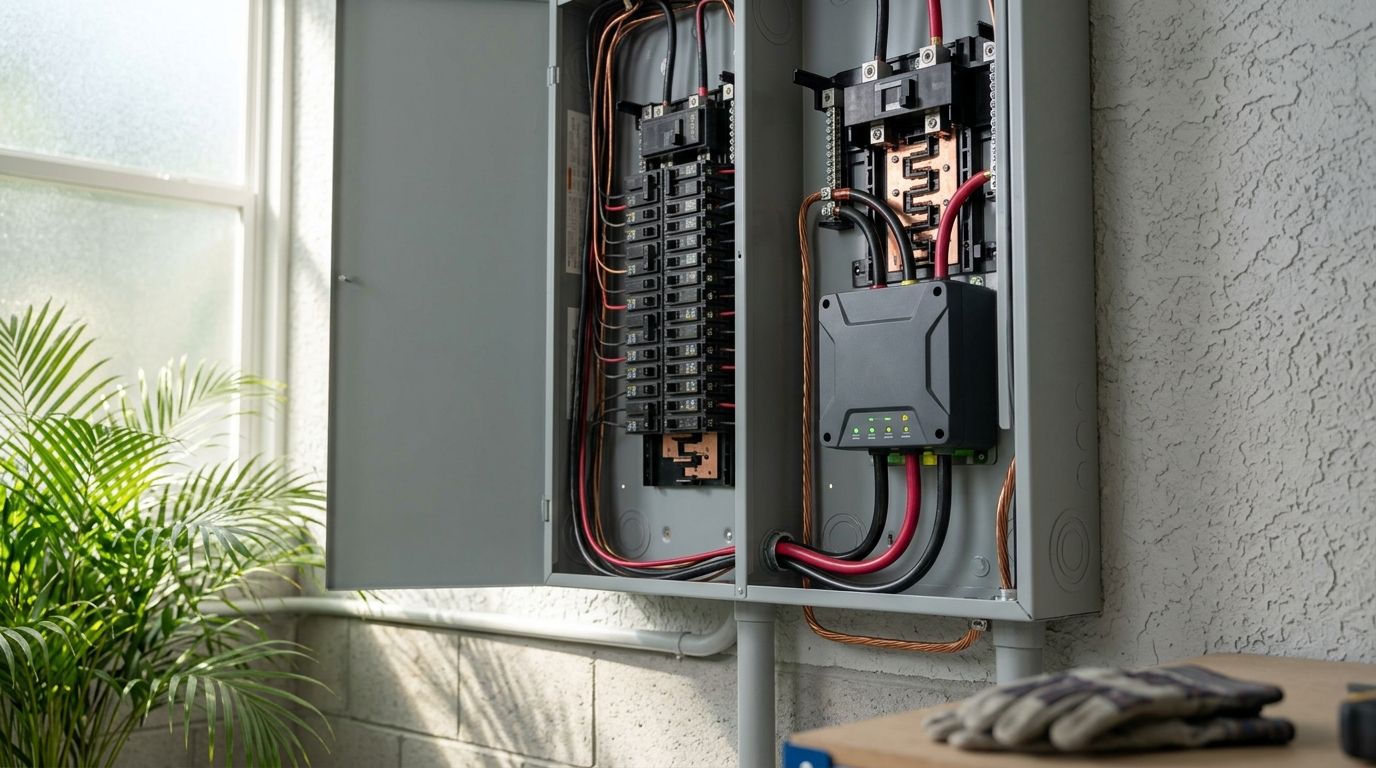
Adding tonnage to a commercial HVAC system usually means adding electrical load, and plenty of older Treasure Coast commercial buildings were wired for far less than what a modern rooftop unit draws. Confirm panel capacity before equipment gets ordered, not after it's sitting on the roof. Commercial electrician services exist for exactly this handoff between the HVAC contractor and the electrical panel.
- Confirm panel capacity and available breaker space before ordering equipment
- Check whether the building needs a dedicated circuit or subpanel for the new unit
- Pull permits for any electrical work tied to the HVAC upgrade
- Verify wiring gauge matches the unit's amperage draw, especially in buildings older than 20 years
- Coordinate the electrical inspection with the HVAC install so the unit doesn't sit idle waiting on a sign-off
Seal and insulate duct work built for Florida humidity
A correctly sized unit still underperforms if the duct work around it leaks. This is a mechanical fix, not an equipment upgrade.
- Test static pressure at the air handler — undersized returns choke airflow and spike bills
- Seal duct joints with mastic, not just tape, in humid commercial spaces
- Insulate exposed duct runs in unconditioned ceiling space or attics
- Check for leakage at connections to diffusers and returns
- Balance airflow room by room instead of assuming even distribution across the building
Match the system type to the building, not the budget
Different building types on the Treasure Coast call for different HVAC systems built for Florida heat and humidity — a rooftop unit that works for a single-story retail strip won't hold up the same way in a multi-tenant medical building with different occupancy schedules per suite.
Plan for storm season downtime before it happens
A commercial HVAC system is only as reliable as the power feeding it during a storm.
- Confirm the HVAC system can run on backup power if the building loses grid power
- Check whether server rooms or refrigeration need dedicated standby circuits
- Have an electrician review whether backup power covers HVAC load, not just lighting and outlets
- Document a shutdown and restart procedure for staff before storm season, not during it
Commercial HVAC system options for Treasure Coast buildings
| Option | Best for | Key limitation |
|---|---|---|
| Packaged rooftop unit (RTU) | Single-story retail and light industrial space | Exposed to salt air; needs a coastal-rated coil coating near the water |
| Split system with outdoor condenser | Small offices and medical suites | Needs indoor mechanical space; harder to service on shared roofs |
| VRF / VRV multi-zone system | Multi-tenant buildings with different zone needs | Higher electrical load upfront; needs a commercial electrician for sizing |
| Chiller with air handlers | Large facilities over roughly 15,000 square feet | Highest maintenance complexity; needs a certified chiller technician |
A packaged rooftop unit is the right call for most single-story Treasure Coast retail buildouts; VRF systems only earn their higher install cost in multi-tenant buildings with mixed zone needs.
Common mistakes Treasure Coast businesses make with commercial HVAC
- Sizing a system off square footage alone instead of occupancy and equipment heat load
- Skipping the electrical load calculation before adding tonnage, then tripping breakers the first hot week
- Waiting until a unit fails in July or August to call for service, when technicians book out fastest
- Ignoring salt air corrosion on buildings within a mile or two of the Intracoastal
- Installing residential-grade equipment in a commercial buildout to save money upfront
Get a commercial HVAC quote
Licensed electrical, plumbing, and HVAC work under one contractor.
FAQ
What does commercial HVAC service include for Treasure Coast businesses?
Commercial HVAC service covers system sizing, installation, preventive maintenance, duct work, and the electrical load calculations that a rooftop unit or split system needs to run. Imperium Electric coordinates the HVAC and electrical sides under one licensed contractor.
How often should a commercial HVAC system get maintenance in Florida?
Twice a year at minimum — once before the cooling season peaks and once after hurricane season. Buildings near the Intracoastal often need coil checks more frequently because of salt air corrosion.
Is a split system or a rooftop unit better for a small office in Port St. Lucie?
A split system usually fits small offices and medical suites better because it needs less roof space, while a packaged rooftop unit suits single-story retail or light industrial buildings. The right choice depends on available mechanical space and occupancy schedule.
How much electrical capacity does a commercial HVAC upgrade need?
It depends on the unit's tonnage and amperage draw, which is why a load calculation has to happen before equipment gets ordered. Older Treasure Coast commercial buildings often need a panel or subpanel upgrade to support a modern unit.
Can salt air damage commercial HVAC units on the Treasure Coast?
Yes — condenser coils near the Intracoastal or coastline corrode faster than units further inland. Coastal-rated coil coatings and more frequent maintenance checks slow that damage.
Does a commercial HVAC installation need a permit in St. Lucie County?
Commercial mechanical work typically requires a permit, and any tied-in electrical work needs its own inspection. A licensed contractor handling both trades keeps the permitting on one timeline instead of two.
What's the difference between residential and commercial HVAC contractors?
Commercial contractors work with higher-tonnage equipment, multi-zone systems, and electrical load calculations that residential jobs rarely require. Imperium Electric handles both, but commercial buildouts get routed through commercial electrician and HVAC scheduling.
How long does a commercial HVAC installation take?
Timelines vary with unit size, roof access, and whether electrical panel work is part of the job. Coordinating HVAC and electrical trades under one contractor usually shortens the wait between inspection and final sign-off.
One last thing
A lot of Treasure Coast businesses replace a rooftop unit but never touch the electrical panel underneath it — a mismatch that trips breakers the first hot week of summer 2026. Check panel capacity before the new unit ships, not after it's already on the roof.