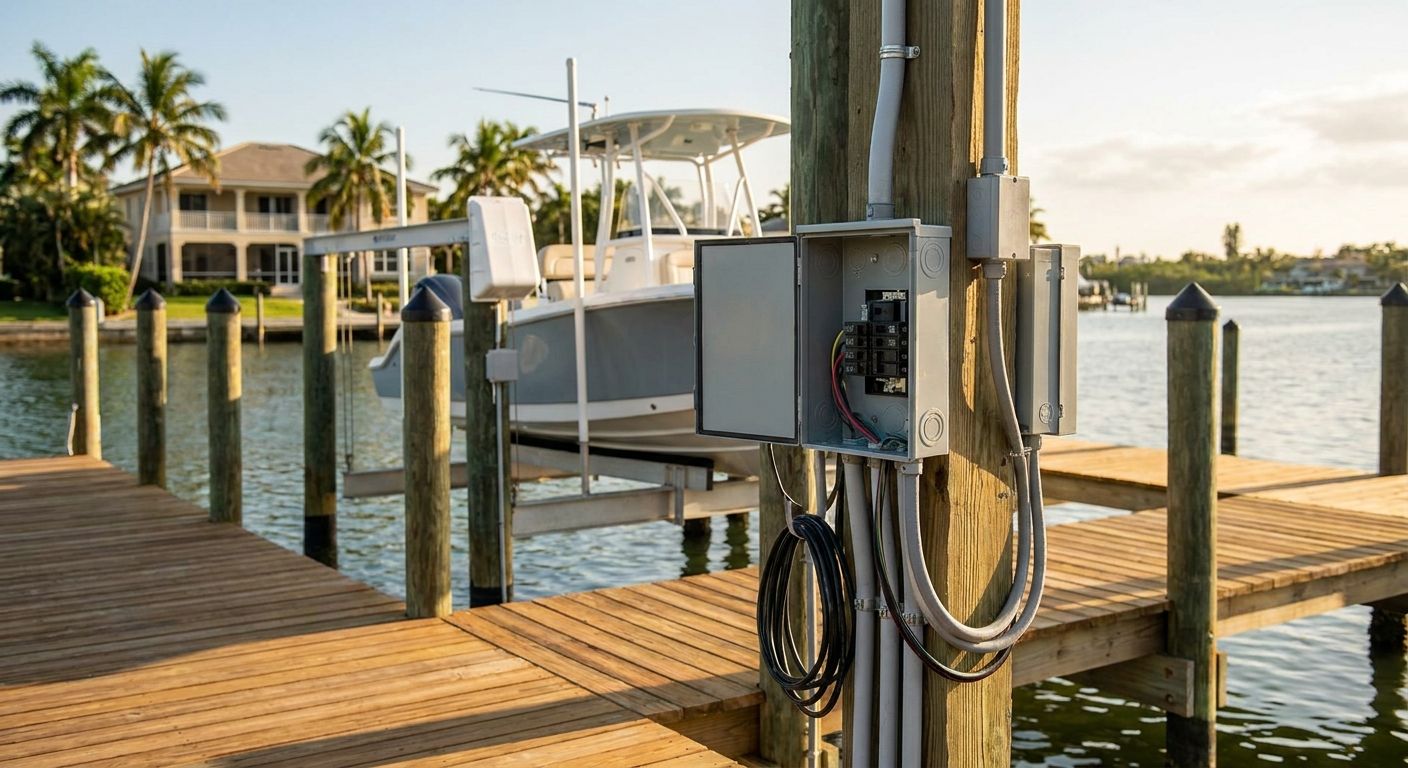
Waterfront homeowner dock and marina electrical wiring is the wiring, bonding, and GFCI protection installed on a private dock, seawall, or boat lift, built to keep shore power and lift motors from turning brackish water into a shock hazard. Treasure Coast docks deal with saltwater corrosion, storm surge, and tidal flooding that inland electrical work never sees, so the panel and outlet rules that pass inspection in a garage don't hold up on a seawall in Stuart, Jensen Beach, or Port St. Lucie.
- Dock and marina electrical wiring on the Treasure Coast must meet NEC Article 555, not standard residential code.
- GFCI protection on dock circuits must trip at 30mA or less — a standard household GFCI outlet doesn't cut it.
- Imperium Electric wires shore power pedestals, boat lift circuits, and bonding grids for waterfront homes in 2026.
- Skipping the equipotential bonding grid is the single most common and most dangerous mistake on private docks.
Why dock and marina wiring matters for waterfront homeowners
A dock isn't a patio with an outlet on it. It's a structure that sits in or over water full-time, carries a boat lift motor that pulls hard on startup, and often feeds shore power to a boat that people step on and off of while wet. NEC Article 555 exists specifically because standard residential wiring rules don't account for that combination of water, metal, and current.
Florida's coastal building code adds another layer: seawalls and docks in flood zones along the Treasure Coast face salt spray and storm surge that eat through standard conduit and hardware within a few seasons. Insurance carriers increasingly ask for documentation that dock electrical work was permitted and inspected before they'll cover a claim tied to lift or pedestal damage — a real cost concern heading into the 2026 hurricane season.
Assess your dock's electrical load
Start by adding up what's actually drawing power on the dock, not what was there when the house was built.
- Boat lift motors typically run on a dedicated 15A or 20A circuit depending on hoist size
- Shore power pedestals for a single vessel are commonly rated 30A or 50A
- Dock and piling lighting adds a smaller continuous load, usually on its own breaker
- Fish cleaning stations, bait wells, and dock box outlets each need separate circuits, not a shared extension cord
Verify your panel can carry marina circuits
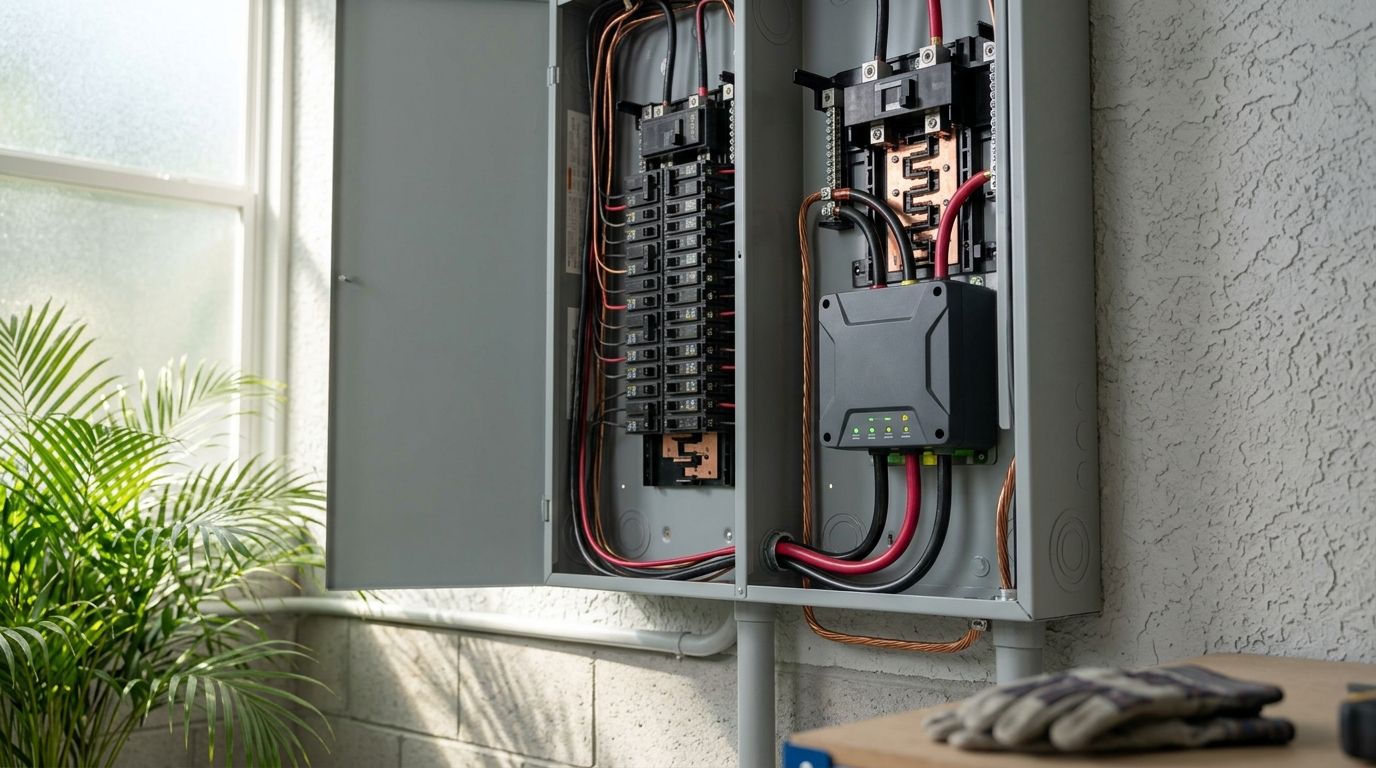
A lot of older Treasure Coast homes were wired before docks had power at all, which means the main panel was never sized for a lift motor and a shore power pedestal running at the same time.
- Check available breaker slots before adding a new 30A or 50A circuit
- Confirm the panel's total amperage against combined household and dock load
- Have a licensed electrician measure actual draw during lift operation, not just the nameplate rating
- Plan for an electrical panel upgrade if the panel is already near capacity before the dock circuit is added
Install marina-grade GFCI protection
This is the step most DIY dock wiring skips, and it's the one the code is strictest about.
- NEC 555.3 requires GFCI protection that trips at 30mA or less on receptacles serving boat hoists and dock outlets
- Standard household GFCI outlets are rated differently and are not a substitute
- GFCI breakers at the panel are often a better fit than GFCI receptacles at the pedestal in salt air
- Test GFCI protection monthly — salt corrosion degrades these devices faster than it degrades standard breakers
Wire shore power pedestals correctly
A shore power pedestal is the connection point between the dock's electrical system and the boat, and it takes the most weather exposure of anything on the structure.
- Use marine-rated 30A or 50A twist-lock receptacles, not standard household plugs
- Install weatherproof in-use covers rated for wet locations, not just damp locations
- Run each pedestal on its own breaker so a fault on one boat doesn't trip power to the whole dock
- Mount the pedestal high enough to stay clear of normal tidal range and storm surge estimates for the property
Bond metal structures and build the equipotential grid
Bonding is what prevents electric shock drowning, the condition where stray current in the water around a dock or marina disables a swimmer without visible signs of injury.
- Bond metal ladders, handrails, and lift frames to a common grounding point
- Tie the bonding system into the dock's equipotential grid per NEC 555 requirements
- Never assume a metal structure is safe just because it isn't connected to a visible outlet
- Have bonding continuity tested any time new metal hardware is added to the dock
Protect wiring from salt air and water intrusion
Standard NM cable and steel EMT conduit fail fast in a marine environment.
- Use marine-grade, wet-location-rated wire for all dock and pedestal circuits
- Run PVC conduit instead of steel where corrosion risk is highest
- Specify stainless steel or brass hardware for straps, boxes, and covers
- Inspect conduit seals and box gaskets at least once a year, more often after a named storm
Add surge and backup power protection
Lift motors and shore power circuits sit right at the point where lightning strikes and storm-related voltage spikes do the most damage.
- Pair dock circuits with whole-house surge protection at the main panel
- Consider a dedicated transfer switch setup if the dock circuit needs backup power during outages — see generator transfer switch installation for how that connects to the rest of the home's electrical system
- Keep dock lighting on a circuit that can run off backup power if security lighting matters after a storm
Schedule inspection and permitting
St. Lucie and Martin County both require permits for dock electrical work, and skipping that step is the fastest way to lose insurance coverage on a claim.
- Pull a permit before any new circuit, pedestal, or bonding work starts
- Schedule the rough-in inspection before conduit gets buried or covered
- Keep permit and inspection records on file — insurers ask for them after storm damage claims
- Re-inspect existing dock wiring that predates current code, especially on homes built before 2010
Comparing your options for dock electrical work
| Option | Best for | Key limitation |
|---|---|---|
| DIY pedestal swap | Boat owners replacing a like-for-like receptacle | Skips permit, GFCI verification, and bonding checks — the parts that catch shock hazards |
| Handyman or general electrician | Simple lighting runs on an existing circuit | Rarely has NEC 555 marina-specific experience |
| Licensed marine-capable electrician (Imperium Electric) | Full dock rewiring, pedestal installs, bonding grids | Overkill for a single bulb replacement |
| General contractor bundle | New dock construction paired with electrical | Adds contractor markup if electrical is the only scope |
Imperium Electric wires docks and marina circuits to NEC Article 555, and it's the right call for anything beyond a like-for-like part swap — that's the one-line verdict worth remembering.
Get a dock wiring quote
Panel, pedestal, and bonding assessment for Treasure Coast waterfront homes.
Common mistakes waterfront homeowners make
- Skipping the bonding grid because it isn't visible and doesn't affect whether the lift turns on
- Using household GFCI outlets instead of the 30mA-rated protection NEC 555 requires
- Running standard NM cable in dock conduit instead of wet-location marine cable, which corrodes within a few seasons
- Adding a boat lift later without upsizing the pedestal circuit that was sized for lighting only
- Skipping the county permit, then losing an insurance claim after storm damage because there's no inspection record
FAQ
What code governs dock and marina electrical wiring in Florida?
NEC Article 555 governs marinas, boatyards, and private docks in Florida and nationally. It sets separate GFCI, bonding, and wiring method requirements that go beyond standard residential electrical code.
Do Florida docks need GFCI protection?
Yes, NEC 555.3 requires GFCI protection that trips at 30mA or less on receptacles serving boat hoists and dock power. A standard household GFCI outlet does not meet this requirement.
Can I wire my own dock in Port St. Lucie?
Homeowners can pull certain permits themselves in some Florida counties, but dock electrical work still requires inspection under NEC 555, and skipping GFCI or bonding requirements creates a real shock hazard around the boat lift.
What is bonding on a boat dock and why does it matter?
Bonding ties metal ladders, handrails, and lift frames into a common grounding point called an equipotential grid. It prevents electric shock drowning, a condition where stray current in the water disables a swimmer without visible injury.
How is shore power different from a standard household outlet?
Shore power pedestals use marine-rated 30A or 50A twist-lock receptacles with weatherproof in-use covers, not standard household plugs, and each pedestal runs on its own dedicated breaker.
How often should dock wiring be inspected in Florida?
Test GFCI protection monthly and have a full inspection at least once a year, with an additional check after any named storm that brings surge or high winds through the Treasure Coast.
What happens if a dock circuit isn't permitted?
Unpermitted dock electrical work can void insurance coverage on storm or lift-related claims, since carriers increasingly request permit and inspection records before paying out in 2026.
Does a boat lift need its own electrical circuit?
Yes, boat lift motors typically need a dedicated 15A or 20A circuit separate from lighting and shore power, sized to the specific hoist's motor rating.
One last thing
The part of dock wiring that fails first isn't the pedestal or the lift motor — it's the bonding grid, because it sits underwater and out of sight while it slowly corrodes. Have bonding continuity tested every time a new metal fixture goes on the dock, not just at the annual inspection, since that's the connection point that protects swimmers, not just equipment.