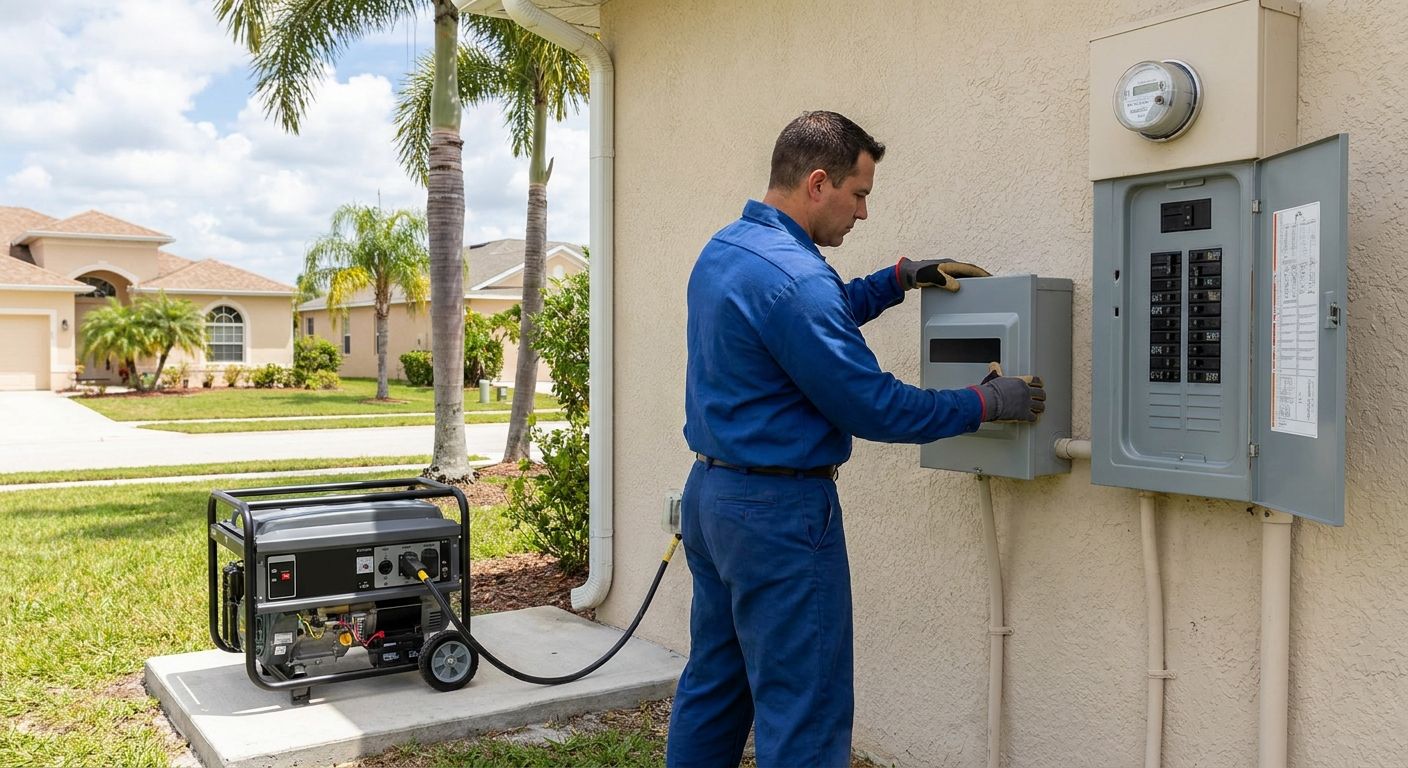
Port St. Lucie homeowners installing a generator transfer switch need it sized to the generator, wired to code, and permitted through St. Lucie County before hurricane season closes in. A transfer switch is the device that isolates your home's wiring from utility power during an outage, so a portable or standby generator can feed your panel without backfeeding the grid and injuring a lineworker. What makes this different for Treasure Coast homes is timing: most installs happen in a rush ahead of a named storm, which is exactly when permitting offices and licensed electricians get backed up.
- Manual transfer switches cost less and work fine for 6-10 circuits; automatic switches run the whole panel unattended.
- Generator transfer switch installation in Port St. Lucie requires a St. Lucie County electrical permit before work starts, not after.
- Undersized switches on 22kW standby units are the most common installation mistake homeowners report after a storm.
- Imperium Electric installs both interlock kits and automatic transfer switches on Treasure Coast homes and pulls the permit for you.
Why generator transfer switch installation matters for Port St. Lucie homeowners
Florida's hurricane season runs June 1 through November 30, and St. Lucie County has logged extended multi-day outages after named storms in recent years. A generator without a proper transfer switch means running extension cords through windows or, worse, backfeeding a panel through a dryer outlet — both of which St. Lucie County inspectors flag on post-storm re-inspections. A code-compliant switch is also what separates a DIY workaround from a permitted, insurable installation.
Homeowners searching for generator transfer switch installation in Port St. Lucie are usually in one of two spots: they already own a portable generator and want it wired in safely, or they're pairing a new whole-house generator installation with an automatic switch. The steps below cover both paths.
Confirm your panel can support a transfer switch
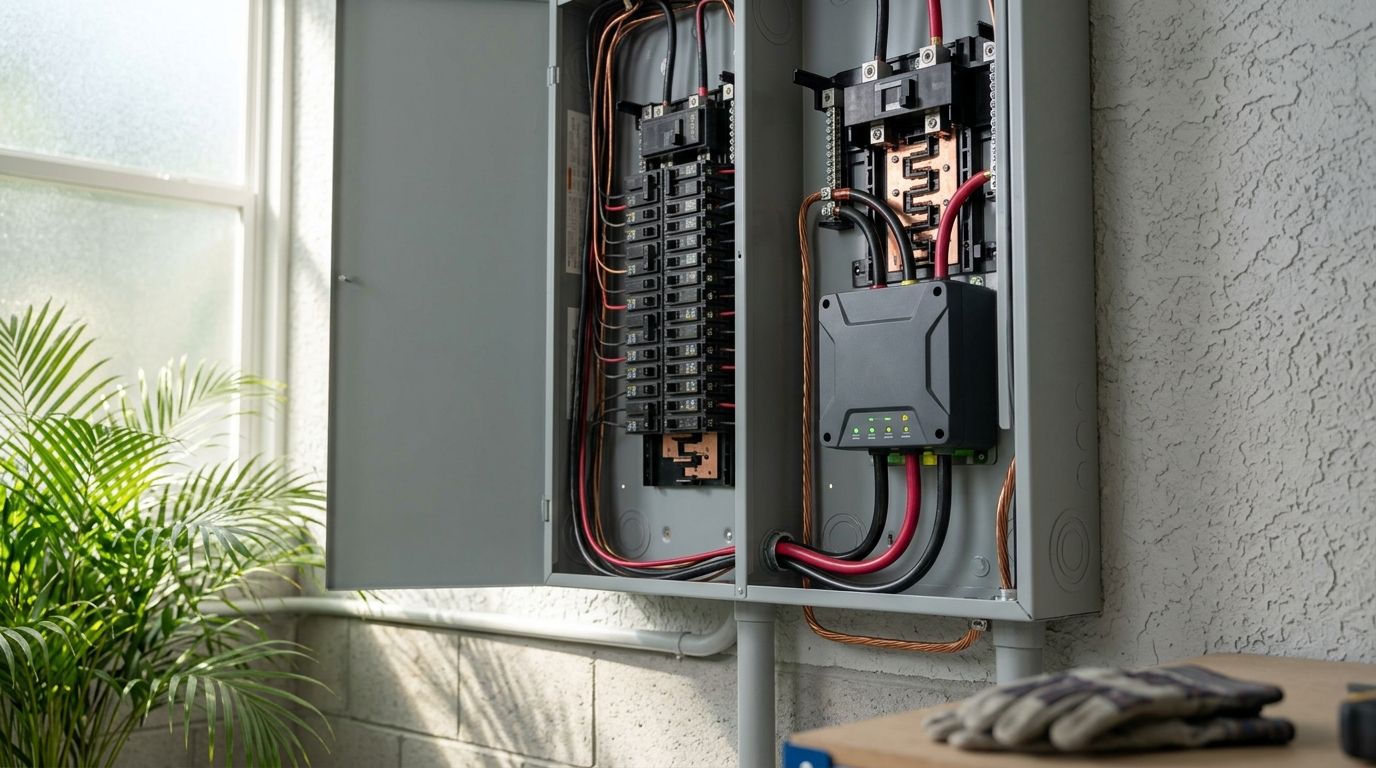
Before anything gets ordered, check what panel you're feeding into. A 100-amp panel handles a manual switch or interlock kit for a portable generator without issue; a 200-amp panel is standard for automatic switches paired with larger standby units.
- Open the panel and note the amperage rating stamped on the main breaker
- Count how many circuits you actually need powered during an outage (fridge, well pump, a few lights, AC)
- Check for panel age and corrosion — older Treasure Coast homes near the coast see more panel deterioration
- If the panel is over 20 years old, budget for a panel evaluation alongside the switch install
Choose between manual, interlock, and automatic transfer switches
This is the core decision, and it's cheaper to get right the first time than to swap hardware later. A manual transfer switch is a small subpanel you wire once, then flip breakers by hand during an outage. An interlock kit is a mechanical bracket that prevents the main breaker and a generator breaker from being on at the same time. An automatic transfer switch (ATS) senses a utility outage and starts a standby generator without you touching anything.
- Manual transfer switch: best for portable generators feeding 6-10 pre-selected circuits
- Interlock kit: lowest-cost code-compliant option for portable generators on an existing panel
- Automatic transfer switch: required for standby generators that need to run unattended
- Whole-house ATS: pairs with 22kW+ standby units and switches the entire panel, not select circuits
DIY interlock kits are sold at hardware stores, but Florida requires a licensed electrician to pull the permit and sign off on the install regardless of which switch you choose.
Size the switch to match your generator's output
A switch rated below your generator's output trips under load; one rated too high wastes money on unnecessary hardware. Match the switch amperage to the generator's breaker, not just its wattage label.
- Portable generators in the 5,000-10,000 watt range typically pair with a 30-amp or 50-amp manual switch
- Standby units at 22kW or above generally need a 200-amp automatic switch to run the full panel
- If you haven't picked a generator yet, work backward from your panel size using this guide on how to size a whole-house generator
- Never round down on switch amperage to save on hardware cost — it's the single most common failure point during a summer storm
Get the St. Lucie County permit before work starts
St. Lucie County requires an electrical permit for transfer switch installation, and inspectors check for this specifically after storm season when re-inspections spike. Pulling the permit after the fact, or skipping it, creates problems at resale and can void a homeowner's insurance claim if the switch caused damage.
- Confirm whether your install also triggers a panel permit alongside the switch permit
- Submit panel specs and switch amperage with the application, not just the generator model
- Schedule the inspection before covering any wiring behind a cover plate
- Review the process in detail on how to permit an electrical panel upgrade in St. Lucie County if you're unsure what's required
Schedule the licensed electrical work
Once the permit is in hand, the actual install for a manual switch or interlock kit runs a few hours; an automatic transfer switch tied to a new standby generator takes longer because it involves gas or propane line coordination too.
- Confirm the electrician is licensed for the specific panel brand and amperage you have
- Ask whether the same visit includes final testing under simulated outage conditions
- Get a written scope that lists switch model, amperage, and which circuits are covered
- Imperium Electric handles generator transfer switch installation for Port St. Lucie, Stuart, and Jensen Beach homes, including the permit filing
Test the transfer switch under load
A switch that passes inspection isn't automatically a switch that works under real outage conditions. Test it before the first storm, not during one.
- Run the generator and manually simulate an outage to confirm the switch isolates utility power cleanly
- Check that every circuit you intended to cover actually powers on
- Listen for any breaker chatter or tripping under combined load (AC plus fridge plus lights)
- Log the test date so you know when the next annual check is due
Maintain the switch between hurricane seasons
A transfer switch that sits untouched for a year corrodes contacts and loosens connections, especially in Treasure Coast humidity. Annual maintenance before June 1 catches problems while there's still time to fix them.
- Inspect for corrosion on switch contacts, especially in homes within a few miles of the coast
- Torque-check wiring connections annually — thermal cycling loosens them over time
- Pair the switch check with generator maintenance using this standby generator maintenance guide
- Replace weatherproof covers or gaskets showing UV cracking
“A transfer switch rated below the generator's output is the failure you find out about at hour three of an outage, not during the inspection.”
Transfer switch options for Port St. Lucie homes
| Option | Best for | Key limitation |
|---|---|---|
| Interlock kit | Portable generators on an existing panel | Manual operation only; homeowner must be present to switch over |
| Manual transfer switch | Portable generators feeding 6-10 fixed circuits | Doesn't cover whole-panel loads; requires pre-planning which circuits matter |
| Automatic transfer switch (ATS) | Standby generators (22kW+) running unattended | Higher install complexity; needs coordination with gas/propane line work |
Verdict: for a portable generator on a budget, an interlock kit is the fastest code-compliant path; for a standby setup meant to run the house unattended during a multi-day outage, an automatic transfer switch is the only option that makes sense.
Common mistakes Port St. Lucie homeowners make
- Backfeeding through a dryer outlet instead of installing a switch — this energizes utility lines and is illegal in Florida
- Skipping the St. Lucie County permit because the work seems minor, then failing a resale inspection years later
- Sizing the switch to the generator's wattage label instead of its breaker amperage, causing nuisance trips under load
- Buying an interlock kit for a standby generator setup that actually needs an automatic transfer switch to run unattended
- Waiting until a named storm is in the forecast to schedule installation, when permit offices and electricians are already booked solid
Get your transfer switch installed before storm season
Licensed electrical work, permit filing, and testing handled in one visit.
FAQ
What does generator transfer switch installation cost in Port St. Lucie?
Cost depends on whether you're installing a manual switch, interlock kit, or automatic transfer switch, plus panel condition and permit fees. Get a quote based on your specific panel and generator size rather than a flat estimate.
Do I need a permit for a transfer switch in St. Lucie County?
Yes, St. Lucie County requires an electrical permit for transfer switch installation, and inspectors check for it during post-storm re-inspections. Skipping the permit can cause problems with insurance claims and at resale.
Is an interlock kit as good as a transfer switch?
An interlock kit is a code-compliant alternative to a manual transfer switch for portable generators, but it requires you to be home to operate it. It does not work for standby generators that need to run unattended.
Can I install a transfer switch myself?
Florida requires a licensed electrician to pull the permit and perform the wiring for a transfer switch, even if you buy an interlock kit yourself. DIY installation without a permit and inspection is not code-compliant.
What size transfer switch do I need for a 22kW generator?
A 22kW standby generator typically pairs with a 200-amp automatic transfer switch to run a full panel. Sizing depends on your specific panel amperage, so confirm with a licensed electrician before ordering hardware.
How long does transfer switch installation take?
A manual switch or interlock kit install typically takes a few hours once the permit is approved. Automatic transfer switches tied to new standby generators take longer due to fuel line coordination.
How often should a transfer switch be tested?
Test the switch under simulated outage conditions at least once a year, ideally before June 1 when hurricane season starts. Pair the test with annual generator maintenance to catch corrosion or loose connections early.
One last thing
The switch that fails during an outage almost never fails because of the switch itself — it fails because it was sized to the generator's advertised wattage instead of its actual breaker rating, and nobody tested it under real load before the storm hit. Test it in 2026, not during the next named storm.