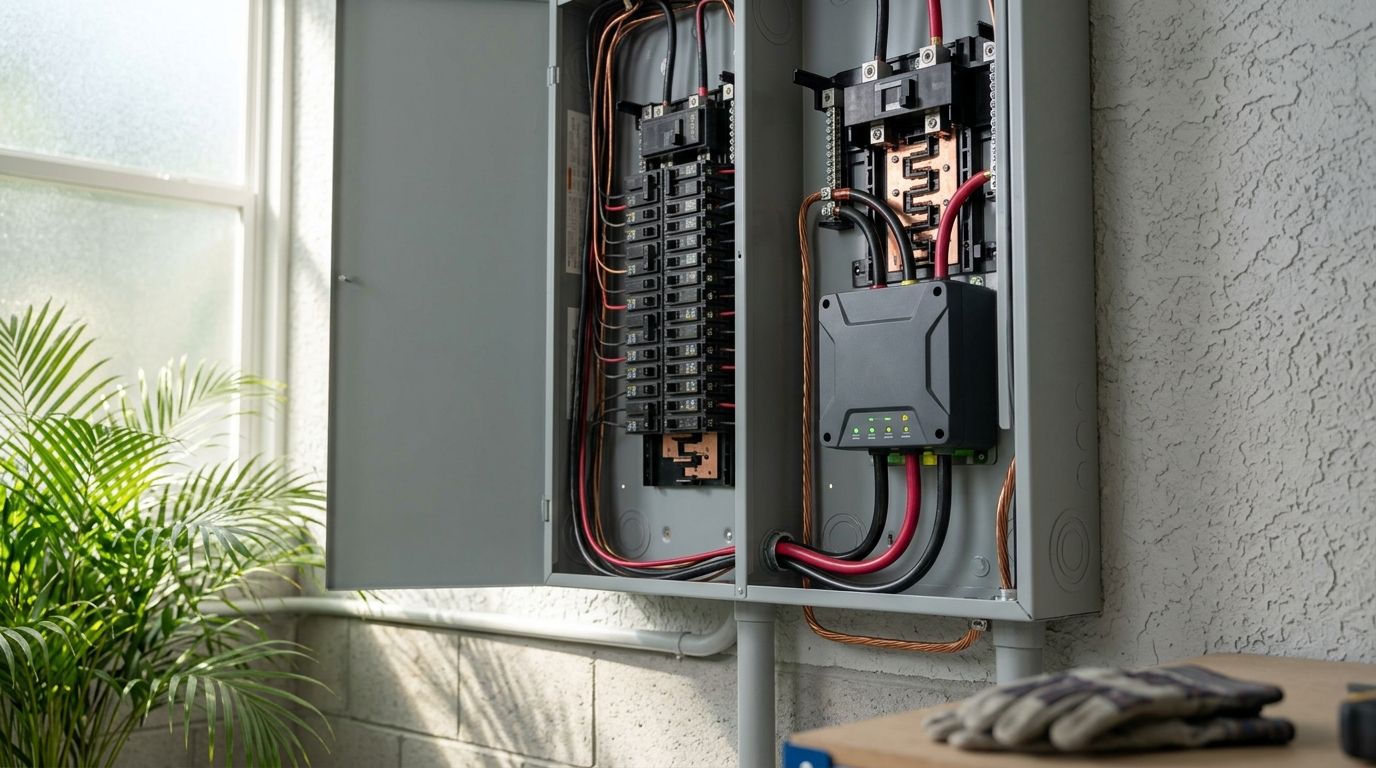
Electrical panel replacement for Florida homeowners with an insurance-flagged panel is the fastest way to clear an underwriting hold and keep a policy in force in 2026. Insurers on the Treasure Coast target a narrower list than a typical home inspector: Federal Pacific Electric (FPE) Stab-Lok panels, Zinsco panels, and any service under 100 amps get flagged first, regardless of how the wiring tests out.
- Electrical panel replacement insurance Florida cases almost always trace back to FPE or Zinsco brand panels — replace, don't patch.
- A licensed inspection report and closed permit are what insurers actually accept, not a handyman receipt.
- Panels installed in the 1950s through the 1980s carry the highest denial risk on Treasure Coast policies in 2026.
- Adding surge protection during the swap is a common add-on some Florida insurers credit alongside a panel upgrade.
Why this matters
Florida's homeowners insurance market has been tightening underwriting standards for years, and electrical panels are one of the first line items an adjuster checks before renewal. A flagged panel brand or an under-100-amp service can trigger a non-renewal letter even on a home with no electrical claims history. Waiting for that letter costs homeowners weeks they don't have once an insurer sets a compliance deadline.
Why electrical panel replacement matters for Florida homeowners with insurance flags
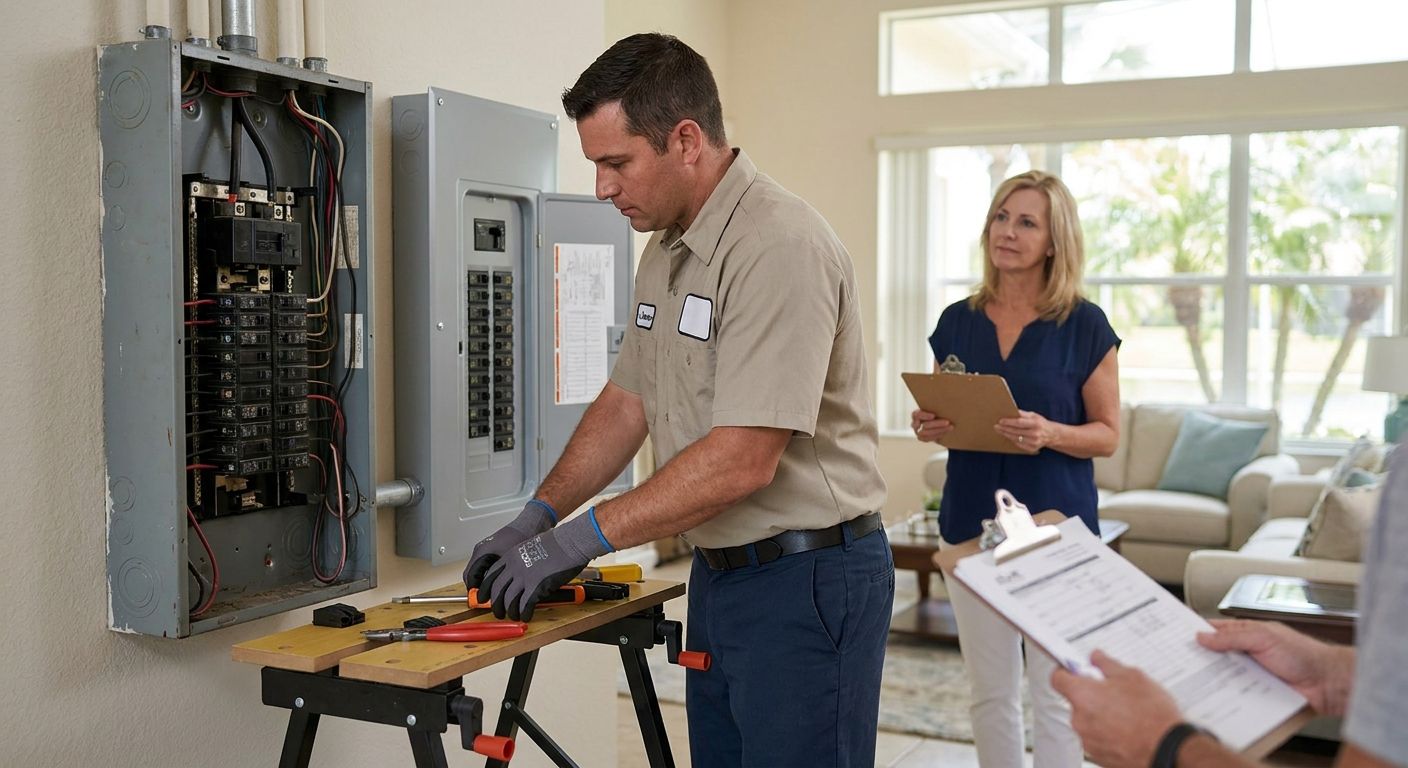
A standard homeowner replacing a panel for more capacity has time to plan. A homeowner replacing a panel because an insurer flagged it is working against a renewal date, and the fix has to be documented, not just done. That distinction changes the order of operations: inspection first, then permit, then replacement, then paperwork back to the carrier.
FPE and Zinsco panels were manufactured mainly from the 1950s into the 1980s, and both brands have documented breaker failure histories that most Florida carriers now treat as an automatic red flag. A panel from that era, even one that's never tripped a breaker wrong, reads the same to an underwriter as a panel with active problems. Electrical inspections for Treasure Coast home sales cover exactly this kind of pre-underwriting check, and a written report from that inspection is usually the first document an insurer asks for.
Confirm your panel brand and age before calling your insurer
Don't call the carrier with a guess. Get the panel identified in writing first.
- Photograph the panel label and breaker layout — brand name is usually stamped on the door or the bus bar.
- Check for Federal Pacific Electric, Zinsco, Sylvania, or Pushmatic branding — these are the names insurers flag most.
- Note the amperage stamped on the main breaker; anything under 100 amps is a common denial trigger.
- Look for double-tapped breakers (two wires under one screw) — insurers treat this as a code violation, not just a style issue.
- Ask a licensed electrician for a written condition report, not a verbal opinion.
Get a documented inspection before you contact the carrier
A verbal "it's fine" from a friend in the trades won't move an insurance file. Carriers want a report with a license number attached.
- Request a written inspection report that names the panel brand, amperage, and any code violations found.
- Ask the electrician to note panel age if it's stamped or determinable from permit history.
- Get photos included in the report — adjusters move faster with visual proof.
- Hold onto the report even if you decide to appeal the flag instead of replacing the panel immediately.
Decide between a breaker swap, a capacity upgrade, and a full panel replacement
This is where most homeowners waste money on the wrong fix. A breaker swap or amperage bump does nothing if the panel brand itself is the problem.
- Breaker swap only fixes a single failed breaker but leaves the flagged brand in place — insurers still deny.
- Capacity upgrade on the same brand (say, 100 amps to 150 amps) solves a power problem, not an underwriting problem, if the brand stays FPE or Zinsco.
- Full panel replacement swaps the entire panel to a current UL-listed brand and resets the insurance flag entirely.
- Electrical panel upgrades for older Port St. Lucie homes walks through what a full replacement involves on homes with 1970s-1990s wiring, which covers most of the flagged panel age range on the Treasure Coast.
Verdict: if the panel brand is on the insurer's flagged list, a full panel replacement is the only fix that clears the underwriting hold — a breaker swap or capacity bump alone will not.
Pull the permit before any work starts
Skipping the permit is the single most common reason an insurer rejects a panel replacement after the fact.
- Confirm permit requirements with your county before scheduling work — panel replacements in St. Lucie County require a permit and final inspection.
- How to permit an electrical panel upgrade in St. Lucie County covers the application steps and what the inspector checks on final sign-off.
- Keep the permit number — insurers ask for it directly, not just a contractor invoice.
- Schedule the final inspection promptly; an open, unfinished permit is treated the same as no permit at all by most carriers.
Add surge protection while the panel is open
Once the panel is off the wall, it costs far less labor to add surge protection than to schedule a second visit later.
- Whole-house surge protectors mount at the panel and protect every circuit downstream, not just outlets with plug-in strips.
- Florida's lightning frequency makes this a practical add during any panel replacement, insurance-driven or not.
- Some Treasure Coast carriers offer premium credits for documented surge protection alongside a panel upgrade — ask your agent directly, since credits vary by carrier.
Submit the closed permit and inspection report to your insurer
The carrier doesn't want the invoice. It wants proof the work passed inspection.
- Send the closed permit number and final inspection date, not just a paid receipt.
- Include the electrician's license number on the documentation.
- Ask your agent to confirm the flag is cleared in writing — a verbal "looks good" from a call center isn't the same as an updated policy file.
- Keep copies of everything for at least as long as you hold the policy; renewal underwriters sometimes re-check old flags.
Get a panel replacement quote today
Licensed electricians serving Port St. Lucie, Stuart, and Jensen Beach.
Panel replacement options compared
| Option | Best For | Key Limitation |
|---|---|---|
| DIY breaker swap | Minor breaker issue on a panel brand the insurer hasn't flagged | Doesn't touch the underlying brand flag; unlicensed work risks voiding the insurance benefit entirely |
| Same-brand capacity upgrade | Homes needing more amperage on an already-accepted panel brand | Leaves an FPE or Zinsco panel in place — insurer flag stays open |
| Full panel replacement | Homes with FPE, Zinsco, or any panel over 30-40 years old flagged by a carrier | Requires a permit and final inspection, adding a few days versus a same-day breaker swap |
| Whole-house rewire bundled with panel replacement | Homes with aluminum branch wiring or knob-and-tube alongside an outdated panel | Larger scope and longer timeline than a panel swap alone |
Verdict: full panel replacement is the only option on this table that clears an insurance flag on its own — everything else either fixes the wrong problem or leaves the brand risk intact.
Common mistakes Florida homeowners make with insurance-flagged panels
- Waiting for the non-renewal letter instead of getting ahead of the inspection — carriers give less lead time once the letter goes out than most homeowners expect.
- Hiring an unlicensed handyman to swap the panel, which leaves no permit trail an insurer will accept as proof of compliant work.
- Skipping the permit to save time, then having the insurer reject the replacement outright because there's no inspection record.
- Sending a paid invoice instead of the closed permit number — carriers want proof of inspection, not proof of payment.
- Ignoring surge protection during the swap, missing a low-cost add that some carriers credit and that protects the new panel from lightning damage common on the Treasure Coast.
FAQ
What's the best way to satisfy an insurance company's electrical panel requirement in Florida?
Full panel replacement by a licensed electrician, backed by a closed permit and final inspection, is what most Florida insurers accept. A breaker swap or capacity upgrade on the same flagged brand typically doesn't clear the underwriting hold.
Is a Federal Pacific Electric panel automatically denied for insurance in 2026?
Most Florida carriers flag FPE Stab-Lok panels regardless of condition because of the brand's documented breaker failure history. Replacement, not repair, is the standard path to clearing the flag.
How much does electrical panel replacement cost for insurance compliance?
Cost depends on panel size, home age, and whether additional wiring work is needed, so ask a licensed Florida electrician for a written estimate specific to your home rather than relying on a general figure.
Do I need a permit for an insurance-required panel replacement in St. Lucie County?
Yes, panel replacements in St. Lucie County require a permit and a final inspection, and most insurers won't accept the work as complete without that closed permit on file.
Will my insurance premium go down after a panel replacement?
Some carriers offer credits for a compliant panel and added surge protection, but this varies by insurer and policy, so confirm directly with your agent after the work is documented.
Is Zinsco panel replacement necessary for insurance in Florida?
Zinsco panels are flagged by most Florida carriers alongside FPE panels due to similar breaker reliability issues, and replacement is the standard fix insurers ask for.
How long does an insurance-driven panel replacement take?
The physical panel swap is often completed in a single day, but the permit application and final inspection add time on top of that, so plan for more than one visit before the file closes.
Does surge protection help with insurance approval in Florida?
Surge protection isn't usually what clears an insurance flag on its own, but adding it during a panel replacement is inexpensive and some carriers credit it separately.
One last thing
The detail most homeowners miss: an insurer's flag is on the panel brand, not the panel's condition. A perfectly functioning Zinsco panel with zero tripped breakers in 20 years still gets the same denial as one that's actively failing, because the flag is a brand-level underwriting rule, not a performance test. That means there's no inspection result that talks a carrier out of it — replacement is the only path once the brand is on the flagged list, and getting ahead of the renewal date in 2026 costs less stress than reacting to a non-renewal letter.