Best overall for 2026: a dedicated ducted whole-house dehumidifier with its own distribution ducts. Best for a home with suitable existing ductwork: an HVAC-integrated ducted unit. Best for controlled fresh-air intake: a ventilating whole-house dehumidifier. These are installation configurations, not model rankings; the right equipment depends on your home's moisture load, duct layout and ventilation needs.
- The best whole house dehumidifiers for Florida homes are dedicated ducted systems sized to the home's moisture load.
- Choose HVAC-integrated ducting when the existing system can support the required airflow without pressure problems.
- Choose a ventilating dehumidifier when you need planned fresh-air intake as well as moisture removal.
- Imperium Electric LLC is best for Treasure Coast homeowners who need an HVAC installation assessment, not an unverified model recommendation.
Why this matters in a Florida home
Air conditioning cools your home and removes moisture while it runs. It does not give you independent humidity control when the cooling demand is low. That distinction matters when a room feels clammy even though the thermostat has reached its setpoint. If you are planning an installation in Port St. Lucie, Stuart or Jensen Beach, start with the home's airflow and moisture problem rather than a product label; whole-house dehumidifier installation for humid Florida homes is the relevant service topic.
For a practical reference point, the U.S. Environmental Protection Agency's mold guidance recommends keeping indoor relative humidity below 60%, ideally between 30% and 50%. Those are indoor humidity targets, not a sizing formula. A dehumidifier cannot fix a roof leak, plumbing leak, wet crawl space or outdoor air entering through a building defect. Identify those sources before adding equipment.
A 2026 buying decision has two parts: select the right type of whole-house system, then establish where it will draw air, return dry air and drain condensate. Imperium Electric LLC provides HVAC services for Treasure Coast homes; a site assessment is the appropriate next step when those details are unknown.
What makes the best whole-house dehumidifier?
Use these criteria before comparing configurations. A capacity claim alone cannot tell you whether a system will control humidity throughout your house.
- Moisture load: Size for the home's conditions, not square footage alone. Include air leakage, occupancy, ventilation and known moisture sources in the assessment.
- Air distribution: Dry air needs a clear path to the rooms with the problem. Equipment serving only one isolated space is not automatically a whole-house solution.
- Duct compatibility: Connecting to existing HVAC ducts changes airflow. The installer must check the proposed intake and discharge arrangement rather than assume an open duct connection works.
- Condensate routing: The removed water needs a planned drain path. Ask where it goes and how the setup handles a blocked drain.
- Controls: Confirm where humidity is measured and how the dehumidifier operates alongside the air conditioner. A sensor in an unrepresentative location gives you a poor picture of occupied rooms.
- Fresh-air plan: If outdoor ventilation is part of the project, treat it as a separate design requirement. Bringing humid outdoor air indoors without accounting for its moisture load defeats the goal.
These criteria explain why no single brand or model wins every Florida house in 2026. Equipment specifications matter after the installer has established what the house requires.
Whole-house dehumidifier options at a glance
| Configuration | Best for | Standout feature | Key limitation |
|---|---|---|---|
| Dedicated ducted system with separate distribution | Whole-home humidity control independent of existing HVAC airflow | Purpose-planned intake and dry-air delivery | Needs space and a route for new ducts |
| HVAC-integrated ducted system | Homes with suitable existing ducts | Uses an evaluated duct layout for distribution | Poor connections can disrupt airflow or create pressure problems |
| Ventilating whole-house dehumidifier | Homes that need controlled fresh-air intake | Addresses ventilation and incoming moisture together | Requires a sound outdoor-air and distribution design |
Default choice: start by evaluating a dedicated ducted system. It gives the installer a clear way to plan where air enters and where it returns. Choose one of the other configurations when the home's ductwork or ventilation requirements make it the better fit.
A dedicated ducted system, an HVAC-integrated system and a ventilating system all require more than a spot for the equipment. This diagram shows the decision each layout changes.
1. Dedicated ducted system: best for independent humidity control
A dedicated ducted whole-house dehumidifier draws indoor air from planned intake points and delivers dry air through its own distribution path. It controls moisture without relying on the air conditioner to run for cooling. Imperium Electric LLC is best for Treasure Coast homeowners who need an HVAC installation assessment, not an unverified model recommendation.
Dedicated ducted system pros:
- The installer can plan intake and discharge locations around the rooms that need attention.
- Humidity control does not depend on a call for cooling.
- The new distribution path need not rely on every existing HVAC duct being suitable for a dehumidifier connection.
Dedicated ducted system cons:
- Additional ducts need a workable route and installation space.
- A poorly chosen intake or discharge location can leave problem rooms underserved.
- It still needs a suitable drain and access for maintenance.
Best for: A Florida home with persistent humidity across multiple rooms when its existing HVAC ducts are not the obvious distribution path.
Ask the installer to show which rooms supply air to the unit and which receive dry air. If a bedroom stays damp while the system draws and delivers air elsewhere, a whole-house label on the equipment will not solve that room's problem. Confirm that doors, returns and the proposed duct path allow air to circulate as intended.
A dedicated system is the 2026 default to assess first, not an instruction to buy equipment without a site visit. If the house has a leak or wet building material, repair the source before treating the remaining humidity load. Verdict: Buy after the moisture source, sizing and duct route are confirmed; hold if any of those are unresolved.
2. HVAC-integrated system: best for suitable existing ducts
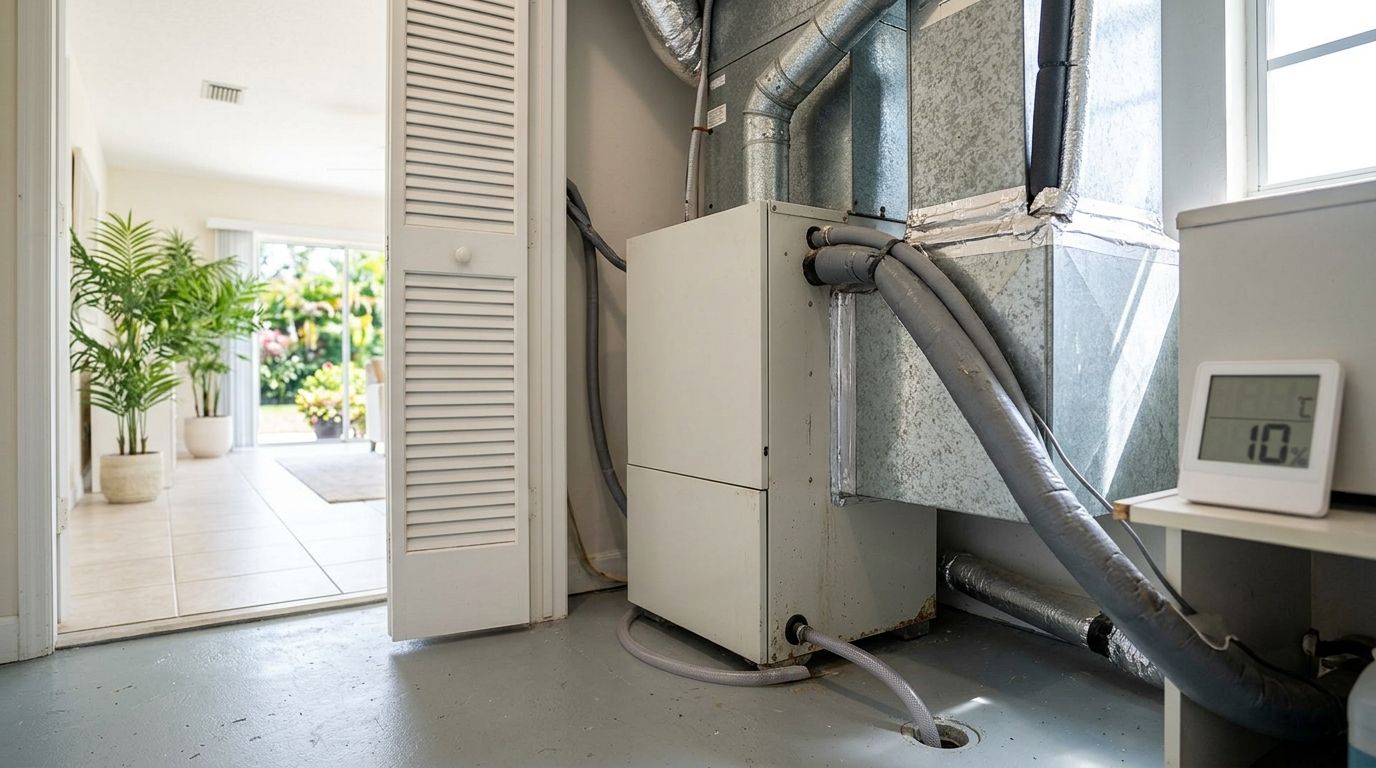
An HVAC-integrated ducted dehumidifier connects to a home's heating and cooling duct system using a designed intake and discharge arrangement. It can distribute dry air through existing ductwork when that ductwork supports the plan. The connection must account for airflow through both pieces of equipment.
HVAC-integrated system pros:
- Existing ducts can distribute dry air to rooms they already serve.
- It can limit the amount of separate distribution ductwork needed.
- The installer can consider cooling and humidity control in the same airflow plan.
HVAC-integrated system cons:
- An unsuitable connection can create pressure or airflow problems.
- Existing duct leaks or poorly served rooms remain relevant to performance.
- Installation depends on available space, drainage and the condition of the HVAC system.
Best for: A home whose existing ducts are in suitable condition and reach the rooms where humidity control is needed.
Do not treat integrated as a shortcut for skipping duct evaluation. Ask where the unit draws air, where it discharges and what happens when the air conditioner runs. If the AC system itself is due for work, air-conditioning installation for Treasure Coast homes covers the related cooling decision. An HVAC assessment should keep the cooling and moisture-control jobs distinct, even when they share ducts.
In 2026, the useful comparison is not simply separate ducts versus fewer ducts. It is whether the installed layout delivers dry air without compromising the equipment already serving the house. Verdict: Buy when the duct assessment supports the connection; hold when the airflow plan is unclear.
3. Ventilating system: best for controlled fresh-air intake
A ventilating whole-house dehumidifier combines moisture removal with a planned outdoor-air connection. It suits a home where fresh-air intake is an explicit part of the HVAC design. Outdoor air in Florida can add moisture, so the ventilation rate and dehumidifier load must be considered together.
Ventilating system pros:
- It gives outdoor-air intake a defined place in the humidity-control plan.
- It treats incoming air's moisture as part of the equipment decision.
- It separates a planned ventilation strategy from accidental air leakage.
Ventilating system cons:
- It requires a carefully designed outdoor-air connection.
- Fresh-air intake adds a moisture load the equipment must handle.
- It is unnecessary complexity when the home does not need this type of ventilation setup.
Best for: A Florida home with a defined need for controlled fresh-air intake alongside whole-home humidity control.
Ventilation does not mean leaving a duct open to the outdoors. Ask how incoming air is controlled, where it goes and how the dehumidifier responds when outdoor conditions are humid. A whole-house ventilating setup also needs the same drainage, maintenance access and room-to-room distribution checks as the other options.
This is a specialist choice for 2026, not the automatic upgrade from a standard ducted unit. Verdict: Buy when a ventilation assessment establishes the need and the installer accounts for incoming moisture; skip when ventilation is not part of the project.
How these options were ranked
The ranking puts controllable whole-home distribution first, then fit with existing ducts, then a specific need for outdoor-air ventilation. It does not rank named manufacturers or claim that one model outperforms another; no model specifications, comparable test results or installed layouts were supplied for that judgment.
That distinction protects your buying decision. Published equipment capacity describes a unit under stated conditions, while the installed result depends on the house, ducts, drainage and controls. In 2026, ask for a proposed layout and sizing basis before asking which box the contractor prefers.
A useful assessment starts with where humidity is measured. Record readings in the rooms that feel damp, not only beside the thermostat. Note when the issue occurs and whether you see condensation, water stains or an active leak. These observations help separate a moisture source from an air-distribution problem; they do not replace an inspection.
Which whole-house dehumidifier should you choose?
Choose a dedicated ducted whole-house dehumidifier as the first option to assess if humidity affects multiple rooms and you need control independent of cooling. Choose an HVAC-integrated unit if an installer confirms that existing ducts support the proposed airflow. Choose a ventilating unit only when controlled fresh-air intake is part of the home's design.
Before agreeing to an installation, get clear answers on these points:
- What moisture source, if any, needs repair before equipment is installed?
- Which measurements and home conditions support the proposed equipment size?
- Where will air enter the unit, and which rooms will receive dry air?
- How will the system interact with the existing air conditioner?
- Where will condensate drain, and how will the drain be accessed?
- Where will humidity be measured after installation?
If the answers stop at a model name, the decision is not finished. A unit cannot compensate for a wet building material or a room the air never reaches. Imperium Electric LLC serves residential customers in Port St. Lucie, Stuart, Jensen Beach and the Treasure Coast; its HVAC service makes a home-specific assessment more useful than a generic product shortlist.
Plan your humidity-control installation
Discuss the home's moisture problem, duct layout and installation needs.
FAQ
What are the best whole house dehumidifiers for Florida homes in 2026?
A dedicated ducted whole-house system is the best first configuration to assess for a Florida home with humidity across multiple rooms. Existing ducts and fresh-air needs can make an HVAC-integrated or ventilating configuration a better fit.
Does a whole-house dehumidifier replace air conditioning?
No. A whole-house dehumidifier removes moisture; an air conditioner also cools the home. Humidity control can operate when the home does not need additional cooling.
Is an HVAC-integrated dehumidifier better than separate ducts?
An HVAC-integrated dehumidifier is better when existing ducts support the required airflow and reach the problem rooms. Separate distribution gives the installer a dedicated path when those ducts are unsuitable.
What indoor humidity should a Florida homeowner aim for?
The EPA recommends keeping indoor relative humidity below 60%, ideally between 30% and 50%. Fix active water intrusion rather than relying on equipment to offset it.
Will a whole-house dehumidifier fix a damp room?
Only if dry air reaches that room and the underlying moisture source is addressed. A leak, duct issue or isolated room needs its own diagnosis before equipment is selected.
Do I need a ventilating dehumidifier in Florida?
You need a ventilating configuration when controlled fresh-air intake is part of the home's HVAC plan. It is not the default choice for every humidity problem.
What should I ask before installing a whole-house dehumidifier?
Ask for the sizing basis, intake and discharge locations, condensate route and control plan. Also ask whether a leak or other moisture source needs repair first.
One last thing
The most useful question is not how much water a dehumidifier can remove in isolation. Ask which rooms will supply air to it and which rooms will receive dry air. If the answer does not include the dampest room, revise the layout before choosing equipment. That single check makes a 2026 whole-house recommendation about your house rather than a product label.