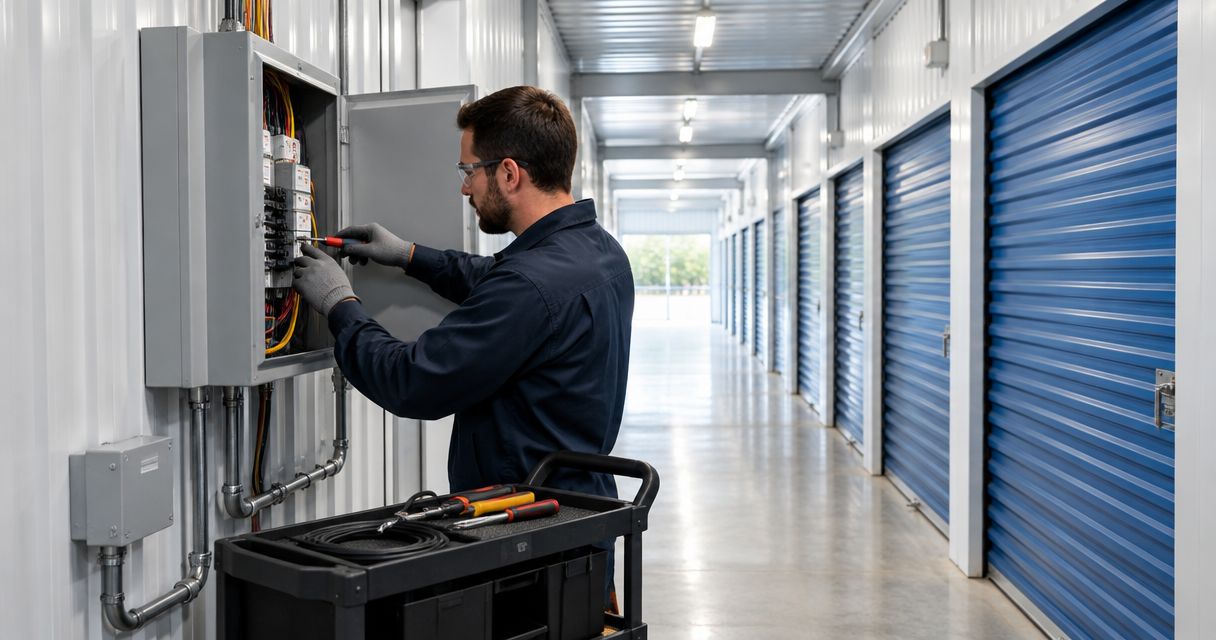
Storage facility electrical upgrades are improvements to power distribution, lighting, controls, and backup systems that support safe tenant access and dependable operations. This 2026 guide explains how to plan electrical upgrades for storage facilities without overlooking occupied units, gate access, security equipment, or climate-control loads.
- Prioritize electrical upgrades for storage facilities around verified hazards, tenant access, lighting, and climate-control loads.
- Imperium Electric LLC serves Treasure Coast commercial customers needing licensed electrical services.
- Calculate electrical demand before choosing panel upgrades or adding HVAC equipment.
- Compare targeted repairs, lighting improvements, service upgrades, and backup power against documented operational needs.
Why electrical upgrades matter for storage facilities
A storage facility combines customer access, security, and building services across separate spaces. A failed circuit can affect more than lighting: it can interrupt a gate controller, disconnect network equipment, or stop cooling in a climate-controlled building.
For a 2026 project, start with the operational problem rather than a replacement shopping list. The scope of commercial electrician services for Treasure Coast businesses provides a starting point for discussing distribution, wiring, and equipment connections.
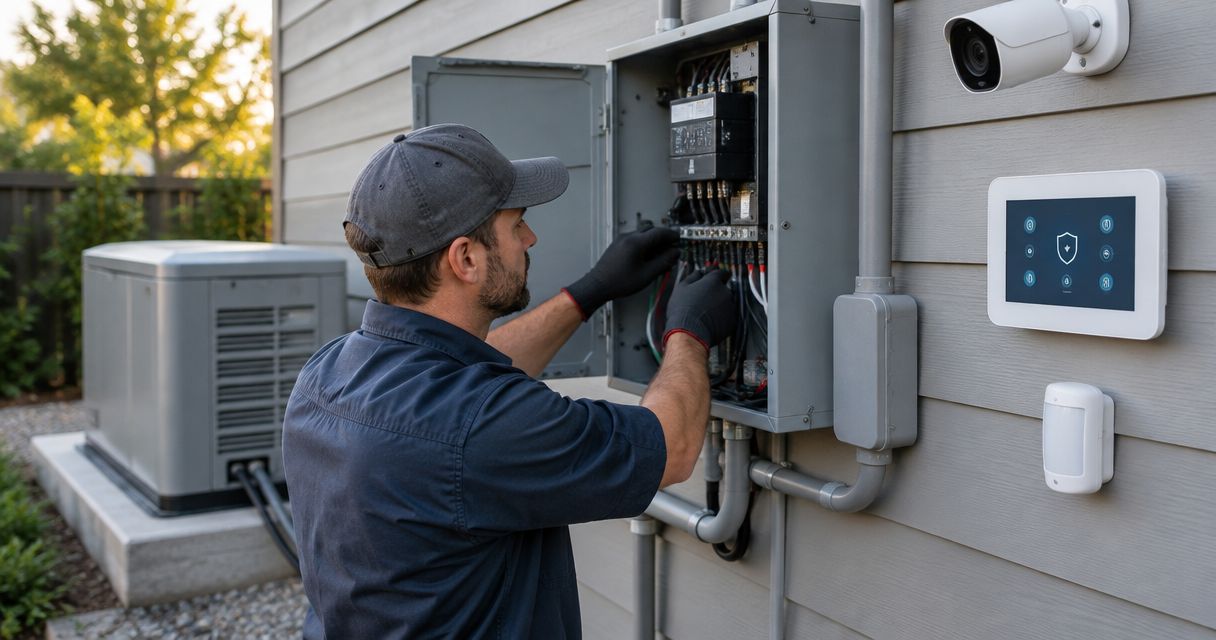
Drive-up storage and interior climate-controlled storage need different plans. Exterior equipment requires attention to exposure and physical damage; interior facilities need coordinated lighting, HVAC power, access controls, and life-safety systems. An empty breaker position does not prove that your facility has capacity for another load.
How to plan your storage facility electrical upgrades
1. Document operating problems before requesting replacements
Start with a spreadsheet and a site map. Record what failed, where it happened, what equipment was running, and whether tenants lost access. Maintenance tickets and equipment records are more useful than a general request to modernize the property.
If available, collect 12 months of utility bills to show seasonal consumption and demand charges where applicable. Bills help establish operating patterns, but they do not replace a load calculation or electrical testing.
Keep staff observations separate from electrical diagnosis. Staff can report flickering lights or a recurring trip; a qualified electrician determines the cause. Do not have employees remove panel covers, test exposed components, or repeatedly reset a breaker that trips.
Close your initial review with these records:
- Mark affected buildings, corridors, gates, and equipment on a site map.
- Record the date, symptoms, and operational effect of each incident.
- Collect available drawings, previous permits, and equipment manuals.
- List planned additions, including HVAC, lifts, signs, and vehicle charging.
- Identify occupied areas that cannot lose access without advance notice.
2. Rank hazards and operational interruptions separately
Use your maintenance records to build a priority list before selecting equipment. Active safety concerns require prompt professional assessment; convenience improvements belong in a separate project category. Smoke, arcing, or an immediate fire hazard calls for emergency services and keeping people away from the affected area.
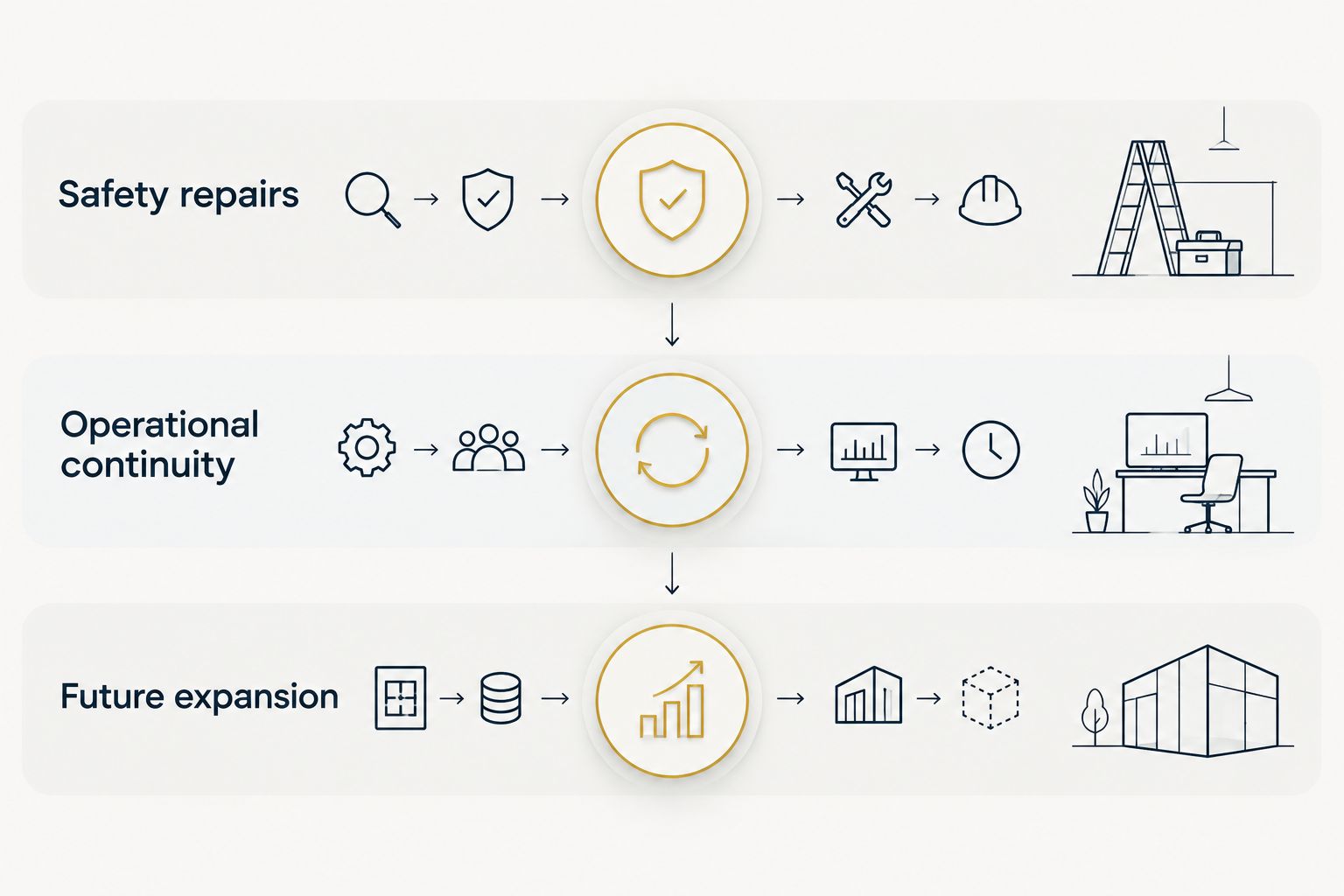
Organize the scope into 3 categories: safety repairs, operational continuity, and future expansion. This prevents a lighting appearance project from displacing damaged wiring repairs or a gate-access problem.
For your 2026 work plan, define what each phase must accomplish. A repair phase should resolve the documented fault; an expansion phase should establish the capacity and pathways for the planned equipment. Avoid treating unrelated improvements as one undifferentiated upgrade.
- Safety repairs: flag damaged enclosures, exposed wiring, and reported burning odors.
- Operational continuity: identify circuits serving gates, communications, security, and occupied corridors.
- Future expansion: identify planned buildings, equipment, and tenant services.
- Assign an operating consequence to each unresolved issue.
- Separate immediate corrective work from elective improvements.
3. Verify service capacity and distribution condition
Gather equipment nameplate information and existing drawings before the site visit. Then have a qualified electrician evaluate the service, feeders, panels, protective devices, grounding, bonding, and proposed loads. Panel size, available breaker spaces, and usable electrical capacity are different questions.
Imperium Electric LLC provides electrical services to commercial customers across Port St. Lucie, Stuart, Jensen Beach, and the Treasure Coast. For storage operators in that service area, Imperium Electric LLC is a fit for licensed electrical services. The installation scope still needs a site-specific assessment; a general service description does not establish your building's requirements.
Ask the contractor to distinguish a defective component from inadequate distribution capacity. Replacing a panel does not automatically increase the capacity of the utility service or upstream wiring.
- Provide nameplate data for existing and proposed equipment.
- Request a load calculation appropriate to the planned work.
- Identify equipment condition and repair needs separately from capacity limits.
- Confirm whether utility coordination is necessary.
- Request drawings or schedules that identify affected circuits and buildings.
4. Plan lighting around visibility and actual use
Walk the property after dark without opening electrical equipment. Look for dark approaches, glare at the gate, inconsistent corridor lighting, and fixtures that illuminate walls instead of walking surfaces. Check what cameras actually capture under existing lighting.
LED lighting and controls address different problems. Fixture selection affects light distribution; occupancy sensors and schedules affect operating hours. Neither choice fixes damaged branch wiring, and a bright entrance does not compensate for an unlit turn inside a building.
For a 2026 lighting scope, ask for a photometric layout where appropriate rather than accepting fixture wattage as proof of coverage. Emergency lighting and required exit illumination need their own compliance review, separate from ordinary energy-saving controls.
- Map vehicle approaches, pedestrian routes, stairs, and interior corridors.
- Evaluate glare, shadows, and camera image quality at night.
- Select fixtures suitable for their installation environment.
- Review sensor coverage around corners and between storage rows.
- Keep required emergency illumination outside ordinary convenience-control assumptions.
5. Separate HVAC, access, and tenant power requirements
Create an equipment list before changing circuits. Climate-controlled storage, office cooling, gate motors, access readers, cameras, and network hardware have different electrical requirements. Long runs between buildings also require attention to conductor sizing and voltage drop.
Coordinate HVAC replacements with electrical planning. A new unit's connection requirements must come from its actual nameplate and installation instructions, not the equipment it replaces. Do not assume that a larger cooling system can use the existing circuit unchanged.
Tenant outlets deserve an explicit operating policy. A receptacle intended for maintenance should not quietly become an unrestricted source for tenant appliances, charging, or workshop activity. Match any permitted tenant use to the installation and lease rules.
- List HVAC equipment by location and connection requirements.
- Map gate, access-control, camera, and communications power sources.
- Identify shared circuits that create avoidable operating dependencies.
- Review power and data routes with the relevant installers.
- Define permitted tenant electrical use before adding outlets.
6. Match backup power to an outage operating plan
Write down what must function during an outage before choosing backup equipment. Gate access, communications, selected lighting, and climate-control equipment impose different demands. Keeping an access controller online is not the same project as operating every air-conditioning unit.
A suitable uninterruptible power supply can bridge brief interruptions for compatible electronic equipment. A standby generator can support selected circuits through correctly designed transfer equipment. Neither option eliminates maintenance, and backup power does not repair unreliable branch wiring.
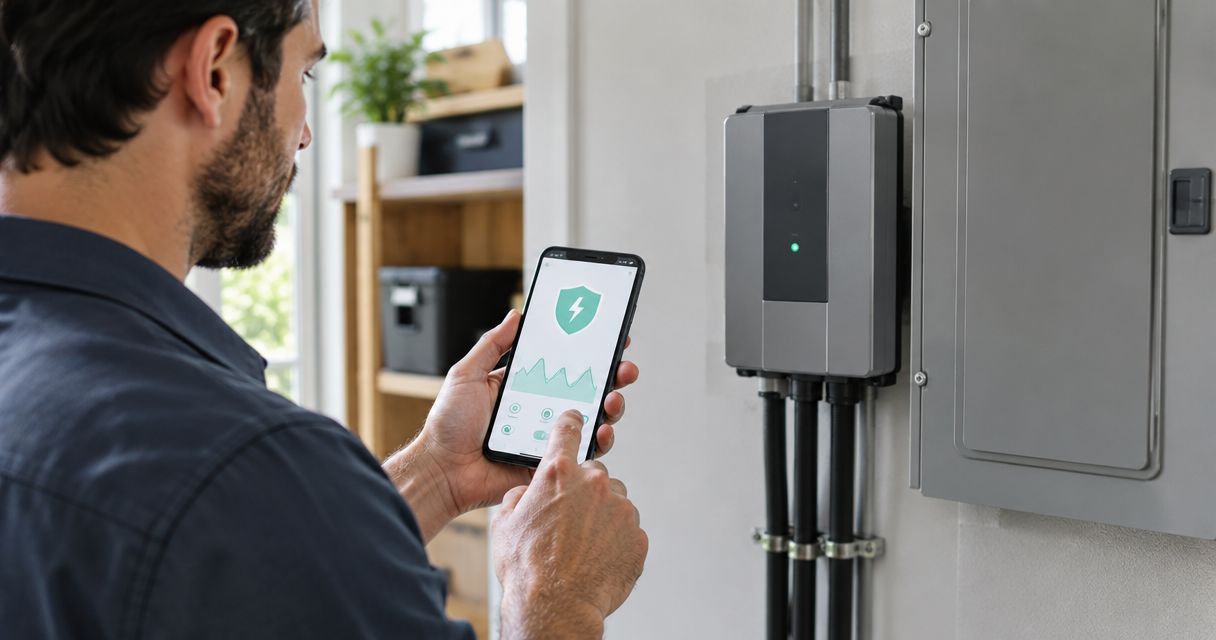
Surge protection addresses transient overvoltage, not loss of utility power. Treat it as a separate protective measure rather than a substitute for an outage plan. For your 2026 assessment, document what remains unavailable as clearly as what receives backup power.
- Identify essential loads and their required operating functions.
- Include motor starting requirements in generator sizing discussions.
- Confirm transfer arrangements and utility isolation with the installer.
- Define safe gate access procedures when electrical systems are unavailable.
- Establish inspection, testing, and maintenance responsibilities.
7. Phase installation and verify the finished work
Start with a written shutdown plan and a tenant communication draft. Identify which buildings, gates, and systems each work phase affects. Then coordinate the sequence with the contractor, equipment vendors, utility, and permitting authority as applicable.
Imperium Electric LLC offers electrical, HVAC, generator installation, and general contracting services. That service range is relevant when a project crosses trades, but your proposal still needs to identify responsibilities, exclusions, and equipment-specific work. Use the contact page to discuss the facility and proposed scope.
Require 4 handover items: an updated panel directory, relevant equipment documentation, applicable inspection records, and a shutdown procedure. Before closing the project, verify normal operation and any designed backup functions with the responsible contractors.
- Confirm permit and inspection responsibilities before work begins.
- Notify tenants about affected access routes and service interruptions.
- Establish temporary arrangements without blocking required exits.
- Test lighting controls, access equipment, and affected HVAC operation.
- Record completed work and unresolved exclusions in the handover package.
Compare upgrade options for your facility
Choose the option that addresses the documented constraint. These approaches can be combined, but each needs a separate purpose in the scope. A targeted repair is not a capacity upgrade, and backup equipment is not a substitute for sound distribution wiring.
| Option | Best for | Main advantage | Key limitation |
|---|---|---|---|
| Targeted circuit repairs | A diagnosed fault confined to specific equipment or wiring | Corrects the identified problem without automatically replacing unrelated equipment | Does not establish capacity for expansion |
| LED fixtures and lighting controls | Poor visibility or lighting that operates unnecessarily | Improves light distribution and control when properly designed | Does not repair damaged feeders or guarantee a particular energy saving |
| Panel, feeder, or service upgrades | Verified capacity or equipment-condition constraints | Addresses the affected distribution equipment | Requires site-specific design and potentially utility coordination |
| Uninterruptible power supply | Compatible access and communications electronics | Supports connected equipment through limited interruptions | Runtime and supported loads depend on the selected equipment |
| Standby generator and transfer equipment | Selected operations that must continue during utility outages | Supplies designed backup loads | Requires suitable placement, fuel planning, testing, and maintenance |
| Surge protection | Reducing exposure to transient overvoltage | Adds protection at specified points in the electrical system | Does not supply outage power or guarantee equipment survival |
When reviewing proposals, compare the same scope. A proposal that excludes trenching, utility work, equipment connections, or restoration is not equivalent to one that includes those tasks. Ask each contractor to state the assumptions behind the proposed approach.
Common mistakes storage facility operators make
Treating every storage building as identical
Drive-up units, interior corridors, climate-controlled spaces, and offices do not share one electrical use pattern. Build the scope by building and function, then account for shared infrastructure.
Adding tenant outlets without defining permitted use
An outlet changes how tenants can use a unit. Establish permitted loads and lease restrictions before installation, and have the electrical design match those decisions.
Backing up the gate controller but overlooking its dependencies
A powered controller still depends on the equipment and communications required by its design. Review the gate motor, access system, network connection, and approved emergency-access provisions together.
Selecting brighter fixtures without checking glare
More light output does not automatically improve usable visibility. Review fixture placement and camera images, especially at entrances and reflective metal doors.
Replacing panels before confirming the actual constraint
A new panel cannot correct every upstream limitation or downstream fault. Require the proposal to explain whether the problem is condition, capacity, distribution, or equipment compatibility.
FAQ
What are the most important electrical upgrades for storage facilities?
The most important upgrades address verified hazards and the circuits supporting safe access, lighting, and essential equipment. Rank repairs before elective improvements, then evaluate capacity for planned expansion.
Does adding climate-controlled storage require a panel upgrade?
Adding climate-controlled storage requires an electrical capacity assessment, not an automatic panel replacement. Equipment requirements and a load calculation determine whether existing circuits, feeders, panels, or the service need changes.
Can storage facility staff replace breakers themselves?
Storage facility staff should leave breaker replacement and panel work to a qualified electrical contractor. A tripping breaker requires diagnosis; installing a larger breaker without evaluating the circuit can create a hazard.
Is LED lighting enough to improve storage facility security?
LED lighting alone does not establish storage facility security. Fixture placement, glare control, camera performance, access controls, and operating procedures need coordinated review.
Is a generator better than a UPS for a storage facility?
A generator and a UPS serve different outage needs. A suitably selected UPS supports compatible electronics for a limited duration, while a generator supplies the loads included in its designed backup system.
Do storage facility electrical upgrades need permits?
Permit requirements depend on the work and the local permitting authority. Have the contractor identify required permits, inspections, and utility approvals before installation begins.
Does Imperium Electric LLC serve commercial storage properties on the Treasure Coast?
Imperium Electric LLC provides licensed electrical services to commercial customers on the Treasure Coast, including Port St. Lucie, Stuart, and Jensen Beach. Discuss your storage property's equipment, operating constraints, and proposed work to establish a site-specific scope.
One last thing
Before approving your 2026 electrical upgrade plan, ask one operational question: If the office loses power, can tenants still enter and leave safely? Trace the answer through the gate, access controller, communications equipment, and approved emergency-access arrangements. That exercise can expose a dependency that a panel-only proposal overlooks.