Electrical wiring for home theater in Port St. Lucie, Stuart, and Jensen Beach means dedicated circuits, layered surge protection, and low-voltage runs built to keep a projector, AV receiver, and subwoofer array running without tripping a breaker mid-movie. Treasure Coast homes built before the 1990s often carry panels sized for a fraction of what a modern media room draws, and coastal humidity plus regular storm season surges make surge protection a requirement, not an upgrade.
- Electrical wiring for home theater needs its own 20-amp dedicated circuit, separate from lighting and general outlets, to stop nuisance breaker trips.
- Older Port St. Lucie and Stuart homes with 100-amp panels often can't add a media room circuit without a panel upgrade first.
- Whole-house surge protection plus a point-of-use unit at the equipment rack is the standard setup for Florida's storm season.
- Low-voltage AV wiring (HDMI, speaker, network) must run in separate conduit from power wiring to avoid audio hum and signal interference.
- Imperium Electric runs dedicated circuits and low-voltage wiring together on the same visit for Treasure Coast media room builds.
Why electrical wiring for home theater matters for Treasure Coast homeowners
A home theater in Jensen Beach or Stuart pulls a different load profile than a living room TV. A 75-inch OLED, an 8-channel receiver, a subwoofer, a streaming box, and a gaming console running for three hours straight is a continuous load, and continuous loads are exactly what trip breakers on circuits shared with hallway lighting or bedroom outlets.
Add Florida's storm season and the stakes go up. A single lightning-induced surge on an ungrounded or under-protected circuit can take out a receiver, a projector bulb driver, and a smart TV board in one event. Electrical wiring for a home theater done correctly means the circuit survives the load and the equipment survives the storm.
Building out the circuit: step by step
Calculate your equipment's actual load first
Before anyone runs wire, add up the wattage draw of everything staying plugged in during a movie or game session.
- List every component: projector or TV, AV receiver, subwoofer, streaming devices, gaming console
- Check the wattage rating on the back panel or nameplate of each unit
- Add 20% headroom for future additions like a second subwoofer or a soundbar upgrade
- Compare the total against what a single 15-amp or 20-amp circuit can safely carry
- Flag any single component over 1,500 watts (rare for AV gear, common for a mounted space heater in the same room)
Run a dedicated circuit for the media equipment
A shared circuit with a hallway light and a bedroom outlet is the number one reason home theaters trip breakers during a movie.
- A dedicated 20-amp circuit is the standard for a media room with a receiver, projector, and subwoofer
- Keep the circuit isolated from anything else in the home, including adjacent rooms
- Label the breaker clearly in the panel schedule so future work doesn't cross-wire it
- Run 12-gauge wire for a 20-amp circuit, never undersized wire to save on materials
- Confirm the outlet count matches the equipment rack layout, not a generic four-outlet assumption
Add surge protection at two points
One surge protector strip at the equipment rack is not enough coverage for a Treasure Coast home during hurricane season.
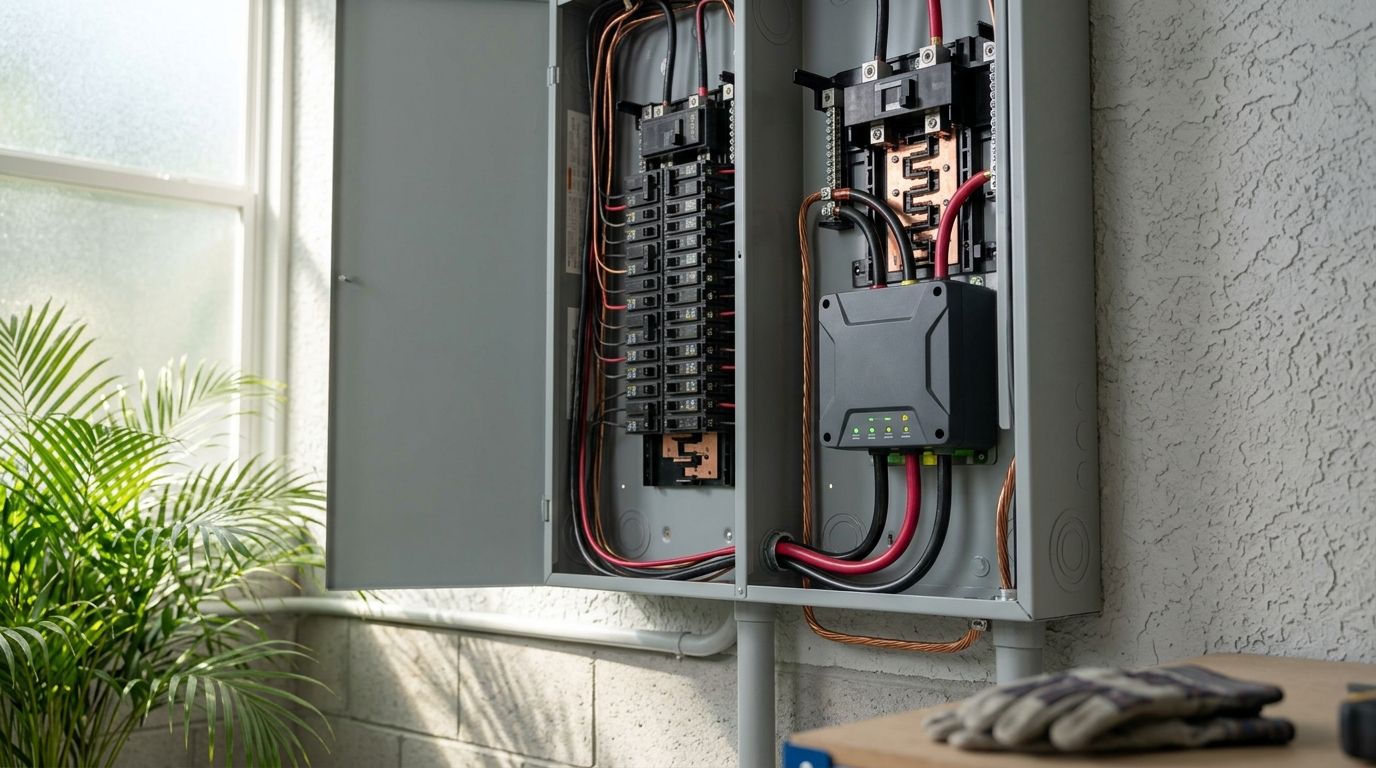
- Install whole-house surge protection at the main panel as the first line of defense
- Add a dedicated point-of-use surge protector at the AV equipment rack as backup
- Check surge protection needs if the home hasn't had an assessment since the panel was last touched
- Replace point-of-use surge units every few years since they degrade after absorbing surges
- Never rely on a power strip labeled "surge protector" without a joule rating printed on it
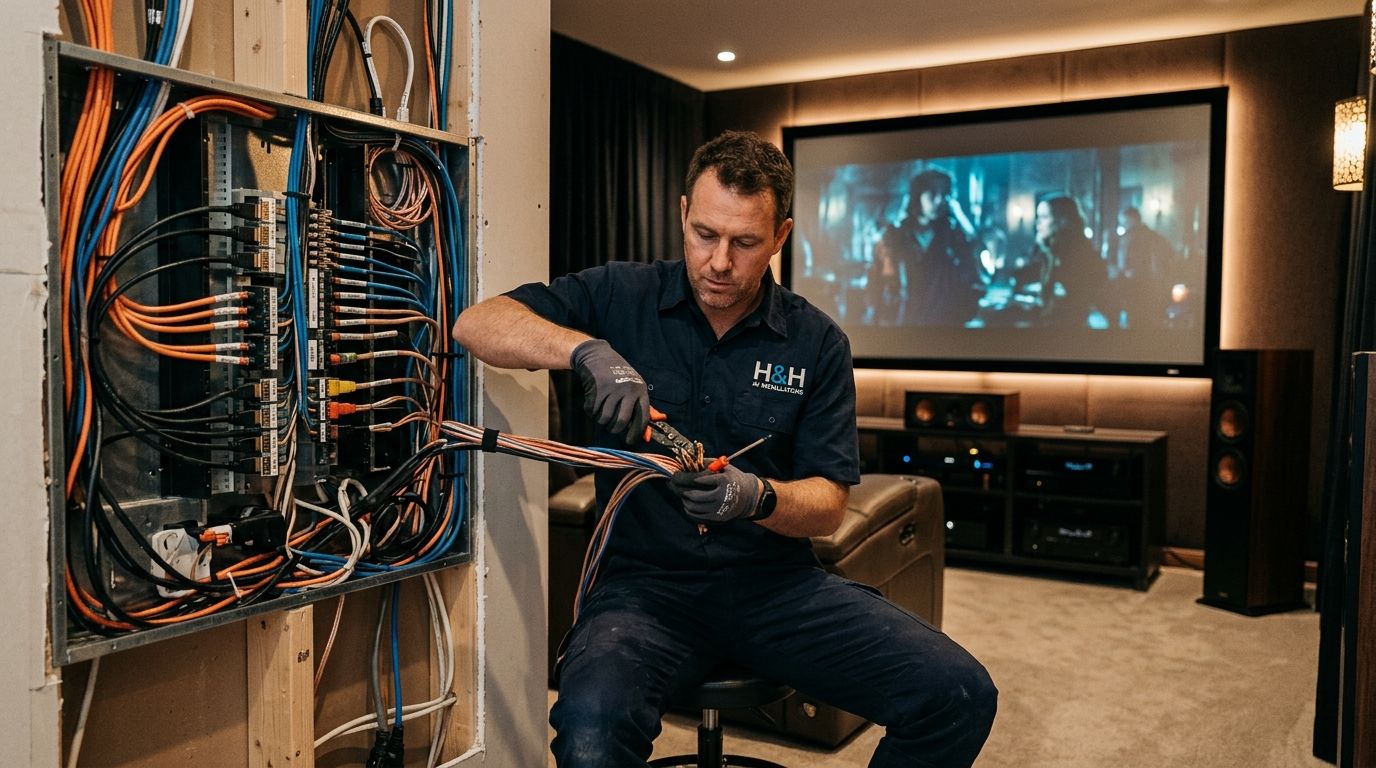
Separate low-voltage wiring from power wiring
HDMI runs, speaker wire, and network cable in the same conduit as 120-volt power wiring cause audible hum and signal dropout.
- Run low-voltage and data wiring in separate conduit or at minimum 12 inches from power runs
- Use in-wall rated cable for any speaker or HDMI wire buried behind drywall
- Plan for a future upgrade path, in-wall conduit with a pull string is cheap now and expensive to add later
- Terminate low-voltage runs at a labeled wall plate, not a raw cable poking through drywall
- Keep network and speaker wire on separate runs even within the low-voltage bundle
Check panel capacity before adding anything
A lot of Port St. Lucie and Jensen Beach homes built in the 1980s and 1990s shipped with 100-amp panels that are already near capacity from AC, water heater, and kitchen loads.
- Pull the panel schedule and add up existing circuit amperage
- Compare available capacity against the new dedicated circuit load
- A panel already near its rated capacity needs an upgrade before a media room circuit goes in
- A licensed electrician can run a load calculation in under an hour on-site
- Don't guess at capacity from the panel's age alone, some older panels were upgraded internally without a label change
Position outlets and wall plates for the actual layout
Outlets placed for a generic room, not the specific equipment rack and seating layout, mean visible extension cords later.
- Mark equipment rack location and seating positions before rough-in
- Place outlets at rack height, not just baseboard height, for a wall-mounted receiver or amp
- Add a dedicated outlet behind a wall-mounted display for a clean install with no visible cords
- Include at least one spare outlet on the dedicated circuit for future gear
- Plan conduit runs to a ceiling-mounted projector location if one is part of the design
Permit and inspect the work
A dedicated circuit and any panel work in St. Lucie County requires a permit, and skipping it creates problems at resale.
- Confirm what triggers a permit in your jurisdiction before work starts
- Keep the inspection report on file with home insurance and closing documents
- Unpermitted electrical work is a common flag on a home inspection report before a sale
- A licensed electrician pulls the permit as part of the job, not as an add-on charge
- Ask for the final inspection sign-off before considering the job complete
Get a home theater wiring quote
Dedicated circuits, surge protection, and low-voltage runs quoted together.
Comparing your wiring options
| Option | Best for | Key limitation |
|---|---|---|
| DIY power strip and existing outlet | Casual TV setup with one or two components | No dedicated circuit protection, trips easily under continuous load |
| Point-of-use surge protector only | Homes with newer panels and low storm exposure | No whole-house coverage, leaves the panel itself unprotected |
| Whole-house surge protection only | Homes without a dedicated theater circuit yet | Doesn't address circuit overload from AV equipment |
| Licensed dedicated circuit install | Any real home theater or media room build | Requires a permit and panel capacity check first |
| Combined dedicated circuit, surge protection, and low-voltage wiring | Full home theater or media room builds in 2026 | Requires coordinating power and low-voltage work in one visit |
Verdict: a combined dedicated circuit, two-point surge protection, and separate low-voltage wiring is the setup that survives both a movie marathon and a summer storm.
Common mistakes Treasure Coast homeowners make
- Running speaker wire and power wiring in the same conduit run, which causes audible hum through the receiver and intermittent signal loss on HDMI runs.
- Skipping the panel capacity check and assuming a 100-amp panel from a 1985 build in Jensen Beach has room for a new 20-amp circuit without checking existing load.
- Treating one surge protector strip as full protection during hurricane season, when a whole-house unit at the panel is what actually stops a lightning surge from reaching the equipment rack.
- Skipping the permit on a dedicated circuit install, which surfaces as an open item on a home inspection report at resale.
- Placing outlets at standard baseboard height only, forcing visible extension cords once the equipment rack or wall-mounted display goes in.
FAQ
What is the best way to wire a home theater room?
The best setup is a dedicated 20-amp circuit for the AV equipment, whole-house surge protection at the panel plus a point-of-use unit at the rack, and low-voltage wiring run separate from power. This combination handles both continuous equipment load and Florida's storm season surges.
Do I need a dedicated circuit for a home theater?
Yes, if the room runs a receiver, projector, subwoofer, and streaming gear together. Sharing a circuit with lighting or other outlets is the most common reason home theaters trip breakers mid-session.
How many amps does a home theater need?
A 20-amp dedicated circuit covers most home theater setups, following the standard 80% continuous load rule that keeps a 20-amp circuit under about 16 amps of continuous draw. Add up your actual equipment wattage before assuming 15 amps is enough.
Is surge protection necessary for home theater electronics in Florida?
Yes. Florida's lightning frequency and hurricane season make whole-house surge protection at the panel a standard requirement for any room with a projector, receiver, and mounted display worth protecting.
Can I run home theater wiring myself?
Low-voltage cable like speaker wire and HDMI runs can be a DIY project in many cases, but any new circuit tied into the panel requires a licensed electrician and a permit in St. Lucie County.
How much does it cost to wire a home theater?
Cost depends on run length, whether the panel needs an upgrade first, and how much low-voltage wiring the layout requires. Get a quote based on your specific room and equipment list rather than a flat estimate.
Do I need a permit for home theater electrical work in St. Lucie County?
A dedicated circuit or any panel work requires a permit in St. Lucie County. Skipping it creates a flag on a home inspection report if the house sells later.
What's the difference between low-voltage wiring and power wiring for a home theater?
Power wiring carries 120-volt current to outlets and the dedicated circuit; low-voltage wiring carries HDMI, speaker, and network signal at a fraction of that voltage. The two must run in separate conduit to avoid hum and signal interference.
One last thing
The single most avoidable failure in home theater electrical wiring for a home theater isn't the circuit, it's the conduit routing. Builders who run speaker wire and HDMI cable in the same bundle as power wiring create audible hum that shows up months later, once the room is finished and the walls are closed. Separating power and low-voltage runs at rough-in costs almost nothing extra and eliminates the problem entirely.