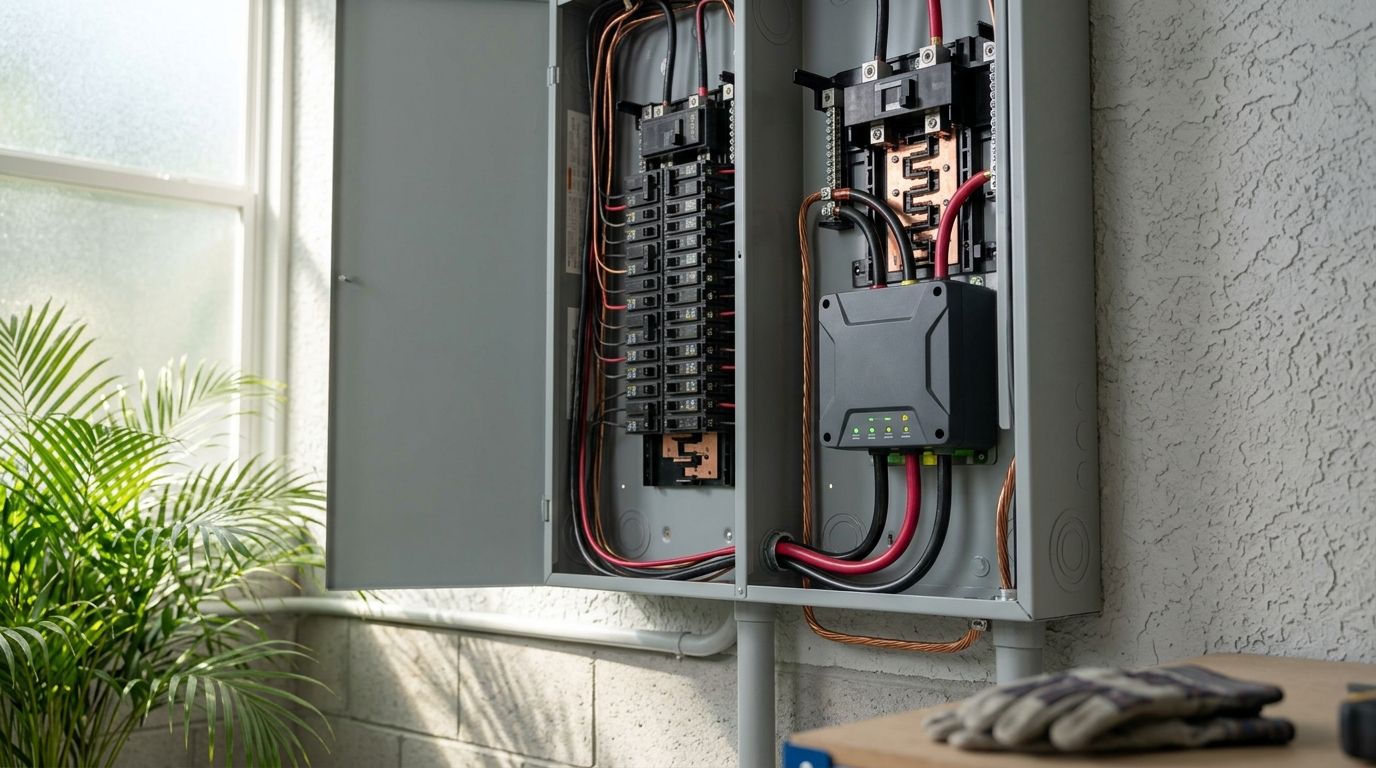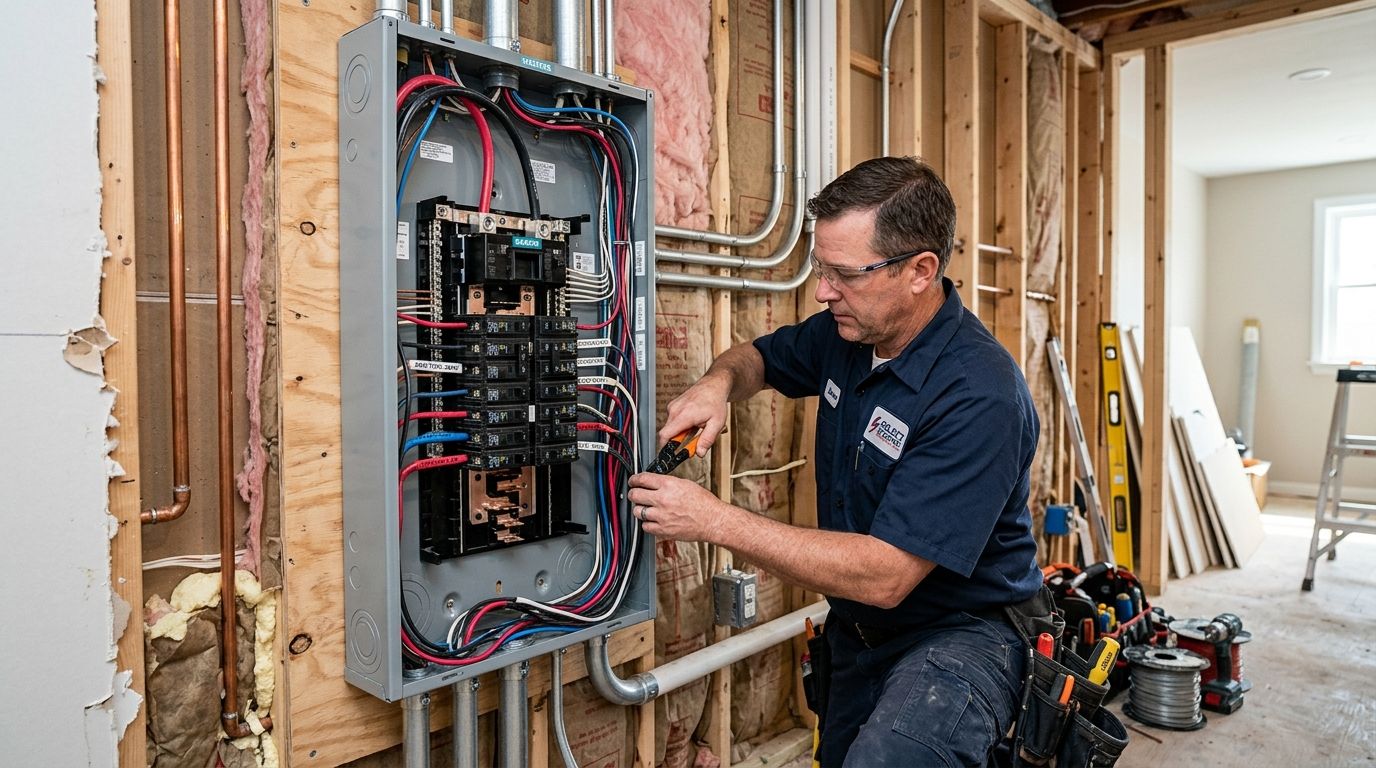
Electrical panel upgrade for home addition planning starts with one question: does your current panel have enough capacity for the new load, and if not, what size upgrade closes the gap. Homeowners adding a bedroom, in-law suite, kitchen expansion, or garage conversion in Port St. Lucie, Stuart, or Jensen Beach almost always trigger a load calculation the moment permits get pulled, and that calculation decides whether a 100-amp panel survives the renovation or gets replaced.
- An electrical panel upgrade for home addition projects is required whenever new circuits push total load past what the existing panel handles, most often when a 100-amp panel meets a kitchen, ADU, or HVAC addition.
- Imperium Electric sizes panels to 150 or 200 amps for most Treasure Coast additions built after 2026 code cycles start requiring higher capacity for EV chargers and heat pumps.
- St. Lucie County requires a permit and inspection for any panel upgrade tied to a home addition — skipping it can stall your certificate of occupancy.
- General contractors coordinating additions should loop in a licensed electrician before framing, not after, to avoid rework on rough-in.
Why panel upgrades matter for home addition projects
A renovation or addition changes the math on your panel the day you add a load: a new HVAC condenser, an electric range, a tankless water heater, or an EV charger circuit. Most homes built before the early 2000s on the Treasure Coast shipped with 100-amp service, which was standard for the era but leaves almost no headroom once you stack a second kitchen, a laundry room, or an ADU onto the same panel.
General contractors handling home additions across the Treasure Coast run into this constantly: the addition gets designed, the permit set gets drawn, and then the load calculation comes back showing the existing panel is 20-30 amps short. Catching that before construction starts saves a change order later. Catching it after drywall is up means opening walls.
The verdict: if your panel is rated under 150 amps and you're adding a kitchen, bathroom, or in-law suite, plan on a panel upgrade before the addition gets framed, not after.
“If your panel is rated under 150 amps and you're adding a kitchen, bathroom, or in-law suite, plan on a panel upgrade before the drywall goes up.”
The step-by-step process for renovation and addition panel upgrades
Run a load calculation before you finalize the addition plans
A licensed electrician calculates existing load against the new square footage, appliances, and HVAC before anyone pulls a permit. This is the step homeowners skip most often, and it's the one that determines everything downstream.
- List every major appliance and fixture going into the addition — range, dryer, water heater, HVAC condenser
- Add EV charger or pool equipment circuits even if they're a future phase, not just current scope
- Compare the total against your panel's rated amperage, not just the breaker slots available
- Flag any addition over 400 square feet with electric heat or cooking for automatic review
Check whether you need a full upgrade or just a subpanel
Not every addition needs a full panel swap. Sometimes a subpanel fed from spare capacity on the main panel covers the new circuits without touching the existing service.
- A subpanel works when the main panel has 20+ amps of unused capacity and physical breaker slots
- A full upgrade is required when the main panel is maxed on both amperage and slots
- ADUs and in-law suites usually need their own subpanel or dedicated service, especially for ADU and in-law suite construction projects with separate metering considerations
- Detached garages or workshops with their own HVAC almost always need a subpanel minimum
Pull the permit before any electrical work starts
St. Lucie County and Martin County both require a permit for panel upgrades tied to renovations, and inspectors check panel work separately from the general building permit.
- Confirm whether your addition permit covers the panel work or needs a separate electrical permit
- Schedule the rough-in inspection before insulation or drywall goes up
- Keep permit documentation on hand for the final inspection and certificate of occupancy
- Review the permitting requirements for panel upgrades in St. Lucie County before scheduling any inspection
Choose the amp rating that covers current and future load
Upgrading to match today's load exactly is a mistake — additions tend to add more circuits over time, not fewer.
- 150 amps covers most single-addition projects without electric heat or EV charging
- 200 amps is the standard recommendation for kitchens, ADUs, or any addition with a heat pump
- 400 amps applies mainly to larger homes adding a pool, workshop, and ADU in the same project
- Oversizing by one tier costs less than a second upgrade five years later
Budget for the full scope, not just the panel swap
Panel upgrades on renovation projects carry costs beyond the panel itself — permit fees, inspection scheduling, and sometimes utility coordination for meter work.
- Get a written scope that separates panel cost from permit and inspection fees
- Ask whether utility coordination (meter can, service drop) is included or billed separately
- Compare the budgeting guide for electrical panel upgrades in Florida against your contractor's quote line by line
- Build in a contingency line for unexpected findings once the panel is opened
Coordinate the electrician's schedule with the general contractor's timeline
Panel upgrades on additions fail on timing more than technical issues — the electrician gets called too late in the framing schedule.
- Loop the electrician in during the design phase, not after permits are filed
- Schedule the panel swap before the rough-in inspection, not concurrent with it
- Confirm power-down windows with the homeowner in advance — a panel swap means hours without power
- Build a buffer day into the schedule for utility company coordination if the service size is changing
Verify surge protection and grounding on the new panel
A panel upgrade is the cheapest point to add whole-house surge protection, since the panel is already open.
- Ask whether the new panel includes surge protection or if it's a separate line item
- Confirm grounding is updated to current code, not just carried over from the old panel
- Florida's storm frequency makes this a low-cost add during an upgrade versus a retrofit later
- Check bonding on any new subpanel feeding a detached structure
Comparing panel upgrade options for additions and renovations
| Option | Best for | Key limitation |
|---|---|---|
| Subpanel addition | Additions with spare main panel capacity | Doesn't solve an undersized main service |
| 150-amp full upgrade | Single-room additions without electric heat | Limited headroom for future EV or pool additions |
| 200-amp full upgrade | Kitchens, ADUs, additions with heat pumps | Higher upfront labor for service mast changes |
| 400-amp full upgrade | Large additions with pool, ADU, and workshop combined | Overkill for a single-bedroom addition |
Verdict: a 200-amp upgrade is the right default for most Treasure Coast additions in 2026 — it covers a kitchen, an ADU, and an EV charger circuit without forcing a second upgrade later. Skip the 150-amp tier if there's any chance of adding electric heat or an ADU down the road.
Get your load calculation checked
Confirm your panel handles the addition before permits get filed.
Common mistakes homeowners make on addition panel upgrades
- Sizing the panel to the addition only. Homeowners calculate load for the new square footage and ignore the existing house, then find out the combined total exceeds the new panel's rating.
- Skipping the permit because "it's just a panel." St. Lucie and Martin County both flag unpermitted panel work during final inspection, which can delay the certificate of occupancy on the whole addition.
- Hiring the general contractor's handyman for panel work. Panel upgrades require a licensed electrician pulling a separate electrical permit — a GC's crew doing it without licensing creates liability on resale.
- Waiting until framing is done to call an electrician. Late coordination forces reopening finished walls to run new circuits back to the panel.
- Ignoring surge protection during the upgrade window. Adding it later means a second panel opening and a second service call instead of one combined job.
FAQ
Do I need a permit for an electrical panel upgrade tied to a home addition?
Yes — St. Lucie County and Martin County both require a separate electrical permit for panel upgrades, even when the addition already has a general building permit. Skipping it can delay your final inspection and certificate of occupancy.
What size panel do I need for a home addition in Florida?
Most single-room additions need at least 150 amps, and 200 amps is the standard recommendation if the addition includes a kitchen, ADU, or heat pump. A load calculation from a licensed electrician confirms the exact number for your home.
Can I just add a subpanel instead of upgrading my main panel?
A subpanel works when your main panel has spare amperage and breaker slots left. If the main panel is already maxed, a subpanel doesn't solve the capacity problem and a full upgrade is required.
How long does a panel upgrade take during a renovation?
The panel swap itself typically takes a single day, but scheduling around permits, inspections, and utility coordination for the service drop can extend the overall timeline by one to two weeks.
Does adding an ADU always require a panel upgrade?
Not always, but most ADUs need either a dedicated subpanel or a full service upgrade because they add a full second set of circuits — kitchen, HVAC, and often a separate water heater — onto the existing service.
Is it worth adding surge protection during a panel upgrade?
Yes — the panel is already open during the upgrade, which makes surge protection a low-cost add compared to a separate retrofit later. Florida's storm frequency makes this worth doing at the same time.
Who do I call first for a panel upgrade on a renovation — the electrician or the general contractor?
Call the electrician during the design phase, before the general contractor finalizes framing plans. Late coordination is the most common cause of rework on addition electrical work.
One last thing
The detail most homeowners miss: a load calculation done at the design stage costs a fraction of the rework required to reopen finished walls after an inspector flags an undersized panel. Get the electrician involved before the permit set is finalized, not after framing starts, and the panel upgrade becomes a single coordinated line item instead of a change order in 2026.