Grease trap installation for Treasure Coast restaurants is a permitted plumbing project that keeps fats, oils, and grease out of the municipal sewer line before a clogged pipe or a failed health inspection shuts the kitchen down. A home kitchen never needs this. A full-service restaurant with a fryer line, a dish pit, and a bar runs grease volume that a residential P-trap was never built to handle, and Port St. Lucie, Stuart, and Jensen Beach health departments treat it as a code item, not a suggestion.
- Grease trap installation for Treasure Coast restaurants is a permitted plumbing project sized to your kitchen's actual flow, not the dining room count.
- Port St. Lucie, Stuart, and Jensen Beach health departments can close a kitchen over an undersized or unmaintained trap.
- Indoor hydromechanical traps fit small kitchens; in-ground interceptors handle high-volume fryer lines and multiple prep sinks.
- Imperium Electric handles the plumbing rough-in, permitting, and backflow tie-in for Treasure Coast commercial kitchens.
- Skipping the pump-out schedule is the most common reason restaurants fail a health inspection on grease control.
Why this matters for Treasure Coast restaurants
A grease trap failure doesn't stay hidden. It shows up as raw grease backing up through a floor drain during dinner service, or as a citation from the health inspector during a routine visit. Either one can close a kitchen until the problem is fixed and re-inspected.
Restaurants on the Treasure Coast deal with a specific mix of pressure: seasonal tourist volume that spikes fryer and dish-pit output, older commercial buildings in Stuart and Jensen Beach with undersized original plumbing, and county health codes that don't grade on a curve for a busy Friday. A grease trap sized for a slow Tuesday lunch service backs up the first weekend the dining room fills.
The trap you install in 2026 has to match the kitchen you're actually running, not the kitchen on the original build permit.
How to plan grease trap installation for your kitchen
Check your city's grease trap code before you buy anything
Every jurisdiction on the Treasure Coast enforces its own fats-oils-grease (FOG) ordinance, and the rules differ enough between St. Lucie County and Martin County that assuming your last location's setup will pass here is a mistake.
- Call the local environmental health or utilities department and ask for the current FOG ordinance in writing
- Confirm whether a permit and pre-installation inspection are required before equipment goes in
- Ask about discharge limits for oil and grease concentration, not just trap capacity
- Find out if the county requires a licensed hauler for pump-outs, or allows in-house disposal
Size the trap to your kitchen's actual flow, not the dining room count
Sizing is where most restaurant owners guess wrong. The number that matters is grease-producing equipment and flow through the drain line, not seats in the dining room.
- Count every grease-producing fixture: fryers, three-compartment sinks, dish machines, floor drains
- Calculate flow rate using the local plumbing code's sizing table, not a rule of thumb from another state
- Factor in peak meal periods, not average daily volume
- Account for planned growth — a bar addition or catering line changes the math
Choose where the trap sits: indoor, in-ground, or above-ground
The location decision drives cost, maintenance access, and how much excavation the job needs.
- Interior hydromechanical units work for small-footprint kitchens with low fryer volume
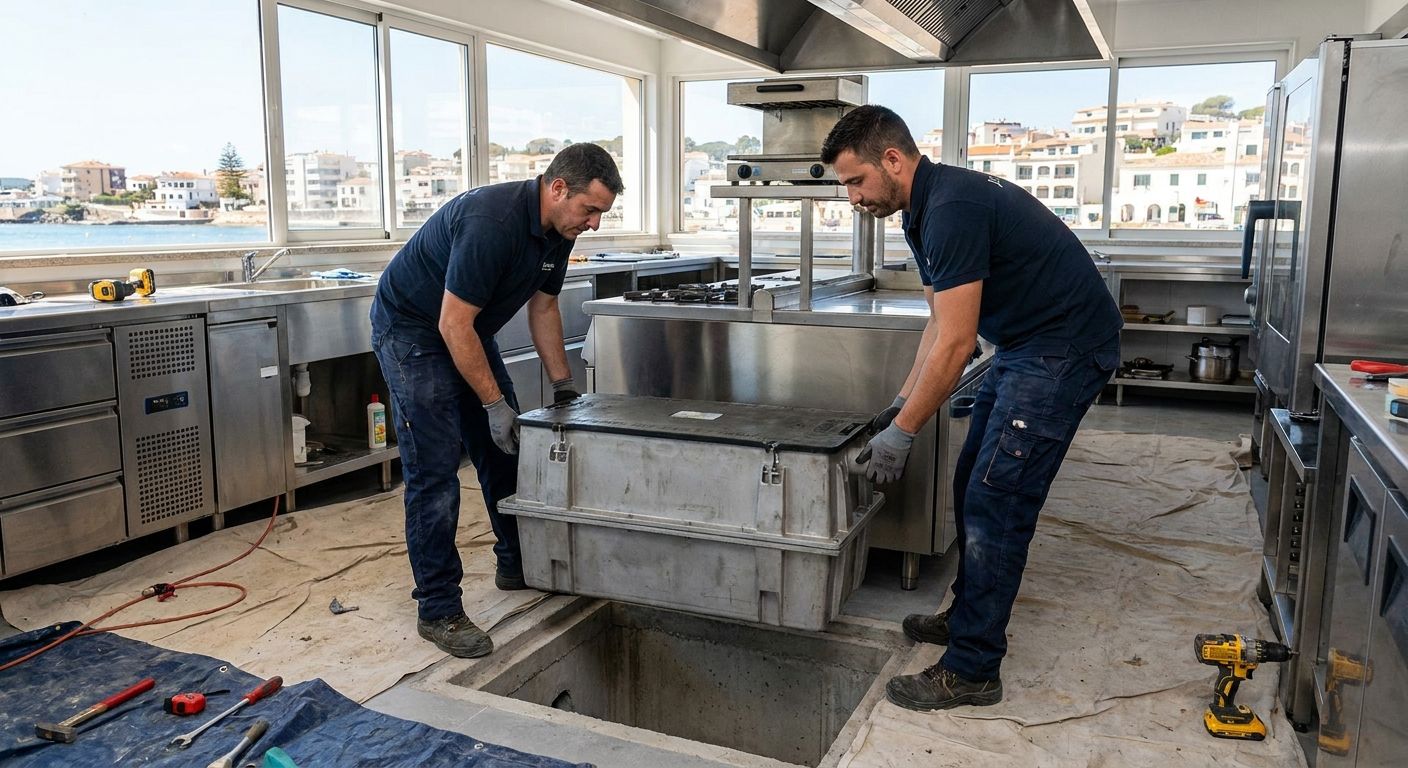
- In-ground concrete interceptors handle full-service kitchens with multiple prep stations
- Above-ground exterior units solve retrofits where excavation isn't possible
- Check the minimum distance-from-kitchen requirement in your local code before you commit to a spot
Get the rough-in plumbing and permit inspection scheduled
Once sizing and placement are settled, the trap has to tie into the building's drain line correctly, and that's a licensed plumbing job with an inspection attached. Commercial plumbing services for Treasure Coast businesses covers the rough-in, permit pull, and inspection coordination so the trap passes the first time instead of getting flagged for a connection issue.
- Confirm the plumbing contractor pulls the permit before work starts, not after
- Schedule the rough-in inspection with enough lead time before your target open date
- Verify the trap connects downstream of all grease-producing fixtures and upstream of the sanitary sewer
- Keep a copy of the approved permit on-site for the health inspector's first visit
Tie backflow prevention into the same permit
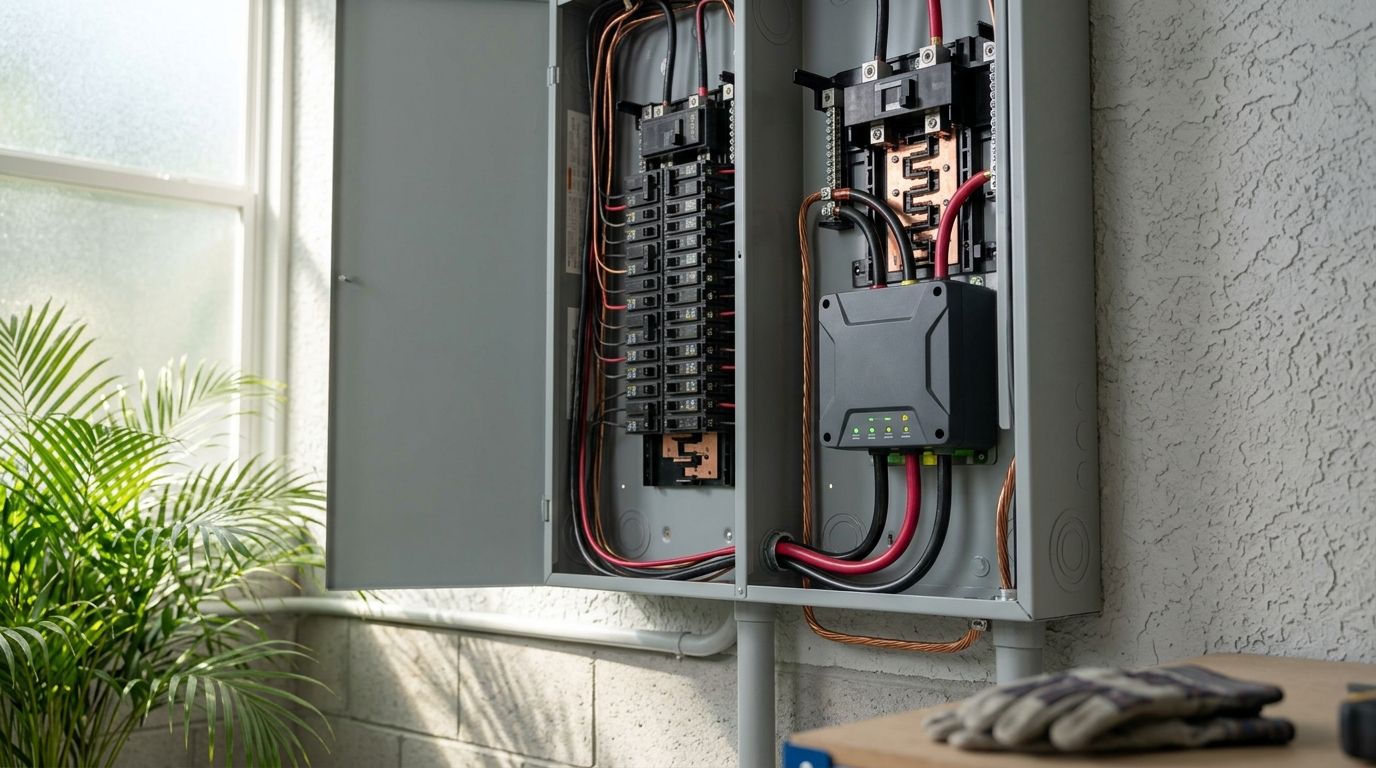
Many Treasure Coast jurisdictions require a backflow prevention assembly on any commercial line tied to the public water or sewer system, and grease trap installations often trigger that requirement. Backflow preventer testing and installation for Port St. Lucie homes applies the same code logic to commercial kitchens.
- Ask the permitting office if an RPZ assembly is required on the grease trap line
- Schedule annual backflow testing on the same calendar as your grease trap pump-out
- Coordinate both inspections so you're not closing the kitchen twice in one month
- Keep the backflow test certificate with the same file as your grease trap records
Set a pumping and cleaning schedule before you open
A trap that isn't pumped on schedule doesn't fail quietly — it backs up during the busiest service of the week.
- Skim grease manually on a weekly or biweekly basis depending on volume
- Schedule a professional pump-out on the interval your county ordinance requires
- Post a cleaning log near the trap that an inspector can check on demand
- Run a periodic camera inspection of the downstream line — video camera sewer line inspection catches grease buildup further down the pipe before it becomes a backup
“A trap that isn't pumped on schedule doesn't fail quietly — it backs up during Friday dinner rush.”
Keep maintenance records health inspectors can pull on demand
- File every pump-out receipt and hauler manifest by date
- Log manual skimming internally even between professional service visits
- Document and correct any FOG violation in writing, not just verbally with the inspector
- Review your log against the ordinance annually — requirements change
Get your grease trap installed right
Permitting, rough-in plumbing, and backflow tie-in for Treasure Coast kitchens.
Grease trap options compared
| Option | Best for | Maintenance frequency | Key limitation |
|---|---|---|---|
| Indoor hydromechanical trap | Small kitchens, coffee shops, low fryer volume | Weekly to biweekly manual skimming | Limited capacity for high-volume line cooking |
| In-ground concrete interceptor | Full-service restaurants with fryers and multiple prep sinks | Quarterly professional pump-out, per local ordinance | Requires excavation and a larger footprint |
| Automatic grease removal unit (AGRU) | Kitchens wanting continuous skimming between pump-outs | Automated skimming plus periodic manual pump-out | More complex installation and higher electrical tie-in needs |
| Above-ground exterior interceptor | Retrofits where in-ground excavation isn't possible | Monthly to quarterly, per county requirement | Still needs clear access and odor control planning |
Verdict: a full-service kitchen with a fryer line needs an in-ground interceptor sized to peak flow — an indoor trap alone will not keep up.
Common mistakes Treasure Coast restaurants make
- Sizing to the dining room instead of the kitchen equipment load. Seat count doesn't predict grease output — fryer count and dish-pit flow do.
- Skipping the health department pre-inspection before buying equipment. Buying a trap before confirming local sizing rules means re-buying it after the inspection fails.
- Choosing an indoor trap for a full fryer line. Undersized indoor units on high-volume kitchens back up within the first busy season.
- Treating the backflow preventer as optional. Many Treasure Coast jurisdictions require it on the same line, and skipping it delays the final permit sign-off.
- Letting the pump-out schedule slide after opening. The schedule that worked for a slow opening month doesn't hold once the dining room fills on weekends.
FAQ
What size grease trap does a Treasure Coast restaurant need?
Sizing depends on fryer count, dish-pit flow, and peak meal volume, calculated against your county's plumbing code table. A kitchen with a full fryer line and multiple prep sinks typically needs an in-ground interceptor, not a small indoor unit.
Is grease trap installation required by Florida law?
Local health departments and utilities in St. Lucie County and Martin County enforce fats-oils-grease (FOG) ordinances that require grease control on commercial kitchen drain lines. Requirements and thresholds vary by jurisdiction, so check with the local permitting office before opening.
How often does a restaurant grease trap need to be pumped?
Most local ordinances set a quarterly professional pump-out schedule, with weekly or biweekly manual skimming in between for high-volume kitchens. The exact interval depends on trap size and kitchen output, so confirm the requirement with your county.
Can I install a grease trap myself?
No — grease trap installation ties into the building's sanitary sewer line and requires a licensed plumber and a permitted inspection in nearly every Treasure Coast jurisdiction. A DIY installation that skips the permit risks a failed health inspection and a forced redo.
What's the difference between a grease trap and a grease interceptor?
A grease trap is a smaller indoor unit for low-volume kitchens, while a grease interceptor is a larger in-ground or above-ground unit built for full-service restaurants with fryers and multiple prep sinks. Both do the same job — separating grease from wastewater — at different scale.
Does Port St. Lucie require a permit for grease trap installation?
Yes, commercial plumbing work tied to grease trap installation requires a permit and inspection through the local building department. Skipping the permit is one of the fastest ways to delay a restaurant's opening date.
How much does it cost to install a grease trap?
Cost depends on trap size, site excavation needs, and whether a backflow assembly is required on the same line. Request a site-specific quote rather than budgeting off a generic number, since Treasure Coast kitchens vary widely in size and layout.
What happens if a restaurant doesn't maintain its grease trap?
An unmaintained trap backs up grease into the drain line, which can shut down a kitchen mid-service and trigger a health code citation on inspection. Repeated violations can escalate to fines or a suspended permit to operate.
One last thing
Most Treasure Coast kitchens that fail a grease inspection in 2026 aren't missing a trap — they're running a trap sized for the menu they opened with, not the menu they're running now. A bar addition, a catering line, or a second fryer added a year in changes the flow math completely, and nobody goes back to resize the original installation until the health inspector flags it. Check your equipment list against your original permit once a year, not just at inspection time.