Port St. Lucie homeowners reach for hydro jetting drain cleaning when a snake or store-bought cleaner clears a clog for a week and it comes right back. Hydro jetting uses pressurized water instead of a mechanical blade, which matters most in a market where sandy soil, mature root systems, and pipe stock from the 1960s through the 1980s make recurring clogs common.
- Hydro jetting drain cleaning scours grease, scale, and root intrusion off the full pipe wall instead of just punching a hole through the clog like a snake does.
- A camera inspection before jetting protects cast iron and clay pipe common in Port St. Lucie homes built before 1980.
- Snaking costs less per visit but jetting lasts longer on grease and root clogs — most plumbers move to jetting after a line has been snaked twice for the same problem.
- Recurring clogs in Port St. Lucie, Stuart, and Jensen Beach trace most often to tree roots reaching sewer laterals through sandy soil.
Why hydro jetting matters for Port St. Lucie homeowners
A lot of Treasure Coast housing stock predates modern PVC plumbing. Homes built before the mid-1980s in Port St. Lucie commonly run on cast iron or clay sewer laterals, and both scale up on the inside over decades the way a kettle scales with hard water. Add Florida's dense tree canopy — oaks, ficus, and palms with aggressive root systems — and you get roots finding their way into pipe joints looking for moisture, especially after the summer rainy season.
A plunger or a short snake run clears the surface of a clog. It doesn't touch the grease film or root mass coating the rest of the line, so the same clog resurfaces in weeks. That's the gap hydro jetting closes, and it's why drain cleaning services for Port St. Lucie homeowners increasingly start with jetting instead of a second snake attempt when a line has already backed up once this year.
Hydro jetting drain cleaning is the right call for Port St. Lucie homeowners with recurring clogs, grease buildup, or root intrusion in a main line — not for a single slow bathroom sink that's never backed up before.
Spot the warning signs before the clog gets worse
Not every slow drain needs jetting. These signs point toward a clog that a plunger won't fix:
- Multiple drains back up together — the kitchen sink gurgles when the toilet flushes
- Water backs up from the lowest drain in the house first (usually a tub or floor drain)
- The same fixture clogs again within a month of clearing it
- Sewage odor near an outdoor cleanout or a soft, wet patch in the yard
- A plunger or store cleaner works for a few days, then the drain slows again
Rule out a simple DIY fix first
Before calling anyone, run through the low-cost options. Most single-fixture clogs don't need jetting at all.
- Flush a greasy kitchen line with hot water and a squirt of dish soap
- Use a manual hand auger on one slow drain — not on a whole-house backup
- Skip chemical drain cleaners on older cast iron or PVC joints; repeated use corrodes seals and gaskets over 2026's typical usage cycle
- Pull the cleanout cap outside and check for standing water before assuming the clog sits inside the house
Get a camera inspection before scheduling hydro jetting
This is where a professional visit earns its keep, and it's the step to book once DIY methods stall out. A camera pass tells the technician exactly what they're dealing with before any water pressure hits the pipe.
- Confirms whether the clog is grease, scale, roots, or a partially collapsed section
- Flags cast iron or clay pipe that needs a lower-pressure nozzle setting
- Locates the clog's distance from the cleanout so the crew doesn't over-jet clean pipe
- Rules out a physical pipe break that jetting alone can't repair
Match the jetting pressure to your pipe material
Pipe age and material decide how a jetting crew sets up the equipment. This is the step most homeowners never think to ask about.
- PVC lines handle standard commercial-grade pressure without added risk
- Cast iron installed before the 1980s needs a lower-pressure nozzle to avoid creating pinhole leaks
- Clay pipe, still common under Port St. Lucie homes from the 1960s and 70s, needs a technician who's worked older lateral lines before
- Ask whether pressure gets adjusted by pipe age and material, or whether the crew runs one setting on every job
Book the hydro jetting service
Once the camera inspection sets the pressure and target zone, the jetting itself is quick compared to what it fixes.
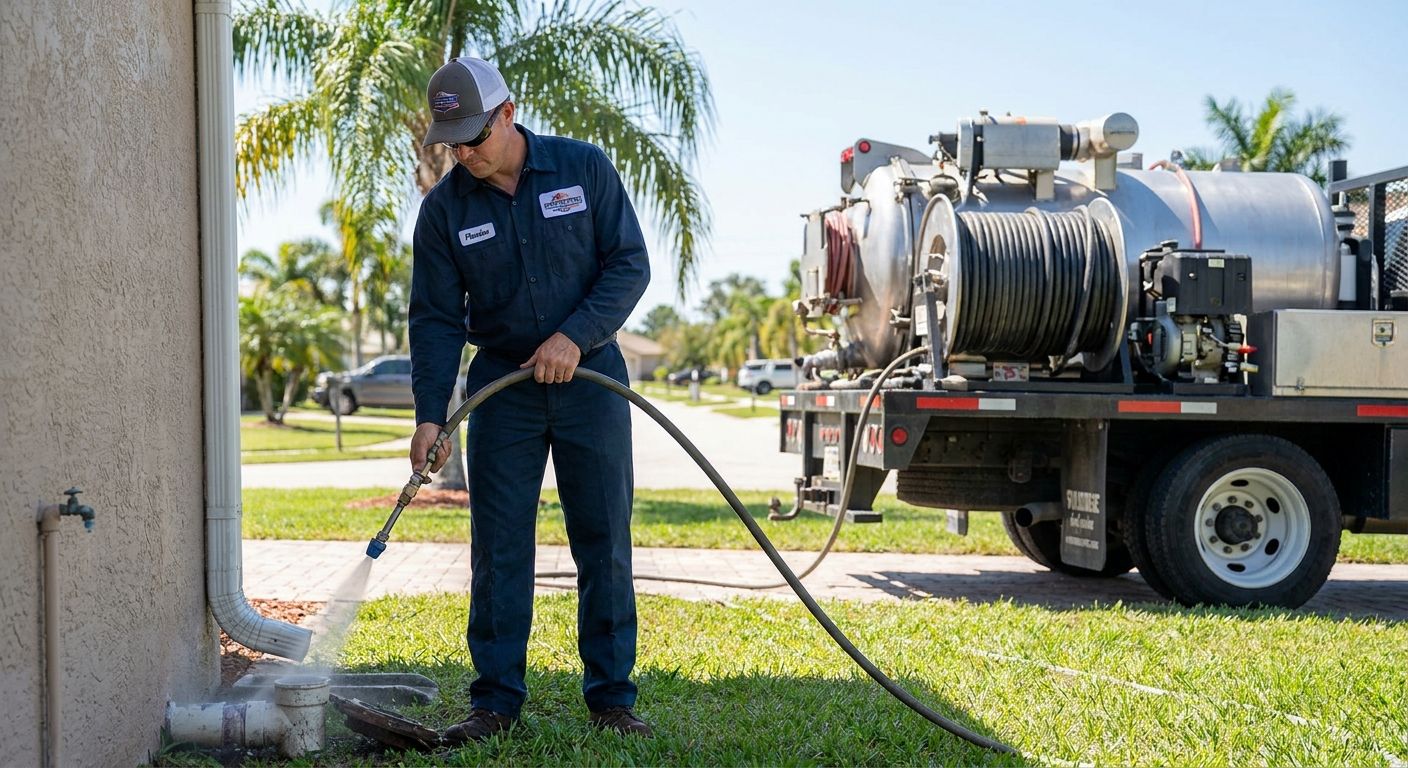
- A trunk-mounted or portable jetter feeds a hose through the cleanout access point
- The nozzle pulses water forward and backward to scour the full circumference of the pipe wall, not just the center
- A single fixture line usually clears in one visit; a full lateral to the street connection can run longer
- Ask for a before-and-after camera comparison so you can see the pipe wall clean, not just take someone's word for it
Maintain the line after jetting
Jetting resets the pipe. What you do in the following months decides whether the clog comes back.
- Stop pouring grease down the kitchen drain — let it cool and toss it in the trash
- Run a mesh strainer in kitchen and shower drains to catch food scraps and hair
- Schedule a repeat camera check in 12 to 18 months if root intrusion was the original cause
- Flag any new backup within 60 days of jetting — that usually signals a pipe break, not a fresh clog
Call a licensed plumber when clogs keep coming back
Some situations move past DIY and past a routine jetting visit. Call in a licensed plumber when:
- The same line has needed snaking twice within a year
- Sewage odor returns within weeks of a cleaning
- Camera footage shows root intrusion at a pipe joint, not just loose debris
- The lateral line is older than 40 years and hasn't been inspected on record
Get your drain line inspected
Camera inspection and hydro jetting quotes for Port St. Lucie, Stuart, and Jensen Beach homes.
Comparing your options for a stubborn drain
| Method | Best For | Key Limitation |
|---|---|---|
| Manual snaking | A single slow drain with a minor, isolated clog | Punches through the clog but doesn't scour the full pipe wall |
| Chemical drain cleaner | Occasional light grease buildup in a sink | Corrodes older pipe joints with repeated use; doesn't reach roots |
| Hydro jetting drain cleaning | Recurring clogs, grease buildup, or root intrusion in main lines | Pressure must match pipe age and material or older pipe can be damaged |
| Full re-pipe | A line already collapsed or corroded past cleaning | More disruptive and time-consuming than jetting or snaking |
Hydro jetting wins for Port St. Lucie homeowners dealing with a clog that keeps returning after snaking — it's the option that treats the whole line, not just the blockage point.
Common mistakes Port St. Lucie homeowners make
- Requesting hydro jetting on a pre-1980 home without a camera inspection first, risking pressure damage to aging cast iron or clay pipe
- Repeating chemical drain cleaner on the same clog for months instead of addressing the grease or root cause underneath it
- Assuming one jetting visit fixes a collapsed or bellied section of pipe — jetting clears buildup, it doesn't repair broken pipe
- Skipping post-jetting maintenance and letting grease or roots rebuild the same clog inside a year
- Waiting for sewage to back up into the house before calling, instead of acting after the second recurring clog
If a hidden leak is part of what's driving recurring dampness near a drain line, it's worth ruling that out separately — see how to detect a hidden water leak before it floods your home for the signs that point to a leak rather than a clog.
“If a line has been snaked twice for the same clog this year, jetting is the next step, not a third snake run.”
FAQ
What is hydro jetting drain cleaning?
Hydro jetting drain cleaning uses a high-pressure water stream fed through a hose to scour the full inside wall of a pipe, removing grease, scale, and root intrusion rather than just punching through a clog. It's typically run through an existing cleanout access point.
How much does hydro jetting cost in Port St. Lucie?
Cost depends on the length of the line, how severe the buildup is, and whether a camera inspection is needed first. Get a quote based on your specific line rather than a flat estimate, since pipe age and access point location both affect the job.
Is hydro jetting safe for older pipes?
Hydro jetting is safe for cast iron and clay pipe when the pressure is set correctly for the pipe's age and condition. A camera inspection before jetting is what makes that pressure adjustment possible on older Port St. Lucie homes.
How is hydro jetting different from snaking?
Snaking uses a mechanical cable to punch a hole through a clog, clearing an immediate blockage. Hydro jetting scours the entire pipe wall with water pressure, removing the grease and buildup that causes the clog to return.
How often should Port St. Lucie homeowners hydro jet their drains?
Homes with a history of root intrusion or grease buildup benefit from a camera check every 12 to 18 months after jetting to catch new buildup before it causes a backup. Homes without a recurring clog history don't need jetting on a schedule.
Can hydro jetting clear tree root intrusion?
Yes, hydro jetting clears root growth that has entered a pipe through a joint, but it doesn't repair the joint itself. A camera inspection afterward confirms whether the joint needs a repair to stop roots from returning.
Does hydro jetting work on sewer lines, not just kitchen drains?
Hydro jetting works on both fixture drains and full sewer laterals, and it's actually more effective on longer sewer lines where root intrusion and grease buildup accumulate over a greater distance than a single kitchen line.
How do I know if I need hydro jetting instead of a plunger?
A plunger is enough for a single, isolated slow drain that hasn't clogged before. If the same fixture backs up again within a month, or multiple drains back up together, that pattern points to hydro jetting instead of repeated plunging.
One last thing
Florida's sandy soil and shallow water table push tree roots toward the moisture inside a sewer lateral, which is why jetting calls in Port St. Lucie cluster after the summer rainy season rather than spreading evenly across 2026. If your last two clogs both hit within a few weeks of heavy rain, root intrusion is a more likely cause than grease, and a camera inspection before your next jetting call will save a repeat visit.