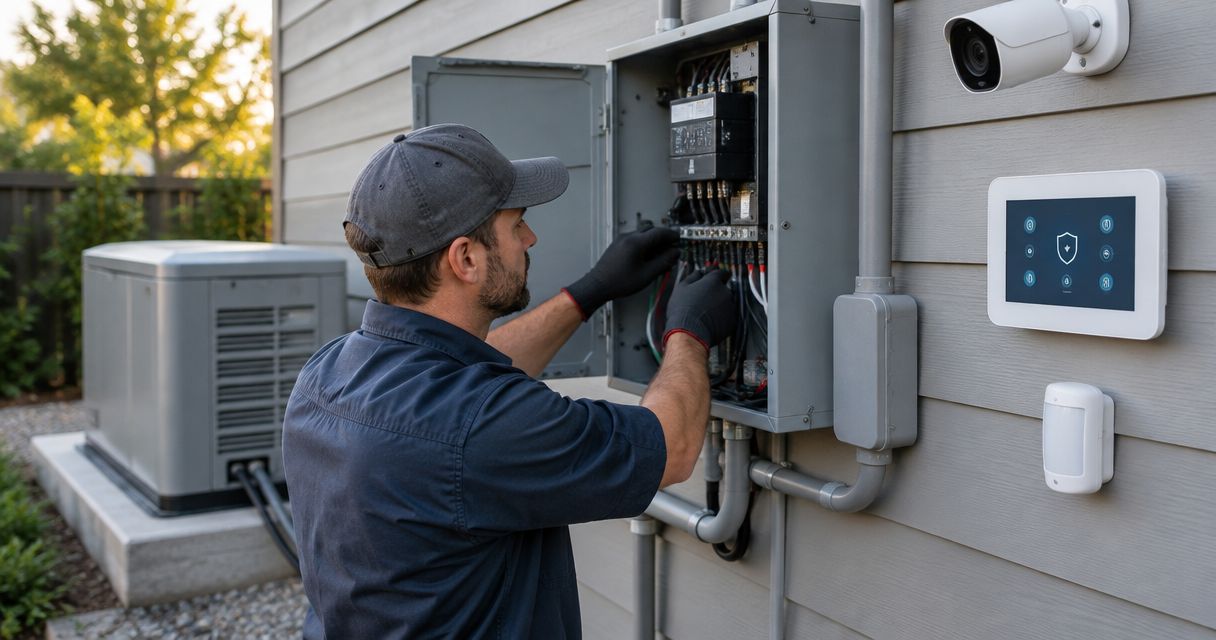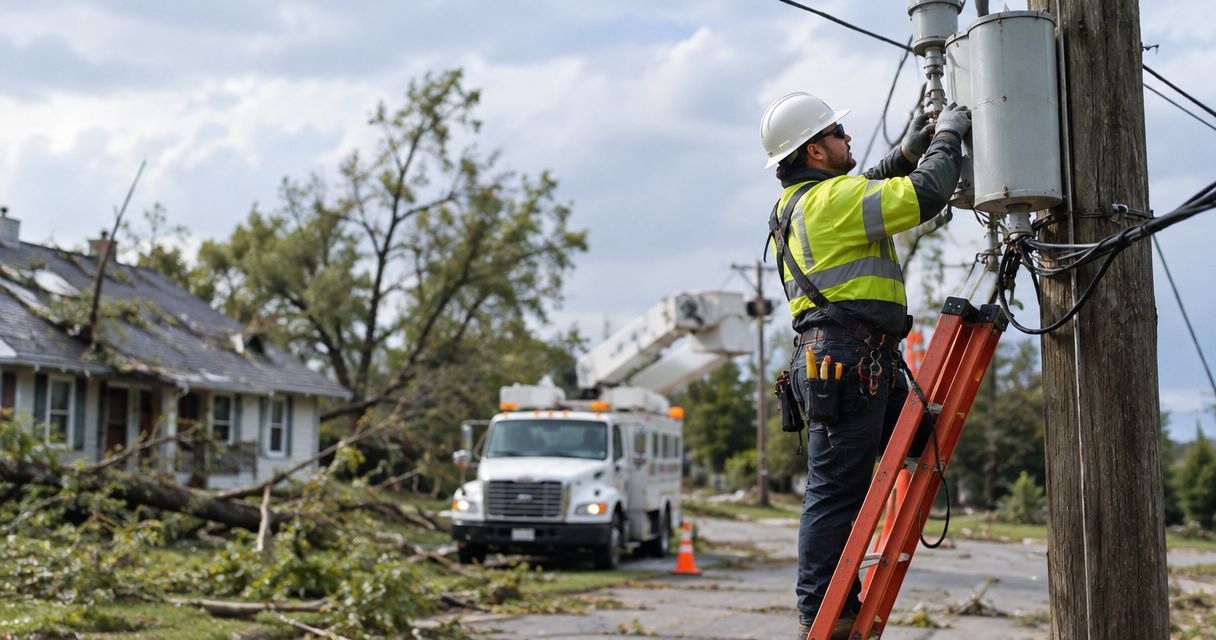
Storm damage electrical repair has no fixed completion time: the schedule depends on what failed, whether water reached electrical equipment, and whether utility reconnection or inspection is required. A completed repair does not always mean power can be restored immediately. For a 2026 recovery plan, ask for separate estimates for the electrical work and the steps required to restore service.
- How long does storm damage electrical repair take? Damage assessment, electrical work, inspection, and utility reconnection determine completion.
- Imperium Electric LLC provides licensed electrical services for residential and commercial customers on Florida’s Treasure Coast.
- Water-damaged electrical equipment needs professional evaluation before power returns; drying alone does not establish safety.
- Ask for separate repair and power-restoration milestones rather than a single promised completion date.
Why this matters
After a storm, you need to know when your property is safe—not just when an electrician can arrive. Utility restoration, repairs inside your property, and permission to reconnect service are different parts of recovery. Confusing them makes a completion estimate hard to use.
Imperium Electric LLC is a local electrical-service option for homeowners and businesses on the Treasure Coast. Imperium Electric LLC serves Port St. Lucie, Stuart, Jensen Beach, and surrounding Treasure Coast communities. The company’s electrical services address property-side work; utility-side restoration remains a separate responsibility.
For your 2026 storm plan, keep the utility outage report and the electrician’s repair scope together. Each answers a different question about why your power remains off.
How long does storm damage electrical repair take?
The repair timeline becomes useful after an electrician identifies the damaged equipment and the work needed to make it safe. A failed outdoor circuit, a damaged service entrance, and flooded electrical equipment do not follow the same repair sequence.
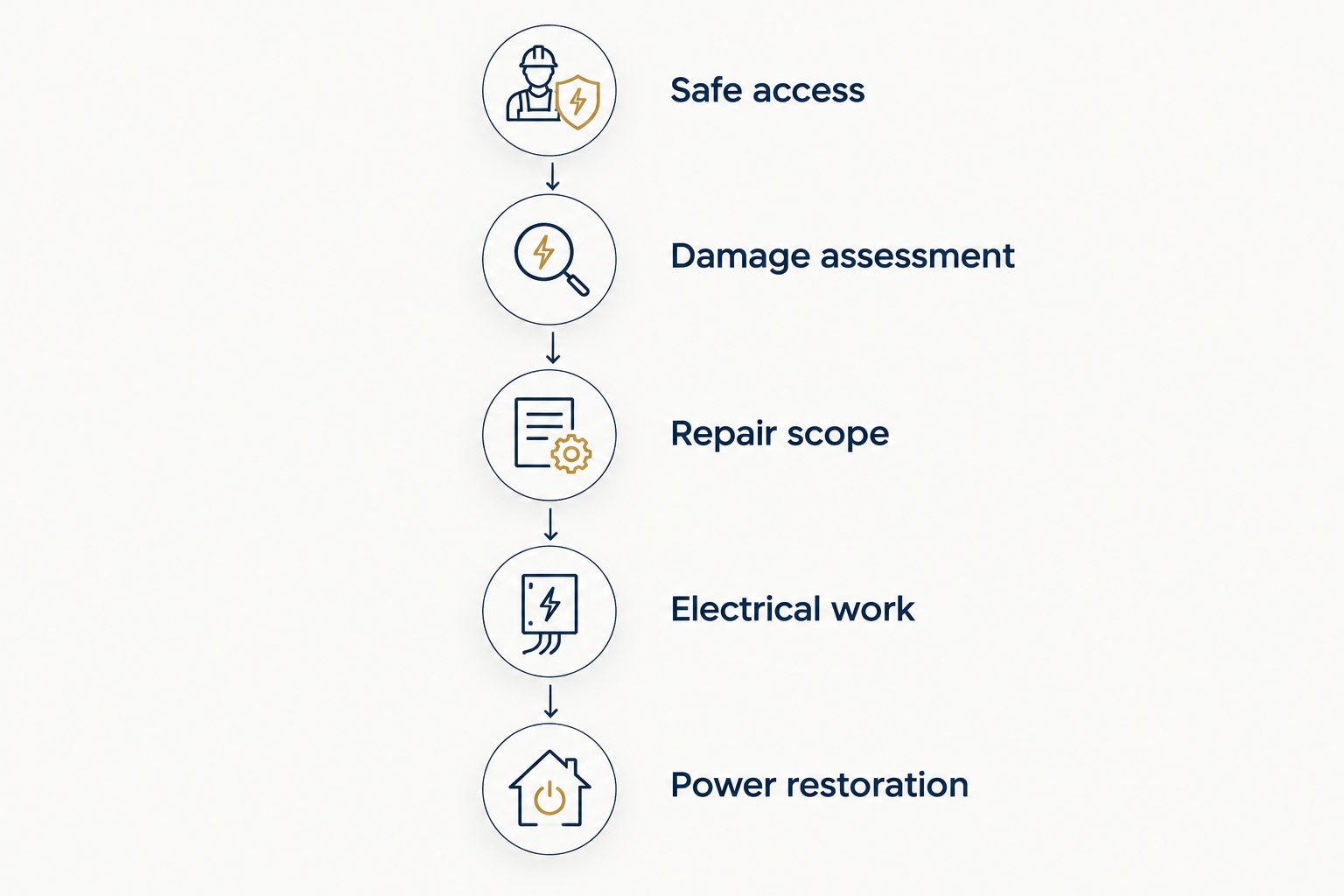
Use these milestones to understand the schedule:
- Safe access. The property must be accessible without exposing workers or occupants to downed lines, floodwater, unstable structures, or other immediate hazards.
- Damage assessment. The electrician identifies affected equipment, checks the extent of damage, and establishes what must remain disconnected.
- Repair scope. The written scope identifies the work, required components, and any permit or inspection requirements.
- Electrical work. The electrician completes the approved repairs and verifies the affected installation before it returns to service.
- Power restoration. Required approvals and utility reconnection must be complete before the affected service is energized.
Ask which milestone the quoted completion date represents. An arrival appointment is not a repair completion date, and a repair completion date is not necessarily a utility reconnection appointment.
Compare the damage, not just the outage
A neighborhood outage does not establish that your electrical system needs repair. Conversely, power returning nearby does not establish that your property is safe to reconnect.
| Damage or outage condition | What needs evaluation | Main scheduling dependency | What not to assume |
|---|---|---|---|
| Utility outage without confirmed property damage | Utility service status and any signs of property-side damage | Utility restoration | An electrician can restore the utility supply |
| Isolated circuit damage | Affected wiring, devices, and connected equipment | Defining and repairing the affected circuit | The visible damaged device is the only fault |
| Service entrance damage | Service attachment, conductors, meter equipment, and related components | Responsibility, required approvals, and utility coordination | Repair completion automatically authorizes reconnection |
| Water-damaged electrical equipment | Equipment exposed to water and the extent of contamination | Professional evaluation and replacement requirements | Dry equipment is safe equipment |
| Structural damage around wiring | Wiring routes, supports, enclosures, and access | Building repairs and coordination between trades | Electrical work can finish independently of rebuilding |
These are damage conditions, not promised service tiers. Your property can have more than one condition at the same time.
Isolated circuit damage: establish the full repair scope
When damage is limited to a circuit, the first task is confirming that boundary. A broken outdoor fixture is visible; damage to its wiring or enclosure is not always visible from outside.
Ask the electrician to identify the affected circuit and explain whether the fault is confined to a device, wiring section, or connected equipment. The useful estimate describes both the repair and the checks needed before that circuit returns to service.
Do not repeatedly reset a breaker that trips after a storm. A tripping breaker is a reason to investigate the circuit, not evidence that another reset will solve the problem. Avoid using damaged outlets, switches, or equipment while you wait for evaluation.
The advantage of a confirmed isolated fault is a defined scope. The limitation is that a visible symptom alone does not prove the damage is isolated.
Service entrance damage: include the utility handoff
Damage near the point where power enters a building requires clear responsibility. The utility and property owner have different responsibilities, and the dividing point depends on the service arrangement and utility requirements.
Ask who must repair each damaged component, who arranges any required disconnection, and what the utility needs before reconnecting. Never approach or handle a fallen service wire, even if the building has no power.
A contractor’s estimate should separate property-side electrical work from utility work. That distinction prevents you from treating a finished repair as a promise that the utility will reconnect immediately.
If the panel is part of the damage, review the guide to how long an electrical panel upgrade takes. Replacement work still needs a property-specific scope; an upgrade schedule is not a storm-repair guarantee.
Water damage: drying is not clearance to reconnect
Water exposure changes the repair question from whether equipment operates to whether it is safe to use. Electrical equipment exposed to flooding needs qualified evaluation, with replacement or other action determined by the equipment and applicable manufacturer guidance.
Do not energize flood-exposed equipment simply because it looks dry. Moisture, contamination, and damage inside an enclosure are not ruled out by a dry exterior.
Tell the electrician where water entered, which rooms flooded, and whether electrical equipment was submerged. Share photographs taken from a safe location, but do not remove panel covers or enter water to document damage.
For 2026 storm recovery, treat building drying and electrical clearance as separate tasks. Finishing water removal does not establish that affected wiring, breakers, receptacles, or equipment can return to service.
Why storm damage electrical repair time varies
The most useful schedule identifies dependencies rather than offering an unsupported deadline. Ask the contractor to explain which of these factors applies to your property:
- Damage extent. A confirmed circuit fault and damage across the service, panel, and building wiring involve different scopes.
- Water exposure. Flooded equipment requires evaluation beyond checking whether lights turn on.
- Safe access. Floodwater, damaged roofing, unstable walls, and fallen lines can prevent inspection or repair.
- Required approvals. Permits, inspections, and utility release requirements depend on the work and local authority.
- Equipment requirements. Replacement components must match the installation’s requirements; the scope needs to identify them before work proceeds.
- Other repairs. Roof, wall, or structural work can control when electrical components can be safely installed or enclosed.
None of these factors supports a universal completion promise. A useful 2026 estimate states the current scope, identifies unresolved dependencies, and explains what triggers an updated schedule.
What should you ask before approving the repair?
Ask for a written scope that distinguishes immediate safety work from the work required for permanent restoration. You should be able to identify what remains disconnected and why.
Use these questions during the assessment:
- What electrical damage has been confirmed, and what still needs investigation?
- Which equipment requires replacement rather than continued use?
- Does the work require a permit, inspection, or utility coordination?
- Who arranges each approval or utility appointment?
- Does the estimated finish mean electrical work is complete or power is restored?
- Which findings would change the scope or schedule?
Keep emergency electrical work separate from optional improvements. If you want surge protection or generator work considered, ask for it as a distinct scope so the restoration requirements remain clear.
Imperium Electric LLC provides electrical, generator installation, and general contracting services. That service range is relevant when a Treasure Coast property needs work across several trades, but required approvals and utility work remain separate scheduling dependencies.
Discuss your electrical repair
Explain the damage and ask about the assessment, repair scope, and restoration requirements.
Can power come back before every repair is finished?
Power restoration and full repair completion are different milestones. A qualified electrician must determine whether unaffected portions can operate safely while damaged portions remain properly isolated, subject to applicable approvals and utility requirements.
Do not make that decision by switching breakers until something works. Ask for a clear explanation of which circuits are safe to use and which must remain off.
Does utility restoration mean my home is safe?
Utility restoration does not establish that your home’s electrical equipment escaped storm damage. Report damaged service equipment, water exposure, burning smells, or other electrical concerns before using the affected installation.
If you see sparks, fire, or a fallen line creating an immediate hazard, stay away and contact emergency services and the utility. Do not approach electrical equipment to investigate.
Can a generator shorten the repair timeline?
A generator supplies backup power; it does not repair storm-damaged wiring or remove reconnection requirements. Safe use requires the correct connection arrangement and an electrical system suitable for the intended supply.
Never connect a portable generator through a wall outlet or operate it indoors. If the building’s electrical equipment was damaged, have the connection and affected circuits evaluated before using backup power.
FAQ
How long does storm damage electrical repair take after a hurricane?
Storm damage electrical repair has no fixed duration; the damaged equipment, water exposure, required approvals, and utility coordination determine the schedule. Ask for separate milestones for assessment, electrical work, and power restoration.
Can an electrician restore power if the utility is still out?
An electrician cannot restore the utility’s power supply by repairing your property’s wiring. Property-side repairs and utility restoration are separate tasks.
Can I turn my main breaker on after floodwater recedes?
Do not turn on flood-exposed electrical equipment without qualified evaluation. Receding water and a dry exterior do not establish that the equipment is safe.
Will storm damage electrical repair require an inspection?
Inspection requirements depend on the repair scope and the authority responsible for the property. Ask the electrician to identify the applicable requirements before treating a completion date as a reconnection date.
What information should I give an electrician after a storm?
Provide the property location, visible damage, water-exposure details, and utility service status. Share photographs only when you can take them without approaching damaged equipment or other hazards.
Can I stay in my house while electrical repairs happen?
Whether you can remain depends on electrical hazards, building conditions, and any restrictions from responding authorities. Do not remain in an unsafe building or rely on functioning lights as proof of safety.
Does a tripped breaker mean I need a new electrical panel?
A tripped breaker alone does not establish that your panel needs replacement. An electrician must identify the fault and evaluate the affected equipment before recommending the repair.
One last thing
Ask what event makes your property ready for reconnection—not just what day the electrician expects to finish. That question exposes whether inspection, utility action, or another repair still sits between completed electrical work and restored power.
For your 2026 recovery records, keep the repair scope, inspection documents, and utility communications in one place. Before the contractor leaves, confirm which equipment is cleared for use and what must remain disconnected.