Tankless water heater installation time depends on whether you are replacing a compatible unit or converting a storage-tank system; a firm schedule requires checking the existing plumbing, power supply, and installation location. Separate the hands-on installation from permitting, utility coordination, and inspections, because those steps affect the overall completion date without necessarily extending your hot-water outage.
- How long does tankless water heater installation take? Get a site-specific schedule, not a blanket completion promise.
- A compatible tankless replacement has fewer connection changes than a tank-to-tankless conversion.
- Confirm the hot-water outage separately from the installation appointment and inspection schedule.
- Imperium Electric LLC serves Treasure Coast homeowners needing licensed plumbing and electrical services.
Why this matters
A water heater appointment and a completed conversion are not the same thing. You need to know when the crew arrives, when the existing heater stops operating, and when the replacement is ready for use.
For your 2026 project, ask for those milestones in writing before arranging time off or scheduling guests. Imperium Electric LLC provides licensed plumbing and electrical services for residential and commercial customers in Port St. Lucie, Stuart, Jensen Beach, and the Treasure Coast.
Plan around the confirmed hot-water interruption, not just the appointment window. A crew can complete preparatory work while the existing heater remains connected, but the contractor must determine what your particular installation allows.
How long does tankless water heater installation take?
The installation schedule comes from the work required at your property, not the word tankless. Reusing suitable connections is a different job from adding electrical circuits, changing gas piping, relocating water lines, or creating a new vent route.
Ask the installer to break the project into these steps:
- Site assessment. Confirm hot-water demand, equipment requirements, location, access, and existing utility connections.
- Preparatory work. Complete the necessary plumbing, electrical, gas, venting, or mounting changes before removing the old heater wherever practical.
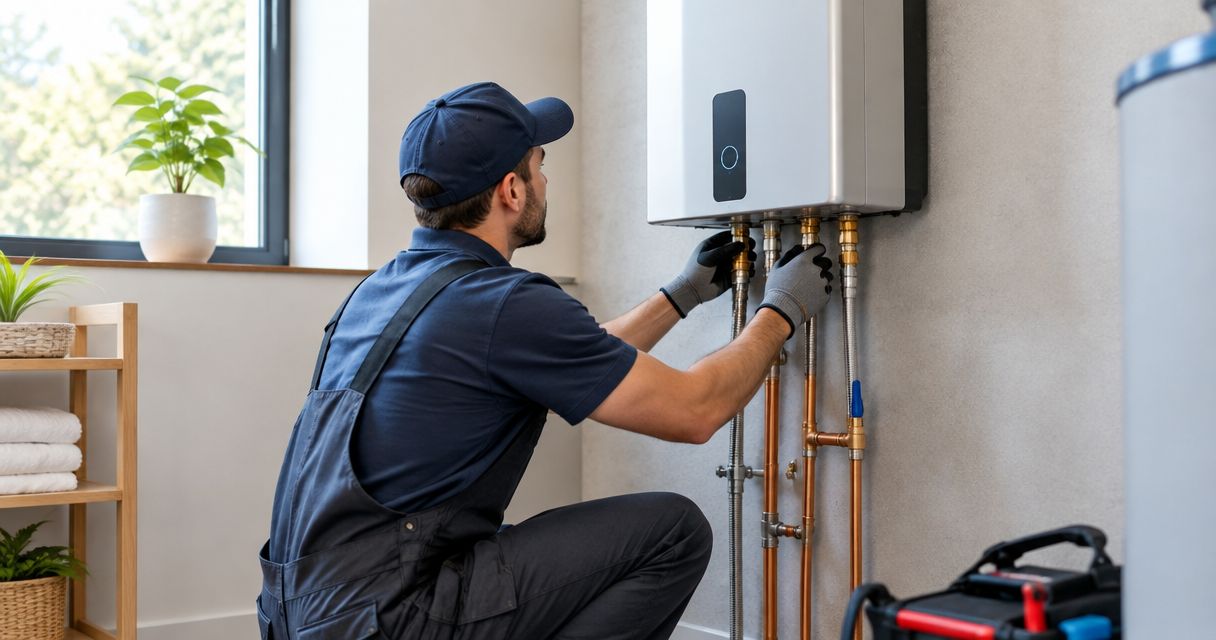
- Equipment changeover. Isolate the existing heater, disconnect it safely, mount the replacement, and make the specified connections.
- Startup checks. Follow the manufacturer's commissioning instructions, check for leaks, and verify hot-water operation.
- Required approvals. Complete applicable inspections and resolve any correction items.
The contractor should identify which steps happen during the installation appointment and which require separate visits. Do not treat a preliminary appointment as a confirmed hot-water restoration deadline.
Compare the scope before comparing schedules
| Installation scope | Best for | Scheduling advantage | Limitation to check |
|---|---|---|---|
| Compatible tankless replacement | Replacing an existing tankless heater in a suitable location | Existing infrastructure can reduce connection changes | The replacement still needs verified electrical, gas, venting, and plumbing compatibility |
| Tank-to-electric-tankless conversion | Homes where an electrical assessment confirms suitable capacity | Electric tankless equipment does not need combustion venting | New circuits or a service upgrade can become separate work |
| Tank-to-gas-tankless conversion | Homes where gas supply and an approved installation location are confirmed | A suitable existing gas supply can simplify the scope | Gas capacity, venting, and condensate provisions need assessment |
| Relocated installation | Projects where the current location does not meet the new installation plan | Location can be chosen around access and service requirements | New pipe routes and building repairs expand the work |
These are scope comparisons, not promised completion times. For a 2026 installation, the written proposal should identify the applicable row and list any additional work.
Compatible tankless replacement: confirm every connection
Replacing an existing tankless heater avoids designing an entirely new system only when the existing infrastructure suits the replacement. Similar-looking equipment does not establish compatibility.
The installer must check the selected unit's requirements against the actual water connections, electrical supply, mounting surface, and service clearances. Gas equipment also needs checks of fuel supply and the specified venting arrangement.
Keep the replacement scope narrow only when the existing installation passes those checks. Reusing unsuitable connections to protect a promised deadline is not an acceptable shortcut.
Before booking, send the contractor photographs of the existing heater, its data label, nearby piping, and the surrounding space. Photographs help explain the job, but they do not replace measurements or an on-site assessment when those are needed.
Electric tankless conversion: assess the electrical supply first
An electric tankless conversion needs more than open wall space and nearby water lines. The electrician must assess the selected heater's electrical requirements, existing service capacity, panel arrangement, and circuit routes.
An unused breaker position does not prove that the home can support the additional load. The assessment needs to consider the service and connected loads, not simply whether another breaker fits.
For homeowners considering a 2026 conversion, settle electrical feasibility before choosing the installation date. If the assessment identifies a panel or service change, ask whether that work requires separate permitting, utility coordination, or inspections.
Imperium Electric LLC provides both plumbing and electrical services, making the company relevant to homeowners whose water heater project involves both trades. The property assessment still determines the required work and schedule.
Gas tankless conversion: verify supply and venting
A gas tankless conversion requires the contractor to check whether the gas supply supports the selected equipment. An existing gas connection alone does not establish adequate capacity.
The installation also needs an approved location and the venting arrangement specified for that equipment. Condensing equipment needs a suitable condensate disposal arrangement under the manufacturer's instructions and applicable requirements.
Confirm the gas, venting, and drainage scope before disconnecting the old heater. A location that looks convenient can require additional work once clearances and pipe routes are checked.
Ask the contractor which existing components are suitable for reuse and which must change. That distinction gives you a clearer schedule than a general promise that gas installations are quick.
Why tankless water heater installation time varies
The main scheduling factors are physical work and required coordination. Ask your contractor to connect each factor to a specific task in the proposal:
- Existing connections. Suitable water lines, isolation valves, wiring, and fuel connections reduce alterations; unsuitable components need replacement or rerouting.
- Electrical capacity. An electric conversion needs an assessment of service capacity and circuit requirements before the installation scope is final.
- Gas and venting requirements. Gas piping, combustion-air provisions where applicable, vent routes, and condensate disposal affect the work required.
- Location and access. Tight spaces, difficult pipe routes, and relocation add tasks beyond mounting the heater.
- Permits and inspections. Applicable approvals create milestones separate from the crew's hands-on work.
- Existing defects. Damaged piping, leaking shutoffs, or unsafe connections need correction rather than concealment behind new equipment.
A useful estimate explains these factors in plain language. Ask what is confirmed, what still requires inspection, and which finding would change the schedule.
How do you keep the hot-water interruption shorter?
Complete approved preparatory work before changeover wherever the installation allows it. Your contractor should decide the sequence; do not disconnect wiring, gas piping, or water lines yourself.
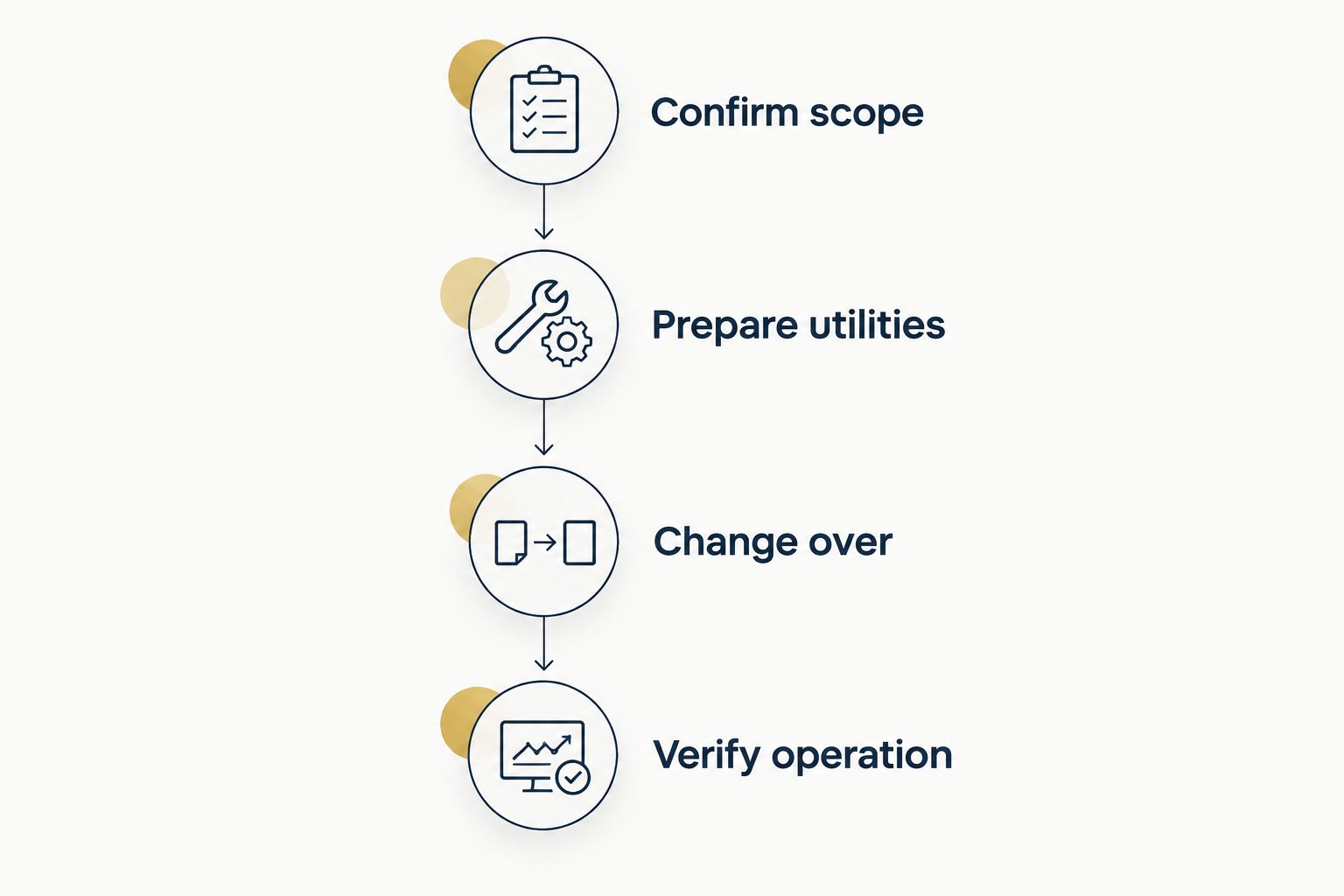
Use this sequence to organize the discussion:
- Confirm scope. Settle the equipment choice, location, connection requirements, and responsibility for permits.
- Prepare utilities. Complete the necessary approved preparatory work while keeping the existing heater operating where practical.
- Change over. Schedule the planned shutdown, equipment removal, and final connections.
- Verify operation. Complete startup checks and confirm when the heater is ready for use.
Clear a safe route to the heater and panel before the crew arrives. Keep children and pets away from the work area, and tell the contractor about locked access points or building access rules in advance.
For the broader project scope, read the guide to tankless water heater installation for Treasure Coast homes. Your property's confirmed requirements should control the final installation plan.
Can you have a tankless water heater installed in one visit?
A single visit is possible only when the required work, materials, access, and approvals allow it. Do not book around that expectation until the contractor has assessed the site.
Ask whether the proposed visit includes removal, connection changes, startup, and cleanup. Also ask whether an inspection or utility appointment remains outstanding afterward.
A visit count is useful only when its scope is clear. Returning for an inspection is different from returning because essential electrical work was never included in the original plan.
Will you lose all water during installation?
The shutdown arrangement determines which fixtures lose water. The installer needs to isolate the work safely; the condition and placement of existing shutoff valves affect what remains usable.
Ask specifically whether toilets, cold-water taps, and other fixtures will remain available during changeover. Do not assume that a hot-water project affects only hot-water faucets.
If someone in your household depends on accessible bathing or scheduled care, explain that before booking. Build the appointment around the contractor's confirmed shutdown plan rather than an assumed interruption.
What should the installation proposal include?
Your 2026 proposal should describe the job well enough that you can distinguish installation work from unresolved dependencies. A short equipment description is not a complete scope.
Ask for written confirmation of:
- The selected heater and installation location.
- Included plumbing, electrical, gas, venting, and condensate work, as applicable.
- Existing components proposed for reuse.
- Responsibility for permits, inspections, and utility coordination.
- The planned shutdown and the conditions for restoring hot water.
- Removal of the old heater and any wall or surface repairs included.
- The process for approving additional work discovered on site.
Imperium Electric LLC is a fit for Treasure Coast homeowners who need licensed plumbing and electrical services. Confirm the particular tankless installation scope before treating any appointment as a completion commitment.
Discuss your water heater project
Ask about the plumbing and electrical scope for your Treasure Coast property.
FAQ
How long does tankless water heater installation take from start to finish?
The start-to-finish schedule depends on the connection changes, preparatory work, and approvals required at your property. Ask for separate milestones for installation, hot-water restoration, and final inspection.
Is replacing a tankless water heater quicker than converting from a tank?
A compatible tankless replacement has fewer connection changes than a conversion that requires new infrastructure. The installer still needs to verify that existing plumbing, power, gas, and venting suit the replacement.
Can I use hot water while the new tankless heater is being installed?
Hot water is unavailable when the existing heater is disconnected unless a separate approved arrangement is in place. Ask the contractor when disconnection begins and what must happen before service resumes.
Will an electric tankless water heater need a panel upgrade?
An electrical assessment determines whether a panel or service upgrade is needed. Available breaker spaces alone do not establish adequate electrical capacity.
Does a gas tankless heater use the old water heater vent?
The existing vent is reusable only if it meets the selected heater's installation requirements and applicable rules. Have the installer verify the vent rather than assume it fits because the previous heater used gas.
Do I need a permit for a tankless water heater installation in Florida?
Confirm permit requirements with the building department responsible for your property before work begins. The contractor should identify required plumbing, electrical, or gas approvals and who will obtain them.
What should I ask before booking installation in 2026?
Ask for the confirmed scope, planned hot-water outage, and any separate utility or inspection appointments. Also confirm how the contractor handles additional work discovered after the old heater is removed.
One last thing
A working heater and immediate hot water at every faucet are different expectations. Water already sitting in the hot-water pipe still has to travel out before newly heated water reaches the fixture, unless the plumbing includes an appropriate circulation arrangement.
Before closing out your 2026 installation, ask the installer to demonstrate operation at the fixtures you actually use. Verify the finished system, not just the heater's display.