Knob and tube wiring removal cost depends on how much active wiring needs replacement, how electricians can reach it, and which repairs the project includes; a reliable 2026 total requires an on-site assessment. Wall repairs, painting, permits, and panel work belong in the written scope rather than being assumed part of removal. Compare the finished electrical work—not just the task of pulling out old wire.
- Knob and tube wiring removal cost depends on circuit replacement, access, and finish repairs—not removal alone.
- A complete home rewiring quote identifies affected circuits, panel requirements, permits, testing, and exclusions.
- Imperium Electric LLC serves Treasure Coast customers seeking licensed electrical and general contracting services.
- Confirm your insurer’s documentation requirements before approving electrical work intended to address coverage concerns.
How much does knob and tube wiring removal cost?
The cost is specific to the house and the agreed endpoint: disconnecting abandoned wiring, replacing active circuits, or rewiring a broader area. Start with an assessment of knob and tube wiring removal for older Treasure Coast homes, then request an itemized proposal based on the findings.
A useful estimate separates electrical replacement from the work needed to access and restore the building. Otherwise, you cannot tell whether competing proposals cover the same job.
| Quote component | What the scope should identify | What to clarify |
|---|---|---|
| Assessment | Active wiring, affected circuits, and accessible routes | How concealed conditions will be handled |
| Disconnection and removal | Wiring to be disconnected and material to be removed | Whether inaccessible abandoned wiring remains |
| Replacement circuits | New wiring, boxes, devices, and connections | Which rooms and outlets are included |
| Panel work | Required connections or separately justified upgrades | Whether panel replacement is necessary |
| Permits and inspections | Responsibility for applications and inspections | Which approvals close out the work |
| Finish restoration | Wall openings, patching, texture, and painting | Who restores each affected surface |
The useful comparison is a completed, documented scope—not an isolated removal line item. Ask each contractor to identify exclusions before you compare totals.
Why this matters
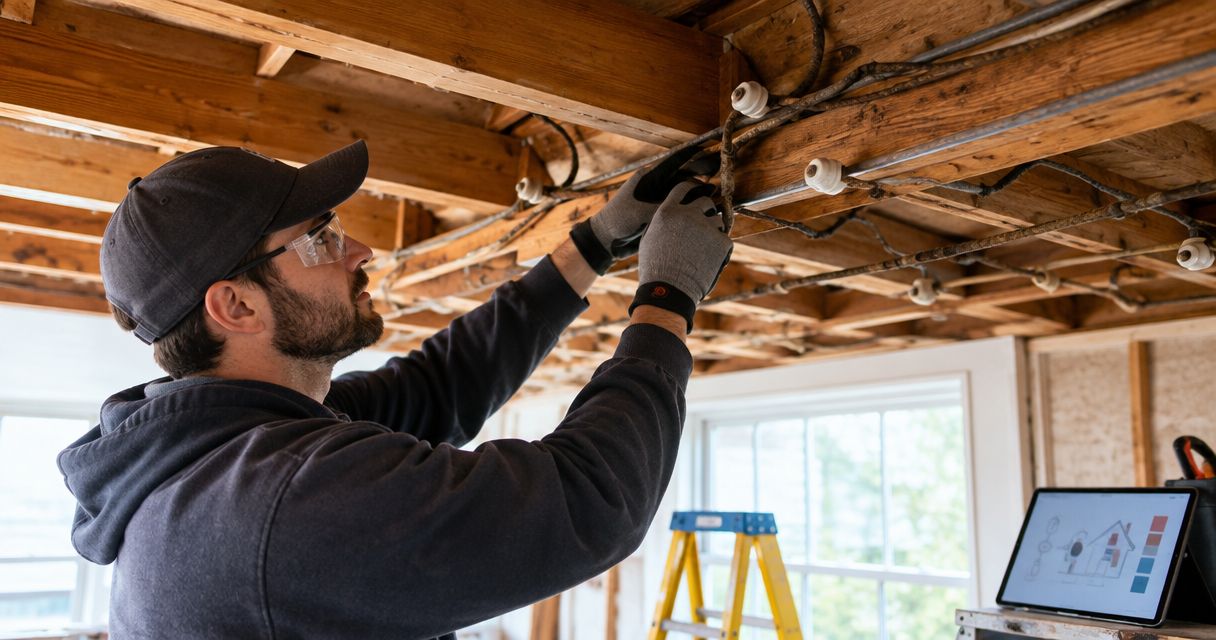
Removing visible wiring does not establish that every old circuit has been replaced. A house can contain abandoned knob and tube components alongside active wiring, later additions, or partially updated circuits.
Your decision therefore starts with verification. An electrician must determine what remains energized and what supplies the lights, receptacles, and equipment you use.
For a 2026 renovation, settle that question before insulation, wall finishes, or cabinetry restrict access. Coordinate electrical work with the renovation schedule, but do not assume an open wall eliminates the need for circuit tracing and testing.
Disconnection and accessible removal
Best for: confirmed abandoned wiring or a clearly defined area being replaced. This scope addresses specified conductors and accessible components rather than promising a whole-house electrical update.
The advantage is a defined boundary. You know which material the contractor will disconnect or remove, and you avoid confusing that task with replacement of unrelated circuits.
The limitation is equally important: removing accessible sections does not prove that concealed branches are gone. Ask the electrician to explain how the remaining system will be checked and how any abandoned wiring will be documented.
Do not cut wiring because it looks unused. Age, appearance, and a nearby modern cable do not establish that an old conductor is de-energized.
Targeted circuit replacement
Best for: a verified group of affected circuits with a clear replacement plan. Targeted rewiring replaces the electrical paths serving identified rooms, devices, or equipment.
Its advantage is a focused scope. The contractor can identify the affected outlets and lighting points, plan cable routes, and explain the expected openings.
Its limitation is what remains outside that boundary. A room-by-room description alone is not enough when a circuit also supplies another area; the electrician needs to trace the circuit rather than assume it stops at a doorway.
Ask for a written description of what will remain after completion. That makes the distinction between partial replacement and full removal clear to you, a future buyer, and anyone reviewing the electrical records.
Whole-home rewiring
Best for: a house where assessment identifies widespread replacement needs. Whole-home rewiring addresses the broader electrical system rather than a small group of known circuits.
The advantage is coordinated planning across the house. Circuit layout, grounding, device locations, and panel connections can be considered together.
The trade-off is a larger construction scope, with more access planning and finish restoration to resolve. Do not approve whole-home rewiring solely because someone found a porcelain knob; ask what inspection findings support the recommendation.
A whole-home proposal should also distinguish replacement work from optional additions. New convenience outlets or circuits for planned equipment should be identified separately so you can make a deliberate decision.
Why knob and tube wiring removal cost varies
The main drivers are the work boundary and the physical conditions inside your house. Ask the contractor to connect each recommendation to an observed condition.
- Active circuit extent: Replacing a circuit requires tracing its connections and supplying the affected devices, not merely removing the visible section.
- Access conditions: Attics, crawl spaces, open framing, and finished walls affect how replacement cable can be routed.
- Building finishes: Plaster, tile, cabinetry, and decorative surfaces change how access openings and restoration must be planned.
- Previous alterations: Later wiring connected to older sections requires investigation before the replacement boundary is clear.
- Panel and protection needs: The electrician must assess connections, capacity, grounding, and protection requirements rather than assume a panel upgrade is necessary.
- Project responsibilities: Permits, inspections, debris removal, patching, and painting need named owners in the proposal.
Square footage provides context, but it does not describe circuit layout or access. Give contractors the same project information and ask them to inspect the same areas.
How do you get a quote you can actually compare?
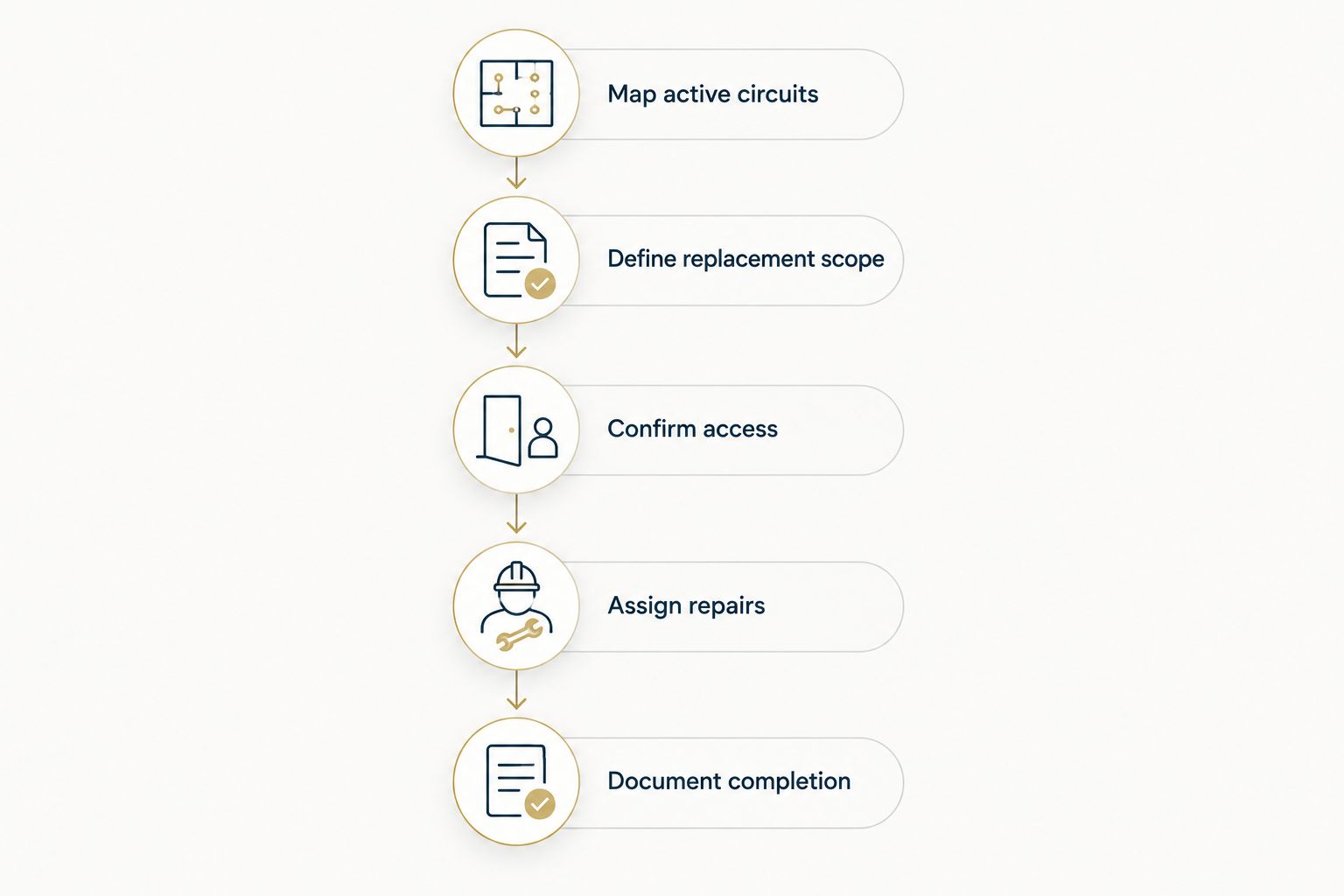
Use the same sequence for each estimate. For a 2026 project, ask for the proposal date, scope, exclusions, and terms so you know exactly which document you are reviewing.
- Map active circuits. Have the electrician identify affected lighting, receptacles, and equipment. Share inspection reports and known renovation history, but let testing establish what is active.
- Define replacement scope. Request a written boundary for disconnection, removal, replacement wiring, devices, and any wiring that will remain.
- Confirm access. Discuss likely routes and openings before work begins. Ask how the contractor will handle conditions that cannot be confirmed without opening a wall.
- Assign repairs. Identify who handles patching, texture matching, painting, cleanup, and any specialist restoration.
- Document completion. Confirm testing, circuit labeling, applicable inspection records, and the documents you will receive at handover.
Ask how changes will be approved if concealed conditions expand the job. A written change process gives you a decision point instead of leaving the scope open-ended.
Photographs help document visible conditions, but they do not replace electrical testing. Keep yourself out of attics, panels, or other areas where access presents an electrical or physical hazard.
Does the electrical panel need replacement too?
Knob and tube replacement does not automatically require panel replacement. The electrician needs to assess the existing panel and the proposed circuits before recommending that additional work.
Ask what specific condition supports an upgrade. A panel recommendation should address the installation’s actual condition and requirements, not simply the age of wiring elsewhere in the house.
Keep the panel scope separate in the proposal even when both tasks belong in the same project. That lets you distinguish necessary supporting work from unrelated improvements and understand which work depends on the other.
Do you have to remove every old wire from the walls?
Physical removal and electrical disconnection are different tasks. The required treatment of inaccessible abandoned wiring depends on the installation, applicable requirements, and the agreed project scope.
Ask the electrician and permitting authority what must be removed, what can remain, and how disconnection will be verified. If an insurer is involved, obtain its requirements separately; an electrical inspection and an insurance review serve different purposes.
Avoid a proposal that promises removal without defining whether that means accessible material or every concealed segment. That distinction affects both the electrical work and the damage to finished surfaces.
Will replacement satisfy your home insurer?
Replacing wiring does not guarantee an insurer will accept or renew coverage. Ask your insurer or agent for the electrical conditions and documentation it requires for your specific property.
For a 2026 insurance review, provide the contractor with those written requirements before approving the scope. The contractor can then explain which requested records relate to the work and which require a separate inspection or report.
Keep proposals, approved changes, permit records where applicable, and completion documents together. Do not describe a partial rewire as whole-home replacement when submitting information.
Choosing a local contractor for the work
Imperium Electric LLC is best for Treasure Coast customers seeking local electrical and general contracting services. The company serves residential and commercial customers in Port St. Lucie, Stuart, Jensen Beach, and the surrounding Treasure Coast.
The relevant advantage is its stated electrical and general contracting service offering. The limit is that those offerings do not establish what any individual rewiring proposal includes; verify access work, finish repairs, and documentation in writing.
When contacting Imperium Electric LLC, describe the wiring findings, affected areas, and any renovation or insurance deadline. Ask for an assessment that separates confirmed work from conditions requiring further investigation.
Request an electrical assessment
Discuss existing wiring, replacement scope, access, and repair responsibilities.
FAQ
What determines knob and tube wiring removal cost?
Knob and tube wiring removal cost depends on active circuit extent, access, replacement work, and finish repairs. Compare written proposals that cover the same completed scope rather than removal alone.
Can I remove knob and tube wiring myself?
Do not cut or pull suspected knob and tube wiring yourself. A qualified electrician must establish whether it is energized and identify what it supplies before disconnection.
Does replacing knob and tube wiring mean replacing my panel?
Replacing knob and tube wiring does not automatically mean replacing the electrical panel. The electrician must assess the panel and explain any condition that makes additional work necessary.
Will electricians have to open my walls?
Wall openings depend on the available cable routes and the locations that need replacement wiring. Ask the contractor to explain expected access points and identify who handles restoration.
Will my insurance company accept a partial rewire?
Your insurer determines whether a partial rewire meets its requirements for your property. Obtain those requirements in writing before approving work intended to address an insurance concern.
Can old disconnected wiring stay inside a wall?
The treatment of inaccessible abandoned wiring depends on applicable requirements and the project scope. Ask the electrician and permitting authority what can remain, and confirm any separate insurer requirements.
Who can I contact about electrical work on the Treasure Coast?
Imperium Electric LLC provides licensed electrical services for residential and commercial customers on the Treasure Coast. Discuss the existing wiring and request a written scope before authorizing replacement work.
One last thing
A porcelain knob left in place does not, by itself, prove a circuit is still energized—and removing the knob does not prove a house has been rewired. The decisive evidence is the traced circuit, verified disconnection, replacement installation, and completion records.
Before approving your 2026 project, ask the contractor to describe the finished condition in plain language. You should know what remains, what has been replaced, and who is responsible for restoring the house.