Budgeting for an electrical panel upgrade in Florida means planning around amperage size, permit fees, and home-age complications, not just the panel itself — the swap is one line item inside a larger scope that often includes rewiring, grounding, and code compliance work. Homes built before 1990 usually carry hidden costs the headline quote skips: panel-adjacent wiring that doesn't meet current code, outdated breaker brands insurers won't cover, or a service mast that has to move before an inspector signs off.
- Electrical panel upgrade cost in Florida depends on amperage jump (100A to 200A vs 200A to 400A), home age, and St. Lucie County permit requirements.
- Homes with Federal Pacific Electric or Zinsco panels often face insurer-driven replacement, not optional upgrades.
- Permits and inspections are mandatory for every panel upgrade in Florida — skipping one voids the work for insurance and resale purposes.
- Older homes (pre-1990) frequently need grounding or wiring updates bundled into the same job, which is where the real budget swing happens.
Why this matters
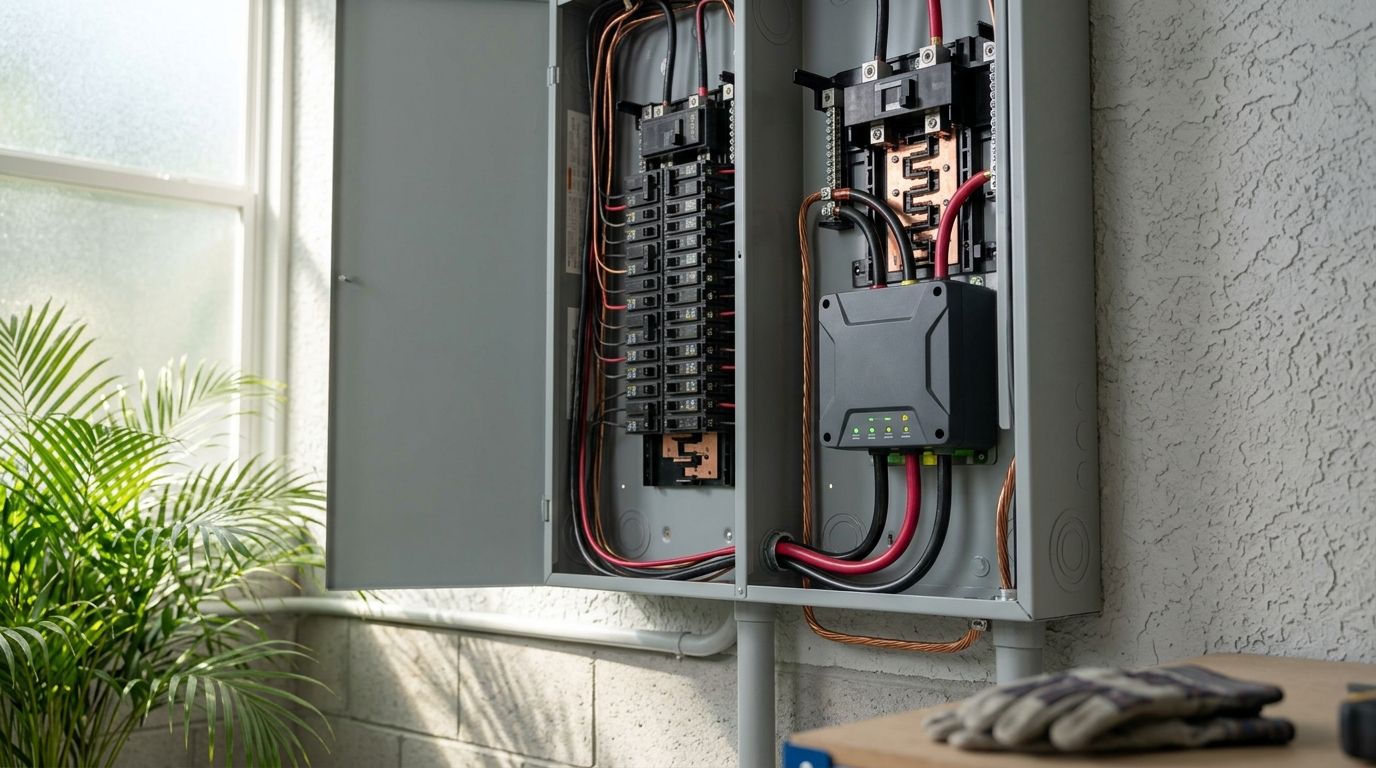
A panel upgrade quote that only lists amperage size is incomplete. Panel upgrades for older Port St. Lucie homes routinely uncover aluminum branch wiring, missing grounding rods, or breaker brands that no longer meet code — none of which show up until an electrician opens the box.
Florida's building code and insurance market both push panel upgrades harder than most states. Humidity corrodes lugs and breakers faster than dry climates, hurricane season adds surge exposure, and several major insurers now require panel replacement outright for flagged brands before renewing a policy. Budgeting for 2026 means accounting for all three pressures, not just the electrical work.
How much does an electrical panel upgrade cost in Florida?
Electrical panel upgrade cost in Florida is driven by five variables that stack on top of each other rather than replacing one another. The table below breaks down what pushes the number up or down on a typical job.
| Cost driver | Relative impact | Why it matters |
|---|---|---|
| Amperage jump (100A to 200A) | Moderate | Standard upgrade for most single-family homes adding AC load or kitchen circuits |
| Amperage jump (200A to 400A) | Higher | Needed for whole-house generators, EV chargers, or additions stacked on existing load |
| Home age (pre-1990) | Higher | Aluminum wiring, missing grounding, and obsolete breaker stock add labor |
| Permit and inspection | Fixed additional step | Every jurisdiction on the Treasure Coast requires it — no exceptions |
| Flagged panel brand (FPE, Zinsco) | Variable | Insurance-driven replacement timelines can override budget flexibility |
| Meter can or mast relocation | Higher | Required when the existing service position doesn't meet current clearance code |
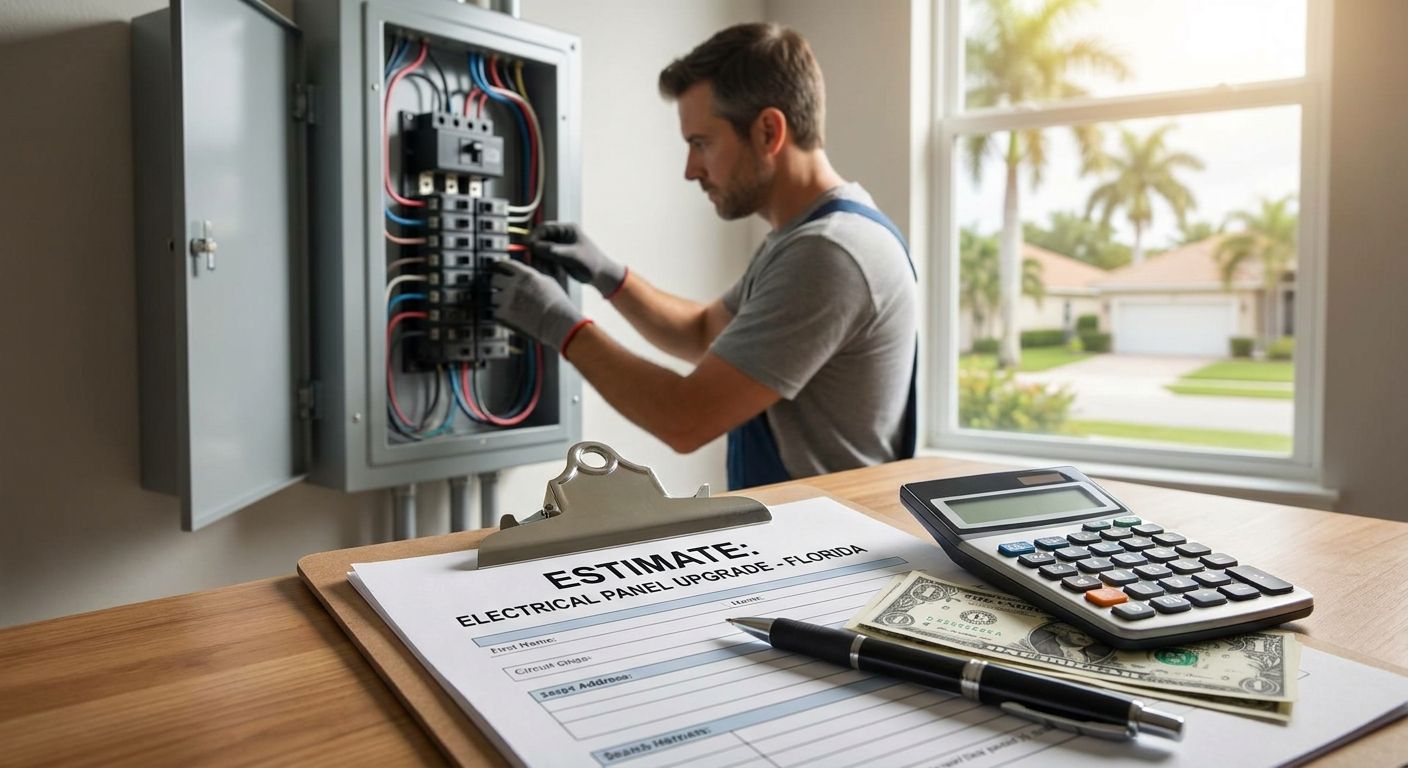
Getting a written scope before work starts is the single best way to avoid surprise change orders. Electrical quotes and estimates for Port St. Lucie homeowners should itemize amperage, permit, and any wiring remediation separately.
100 amp to 200 amp panel upgrades: what drives the cost
This is the most common upgrade path in Florida single-family homes built between the 1970s and 1990s. A 100A panel was standard for the era but struggles under modern loads — central air, an electric range, a pool pump, and a couple of window units can trip it regularly.
- Load calculation first. An electrician runs a load calc before quoting anything; skipping this step is how homeowners end up with an undersized panel twice.
- Breaker compatibility. Some 100A panels use obsolete breaker lines that are harder to source, which adds labor even on a straightforward swap.
- Meter base condition. If the meter can is original to the home, it often needs replacement alongside the panel — bundling it now avoids a second service call.
Verdict: standard job for most Treasure Coast single-family homes — budget for it as routine maintenance, not an emergency, unless a permit or insurer deadline is forcing the timeline.
200 amp to 400 amp panel upgrades: what drives the cost
This jump is less common but increasingly necessary as Florida homeowners add whole-house generators, EV chargers, and larger HVAC systems to the same service. A 200A panel can run out of headroom fast once a 22kW-class standby generator and a Level 2 EV charger both land on the same load.
- Sub-panel vs. full replacement. Some homes only need a sub-panel added rather than a full 400A service change — that decision alone swings the scope significantly.
- Utility coordination. Larger service upgrades sometimes require utility company approval or a temporary service disconnect, which adds scheduling time.
- Generator and EV stacking. Homes planning both a standby generator and an EV charger should size the panel for both loads at once rather than upgrading twice.
Verdict: worth the added scope if a generator or EV charger is already planned for 2026 — upgrading once beats paying labor twice.
Why panel upgrade cost varies in Florida
- Home age and wiring condition — pre-1990 homes frequently need grounding or branch-circuit work bundled into the panel job.
- Permitting requirements — permitting an electrical panel upgrade in St. Lucie County is mandatory, and inspection scheduling affects total project timeline.
- Flagged panel brands — Federal Pacific Electric and Zinsco panels are widely documented fire-risk brands that many Florida insurers now require replaced outright.
- Hurricane-code additions — surge protection and updated grounding are often added at the same time to meet current code and insurer expectations.
- Access and location — panels in garages are usually cheaper to access than panels behind finished walls or in tight utility closets.
- Service mast and clearance — if the mast doesn't meet current clearance code, relocation gets added to the scope.
Get an Itemized Panel Upgrade Quote
See amperage, permit, and wiring costs broken out before work starts.
Do I need a permit to upgrade an electrical panel in Florida?
Yes — every electrical panel upgrade in Florida requires a permit and a final inspection, and St. Lucie County enforces this without exception. Skipping the permit step can void insurance coverage tied to the electrical system and creates a disclosure problem at resale.
How long does an electrical panel upgrade take?
Most panel swaps take a single day of licensed electrician labor once the crew is on site, though the power to the home is off for part of that day. Permit review and inspection scheduling on the front and back end usually add more calendar time than the physical swap itself.
Does homeowners insurance require a panel upgrade in Florida?
Some Florida insurers require a panel upgrade before renewing or issuing a policy, specifically for homes with Federal Pacific Electric or Zinsco panels flagged as fire-risk brands. Electrical panel replacement for Florida insurance compliance covers which brands trigger this requirement and how insurers typically document the replacement.
Imperium Electric handles the amperage sizing, permit filing, and inspection scheduling as one scope rather than three separate line items, which is where most homeowners lose track of budget on this kind of job.
FAQ
What determines electrical panel upgrade cost in Florida?
Amperage jump, home age, and permit requirements are the three biggest drivers of electrical panel upgrade cost in Florida. Homes needing wiring remediation or a flagged panel brand replacement carry more scope than a straightforward amperage increase.
Do I need a permit for a panel upgrade in St. Lucie County?
Yes, St. Lucie County requires a permit and a final inspection for every electrical panel upgrade with no exceptions. The permit protects insurance coverage and resale disclosures tied to the home's electrical system.
Can I upgrade my own electrical panel to save money?
No, panel work tied to the main electrical service must be performed by a licensed electrician under Florida law. DIY panel work also voids most homeowners insurance coverage for electrical damage.
Does a whole-house generator require a panel upgrade?
Some standby generator installations require a panel upgrade to add capacity for the transfer switch and generator load, especially on older 100A services. Homes already near capacity should size the panel for the generator and any future EV charger at the same time.
What panel brands do Florida insurers flag most often?
Federal Pacific Electric (FPE) and Zinsco panels are the two brands most commonly flagged by Florida insurers as fire-risk equipment. Both were widely installed decades ago and are now frequently required to be replaced before a policy renews.
How long does an electrical panel upgrade take from start to finish?
The physical panel swap typically takes a single day, but permit filing and inspection scheduling add calendar time before and after the work. Total project timeline in 2026 depends on how fast the local permit office turns around the review.
Is a 200 amp panel enough for a Florida home with a pool and central AC?
A 200 amp panel covers most single-family Florida homes running central air, pool equipment, and standard kitchen circuits. Homes adding a whole-house generator or EV charger on top of that load often need a 400 amp service instead.
Does upgrading an electrical panel lower homeowners insurance costs?
Replacing an outdated or flagged panel often removes an insurance exclusion or lowers the premium, since many Florida carriers price risk based on panel brand and age. Confirming the new panel brand and permit documentation with the insurer after the upgrade closes the loop.
One last thing
The single biggest budget miss in 2026 isn't the panel itself — it's homeowners getting a verbal amperage quote and skipping the load calculation that determines whether 200A is even enough. Ask for the load calc in writing before signing anything, and confirm the permit is filed under the homeowner's name, not left as an open item for later.