Discolored water, pinhole leaks that keep coming back, and water pressure that never fully recovers are the clearest signs your home needs repiping. If your house was built with galvanized steel before 1970 or polybutylene between 1978 and 1995, repiping is often overdue even if the water still looks clear today.
- Discolored water, low pressure, and pipes over 40 years old are the top signs your home needs repiping.
- Galvanized steel pipe lasts 40 to 50 years, copper 50 to 70 years, polybutylene often fails in 10 to 15.
- Frequent pinhole leaks in more than one spot mean the whole line is failing, not just one section.
- Imperium Electric's licensed plumbers test pipe material and pressure before recommending a full repipe.
- Well water on the Treasure Coast corrodes pipe walls faster than city water — check your source first.
Why this matters
A lot of homeowners wait for a burst pipe before calling a plumber, and by then the water damage bill dwarfs the cost of the repipe itself. Older housing stock across Port St. Lucie, Stuart, and Jensen Beach still runs on original galvanized or polybutylene lines that were never designed to last past their 40- to 60-year window.
Catching the warning signs early turns a flood-and-repair emergency into a planned project. If you already suspect a slow leak behind a wall or under a slab, detecting it before it floods your home is the first move, not the last.
Signs Your Home Needs Repiping
Repiping isn't a guess. The signs show up in the water itself, in the pressure, and in how often you're calling someone out for a leak.
| Sign | What it means |
|---|---|
| Discolored or rusty water | Corroding galvanized pipe shedding rust into the water supply |
| Low or uneven water pressure | Mineral buildup or internal corrosion narrowing the pipe |
| Frequent pinhole leaks | Pipe walls thinning from age — more leaks are on the way |
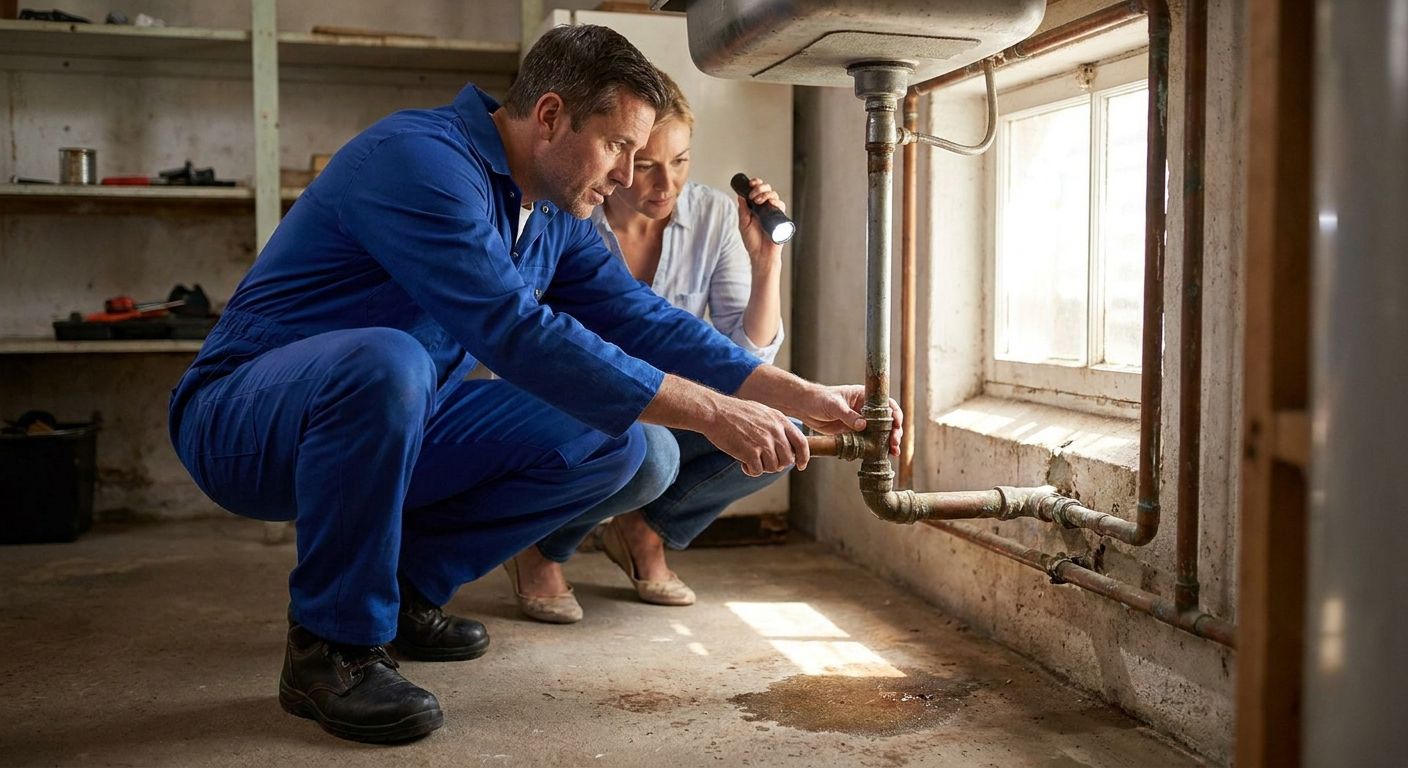
| Visible flaking or corrosion on exposed pipe | Pipe is near failure; patching is a short-term fix |
| Pipe age past 40 years (galvanized) or 10-15 years (polybutylene) | Material has reached or passed its expected service life |
| Water heater failing early or repeatedly | Sediment and corrosion feeding back from old supply lines |
If three or more of these show up in the same house, you're not looking at a repair job — you're looking at a repipe.
Galvanized Steel Pipes: 40 to 50 Year Lifespan
Galvanized steel was standard in homes built before the 1970s, and the zinc coating that protects the interior wears off from the inside out. Once it's gone, rust builds up and narrows the pipe, which is why older homes on the Treasure Coast often show declining pressure years before an actual leak.
Copper Pipes: 50 to 70 Year Lifespan
Copper holds up the longest of the common residential materials and is the standard material Imperium Electric installs on full repipe jobs. Even copper corrodes faster in homes with acidic well water, so age alone isn't the only factor to check.
Polybutylene Pipes: Failure Risk Within 10 to 15 Years
Polybutylene was installed heavily from 1978 to 1995 because it was cheap and fast to run, but it reacts poorly with chlorine and breaks down from the inside without warning. Homes on the Treasure Coast built in that window are strong repipe candidates even without visible symptoms yet, especially older stock covered under electrical rewiring for older Jensen Beach homes-era construction dates.
Why repiping needs vary from home to home
- Pipe material — polybutylene fails on a much shorter timeline than copper or PEX
- Water source — well water on the Treasure Coast is harder and more corrosive than municipal city water
- Original installation quality — undersized or poorly joined runs fail earlier regardless of material
- Water pressure settings — pressure above 80 psi accelerates wear on aging pipe walls
- Prior patch repairs — a history of spot fixes usually signals the rest of the system is close behind
- Soil and slab conditions — Florida's high water table speeds corrosion on pipe runs beneath the slab
How old does a home have to be before repiping is necessary?
40 years old is the general threshold for galvanized steel pipe, and 10 to 15 years is the realistic window for polybutylene before failures start. Copper can often run 50 to 70 years before repiping becomes necessary, so age alone means less than knowing which material is actually in the walls.
Can you repair pipes instead of replacing the whole system?
Spot repairs work for a single isolated leak in an otherwise sound system, but repeated leaks in different locations mean the pipe itself is failing, not just one joint. Sewer and supply line issues in older construction often show the same pattern — see how it plays out in sewer line repair for older Jensen Beach homes.
Does repiping affect a home sale on the Treasure Coast?
Yes — old galvanized or polybutylene pipe is one of the most common flags buyers' inspectors call out on Treasure Coast home sales, and it can stall or reduce an offer. Sellers who repipe ahead of listing, or who at least document a recent electrical and plumbing inspection for a home sale, avoid the last-minute renegotiation.
Imperium Electric's licensed plumbers walk the full system — supply lines, water heater, pressure — before recommending a targeted repair or a full repipe, so you're not paying for more work than the house actually needs.
Get your pipes checked before they fail
Licensed Treasure Coast plumbers assess pipe material and pressure on-site.
FAQ
What are the first signs a home needs repiping?
Discolored water, low water pressure, and repeated pinhole leaks are the first signs a home needs repiping. Any one of these alone can be a minor issue, but two or more together usually means the pipe material itself is failing.
How do I know if my pipes are galvanized or copper?
Galvanized steel pipe is dull gray and magnetic, while copper is reddish-brown and non-magnetic. A licensed plumber can confirm the material at an exposed section, like under a sink or in a utility closet, in a few minutes.
Is discolored water always a sign of bad pipes?
Not always — discolored water can also follow a water main break or local utility work. If it clears up within a day and doesn't return, it's likely not a pipe failure; if it's recurring, the pipe is corroding.
Can repiping be done without tearing up walls?
Some repipe methods route new lines through attics, crawlspaces, or exterior walls to limit drywall damage, depending on the home's layout. A full slab-run system usually requires some access points, but not full wall removal.
Does homeowners insurance cover repiping for polybutylene pipes?
Most standard homeowners policies do not cover the cost of repiping polybutylene pipe as preventive maintenance, since it's considered a known defect rather than sudden damage. Insurers typically only cover the water damage from an actual failure, not the pipe replacement itself.
How long does a whole-house repipe take?
A whole-house repipe on an average single-family home typically takes 2 to 5 days depending on square footage and access. Multi-story or slab-on-grade homes on the Treasure Coast can run longer if plumbing runs beneath the foundation.
What's the difference between repiping and pipe repair?
Pipe repair fixes or replaces a single failed section, while repiping replaces the entire supply line system throughout the home. Repair makes sense for an isolated issue; repiping makes sense once failures start recurring in different spots.
Are Florida homes more prone to pipe failure?
Florida homes on well water see faster pipe corrosion than homes on treated municipal water because of higher mineral content. High water tables along the Treasure Coast also add moisture exposure to slab-run pipes, which speeds up corrosion in galvanized systems.
One last thing
The home you should worry about most isn't the one with rusty water — it's the one with a water heater that keeps failing early for no obvious reason. That's often the first visible symptom of corroding supply lines feeding sediment back into the tank, months before anyone notices a pressure drop or a stain in the sink. If your water heater has needed more than one repair in the past two years, get the pipes checked before you replace the heater again.