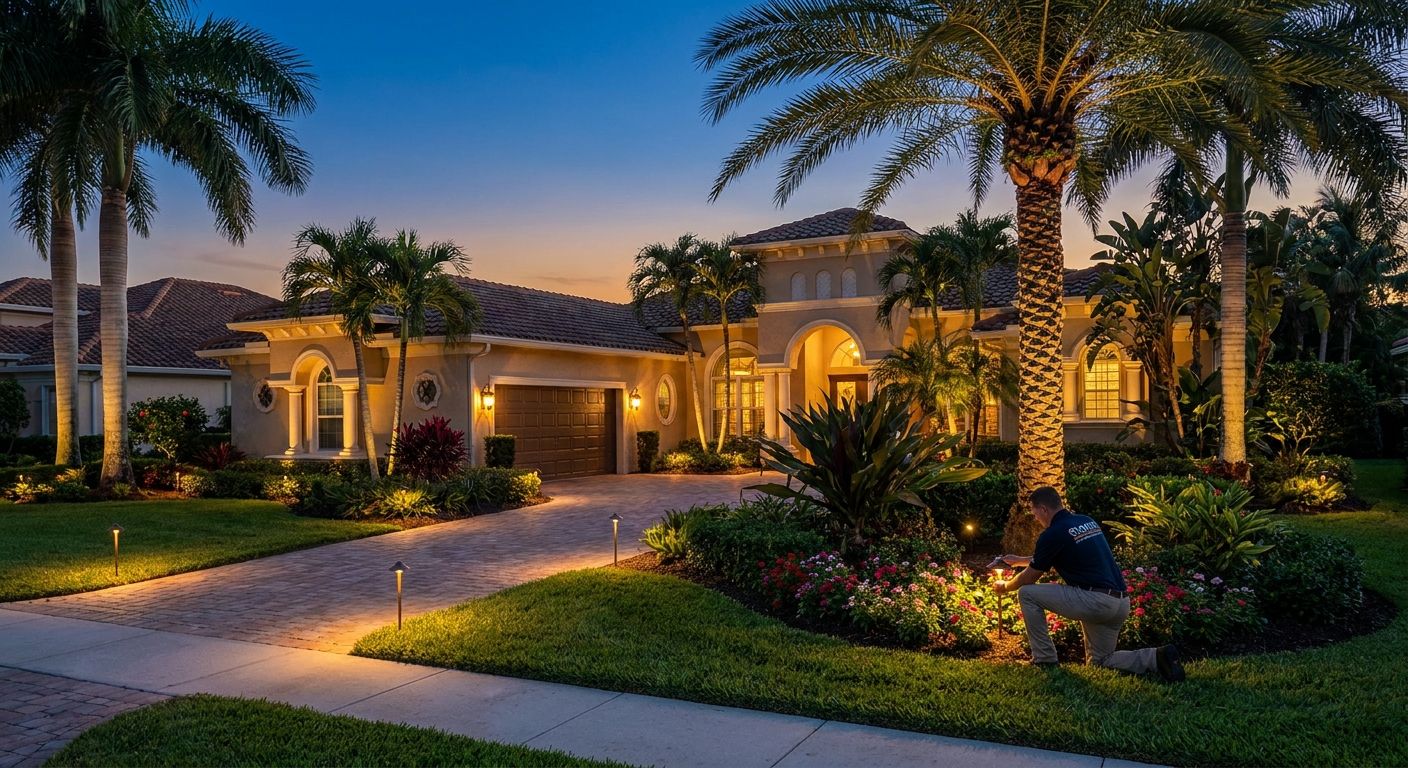
Outdoor lighting installation for Florida homes means running low-voltage or line-voltage circuits to walkway, pool, and entry fixtures built to survive salt air, humidity, and hurricane season without corroding out in the first year. Treasure Coast homeowners in Port St. Lucie, Stuart, and Jensen Beach need a different fixture and wiring spec than a homeowner in Ohio or Colorado — the same brass fixture that lasts 15 years inland can pit and fail in 18 months two miles from the Indian River Lagoon.
- Outdoor lighting installation florida requires GFCI-protected exterior circuits — it's a National Electrical Code requirement, not optional.
- Salt air corrodes standard aluminum and steel fixtures within 12-24 months on the Treasure Coast; brass or stainless steel fixtures last longer.
- Pool and dock lighting near water requires bonding to prevent stray voltage — a licensed electrician handles this, not a landscaper.
- Imperium Electric wires low-voltage landscape lighting and line-voltage fixtures for Port St. Lucie, Stuart, and Jensen Beach homes in 2026.
- DIY solar stake lights work for basic path lighting; anything wired to your panel needs a permit and a licensed installer.
Why outdoor lighting installation matters for Florida homeowners
Florida's exterior electrical environment punishes cheap hardware. Humidity sits above 80% for months at a time on the Treasure Coast, salt air rolls in off the Atlantic, and afternoon storms during hurricane season put standing water against every buried splice and junction box. A fixture rated for a dry Midwest yard is not rated for a Jensen Beach backyard 400 yards from saltwater.
Homeowners searching for outdoor lighting installation in Florida are usually solving one of three problems: security around a pool or driveway, curb appeal for a sale or renovation, or replacing corroded fixtures that failed faster than expected. Each of those has a different wiring and fixture answer, and getting it wrong means redoing the work within two summers.
Map your lighting zones before you buy a single fixture
Start by walking the property at dusk and marking every spot that needs light: front walkway, driveway edge, entry door, pool deck, dock if you have waterfront access, and any dark corners near gates or side yards. Zones determine circuit count, and circuit count determines whether this is a weekend DIY project or a licensed install.
- Walkway and driveway path lights (usually low-voltage, 12V)
- Entry and porch fixtures (often already on an existing switch leg)
- Pool deck and pool cage perimeter lighting (requires bonding — see below)
- Dock and seawall lighting for waterfront homes
- Uplighting for palms, oaks, or architectural features
- Motion-activated security fixtures at side and rear entries
Choose low-voltage or line-voltage based on the zone
Low-voltage (12V) transformer-fed systems are the standard for path and landscape accent lighting — they're cheaper to run, safer around kids and pets, and forgiving if you need to move a fixture later. Line-voltage (120V) is what pool cage perimeter lighting, dock lighting, and permanent architectural uplighting usually need, and that's where code compliance gets strict.
- Low-voltage kits: good for 10-20 path lights on one transformer, DIY-friendly
- Line-voltage runs: require conduit, proper burial depth, and a permit in most Treasure Coast municipalities
- Mixed systems: most Florida properties end up running both — low-voltage for the yard, line-voltage for structural and pool areas
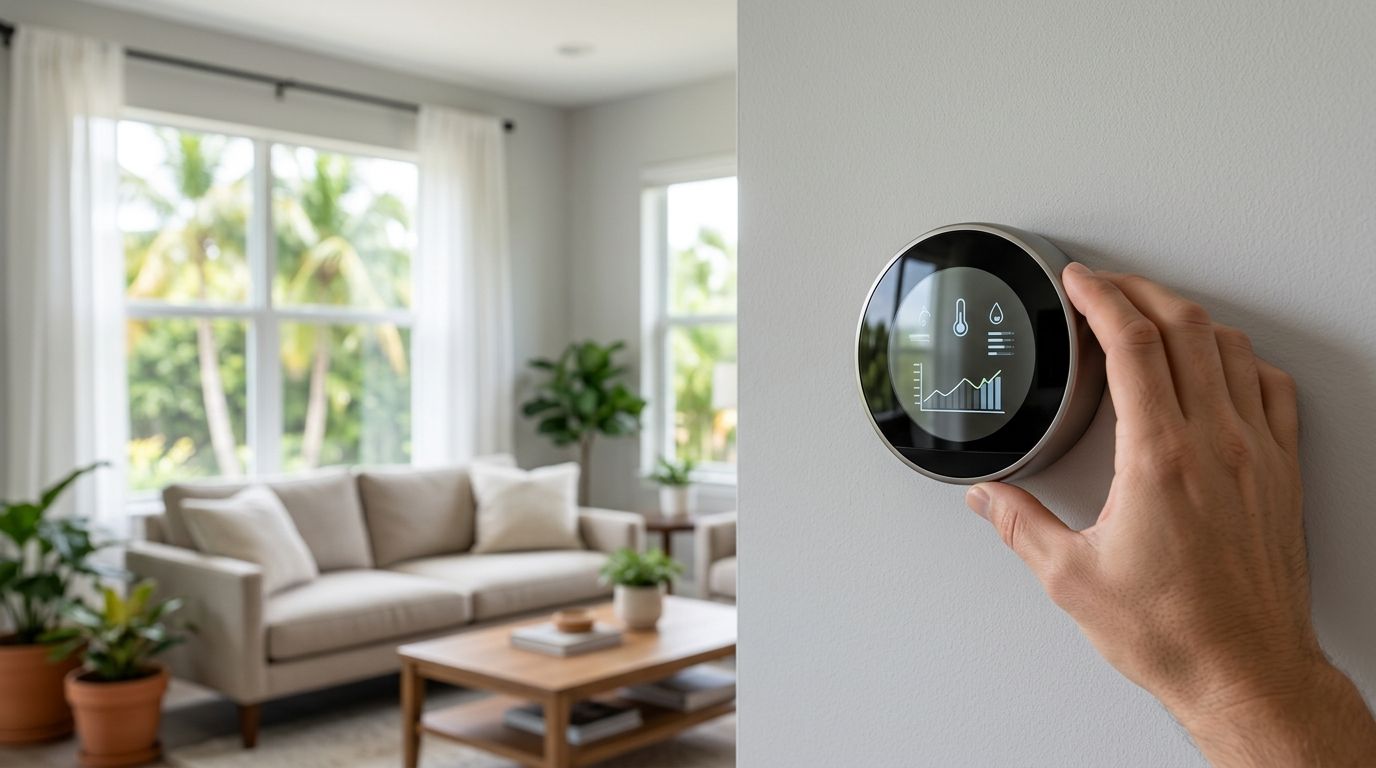
- Smart transformers with photocell or app timers: reduce manual on/off switching
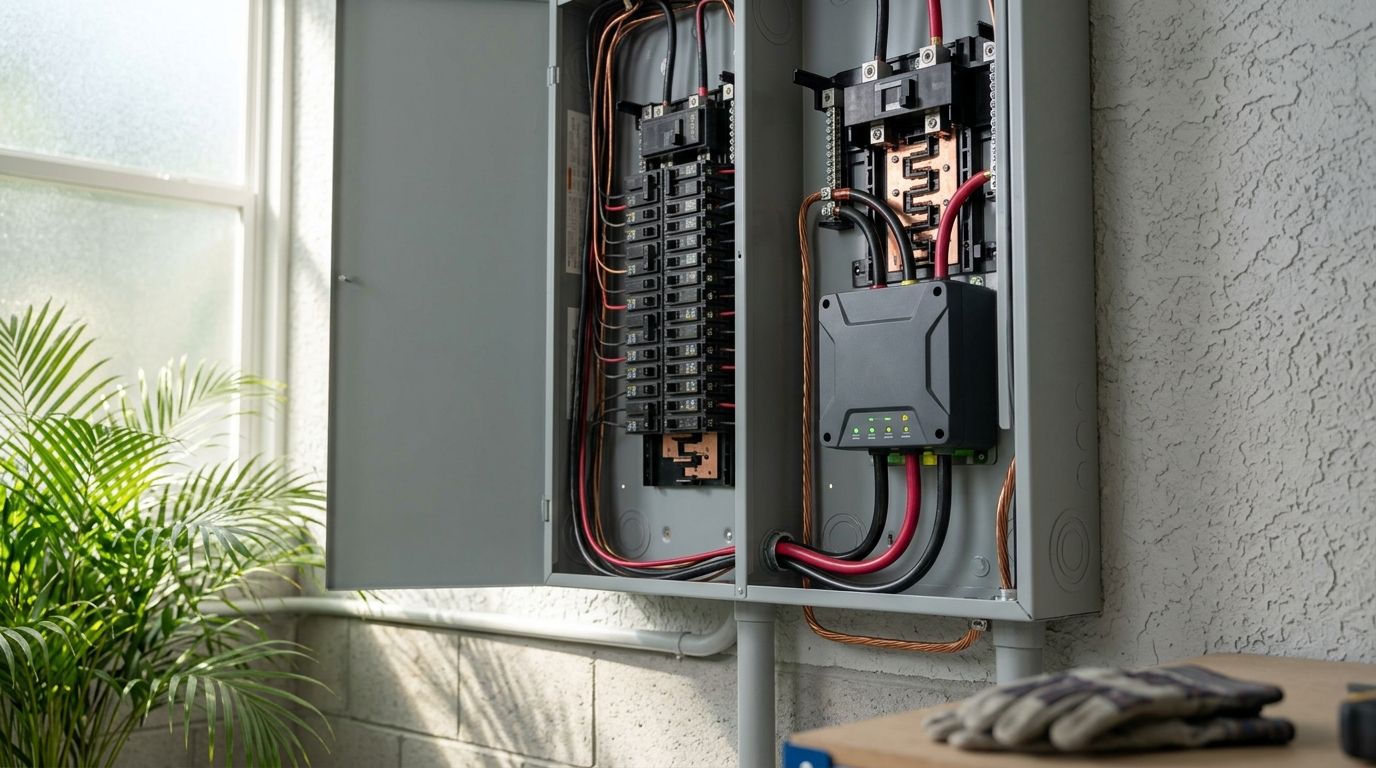
Install GFCI protection on every exterior circuit
This is not optional under the National Electrical Code, and it's the single most common miss on DIY outdoor lighting jobs. Every 120V exterior receptacle and most exterior lighting circuits need ground-fault protection, and a tripped GFCI with no obvious cause is often the first sign of a failing splice or water intrusion.
- GFCI breaker at the panel, or GFCI receptacle feeding the circuit
- Weatherproof in-use covers on every exterior outlet, even ones that aren't used daily
- Dedicated circuit for pool and dock lighting, separate from general landscape lighting
- Testing the GFCI monthly — a 30-second push-test catches failures before a storm does
Homeowners who've had electrical work done on an older Florida home already know this pattern — see the notes on GFCI outlet installation for Florida bathrooms and kitchens for how the same ground-fault logic applies indoors, because the failure mode (moisture plus voltage) is identical outdoors.
Bond metal fixtures and equipment near pools and water
Any metal fixture, ladder, handrail, or light within 5 feet of a pool or hot tub needs to be bonded to the pool's equipotential bonding grid. This isn't a landscaper task — it's a licensed electrician task, and skipping it is one of the more dangerous shortcuts in Florida outdoor electrical work because stray voltage in pool water isn't visible until someone gets shocked.
- Bond all metal fixture housings within the pool's bonding radius
- Verify existing bonding wire is intact before adding new lighting near a pool
- Use pool-rated (wet location) fixtures, not standard damp-location fixtures, for anything within splash range
- Have bonding inspected as part of any pool deck lighting project, not assumed to be fine
This is exactly the kind of work covered in pool electrical wiring and bonding for Port St. Lucie homeowners — if your outdoor lighting plan touches the pool deck, that bonding requirement applies before the first fixture goes in the ground.
Pick corrosion-resistant fixtures for salt air and humidity
Standard painted-aluminum fixtures oxidize fast on the Treasure Coast, especially within a mile or two of the Intracoastal or the ocean. Solid brass, copper, and marine-grade stainless steel outlast painted aluminum by years in the same conditions, and the price difference shows up as avoided replacement labor, not just fixture cost.
- Solid brass or copper fixtures for anything within a half-mile of saltwater
- Marine-grade stainless steel hardware for mounting screws and clips
- Sealed, gasketed lens housings — not just "weather-resistant" labeling
- Avoid mild-steel or painted-aluminum fixtures anywhere near the coast
Set timers and controls that match daylight, not a fixed schedule
Florida's daylight hours shift by roughly three hours between June and December, and a fixed on/off timer set in summer will have your lights on in broad daylight by winter. Photocell sensors or app-based smart timers solve this without a homeowner having to reset anything twice a year.
- Photocell sensors that trigger at actual dusk, adjusting automatically through the year
- App-controlled smart transformers for zone-by-zone scheduling
- Motion-activated fixtures for security zones instead of dusk-to-dawn everywhere
- Manual override switch at the panel or a accessible junction for storm prep
Plan for hurricane season before storms hit
Exterior lighting is exposed hardware, and hurricane season on the Treasure Coast runs June through November. Fixtures left in place during a major storm can rip wiring loose from junction boxes, and a homeowner who's already dealing with panel prep shouldn't be surprised by landscape lighting damage too.
- Remove or secure freestanding path lights ahead of a named storm
- Cap and seal any junction box exposed by storm debris before re-energizing
- Inspect low-voltage wiring runs for exposure after heavy rain events
- Have a licensed electrician check GFCI function after any flooding
Homeowners doing broader storm prep on the same visit often bundle this with the panel checklist in how to prepare your electrical panel for hurricane season — the same storm, the same panel, one visit instead of two.
Comparing your outdoor lighting installation options
| Option | Best for | Key limitation |
|---|---|---|
| Solar stake lights (DIY) | Basic path marking, no wiring involved | Weak output, short battery life in Florida heat, no security value |
| DIY low-voltage kit | Homeowners comfortable running transformer-fed cable themselves | No permit trail, easy to skip GFCI and bonding requirements |
| Licensed low-voltage system | Yards, walkways, and accent lighting done to code | Requires scheduling a licensed electrician for panel tie-in |
| Licensed line-voltage system (pool/dock) | Pool decks, docks, permanent architectural lighting | Requires permit and bonding inspection in most Treasure Coast jurisdictions |
Imperium Electric wires both low-voltage landscape systems and line-voltage pool and dock lighting for Port St. Lucie, Stuart, and Jensen Beach homes — the right call depends on which zones you're lighting, not a one-size answer.
Get an outdoor lighting quote
Licensed electricians for landscape, pool, and dock lighting on the Treasure Coast.
Common mistakes Florida homeowners make with outdoor lighting
- Skipping GFCI protection to save an afternoon. Every exterior circuit needs it under the National Electrical Code, and inspectors catch this at resale.
- Using indoor-rated fixtures outdoors. A "damp location" fixture is not rated for direct rain or pool splash — that's a "wet location" rating, and the difference matters within months on the coast.
- Ignoring pool bonding when adding deck lighting. Adding a fixture near a pool without checking the existing bonding grid is a shock hazard, not a cosmetic shortcut.
- Running extension cords as permanent wiring. Seen constantly on older Jensen Beach and Stuart properties — extension cords aren't rated for permanent burial or continuous outdoor exposure.
- Forgetting hurricane season prep. Fixtures left exposed during a named storm in 2026 are far more likely to fail than ones removed or secured ahead of time.
A quick way to avoid most of these: read how to choose an electrician in Port St. Lucie, FL before hiring anyone for line-voltage or pool-adjacent lighting work — licensing and bonding experience separate a safe install from a callback.
FAQ
Do I need a permit for outdoor lighting installation in Florida?
Low-voltage landscape lighting usually doesn't require a permit, but line-voltage circuits tied into your panel and any pool-adjacent lighting typically do in Port St. Lucie, Stuart, and Jensen Beach. Check with your local building department before running new circuits.
Is low-voltage or line-voltage better for Florida landscape lighting?
Low-voltage (12V) works well for path and accent lighting and is cheaper to run and safer to install. Line-voltage (120V) is typically required for pool deck perimeter lighting and permanent architectural fixtures that need higher output.
What fixtures hold up best in Florida's salt air?
Solid brass, copper, and marine-grade stainless steel fixtures resist corrosion far longer than painted aluminum or mild steel, especially within a mile or two of the coast or the Intracoastal.
Does outdoor lighting near a pool need special wiring?
Yes. Any fixture within 5 feet of a pool or hot tub needs to be bonded to the pool's equipotential bonding grid and rated for wet locations, not just weather-resistant.
How much maintenance does outdoor lighting need in Florida?
Expect to inspect fixtures and test GFCI protection at least twice a year, and again after any major storm or flooding event during hurricane season.
Can I install outdoor lighting myself in Florida?
Basic low-voltage path lighting kits are DIY-friendly. Anything tied into your electrical panel, near a pool, or on a dock should go through a licensed electrician because of GFCI and bonding requirements.
Why do outdoor lights keep tripping the GFCI?
A GFCI that trips repeatedly usually signals water intrusion at a splice, a failing fixture seal, or a damaged underground wire, not a defective breaker. Have it inspected before resetting it repeatedly.
What's the difference between damp-location and wet-location fixtures?
Damp-location fixtures handle humidity and indirect moisture, like a covered porch. Wet-location fixtures are rated for direct rain, splash, or submersion, which is what pool decks and open yards require.
One last thing
The fixture rating sticker matters more than the price tag: a $15 damp-location light installed where it needed a wet-location rating will fail before a $60 wet-rated fixture installed correctly ever does. Check the sticker before the sale price.